
Gaza Heatwave Exposes Limits of Ceasefire and Board of Peace Roadmap
Displaced Palestinians in Gaza City are turning to the Mediterranean Sea to escape extreme summer heat inside tents lacking electricity or fans, a humanitarian scene unfolding against the backdrop of a fragile ceasefire brokered under the US-led Board of Peace and involving Egyptian and Qatari media
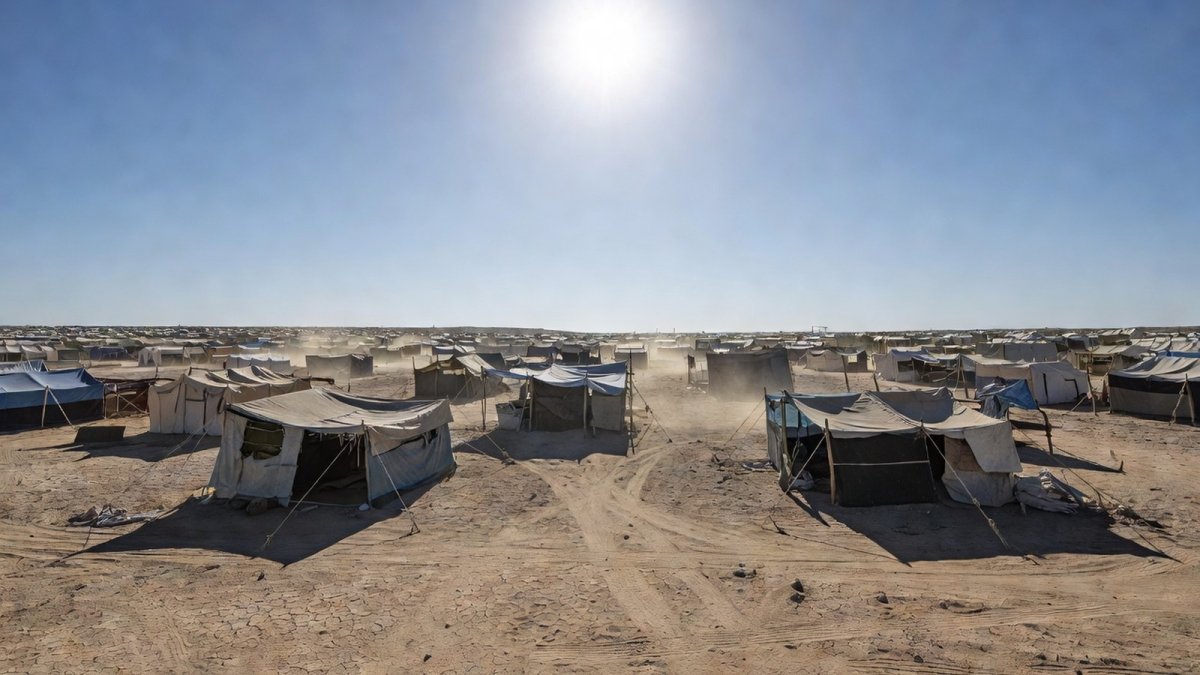
Displaced Palestinians in Gaza City are turning to the Mediterranean Sea to escape extreme summer heat inside tents lacking electricity or fans, a humanitarian scene unfolding against the backdrop of a fragile ceasefire brokered under the US-led Board of Peace and involving Egyptian and Qatari mediation. This situation highlights how post-conflict recovery in Gaza intersects with broader Middle East dynamics, including Gulf states’ reconstruction funding debates and the sequencing of Hamas disarmament tied to Israeli withdrawal. Nearly one million Gazans remain in tents as of June 2026, according to the Norwegian Refugee Council, underscoring the slow pace of stabilization nine months after the truce took hold.
Gaza Heatwave Exposes Limits of Ceasefire and Board of Peace Roadmap
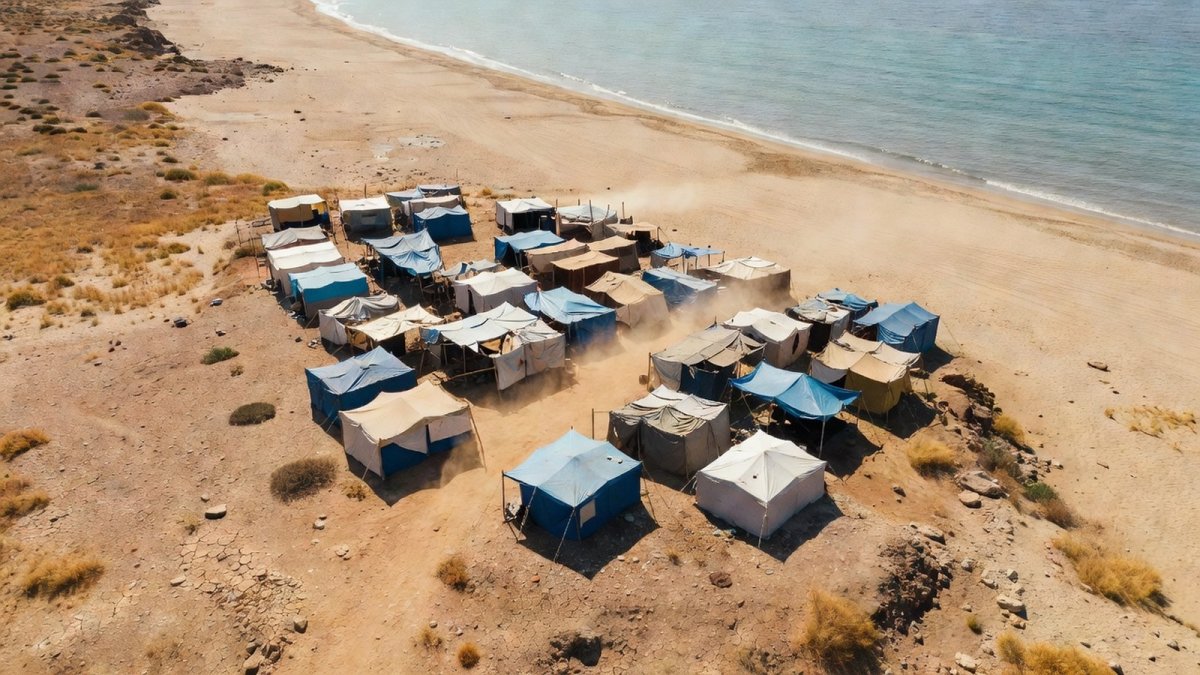
Gaza City, Gaza – August 8, 2026 — Displaced families continue heading to the beach in Gaza City to find relief from summer temperatures inside tents where electricity and fans remain unavailable, according to an Al Arabiya English report. The scene reflects ongoing humanitarian strains even as a ceasefire has held for roughly 300 days.
Geopolitical Context — Board of Peace Framework
The Board of Peace, established by US President Donald Trump, secured Hamas agreement on July 30-31, 2026, to a 15-point roadmap for phased disarmament following negotiations in Cairo. The plan would shift Gaza’s day-to-day administration to a technocratic Palestinian committee under Board oversight while linking verified Hamas disarmament to phased Israeli withdrawal. Sequencing of these steps remains disputed, with Israel’s military reporting 32 ceasefire violations between July 10-31.
The Board of Peace originated in Trump administration talks hosted in Cairo, where Egypt and Qatar coordinated with the Palestinian Authority and select Gulf states to produce the 15-point roadmap announced July 30-31, 2026. The plan transfers day-to-day Gaza administration to a technocratic Palestinian committee under BoP supervision while conditioning phased Israeli withdrawal on verified Hamas disarmament. Israel’s security establishment has contested the sequencing, arguing that disarmament benchmarks must precede any territorial pullback, a position that has slowed coordination with regional mediators.
These political frictions occur against documented breaches of the ceasefire. The IDF recorded 32 violations between July 10 and 31, 2026, while OCHA reported repeated strikes on tents, schools and residential buildings. UNICEF figures show 300 Palestinian children killed across the roughly 300-day ceasefire period ending August 8, 2026. UN satellite data confirm that destruction has continued to deepen even as reconstruction remains stalled, with nearly one million Gazans still sheltering in tents per NRC estimates from June 2026.
The resulting gap between institutional design and field conditions is visible along Gaza’s coastline, where limited reconnection of the Southern Gaza Desalination Plant has raised daily output only from 2,500 to 18,000 cubic metres. Power supply, which fell to near zero after the October 2023 blackout, remains negligible for most households, leaving basic cooling and water access unmet despite the framework’s oversight mechanisms.
Historical Background — From Blackout to Truce
Gaza’s sole power plant shut down within days of October 7, 2023, due to fuel depletion, leading to a full electricity blackout by October 11, 2023, per UN agencies. Pre-war supply of 8-12 hours per day dropped to near zero. The Hamas attack on October 7, 2023, killed about 1,200 people in Israel, triggering an Israeli campaign that killed tens of thousands in Gaza and displaced roughly 90 percent of the population at its peak.
The Gaza Strip's electricity infrastructure had long been a point of fragility before October 2023, with the sole power plant operating under severe fuel constraints that limited supply to eight-to-twelve hours daily. Within days of the Hamas-led attack that killed approximately 1,200 people in Israel, the plant shut down after fuel deliveries ceased, producing a full blackout by 11 October as documented by UN agencies. This collapse compounded the immediate humanitarian strain as Israeli forces launched their campaign, with Gaza health authorities later reporting tens of thousands of Palestinian deaths amid widespread destruction of housing stock and civilian infrastructure.
At its peak the conflict displaced roughly 1.9 million people, or ninety percent of Gaza's population, forcing families into increasingly crowded conditions across the south. By mid-2026 the Norwegian Refugee Council recorded nearly one million residents in tents and 170,000 households in temporary shelter, while UN satellite imagery showed continued degradation of residential areas and public facilities even after the ceasefire took hold around October 2025. Egypt and Qatar, which had mediated earlier truces, hosted follow-on talks that produced the Board of Peace framework, yet reconstruction remained stalled because of disputes over the sequencing of Hamas disarmament and Israeli withdrawal.
Three hundred days into the truce, UNICEF reported three hundred Palestinian children killed and OCHA documented repeated strikes on tents, schools and apartment blocks. The July 2026 fifteen-point roadmap transferred limited administrative functions to a technocratic Palestinian committee under Board of Peace oversight, but Israel's security establishment continued to cite thirty-two ceasefire violations between 10 and 31 July as justification for maintaining tight controls on imports and movement, leaving basic services such as the Southern Gaza Desalination Plant operating far below pre-war capacity.
Regional Dynamics — Mediation and Reconstruction Stakes
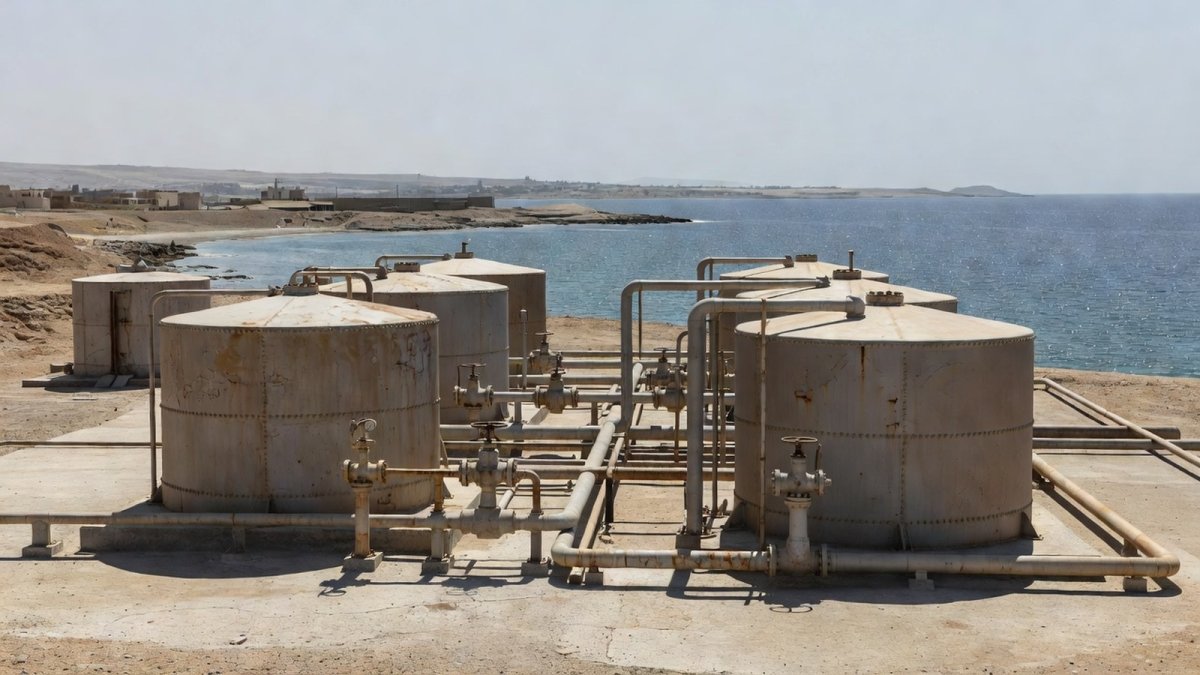
Egypt hosted the Cairo negotiations that produced the roadmap, while Qatar played a key mediation role alongside the Palestinian Authority. Gulf states are debating reconstruction funding, with the Southern Gaza Desalination Plant reconnection on July 26, 2026, raising safe water output from 2,500 to 18,000 cubic metres per day. These steps occur amid Arab-Israeli normalization pressures and great-power competition over postwar arrangements.
Egypt’s position as host of the Cairo negotiations underscores its longstanding interest in managing Gaza’s borders and preventing spillover into Sinai, a concern rooted in the 2013-2014 Rafah tunnel crackdowns. The 15-point roadmap agreed in late July 2026 envisions transferring day-to-day administration to a technocratic Palestinian committee under Board of Peace oversight, yet the Palestinian Authority in Ramallah has signaled it will only participate if the committee reports ultimately to the PLO rather than an externally imposed structure. Qatar, which has channeled more than $1.8 billion in fuel and salary support to Gaza since 2012, continues to press for a sequenced Israeli withdrawal tied to verified Hamas disarmament, while warning that any renewed blockade would collapse the fragile truce.
Gulf states remain divided over reconstruction financing. Saudi Arabia and the UAE have conditioned major pledges on governance reforms and explicit linkage to broader Arab-Israeli normalization, echoing the 2020 Abraham Accords framework. Riyadh has reiterated that full diplomatic relations require a credible pathway to Palestinian statehood, a stance that complicates donor-conference planning for an estimated $40-50 billion rebuild. Against this backdrop, the July 26 reconnection of the Southern Gaza Desalination Plant—raising output from 2,500 to 18,000 cubic metres per day—offers a tangible, if limited, recovery milestone that could reduce tanker dependence for roughly 250,000 residents if grid stability holds.
Great-power dynamics further complicate the picture. While the Trump administration’s Board of Peace supplies the diplomatic umbrella, China has offered technical assistance for energy and water infrastructure without political preconditions, and Russia has floated parallel security guarantees to both Israel and Hamas factions. These overtures give regional actors additional leverage as they weigh reconstruction commitments against the risk of renewed escalation.
Strategic Calculus — Disarmament Versus Withdrawal
Each party weighs leverage carefully: Hamas seeks guarantees on Israeli withdrawal before full disarmament, while Israel prioritizes verified weapons removal to address security concerns. The Trump administration’s Board of Peace aims to lock in phased implementation to prevent renewed escalation. Second-order effects include potential delays in Gulf investment if sequencing stalls.
Hamas retains leverage through its insistence on verifiable security guarantees and a continued governance role within any technocratic transition, while Israel's security establishment demands strict sequencing that ties each withdrawal phase to confirmed disarmament milestones under the Board of Peace framework. Israeli reporting of 32 ceasefire violations between July 10 and 31, 2026, has already slowed initial transfers of authority to the Palestinian committee, illustrating how field-level incidents can recalibrate the entire 15-point roadmap.
The Trump administration faces legacy pressures to demonstrate progress ahead of electoral cycles, with Egypt and Qatar incentivized to sustain mediation roles that enhance their regional standing and unlock Gulf reconstruction pledges. Egypt's hosting of Cairo talks and Qatar's facilitation of indirect channels create mutual stakes in preventing total collapse, yet both capitals remain wary of absorbing spillover displacement or renewed militant activity if the process stalls.
Delays in reconstruction funding and the return of nearly one million displaced Gazans risk entrenching the current shelter crisis documented by the NRC, while comparisons to the sequencing failures of Oslo and the narrower scope of the Abraham Accords underscore how unresolved disarmament-withdrawal disputes have historically allowed violence to resume before economic stabilization takes hold.
Humanitarian Dimensions — Heat, Water and Shelter
Palinfo reported on August 7, 2026, that continuous blackouts render cold water and fans a shared wish among thousands of families. El País quoted displaced resident Ahmed Abu Fayed from Nuseirat describing conditions as “hell” and expressing a dream of opening a refrigerator for cold water. Mosquitoes and rats are multiplying in the camps housing nearly one million people, with humanitarian agencies estimating around 170,000 households still in temporary shelter.
Regional Implications — Path Forward Under Ceasefire
If the 15-point roadmap advances, verified disarmament could unlock broader reconstruction involving Gulf capital and technocratic governance. Continued strikes on tents and infrastructure, including three reported injuries on August 8, 2026, in southern Gaza, test the truce’s durability. Sustained implementation would shape future Sunni-Shia competition dynamics and the viability of Arab-Israeli normalization efforts across the region.
By Malik Hassan, Staff Writer
This article was produced with AI-assisted research and editorial support. Reporting is based on sources cited in the article.
What's Your Reaction?
 Like
0
Like
0
 Dislike
0
Dislike
0
 Love
0
Love
0
 Funny
0
Funny
0
 Wow
0
Wow
0
 Sad
0
Sad
0
 Angry
0
Angry
0

Middle East Correspondent at Global1.News. Based in Beirut, covering politics, conflict, energy, and society across the Middle East. Brings context and depth to a region often reduced to headlines.











Comments (0)