
Manila rolls out red carpet for Trump as impeachment drama looms
In a dazzling display of diplomacy, Manila turned its streets into a red‑carpet boulevard for a delegation of world leaders, most notably former U.S. President Donald Trump, according to ANC 24/7’s latest Weekend Wrap.
In a dazzling display of diplomacy, Manila turned its streets into a red‑carpet boulevard for a delegation of world leaders, most notably former U.S. President Donald Trump, according to ANC 24/7’s latest Weekend Wrap. The arrival of the former American commander‑in‑chief was framed as a celebration of the Philippines’ growing role on the global stage, with officials highlighting a “very big trade deal” that they said had been reached during the visit. While the ceremony underscored the country’s eagerness to showcase its foreign‑policy victories, the same day saw the nation’s political arena shift its focus to the high‑stakes impeachment trial of Vice President Sara Duterte, the second‑highest official in the government. The juxtaposition of diplomatic pageantry and domestic controversy offers a vivid snapshot of a nation balancing its aspirations for international relevance with the pressing demands of internal accountability.
Red‑carpet diplomacy: the arrival of former President Trump
The video report opened with footage of a gleaming motorcade winding through Manila’s bustling avenues, flanked by cheering crowds and banners bearing the colors of the Philippine flag. Former President Donald Trump, accompanied by a retinue of advisers and business leaders, stepped onto the tarmac to a fanfare of applause that echoed through the city’s historic streets. The presence of the former U.S. leader, though not an official state visit, was presented by officials as a symbolic gesture of the deepening ties between the two nations.
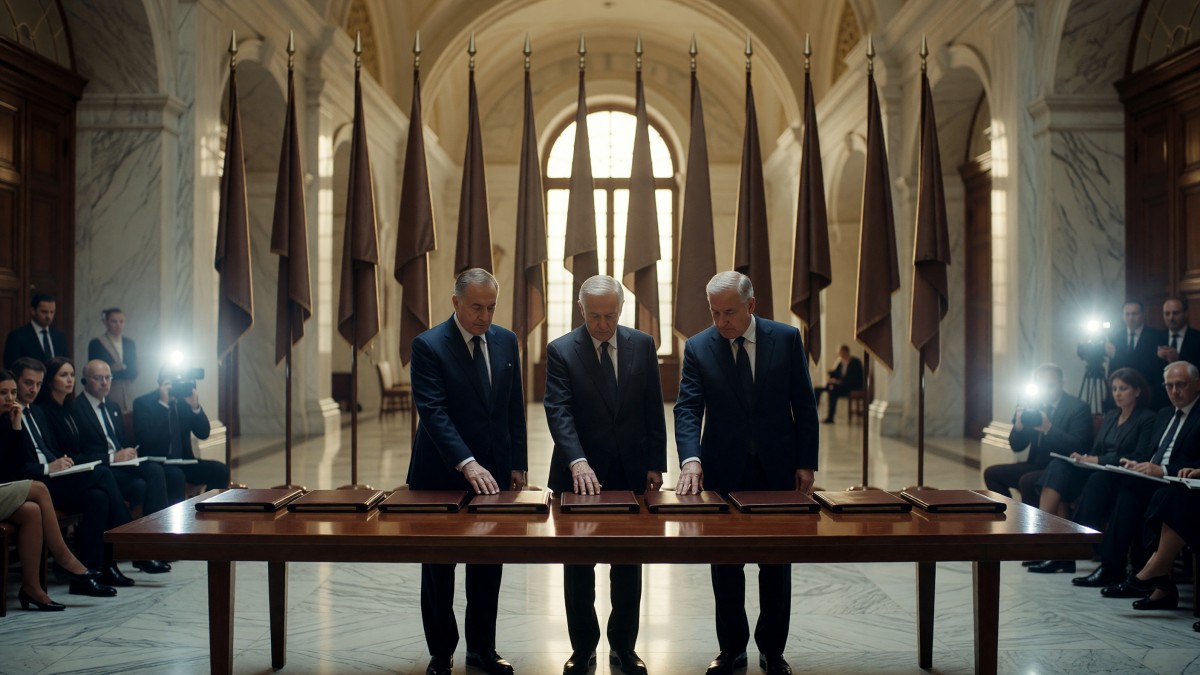
Government spokespeople, as captured in the ANC segment, emphasized that the event was more than a photo‑op; it was a platform to announce a “very big trade deal” that would supposedly boost economic cooperation. While the report did not disclose the specific sectors or monetary values involved, the language used suggested that the agreement could have far‑reaching implications for Filipino exporters and investors seeking to tap into the U.S. market. The emphasis on trade aligns with the administration’s broader narrative of positioning the Philippines as a hub for regional commerce, especially as other Southeast Asian economies vie for similar partnerships.
Beyond the trade angle, the ceremony served as a reminder of the Philippines’ long‑standing strategic partnership with the United States. The presence of a former president, who remains a polarizing figure both domestically and abroad, highlighted the nuanced dance of diplomatic signaling. For many Filipinos, the sight of a familiar American face evoked memories of the historic 1946 Treaty of Friendship, while also prompting discussions about the current administration’s foreign‑policy direction, especially in the context of rising tensions in the South China Sea.
The “very big trade deal”: expectations and uncertainties
The phrase “very big trade deal” echoed throughout the video, underscoring the administration’s intent to portray the agreement as a watershed moment for the Philippine economy. While the report refrained from detailing the deal’s exact provisions, it hinted at a broad scope that could encompass sectors such as agriculture, technology, and infrastructure. Such a sweeping description suggests an ambition to attract foreign direct investment and to open new markets for Filipino products, a goal that resonates with the aspirations of many sari‑sari store owners and small‑scale farmers who hope for better export opportunities.
Analysts watching the coverage noted that the timing of the announcement—coinciding with the high‑profile arrival of a former U.S. president—could be a strategic move to amplify the perceived significance of the deal. By linking the trade agreement with a globally recognized figure, the administration may be seeking to generate both domestic enthusiasm and international credibility. This approach mirrors past instances where the Philippine government has paired major policy rollouts with high‑visibility events to maximize media coverage and public interest.
Nevertheless, the lack of concrete details in the video leaves room for speculation about the deal’s actual impact. Without specific figures or sectoral breakdowns, stakeholders such as the Department of Trade and Industry and local business chambers will need to await further clarification before gauging the agreement’s true benefits. For now, the promise of a “very big” partnership serves as a rallying cry for optimism, while also inviting scrutiny from watchdog groups and opposition lawmakers who may question the transparency of the negotiation process.
Political drama continues: impeachment trial of Vice President Sara Duterte
Even as the red carpet glittered, the political spotlight shifted to the Senate chambers, where Vice President Sara Duterte faced an impeachment trial that has captured the nation’s attention. The ANC report highlighted the trial as the “high‑stakes” showdown that will determine the political future of the country’s second‑highest official. While the video did not detail the specific charges, it underscored the trial’s significance in the broader context of the administration’s governance and accountability.
The impeachment proceedings, conducted before the Senate, reflect a constitutional mechanism designed to hold high‑ranking officials to account. In the Philippines, the Senate serves as the impeachment court, while the House of Representatives initiates the articles of impeachment. The fact that Vice President Duterte is now at the center of such a process underscores the intense scrutiny faced by the Duterte family, which continues to wield considerable influence in national politics.
Public reaction, as glimpsed in the footage, ranged from fervent support for the vice president to calls for transparency and justice. Barangay captains and community leaders were seen discussing the trial’s implications for local governance, emphasizing how national-level accountability can ripple down to affect everyday life in the provinces. For many ordinary Filipinos, the outcome of the trial could shape perceptions of fairness in the political system and influence confidence in the next generation of leaders.
Implications for democracy and rule of law
The simultaneous occurrence of a grand diplomatic event and a contentious impeachment trial raises questions about the state of democracy and the rule of law in the Philippines. On one hand, the government’s ability to host an international gathering and announce a major trade agreement demonstrates institutional capacity and a willingness to engage with global partners. On the other hand, the impeachment trial of a sitting vice president tests the robustness of constitutional checks and balances.
Observers noted that the trial’s progress will be a litmus test for the independence of the Senate and the broader judicial system. If the proceedings are conducted with transparency and adherence to due process, it could reinforce public trust in democratic institutions. Conversely, any perception of political interference or procedural shortcuts could erode confidence and fuel cynicism among voters, especially in a climate where political dynasties remain prominent.
Moreover, the juxtaposition of diplomatic triumphs with domestic turbulence reflects a broader pattern in Philippine politics where external successes are sometimes leveraged to offset internal challenges. This dynamic can be seen in previous administrations that highlighted infrastructure milestones while navigating scandals at home. The current scenario invites citizens to consider whether international accolades can truly compensate for unresolved governance issues that directly affect their daily lives.
Local reactions: from barangays to the diaspora
Across the archipelago, reactions to the red‑carpet event and the impeachment trial have been mixed. In rural barangays, community gatherings took place to watch the televised arrival of former President Trump, with some residents expressing pride in the Philippines’ ability to attract high‑profile visitors. Others, however, voiced concerns that the focus on foreign dignitaries diverted attention from pressing local needs such as agricultural support, health services, and education.
The Filipino diaspora, particularly overseas Filipino workers (OFWs) in the United States, also weighed in on social media. Many OFWs shared videos of the Manila ceremony, highlighting the nation’s visibility on the world stage. Yet, a parallel stream of commentary questioned whether the “very big trade deal” would translate into better wages or job security for Filipino workers abroad, underscoring the deep link between foreign policy outcomes and the livelihoods of millions of Filipinos overseas.
Local business owners, especially those operating sari‑sari stores, saw the event as an opportunity to attract customers drawn by the festive atmosphere. Some displayed small flags and patriotic symbols, hoping to capitalize on the surge of foot traffic. Yet, the lingering uncertainty surrounding the impeachment trial reminded many that political stability remains a key factor for business confidence, especially in sectors reliant on government contracts and public procurement.
Looking ahead: what the next weeks may hold
As the week draws to a close, the Philippines stands at a crossroads where diplomatic triumphs and domestic accountability intersect. The “very big trade deal” announced during the red‑carpet ceremony promises potential economic benefits, but its real impact will depend on the details yet to be disclosed by the Department of Trade and Industry and the negotiating parties. Meanwhile, the impeachment trial of Vice President Sara Duterte continues to unfold in the Senate, with the verdict poised to shape the political landscape for months, if not years, to come.
For ordinary Filipinos, the outcomes of both developments will be felt in tangible ways—from the price of imported goods and the availability of jobs to the perception of fairness in the nation’s highest offices. As barangay assemblies discuss the implications, and as OFWs watch from abroad, the collective hope remains that the government will honor the principles of justice, transparency, and inclusive growth that underpin a thriving democracy.
In the coming weeks, the eyes of the nation will remain fixed on two stages: the international arena, where Manila seeks to cement its role as a diplomatic hub, and the Senate floor, where the fate of a vice president hangs in the balance. How these narratives converge will ultimately define whether the red carpet moment becomes a lasting symbol of progress or a fleeting spectacle amidst deeper challenges.
By Bella Reyes, Staff Writer
This article was produced with AI-assisted research and editorial support. Reporting is based on the source material cited below. Sources: ANC 24/7 video report (21 November 2026); ANC 24/7; Global1.News
What's Your Reaction?
 Like
0
 Dislike
0
 Love
0
 Funny
0
 Wow
0
 Sad
0
 Angry
0

Philippines/Southeast Asia Correspondent at Global1.News. Manila-based journalist covering Philippine politics, environment, maritime security, and social issues. Passionate about marine conservation and the communities protecting the Philippines' natural heritage.












Comments (0)