
Ukraine War's New Phase: Kyiv Pleads for Interceptors as Warehouses Burn
In a recent BBC Newscast episode, the question was posed directly: is the war in Ukraine entering a new phase of aggression? Ukraine War's New Phase: Kyiv Pleads for Interceptors as Warehouses Burn London – 8 August 2026 — A week of deadly strikes against factories, warehouses and infrastructure has
In a recent BBC Newscast episode, the question was posed directly: is the war in Ukraine entering a new phase of aggression?
Ukraine War's New Phase: Kyiv Pleads for Interceptors as Warehouses Burn
London – 8 August 2026 — A week of deadly strikes against factories, warehouses and infrastructure has pushed the conflict into its most aggressive phase since the winter campaign, as Ukrainian leaders warn that a shortage of missile interceptors is costing lives. In a recent BBC Newscast episode, correspondents examined whether the pattern of strikes marks a turning point in the war of attrition. Ukrainian air defences shot down 98 of 115 drones fired at Kyiv this week but stopped no ballistic missiles, and the civilian toll is climbing.
A Night of Fire Over Kyiv
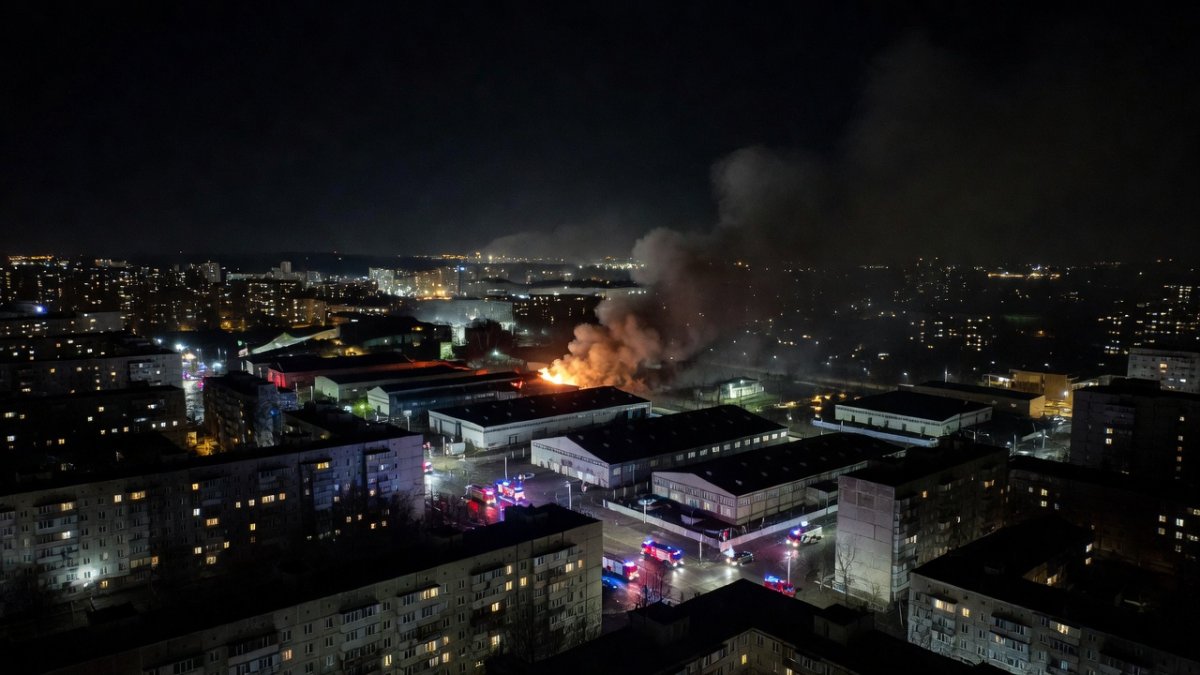
The overnight assault on the Ukrainian capital began shortly after midnight, with residents describing successive explosions as at least two dozen ballistic missiles came in. According to President Volodymyr Zelenskyy, Russia fired 24 ballistic missiles, four cruise missiles and 115 drones in a single wave. Ukrainian air defences intercepted 98 drones but none of the ballistic missiles. The main targets included a brewing company, construction materials warehouses, a railway station, the Epicentr home improvement chain and a Nova Post postal distribution centre. Fires broke out in warehouses in Brovary and Bucha, and an ammonia leak was reported at one site.
Kyiv mayor Vitali Klitschko stated that people may still be under rubble. Rescuers pulled two people from warehouse ruins. An ambulance driver was among the injured, and four people remained in critical condition. At least 17 people were killed and dozens injured across the city. Witnesses described chaotic scenes as emergency services worked through the night amid ongoing fires and structural collapses at multiple civilian facilities. The scale of destruction at logistics and commercial sites left many residents without immediate access to essential goods and services.
The human cost extended beyond the immediate fatalities. Families in affected districts reported losing homes and livelihoods tied to the damaged warehouses and distribution centres. Local hospitals treated blast injuries and burns while search operations continued at several locations. The attack highlighted the vulnerability of densely populated areas to ballistic missile strikes that current Ukrainian systems could not intercept.
The Interceptor Gap: Why Kyiv Cannot Stop the Missiles
The most striking detail of the attack was what Ukraine's defences could not stop. The air force said it intercepted 98 of 115 drones, but no ballistic missiles reached their targets. President Volodymyr Zelenskyy stated that ballistic missile interceptors could have saved the lives of those killed. Supplies of air defence missiles to Ukraine in the first half of this year fell to a third of their 2025 level, leaving critical gaps in coverage against high-speed threats.
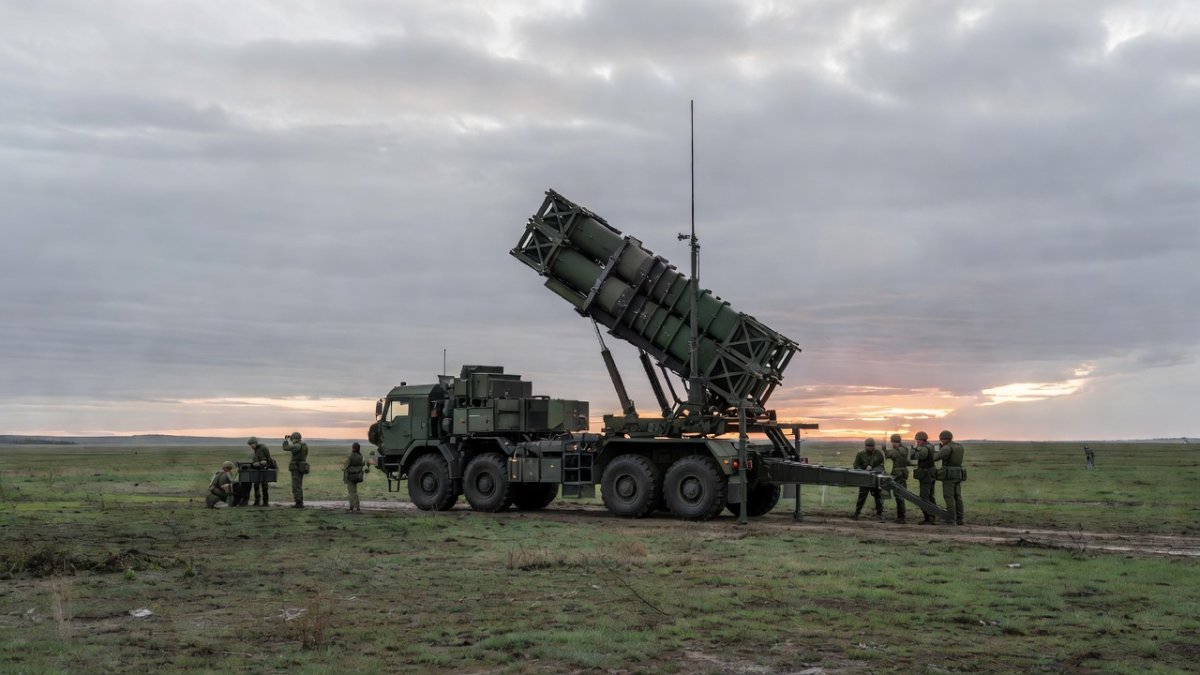
The global shortage of US-made Patriot interceptor missiles stems from surging demand tied to both the Ukraine conflict and tensions with Iran. Last month Donald Trump suggested the United States might grant Ukraine a licence to manufacture Patriots, but he later backtracked and described the technology as a hard thing to give away. Reuters reported that US officials are discussing options to replenish Ukraine's depleted stocks, including domestic component manufacturing with final assembly in Germany, development of a cheaper missile variant, or integration of Ukraine into the broader US-European Patriot programme.
These discussions reflect the strain on Western production lines and the difficulty of scaling output quickly enough to match Russian launch rates. Ukrainian officials have repeatedly highlighted how the interceptor shortfall directly translates into higher civilian casualties during massed missile barrages. Without accelerated deliveries or new manufacturing pathways, the pattern of unstopped ballistic strikes is likely to persist through the coming months.
The War of Attrition's Next Phase
Serhii Beskrestnov, adviser to President Zelenskyy, warned that the war of attrition has entered its next phase. He stated that the enemy is attacking everything in its path, including retail warehouses, food warehouses, logistics hubs, enterprises and construction material warehouses. The strikes on Epicentr facilities and Nova Post centres illustrate a deliberate focus on commercial infrastructure that sustains daily civilian life and economic activity across Ukraine.
This targeting disrupts supply chains for construction materials, postal services and consumer goods, raising costs and creating shortages for ordinary Ukrainians. The destruction of warehouses in Brovary and Bucha, along with the ammonia leak, added environmental and safety hazards that further complicate recovery efforts. Russia's Defence Ministry claimed it hit logistics hubs and supply centres used for military purposes, while also reporting strikes on three cargo vessels near the Black Sea port of Odesa.
The economic-warfare dimension places additional pressure on Ukrainian households already coping with inflation and displacement. By striking commercial nodes rather than purely military sites, the campaign aims to degrade the rear-area support that underpins Ukraine's ability to sustain prolonged resistance. Both sides now face the challenge of protecting dispersed civilian infrastructure from long-range precision attacks.
Interpreting this pattern at a structural level, the deliberate emphasis on commercial logistics forms a calculated bid to inflate the everyday costs of living for Ukrainian households, thereby intensifying economic strain on families and probing the endurance of Western political will to maintain supply lines through an extended war of attrition.
Ukraine Strikes Back
Ukraine responded with its own deep strikes this week. Drones hit a Wildberries sorting office in Aleksin, Tula oblast, according to regional Governor Dmitry Milyaev. Damage included two apartment buildings. More than a dozen Wildberries facilities have been targeted in recent weeks. Kyiv justifies these actions by noting that the retailer supplies dual-use items to Russia's war effort. Ukraine also struck an oil refinery in Ufa, Bashkortostan.
A Russian drone factory director was reported in serious condition after a car explosion that killed his driver. The Russian Defence Ministry claimed it destroyed 475 Ukrainian drones during the latest exchanges. These counter-strikes demonstrate Kyiv's expanding reach into Russian territory and its focus on economic and industrial targets that support Moscow's military production.
The mutual campaign against rear-area logistics and manufacturing facilities marks a broadening of the conflict beyond the front lines. Both capitals now confront the task of shielding commercial and industrial assets from drone and missile threats while maintaining wartime output. The pattern suggests that economic resilience will play an increasingly decisive role in the months ahead.
At an interpretive level, Ukraine's growing deep-strike capability signals a maturing operational reach that projects both technical proficiency and resolve, generating psychological unease and measurable economic disruption across Russian rear areas while underscoring that neither side regards any warehouse, refinery or logistics node as immune from reciprocal targeting.

Western Response and the Patriot Dilemma
EU Commission President Ursula von der Leyen condemned the attacks, stating that once again the world wakes up to news of horrible atrocities by Russia through its aerial attacks on Ukraine. She added that Russia must pay for the destruction it has caused. French President Emmanuel Macron described the strikes as a policy of terror carried out with missiles and drones and called it unacceptable. He pledged that the EU will implement new sanctions while strengthening military support for Ukraine.
President Zelenskyy urged the G7 and EU to act against the 17 key companies producing Russia's ballistic missiles that exploit loopholes to evade sanctions. On Friday the EU listed five additional individuals supporting Russia's military-industrial complex. These measures aim to tighten restrictions on components and financing that sustain Moscow's missile programmes.
The strategic question remains whether Western production of interceptors can scale rapidly enough to close the gap before winter. European and American officials continue to weigh options for joint manufacturing and technology transfer, yet bureaucratic and industrial constraints limit the speed of any response. The coming diplomatic season will test whether these pledges translate into concrete deliveries that alter the current imbalance.
Viewed through an interpretive lens, the interceptor shortfall now intersects directly with US industrial policy priorities and European defence procurement timelines, raising the political stakes for allied governments that must justify delivery delays to domestic audiences as Ukrainian casualties continue to mount from unstopped strikes.
Analysis and Implications
This week's events could indicate that the conflict is shifting from battlefield attrition toward a broader campaign against economic and civilian infrastructure on both sides. The Reuters report of a North Korean missile unit with up to 120 missiles and six launchers deployed to western Russia suggests Moscow is supplementing its stocks through external suppliers. Analysts suggest this signals ongoing pressure on Russian domestic production capacity despite sanctions.
The ordered evacuation of hundreds of families with children from Kramatorsk, as reported by Donetsk governor Vadym Filashkin, reflects intensifying Russian pressure in the east. Interceptor diplomacy may define the autumn agenda as Kyiv seeks firmer commitments on Patriot replenishment. NATO and EU capitals face the task of balancing immediate defensive needs against longer-term industrial and political constraints.
Washington's approach to technology transfer and European coordination will shape whether Ukraine can restore a credible shield against ballistic threats. The trajectory points to continued strikes on logistics and manufacturing nodes unless production and sanctions measures close the current gaps. Observers will watch whether the pattern of mutual deep strikes settles into a sustained new equilibrium or escalates further before the end of the year.
Looking ahead, the coming weeks may bring a renewed winter campaign against Ukraine's energy grid, with interceptor stockpiles likely determining whether Ukrainian defences can blunt such an offensive or whether further civilian hardship will follow.
By Irina Volkov, Staff Writer
This article was produced with AI-assisted research and editorial support. Reporting is based on sources cited in the article.
What's Your Reaction?
 Like
0
Like
0
 Dislike
0
Dislike
0
 Love
0
Love
0
 Funny
0
Funny
0
 Wow
0
Wow
0
 Sad
0
Sad
0
 Angry
0
Angry
0

Russia/Eastern Europe Correspondent at Global1.News. Covering Russian politics, energy, security, and the shifting dynamics of the post-Soviet space. Provides clear-eyed analysis on one of the world's most opaque regions.














Comments (0)