
Pezeshkian Defends Iran-US Memorandum as Critics Echo Israeli Positions
Iranian President Masoud Pezeshkian has mounted a direct defense of Tehran's June memorandum with Washington, framing domestic attacks on the deal as unwitting echoes of Israeli preferences for continued conflict.
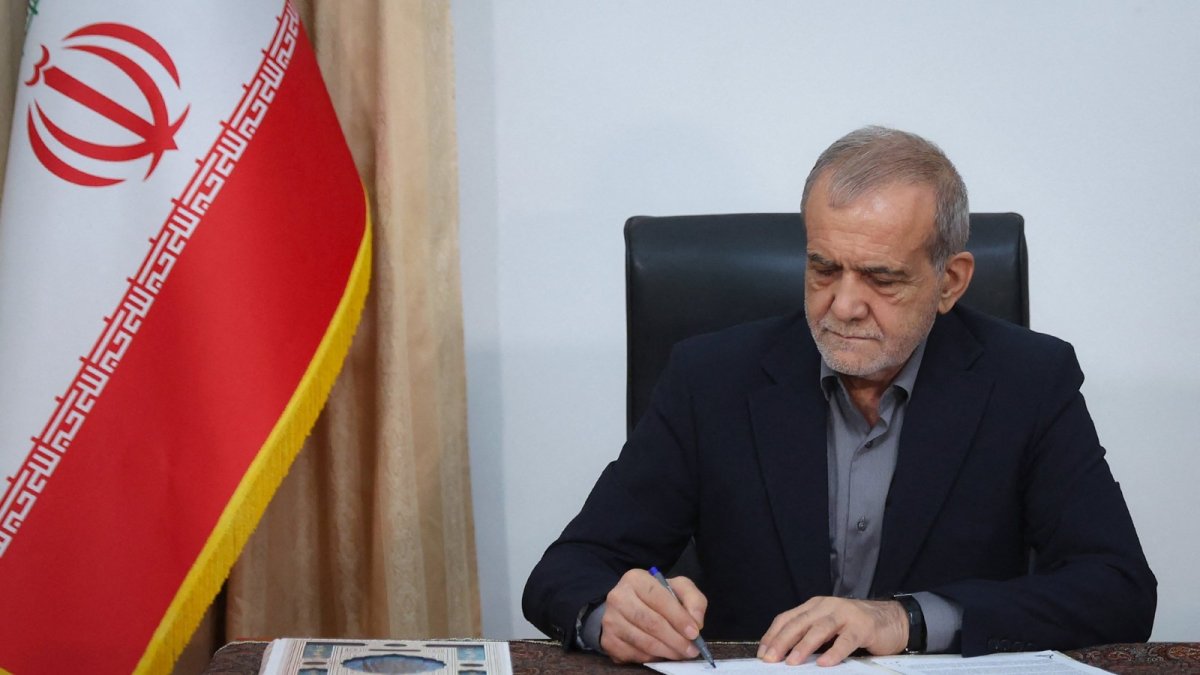
Iranian President Masoud Pezeshkian has mounted a direct defense of Tehran's June memorandum with Washington, framing domestic attacks on the deal as unwitting echoes of Israeli preferences for continued conflict. The pushback comes as regional powers watch whether the fragile ceasefire holds and whether stalled nuclear talks can resume without fresh escalation. At stake are energy flows through the Strait of Hormuz, the balance of Gulf alliances, and the trajectory of great-power involvement in the Middle East.
Pezeshkian Rejects Failure Narrative on Islamabad Memorandum
Tehran, Iran – August 8, 2026 — Iranian President Masoud Pezeshkian pushed back Friday against mounting criticism of Tehran's June memorandum with Washington, accusing its domestic opponents of adopting Israel's narrative and rejecting speculation that he could step down.
The timing of these domestic attacks coincides with the expiration of the initial 60-day implementation window, raising questions about whether internal divisions could derail the reciprocal steps outlined in the Islamabad Memorandum. Past episodes of Iranian nuclear diplomacy, such as the JCPOA negotiations, illustrate how elite consensus fractures often amplify external pressures from actors seeking to portray any compromise as capitulation.
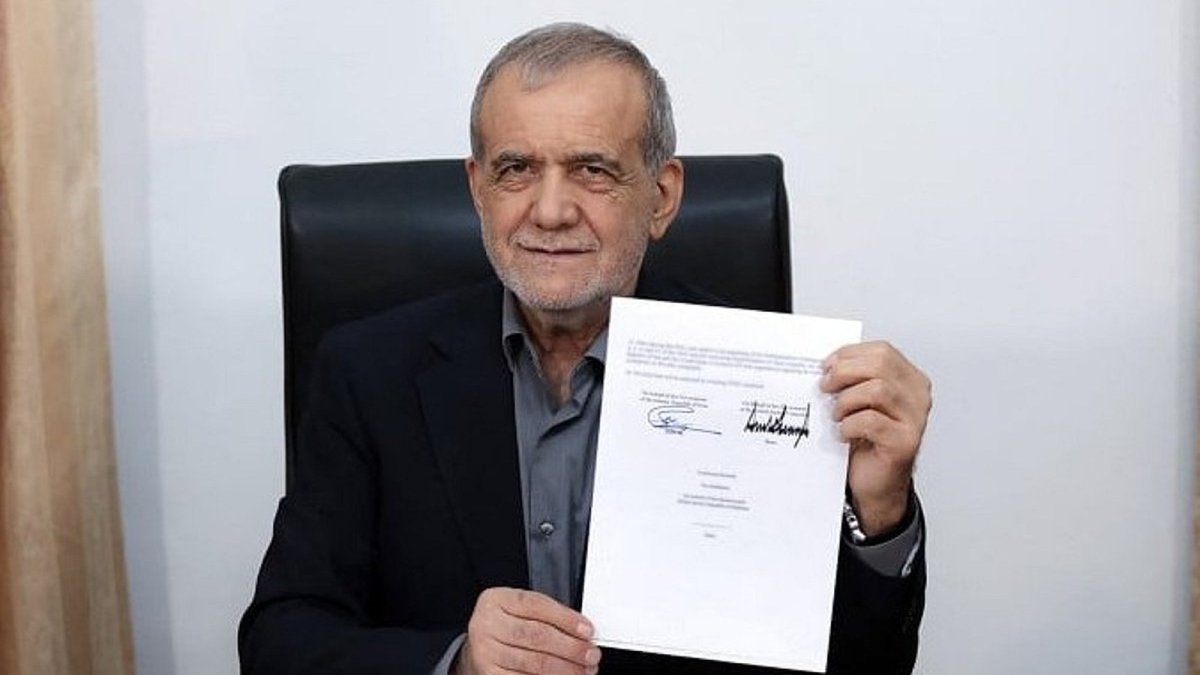
Core Provisions and Reciprocal Commitments
The memorandum, reached through Pakistani and Qatari mediation and known as the Islamabad Memorandum, ended active hostilities that began with coordinated Israeli and U.S. strikes on Iranian military, nuclear, and energy sites on February 28, 2026. It extended an existing ceasefire and opened a 60-day window for further talks on Iran's nuclear program, sanctions relief, and reopening of the Strait of Hormuz. Pezeshkian stressed that implementation remains strictly reciprocal: Iran will meet obligations only where the United States fulfills its own.
He noted that Tehran had not compromised on any clause and challenged critics to identify a single provision where Iran had backed down. The principal Iranian concession involved allowing ship transit through the Strait of Hormuz under Iranian regulations, a framework the United States accepted. In return, Pezeshkian said Iran had forced the lifting of what he described as a U.S. blockade.
Analysts note that this reciprocity clause echoes earlier patterns in Gulf security talks, where verification mechanisms for maritime access have historically required phased confidence-building measures to prevent miscalculation. The February 2026 strikes themselves followed months of proxy escalations, underscoring how energy infrastructure targeting can rapidly draw in external mediators seeking to stabilize global supply chains.
Domestic Pushback and Resignation Rumors
Speculation about Pezeshkian's possible resignation has circulated in Iranian media for weeks. The president dismissed these claims, stating that any resignation would be announced officially and that the rumors aim to create discord within Tehran's political and military leadership. He also denied any rift with Supreme Leader Ayatollah Ali Khamenei.
Critics argue the memorandum delivered too little on sanctions relief while exposing Iran to renewed pressure. Pezeshkian countered that opponents stand on the sidelines offering opinions on the economy and politics, only to criticize later if problems arise. He added that such critics either do not know the leader's position or lack logic and reason.
These internal debates reflect deeper tensions over the balance between deterrence and economic relief that have characterized Iranian decision-making since the 2015 nuclear accord, where similar accusations of insufficient gains fueled hardliner opposition and complicated subsequent implementation.
Strategic Calculus: Avoiding Israel's Preferred Path
Pezeshkian framed the choice as one between endless confrontation and negotiated rights. He stated that Israel wants the war to continue and that constant calls to fight serve Israeli interests. Iran, he said, will fight if forced into submission but sees no reason to pursue a course that benefits its adversary when negotiations can secure its position.
The United States had sought during talks to strip Iran of military and defensive capabilities, a demand Tehran rejected. Pezeshkian emphasized that Iran seeks neither aggression nor territorial expansion but will never surrender its means of self-defense. This stance aligns with Iran's broader regional posture of coexistence rather than the expansionist aims he attributed to Israel.
By rejecting demands that would erode core defensive assets, Tehran appears to be preserving leverage for any revived nuclear discussions, mindful of how previous rounds of diplomacy collapsed when one side perceived irreversible concessions on security capabilities.
Role of Regional Mediators and Shifting Alliances
Saudi Arabia, Turkey, and Egypt facilitated the negotiations alongside Pakistan and Qatar. Their involvement reflects shared interest in preventing wider disruption to energy markets and avoiding a prolonged Sunni-Shia confrontation that could destabilize the Gulf. The memorandum's signing was upgraded from an initial plan involving Parliament Speaker Mohammad Bagher Qalibaf and U.S. Vice President JD Vance in Geneva to a direct agreement between Pezeshkian and President Donald Trump at the Palace of Versailles, increasing its political weight.
Such multilateral mediation builds on precedents from earlier Gulf crises, where overlapping interests among Sunni-majority states helped contain sectarian fallout while protecting critical shipping lanes vital to both OPEC+ cohesion and Asian energy importers.
Energy Markets and the Strait of Hormuz
The Strait of Hormuz remains central, carrying roughly one-fifth of global oil and gas supply. The memorandum's framework for regulated transit has not yet resolved all disputes over maritime security and freedom of navigation, causing the 60-day talks to stall. Any sustained closure or restriction would immediately affect OPEC+ dynamics and global prices, giving Gulf states strong incentive to support de-escalation.
Historical volatility in the strait, from the 1980s tanker war onward, demonstrates how even partial restrictions can trigger price spikes that ripple through European and East Asian economies, reinforcing why Gulf capitals prioritize incremental confidence measures over outright confrontation.
Second-Order Effects on Broader Regional Dynamics
The agreement intersects with ongoing Arab-Israeli normalization efforts under the Abraham Accords and Turkey's efforts to expand influence. By keeping nuclear negotiations alive, the memorandum offers a narrow channel to manage Iran's program under IAEA scrutiny while limiting opportunities for proxy escalation involving groups such as Hezbollah and Hamas. For Washington, it tests whether limited engagement can constrain Iranian capabilities without full-scale confrontation.
Second-order effects include potential shifts in military budgets across the region and renewed focus on economic diversification in Gulf states seeking to insulate themselves from conflict. Power struggles inside Iran, including reported differences over the memorandum attributed to figures close to the supreme leader, add uncertainty to implementation.
These ripple effects also intersect with Turkey's regional ambitions and Egypt's focus on Red Sea stability, illustrating how even limited de-escalation can recalibrate alliance calculations among powers wary of renewed proxy involvement.
Outlook for Renewed Talks
Pezeshkian presented the memorandum as an achievement that preserved Iran's defensive posture while opening space for diplomacy. Whether the 60-day window can be revived depends on resolving remaining disputes over the Strait and sanctions. Regional actors from Riyadh to Ankara will continue to weigh the risks of renewed fighting against the benefits of stabilized energy routes and contained proxy conflicts.
Success in reviving the window would likely hinge on sequenced steps that address both verification of transit rules and incremental sanctions adjustments, a formula tested in prior nuclear diplomacy but complicated by the shadow of the 2026 strikes and persistent Israeli skepticism toward any Iranian concessions.
By Malik Hassan, Staff WriterThis article was produced with AI-assisted research and editorial support. Reporting is based on sources cited in the article.
What's Your Reaction?
 Like
0
Like
0
 Dislike
0
Dislike
0
 Love
0
Love
0
 Funny
0
Funny
0
 Wow
0
Wow
0
 Sad
0
Sad
0
 Angry
0
Angry
0

Middle East Correspondent at Global1.News. Based in Beirut, covering politics, conflict, energy, and society across the Middle East. Brings context and depth to a region often reduced to headlines.











Comments (0)