
Saratov Court Jails Accomplice in Russian General’s Assassination for 23 Years
The verdict, issued amid a broader crackdown on independent media, underscores the Kremlin’s determination to portray any external meddling as a coordinated Ukrainian plot and to showcase the reach of its security apparatus into the private sector.
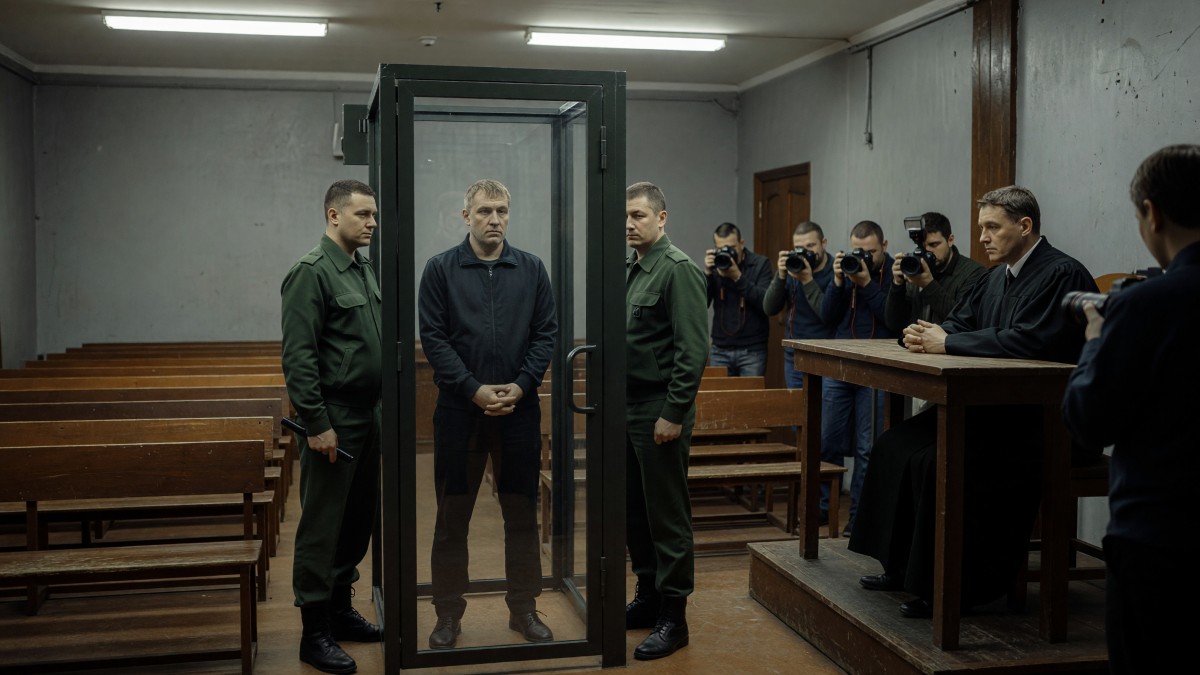
The Saratov Regional Court on Monday handed businessman Vyacheslav Grafsky a 23‑year term in a maximum‑security penal colony, finding him guilty of treason, weapons trafficking and money laundering for his role in the intelligence‑gathering operation that culminated in the April 2025 assassination of Lieutenant General Yaroslav Moskalik. The verdict, issued amid a broader crackdown on independent media, underscores the Kremlin’s determination to portray any external meddling as a coordinated Ukrainian plot and to showcase the reach of its security apparatus into the private sector.
Background to the Moskalik assassination
Lieutenant General Yaroslav Moskalik, a senior officer in the Russian armed forces, was killed on 25 April 2025 when a remote‑controlled car bomb detonated in the Moscow suburb of Balashikha. The explosive device, assembled and planted by Ignat Kuzin, was sentenced to life imprisonment by a military court in November 2025. The attack marked one of the most high‑profile killings of a Russian general since the war in Ukraine began, sending shockwaves through the defence establishment.
According to the Saratov court’s statement, the bombing was not a spontaneous act of sabotage but the endpoint of a coordinated intelligence‑gathering operation. Prosecutors allege that the operation was directed by Ukrainian special services, which recruited Grafsky online in June 2023 and tasked him with surveillance of military personnel, vehicles and residences in the Saratov region.
The court’s findings on Grafsky’s involvement
The Saratov Regional Court detailed Grafsky’s alleged activities: after being recruited, he was instructed to monitor the movements of senior officers near a military installation in Saratov. In February 2025, he received a photograph of Moskalik, identified the general’s home address and the specific vehicle he used, and transmitted that information to his handler. The court described these steps as “following the instructions” and framed them as a direct contribution to the successful targeting of the lieutenant general.
In addition to the espionage charge, the court found Grafsky guilty of weapons trafficking and money laundering. Investigators claim he laundered cryptocurrency payments received for his intelligence work through digital‑asset sales, a method that allowed the flow of foreign‑sourced funds to remain concealed within Russia’s financial system.
Legal and procedural context
The sentencing follows a pattern of severe penalties for individuals accused of aiding foreign intelligence services. Treason carries a maximum term of 20 years, but the court added an extra three years for the weapons‑trafficking and money‑laundering components, resulting in a total of 23 years. The verdict aligns with the Russian Prosecutor General’s Office’s recent designation of The Moscow Times as an “undesirable” organization, a label that criminalises the outlet’s operations and reflects a broader tightening of legal levers against perceived foreign influence.
Grafsky entered a not‑guilty plea, and it remains unclear whether his defence will appeal the ruling. The court’s decision, however, sends a clear signal to other private‑sector actors that cooperation with foreign intelligence—whether motivated by profit, ideology or coercion—will be met with the full weight of the penal code.
Implications for Russian security services
The Moskalik case illustrates the vulnerability of high‑ranking officers to targeted attacks that rely on precise intelligence rather than brute force. By exposing a civilian businessman as the conduit for that intelligence, the prosecution underscores the expanding scope of Russia’s counter‑intelligence efforts, which now monitor not only traditional espionage networks but also digital‑currency channels and online recruitment platforms.
For the security services, the successful prosecution of Grafsky serves a dual purpose: it demonstrates operational capability to dismantle foreign‑directed plots and it provides a public deterrent against future collaboration with hostile actors. The emphasis on cryptocurrency laundering indicates an awareness within the prosecutor’s office of the growing role of digital assets in funding covert operations.
Political resonance within the Kremlin
The timing of the verdict—issued just days after The Moscow Times was labelled “undesirable”—suggests a coordinated narrative push from the Kremlin. By foregrounding a Ukrainian‑directed plot and delivering a harsh sentence, the state can reinforce the portrayal of external threats while simultaneously justifying the suppression of independent media that reports on such cases.
State media have already echoed the court’s findings, framing the incident as evidence of “aggressive Ukrainian aggression” and linking it to broader claims of Western interference. This narrative reinforces President Vladimir Putin’s long‑standing emphasis on external enemies as a rallying point for domestic cohesion and justification for heightened security measures.
Impact on the business community
Grafsky’s conviction sends a warning to Russian entrepreneurs who might be approached by foreign intelligence operatives. The case demonstrates that involvement in intelligence‑gathering, even if limited to surveillance and data provision, can trigger severe criminal liability. Business owners are now likely to scrutinise any unsolicited contacts that request information on military personnel or assets, fearing that such overtures could be interpreted as recruitment attempts.
The inclusion of money‑laundering charges tied to cryptocurrency also highlights the regulatory risks facing firms that engage in digital‑asset transactions. As the state tightens oversight of crypto‑related activities, businesses that rely on such platforms may face increased scrutiny, audits and potential criminal investigations.
Broader geopolitical ramifications
The Moskalik assassination and the subsequent prosecution of Grafsky reinforce the narrative of a protracted covert war between Russia and Ukraine. By publicly attributing the plot to Ukrainian special services, the Kremlin aims to delegitimize Kyiv’s diplomatic standing and portray the conflict as extending beyond conventional battlefields into the realm of targeted assassinations.
International observers have noted the pattern of remote‑controlled car bombs as a tactic employed by Ukrainian‑aligned operatives, though definitive attribution remains contested. The Russian authorities’ reliance on a court‑issued verdict to substantiate the claim adds a veneer of legal legitimacy to the accusation, potentially influencing foreign governments’ assessments of the conflict’s escalation.
In the long term, the case may shape how Western intelligence agencies engage with Ukrainian counterparts, as the latter seek to demonstrate operational effectiveness against high‑value Russian targets. Simultaneously, the harsh sentencing may deter Russian collaborators, limiting the flow of actionable intelligence to external actors and complicating future covert operations.
This article was produced with AI-assisted research and editorial support. Reporting is based on the source material cited below. Sources: The Moscow Times; themoscowtimes.com; Global1.News (20 November 2026).
By Irina Volkov, Staff Writer
What's Your Reaction?
 Like
0
 Dislike
0
 Love
0
 Funny
0
 Wow
0
 Sad
0
 Angry
0
Russia/Eastern Europe Correspondent at Global1.News. Covering Russian politics, energy, security, and the shifting dynamics of the post-Soviet space. Provides clear-eyed analysis on one of the world's most opaque regions.














Comments (0)