
Overnight, Ukraine Launches Largest Drone Attack of the War on Russia
Ukraine launched its largest drone attack of the war on Russia overnight, killing at least six people in the biggest air raid on Moscow in two years. Russia answered with missile and drone strikes on Kryvyi Rih, Kyiv, Sumy and Zaporizhzhia that killed seven civilians.
Folks, if you went to bed last night thinking the war in Ukraine had settled into a grim, predictable rhythm, you woke up this morning to a very different reality. This was the night the war came home to Russia in a way we haven't seen in two years, and it was also a night of brutal, calculated retaliation against Ukraine’s civilian heart. We are looking at a dramatic escalation on both sides, with the largest Ukrainian drone barrage of the entire conflict slamming into Russian territory, and Moscow answering with a fresh wave of missiles and drones that killed and wounded dozens of Ukrainian civilians. This is not a sideshow, folks. This is the war entering a new, more dangerous phase nearly four and a half years in.
Overnight, Ukraine Launches Largest Drone Attack of the War on Russia
Washington, D.C. — August 16, 2026 — In a stunning overnight escalation, Ukraine launched what appears to be its largest aerial assault of the war against targets deep inside Russia, killing at least six people, according to Russian officials, and forcing the Kremlin to acknowledge a massive breach of its air defenses. Simultaneously, Russia unleashed a punishing counter-barrage of missiles and drones against multiple Ukrainian cities, including President Volodymyr Zelenskyy’s hometown of Kryvyi Rih, leaving a trail of death and destruction. The scale of the exchange overnight Saturday into Sunday marks a significant intensification of the conflict, signaling that neither side is willing to blink as the war grinds toward its fifth year.
The Overnight Barrage
Let’s cut through the fog of war and get to the numbers, because they are staggering. Russia’s Defense Ministry claimed its forces destroyed a whopping 822 Ukrainian drones overnight. Now, we have to take that figure with a grain of salt—Moscow has a habit of inflating its defensive successes, and there is no independent confirmation of the full scale of the attack just yet. But even if that number is half right, this was a massive, coordinated effort by Kyiv to strike at the heart of Russian military logistics and infrastructure.
This wasn't just a few drones buzzing the border. This was a coordinated swarm, a deliberate strategy to overwhelm Russian air defenses and send a message. The sheer volume of drones launched suggests Ukraine is not just trying to hit targets; they are trying to prove they can reach anywhere, anytime. And the targets they chose tell a story of their own. This was not indiscriminate; it was a calculated strike on the Russian war machine and the economy that fuels it.
Moscow Under Drones
The most dramatic developments came over the Russian capital itself. Moscow Mayor Sergei Sobyanin reported that a staggering 600 drones were detected heading toward the city, with 201 of them destroyed over the Moscow region alone. He called it the biggest air raid on the Russian capital in two years. Folks, let that sink in. The people of Moscow, who have largely been insulated from the day-to-day horrors of this war, woke up to the sound of air raid sirens and explosions. The war is no longer something they just see on state TV; it is now in their skies.
The human cost of this assault was immediate and tragic. In the Moscow region, local Governor Andrey Vorobyov confirmed that an 83-year-old man was killed after a Ukrainian drone struck his private home. Think about that for a second. An elderly man, likely in his bed, killed by a weapon of war in his own living room. This is the reality of modern warfare, where the front lines are no longer just in the trenches of eastern Ukraine but in the suburbs of the Russian capital.
Wildberries Warehouse Blaze
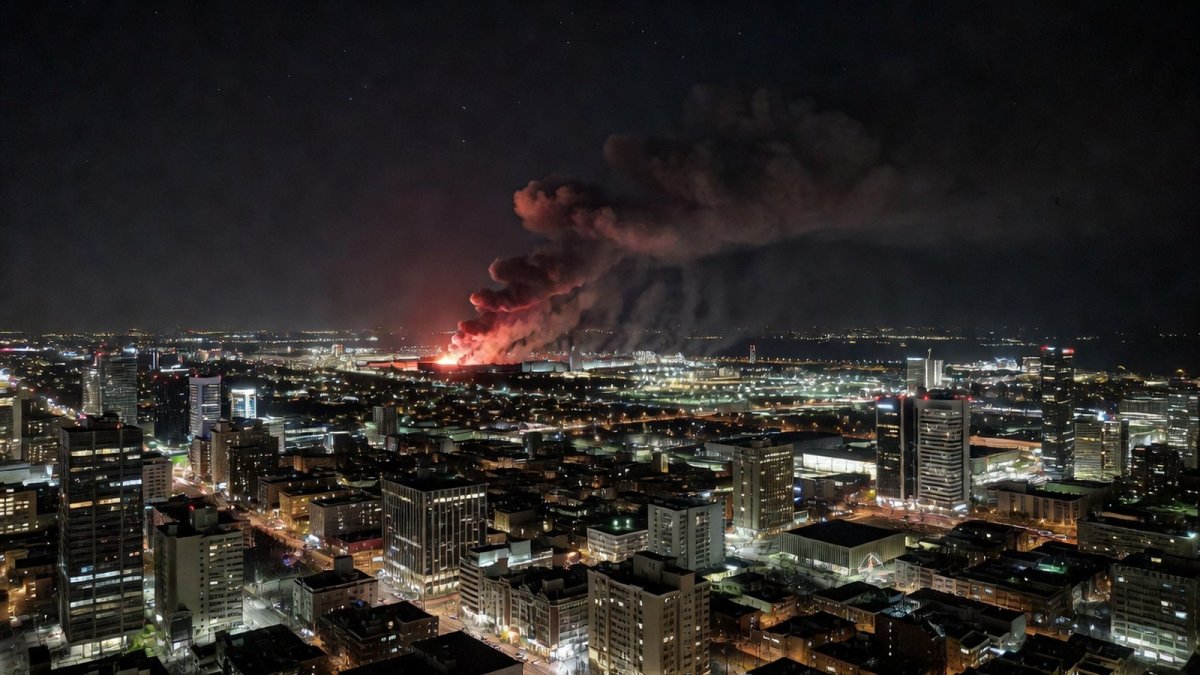
But the most visually stunning and symbolically potent strike was on a massive warehouse belonging to Russian retail giant Wildberries in Podolsk, just south of Moscow. Governor Vorobyov confirmed that a Ukrainian attack sparked a blaze at the 200,000 square metre facility. Photos emerging from the scene show the warehouse completely engulfed in flames, with colossal columns of black smoke billowing into the sky, visible for miles. This wasn't just a military target; it was a direct hit on Russian consumerism and a clear message to the Russian public.
According to the Kyiv Independent, Ukrainian forces deliberately targeted this warehouse along with other industrial facilities across the Moscow region. This is a key part of Ukraine’s strategy. They have increasingly pummeled Wildberries depots, burning billions of dollars' worth of merchandise. Why? Because it brings the war home to the Russian public in a way that a missile strike on a military base never could. It hits their wallets, their access to goods, and their sense of normalcy. It’s a psychological operation as much as a military one, designed to make the Russian people question the cost of this war nearly 4.5 years into Moscow's full-scale invasion.
Strikes on Kryvyi Rih
While the world’s attention was fixed on the fires over Moscow, Russia was delivering its own brutal response, and they aimed straight for the heart of Ukrainian leadership. A Russian missile attack on Kryvyi Rih, President Zelenskyy’s hometown and a major industrial center in central Ukraine, killed two people and wounded at least 14 others. The head of the Kryvyi Rih Defense Council, Oleksandr Vilkul, confirmed the grim news, stating that the body of a 44-year-old man, previously reported missing, was recovered from the rubble.
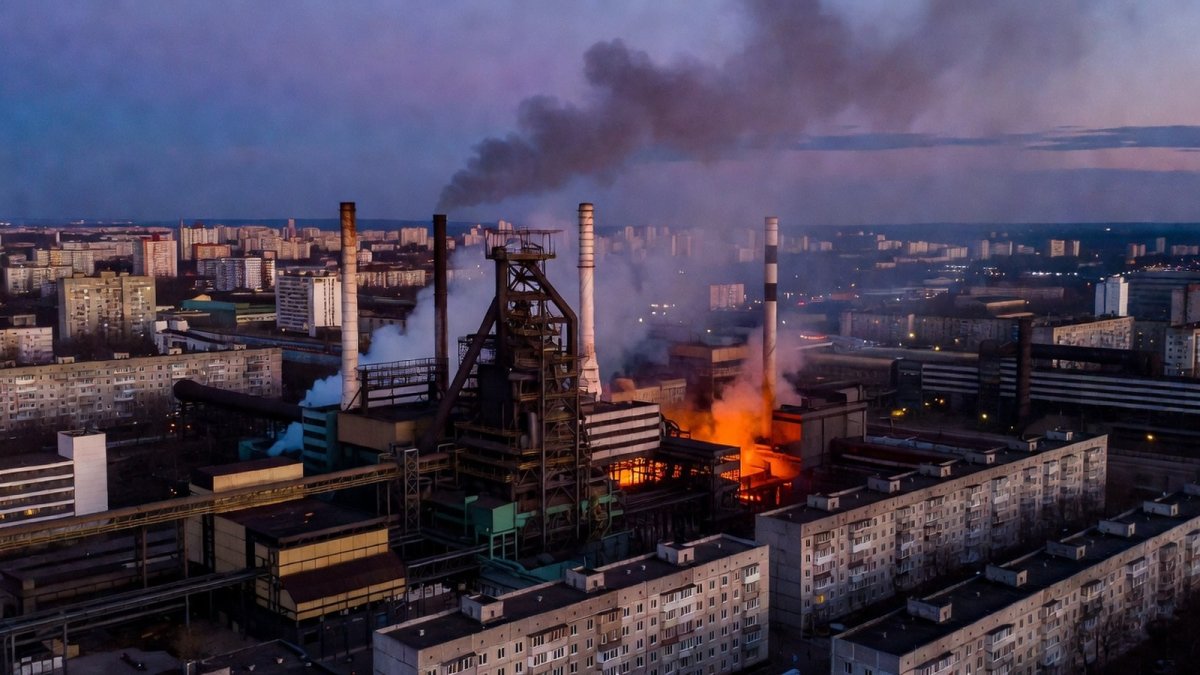
This was a combined missile and drone strike targeting two industrial facilities. The attack caused significant damage, with 13 apartment buildings, a lyceum, a medical center, and stores all damaged in the Metallurgichesky District. A relief center has been set up at a city school for those displaced. The attack also hit the civilian steel giant ArcelorMittal Kryvyi Rih, damaging power and blast furnace facilities and forcing a halt to some production processes. Thirteen employees and contractors were injured in the strike on the plant alone, with search and rescue operations ongoing. This is a direct assault on the economic lifeline of the city and a deeply personal attack on the President’s home turf.
President Zelenskyy responded with a stark and damning statement, posting on social media: "Wherever the Russians can reach with their ballistic missiles, they strike civilian infrastructure." He added, "Since this morning, air raid alerts have continued in many regions – the Russians launched another wave of drones." His words underscore the relentless nature of the Russian campaign, which continues to target the very fabric of Ukrainian civilian life.
Kyiv, Sumy and Zaporizhzhia
But the assault on Kryvyi Rih was just one part of a wider Russian barrage. The Ukrainian capital, Kyiv, also came under attack, with fires breaking out throughout the city, including at a book market, and at least six people injured. The psychological impact of strikes on the capital cannot be overstated. It is a reminder to the government and the people that no place is safe.
The northeastern city of Sumy also suffered a fatality, with Zelenskyy confirming one person was killed there. And in the southern Zaporizhzhia region, the regional military administration head, Ivan Fedorov, reported that a man and a woman were killed when a Russian strike hit their home. According to a tally by The Guardian, Russian attacks killed at least seven people in Ukraine overnight, including the two in Kryvyi Rih. Each of these numbers represents a life cut short, a family shattered, and a home destroyed. This is the grim arithmetic of war that continues to play out day after day.
NATO on High Alert
This escalation isn't just a bilateral affair between Russia and Ukraine. The fallout is spilling over into NATO territory, putting the alliance on high alert. Romania’s Defense Ministry reported that a Spanish F-18 fighter jet, operating on NATO duties, shot down a drone early Sunday morning after it entered Romanian airspace from Moldova near the border with Ukraine. The interception happened at 5:01 a.m. local time, with debris falling in an unpopulated area of Galati county, close to the Ukrainian border. A NATO military spokesperson stated, "The drone appears to be Russian."
This is not an isolated incident. Romania has repeatedly reported finding drone debris on its territory since 2023, following Russian attacks on Ukrainian Danube ports. But the active shooting down of a drone by a NATO jet is a significant step. It shows that the alliance is no longer just passively monitoring incursions; it is actively engaging and destroying them. And it wasn't just Romania. On Friday, an Italian Eurofighter operating under NATO command shot down a foreign drone that entered Latvian airspace. These incidents, happening within days of each other, demonstrate a new level of tension and a clear message to Moscow: NATO will not tolerate its airspace being violated, and it will use force to protect its borders.
What This Means
So, what are we to make of this dramatic overnight escalation? First, it proves that Ukraine has developed a deep-strike capability that can reach and disrupt the Russian heartland. The attack on Moscow, the largest in two years, is a significant psychological and strategic victory for Kyiv. It shows that the war is not unwinnable and that Russia is not invulnerable. The targeting of the Wildberries warehouse is a clear attempt to turn the Russian public against the war by making its economic consequences impossible to ignore.
Second, Russia’s response shows that it has no intention of de-escalating. By striking Zelenskyy’s hometown and other civilian centers, Moscow is signaling that it will continue to target Ukrainian morale and infrastructure, regardless of the cost. The quote from President Zelenskyy—"Wherever the Russians can reach with their ballistic missiles, they strike civilian infrastructure"—is a damning indictment of Russian tactics and a plea for more support from the West.
Third, the NATO interceptions are a dangerous new flashpoint. While the alliance is careful to frame these as defensive measures, the active engagement of Russian drones brings NATO and Russia closer to a direct confrontation than at any point since the start of the war. The risk of miscalculation is high, and a single mistake could have catastrophic consequences.
Nearly 4.5 years into this brutal conflict, there is no end in sight. Both sides are digging in, developing new tactics, and escalating their attacks. The overnight exchange was not a one-off; it is the new normal. The war has entered a phase of strategic attrition, where each side is trying to outlast the other, both on the battlefield and in the hearts and minds of their populations. The coming weeks and months will be critical in determining whether this escalation leads to a new round of negotiations or a further descent into the abyss. For now, folks, the only certainty is more bloodshed, more destruction, and more sleepless nights for millions of people on both sides of the front lines.
This article was produced with AI-assisted research and editorial support. Sources: NPR, DW, The Guardian, France 24, BBC, Kyiv Independent, Reuters.
By Jessica Ali, Staff Writer
What's Your Reaction?
 Like
0
Like
0
 Dislike
0
Dislike
0
 Love
0
Love
0
 Funny
0
Funny
0
 Wow
0
Wow
0
 Sad
0
Sad
0
 Angry
0
Angry
0

Editor-in-Chief at Global1.News. Atlanta-based journalist who cuts through the BS and tells it like it is. Lead anchor, host, and the voice you hear when the spin stops and the truth starts.













Comments (0)