
Day 16 of VP Sara Duterte Impeachment Trial: Senate Weighs Afternoon Sessions as COA Evidence Mounts
In a recent ANC 24/7 special coverage, the Senate impeachment court hearing the case of Vice President Sara Duterte resumes its historic proceedings on Monday, August 17, 2026, for Day 16 of the trial.
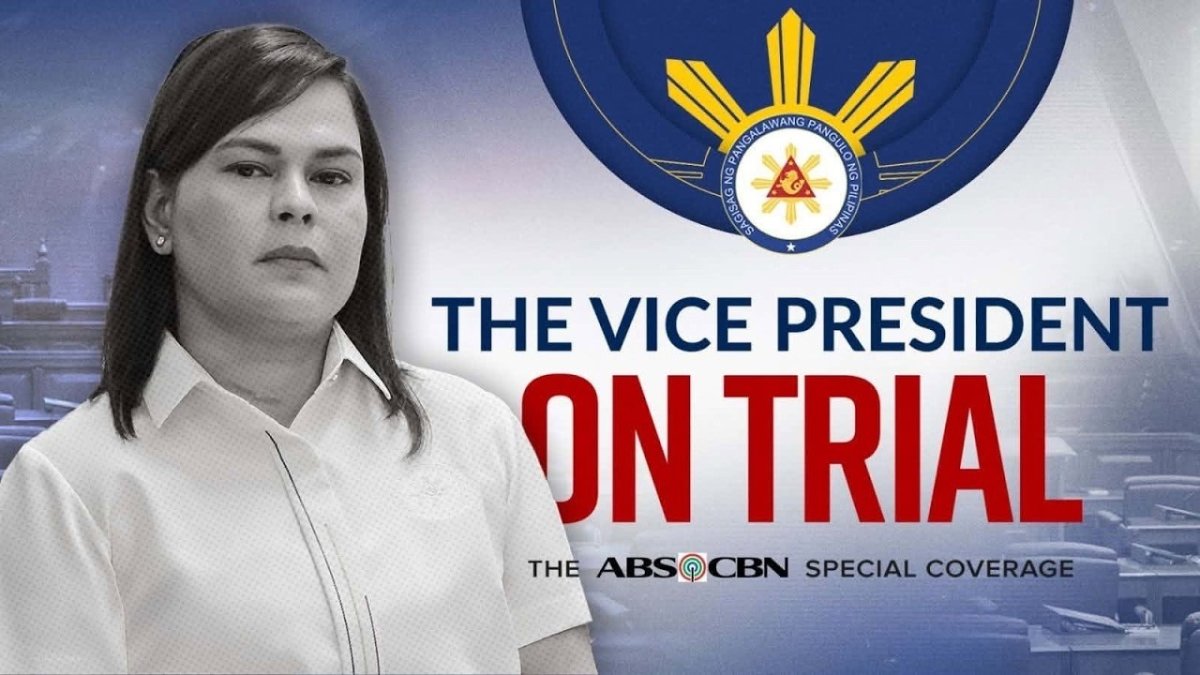
In a recent ANC 24/7 special coverage, the Senate impeachment court hearing the case of Vice President Sara Duterte resumes its historic proceedings on Monday, August 17, 2026, for Day 16 of the trial. The ABS-CBN News full-force coverage, streaming live under the hashtag #VPOnTrial, captures a pivotal moment as the prosecution and defense continue to battle over the details of P612.5 million in confidential funds.
Day 16 of the Sara Duterte Impeachment Trial Resumes: COA Witness Returns as Senate Weighs New Schedule to Speed Up Proceedings
Manila, Philippines – This week — The Senate impeachment court in Pasay City reconvenes on Monday, August 17, 2026, for Day 16 of the trial of Vice President Sara Duterte, the first vice president in Philippine history to be impeached and the first public official to face impeachment twice. The proceedings, which began on July 6, 2026, at 2 p.m., center on Articles of Impeachment alleging betrayal of public trust and culpable violation of the Constitution, with Article I focused on the alleged misuse of P612.5 million in confidential funds from the Office of the Vice President (OVP) and the Department of Education.
A Third Day for the COA Auditor
Day 16 will see the continued cross-examination of Commission on Audit (COA) supervising auditor Xylene del Campo, who returns to the witness stand for the third time. Court spokesperson Atty. Regie Tongol noted that cross-examinations typically take two sessions, but the complexity of the confidential fund documents has extended the process. On August 11, del Campo testified that Vice President Duterte and two other OVP officials — former special disbursing officer Gina Acosta and chief accountant Julieta Villadelrey — are liable for P73.287 million in disallowed confidential fund disbursements made over just 11 days, from December 21 to 31, 2022.
Of that amount, P69.787 million were reward payments that lacked documents showing successful information-gathering or surveillance activities. Another P3.5 million went to tables and chairs, desktop computers, and printers without proof they were intended for confidential operations. The OVP also failed to submit sales invoices or official receipts for these purchases. The COA issued its first Notice of Disallowance in November 2024, and the OVP has been ordered to return P448.2 million in total disallowed confidential funds. Private prosecutor Lorna Kapunan conducted the direct examination, laying out a paper trail that COA says reveals a pattern of undocumented disbursements. Confidential funds are meant for a very specific, delicate purpose: intelligence gathering and surveillance operations where revealing the recipients or the details of the operation would put lives at risk and compromise national security. These are not slush funds for general expenses. Under strict Commission on Audit rules, every single peso must be traceable to a legitimate covert activity, with proper documentation maintained even if the specifics are kept secret. That is why the COA’s finding of P69.787 million in undocumented “reward” payments is so troubling for ordinary Filipinos. When a sari-sari store owner in Quezon City or a teacher in Cebu pays taxes, they are trusting that their money goes to protect them, not to unverified handouts. The defense has pointed to the special disbursing officer as the one who handled the cash, but the COA insists that as agency head, the Vice President bears ultimate accountability for how her office’s funds are spent. This is about making sure public money serves the public, not just those who hold it.
Senate Weighs Afternoon Sessions to Speed Up Trial
As the trial grinds on, Senate Majority Leader Juan Miguel Zubiri proposed on August 16 a significant procedural shift: moving the trial to the afternoon, starting at 3 p.m., so senators can hold regular plenary sessions in the morning. Senate President Sherwin Gatchalian, who presides over the impeachment court, told dwIZ and dzMM radio that the court is "seriously considering" the proposal. Gatchalian explained that an afternoon schedule would give the trial "unlimited time" and allow the court to dispense with roughly one witness per day — a marked improvement from the current pace, where witnesses take two to three days because each party and the court spend two to six hours grilling them.
"We want to finish the impeachment trial so we can all return to the normal legislative function," Gatchalian said. The urgency is compounded by the need to pass the national budget. The Senate received the administration's National Expenditure Program last Tuesday, and budget hearings may be squeezed into Thursdays and Fridays. For ordinary Filipinos, this scheduling debate is not just procedural — it determines how quickly their elected senators can return to crafting the national budget that funds schools, hospitals, and infrastructure projects in their barangays.
The Vice President's Absence and the Political Theater
Vice President Duterte has largely been absent from the trial, letting her defense team handle the proceedings. On July 8, she attended a town fiesta in Surigao del Sur while the trial was in session. After attending the Kadayawan Festival Thanksgiving Mass in Davao City, she claimed the proceedings were politically motivated. Prosecutors responded that remarks like her "bending the law" comment risk misleading the public and violating sub judice rules, with some warning of contempt. The tension between the Vice President's public appearances and the gravity of the trial has not been lost on observers, who note that her absence from the courtroom stands in stark contrast to the detailed financial records being scrutinized there.
For many Filipinos, the Vice President's decision to skip the trial while attending festivals sends a troubling signal. In a country where public office is often treated as a family inheritance, her absence raises questions about accountability and respect for the rule of law. The trial, after all, is not just about one official — it is about whether public funds meant for intelligence and surveillance operations were properly documented and used for their intended purpose.
Parallel Criminal Case Adds Another Layer
While the impeachment trial continues, a parallel criminal case looms. The Department of Justice (DOJ) filed a grave threats case against Vice President Duterte before the Quezon City Regional Trial Court on Tuesday, August 11, 2026, at 1:30 p.m. The case stems from her November 2024 online press briefing remarks concerning President Ferdinand "Bongbong" Marcos Jr., First Lady Liza Araneta-Marcos, and then-Speaker Martin Romualdez. Her legal team says the case "will be dismissed," but the filing adds another dimension to an already crowded legal landscape. For the Vice President, the convergence of the impeachment trial and the criminal case creates a legal gauntlet that could define her political future.
Voices on ANC: Accountability or Surrender?
This week on ANC, the debate over the trial's meaning intensified. In the 88th episode of ANC's "Beyond the Exchange" with veteran anchor Rico Hizon, 1Sambayan convenor Atty. Howard Calleja said the Vice President's refusal to appear at the impeachment trial amounts to a "surrender." Calleja called the confidential funds evidence and AMLC-flagged dealings "damning" evidence against her. He stressed that 1Sambayan is not seeking regime change, only accountability for corruption, and that the coalition aims to support one presidential candidate in the 2028 elections. Possible bets mentioned included Leni Robredo with a tandem partner like Raffy Tulfo or Gibo Teodoro, as well as Hontiveros, Aquino, or Teodoro.
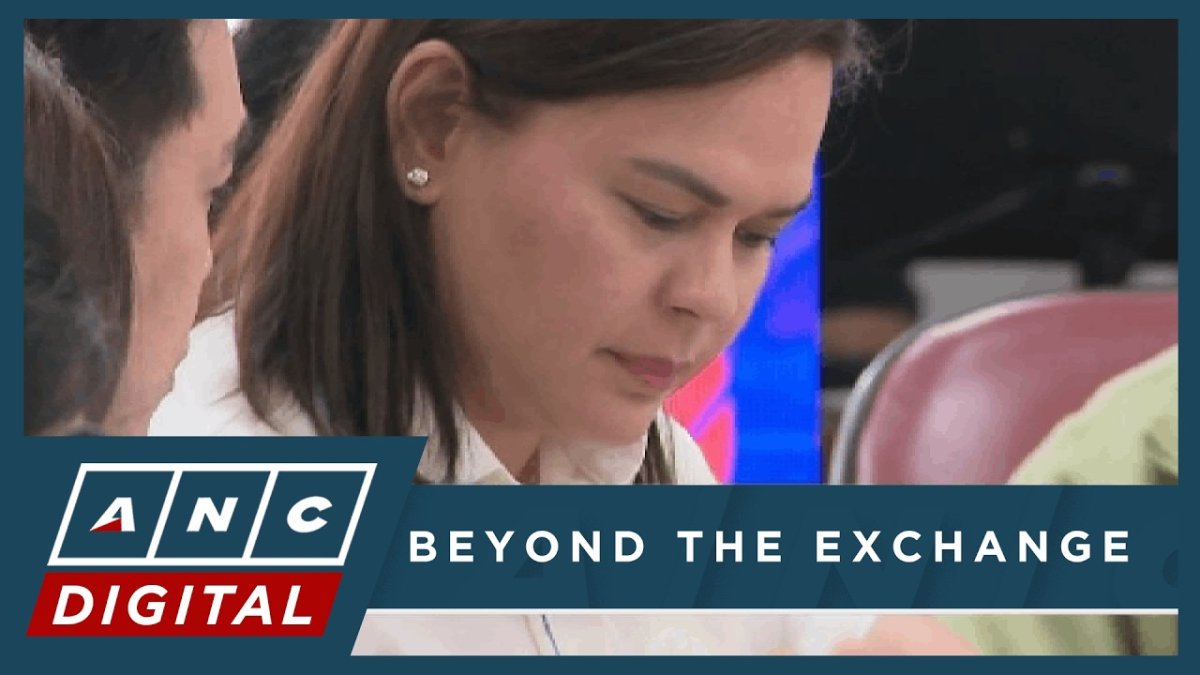
Calleja's remarks on Senator Ronald dela Rosa were particularly pointed. In Filipino, he said: "Hanapin natin saang bato siya nagtatago" — let's find which rock he is hiding under. The comment reflects a growing frustration among civil society groups who see the trial as a test of whether the Senate can hold powerful officials accountable. Separately, Palace Press Officer Undersecretary Claire Castro, commenting on trial procedure, said: "This is so basic; misleading questions are not allowed, especially during cross-examination." Her statement underscores the procedural battles that have characterized the trial, where every question and objection is scrutinized.
What to Watch For
As Day 16 unfolds, several key questions remain. Will the Senate adopt the afternoon schedule proposed by Zubiri, and how quickly can it accelerate the pace of witness testimony? Will the COA auditor's continued testimony reveal additional details about the P448.2 million in disallowed funds? And how will the Vice President's defense team respond to the mounting documentary evidence?
The stakes could not be higher. Conviction requires a vote of two-thirds of all senators, a high bar that reflects the gravity of removing a sitting vice president. The trial is being watched closely by ordinary Filipinos because it involves accountability for public funds — confidential funds are meant for intelligence and surveillance operations, and COA findings suggest a pattern of undocumented disbursements. For the sari-sari store owner in Quezon City, the public school teacher in Cebu, and the OFW in Dubai sending remittances home, this trial is about whether their taxes are being spent honestly.
How this trial ends could reshape the political landscape well before 2028. Atty. Howard Calleja, convenor of the opposition coalition 1Sambayan, has said they are watching the proceedings closely, with an eye toward backing a single presidential candidate in the next election. Names already floated include Leni Robredo, Raffy Tulfo, Gibo Teodoro, Risa Hontiveros, and Bam Aquino. Calleja was careful to clarify that 1Sambayan is not seeking regime change, only accountability for corruption. But the outcome of this trial will inevitably influence public trust and the credibility of those who seek higher office. If the Senate convicts, it could energize the opposition and set a powerful precedent for fiscal discipline. If it does not, voters may wonder whether accountability is truly possible, and that sentiment will echo all the way to the ballot box in 2028. The Senate impeachment court sits in Pasay City, a stone's throw from the bustling streets of Manila. But the decisions made within its walls will echo far beyond the capital. As the trial resumes, the nation watches — not just for the fate of one politician, but for the future of accountability in Philippine governance. The ANC 24/7 coverage ensures that every Filipino with a television or a smartphone can witness history unfold, live and unfiltered.
By Bella Reyes, Staff Writer
This article was produced with AI-assisted research and editorial support. Reporting is based on sources cited in the article.
What's Your Reaction?
 Like
0
Like
0
 Dislike
0
Dislike
0
 Love
0
Love
0
 Funny
0
Funny
0
 Wow
0
Wow
0
 Sad
0
Sad
0
 Angry
0
Angry
0

Philippines/Southeast Asia Correspondent at Global1.News. Manila-based journalist covering Philippine politics, environment, maritime security, and social issues. Passionate about marine conservation and the communities protecting the Philippines' natural heritage.














Comments (0)