
UK Supreme Court Greenlights Palestine Action Appeal
UK Supreme Court Greenlights Palestine Action Appeal in Landmark Free Speech Case London, United Kingdom — The UK Supreme Court has granted permission for Palestine Action co-founder Huda Ammori to challenge a Court of Appeal ruling that upheld the government's ban on the pro-Palestine direct action group, marking a pivotal moment in the ongoing legal battle over the right to protest in Britain. The nation's highest court confirmed Thursday that Ammori ...
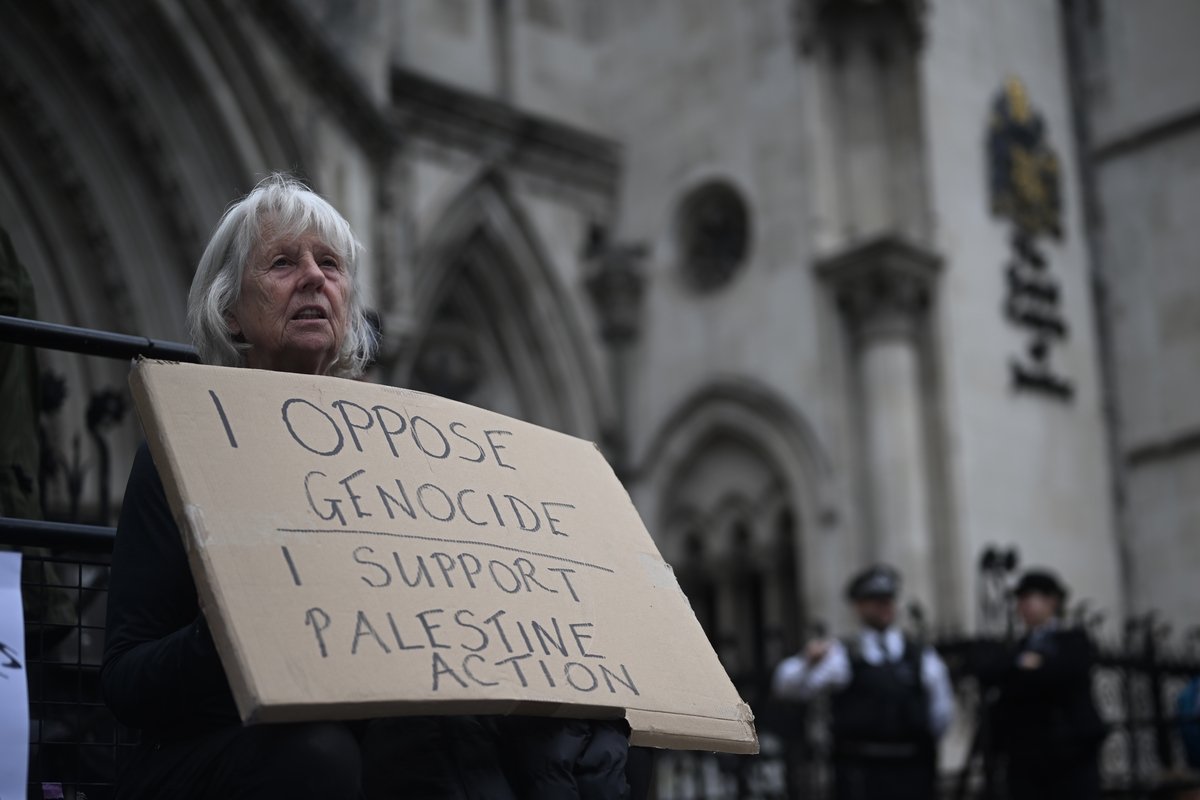
UK Supreme Court Greenlights Palestine Action Appeal in Landmark Free Speech Case
London, United Kingdom — The UK Supreme Court has granted permission for Palestine Action co-founder Huda Ammori to challenge a Court of Appeal ruling that upheld the government's ban on the pro-Palestine direct action group, marking a pivotal moment in the ongoing legal battle over the right to protest in Britain.
The nation's highest court confirmed Thursday that Ammori could appeal the Court of Appeal's June decision, with the case set to be heard in the final quarter of 2026. The development comes amid a sustained mass civil pro-Palestine campaign that has seen hundreds of activists arrested under counter-terrorism legislation since the group was proscribed last July.
Ban Under the Terrorism Act
Palestine Action was designated a terrorist organization in July 2025 under the Terrorism Act following an incident in which members entered a Royal Air Force base in eastern England and spray-painted two aircraft, causing an estimated 7 million pounds ($9.4 million) in damage, according to police estimates. The group has described its actions as nonviolent direct action aimed at disrupting what it calls Israel's military-industrial supply chain operating from British soil.
The Home Office's decision to proscribe the group marked the first time a domestic political protest movement had been banned under counter-terrorism legislation in the UK, a move that human rights organizations immediately condemned as a dangerous precedent for civil liberties.
The Legal Journey: High Court to Supreme Court
The legal battle has traveled a winding path through Britain's court system. In February 2026, the High Court ruled that the ban was disproportionate and unlawful, finding that the government had not adequately demonstrated that Palestine Action met the threshold for proscription under terrorism law. The ruling was celebrated by civil liberties groups as a victory for the right to protest.
However, that decision was overturned in June by the Court of Appeal, which restored the ban and found that the Home Secretary had acted within her legal authority. The Court of Appeal's ruling triggered a new wave of arrests and intensified scrutiny of the government's approach to pro-Palestine activism.
Now, the Supreme Court has agreed to hear Ammori's appeal, setting the stage for a landmark judgment that could redefine the boundaries of lawful protest in the United Kingdom.
Ammori: "The Fight Continues"
"We will be arguing in the Supreme Court that the ban is unlawful, as it is disproportionate to free speech and the right to protest. The fight continues," Ammori wrote on social media platform X following the Supreme Court's decision.
Ammori, a co-founder of Palestine Action, has emerged as a central figure in the legal challenge, representing not only herself but the broader pro-Palestine movement in Britain that has faced increasing state scrutiny since the escalation of conflict in Gaza. Her legal team is expected to argue that the ban violates Article 10 of the European Convention on Human Rights, which protects freedom of expression, and Article 11, which guarantees the right to peaceful assembly.
Mass Arrests Under Terrorism Legislation
The Defend Our Juries group, which has been monitoring legal proceedings related to Palestine Action, reported that 70 people have been arrested under terrorism law by officers outside Westminster Magistrates Court alone. The arrests highlight the scale of the policing response to pro-Palestine activism in Britain, which critics say has become increasingly militarized.
Hundreds of pro-Palestine activists have been arrested across the country since the ban was imposed, with many facing charges under the Terrorism Act — legislation that carries significantly harsher penalties than public order offenses. Legal observers have noted that the use of counter-terrorism powers against political protesters marks a significant escalation in the state's approach to dissent.
International Condemnation and UN Criticism
Human rights groups and United Nations experts have criticized the escalating crackdown on peaceful protests in the UK, urging the government to reverse its designation of Palestine Action as a terrorist organization. UN special rapporteurs have expressed concern that the ban could have a chilling effect on legitimate advocacy for Palestinian rights.
Amnesty International and Human Rights Watch have both called on the British government to reconsider the proscription, arguing that nonviolent direct action should not be equated with terrorism. The controversy has also drawn attention from international legal bodies, with some experts suggesting that the ban may violate the UK's obligations under international human rights law.
Broader Implications for Free Speech
The Palestine Action case has become a flashpoint in the broader debate over the state of free speech and assembly in the United Kingdom. Critics argue that the government has used the terrorism framework to target political activism it finds inconvenient, setting a dangerous precedent that could be applied to other protest movements in the future.
The case also raises questions about the definition of terrorism itself. Palestine Action's tactics have involved property damage targeting companies and facilities linked to Israel's defense industry, which the group frames as resistance to occupation. The government, however, characterizes these actions as terrorist offenses under domestic law.
The Supreme Court's decision to hear the appeal suggests that the justices recognize the significance of the legal questions at stake, particularly regarding the balance between national security powers and fundamental rights to political expression.
What Comes Next
The Supreme Court hearing, expected in the final quarter of 2026, will be closely watched by human rights organizations, legal scholars, and activists around the world. A ruling in favor of Ammori could force the government to lift the ban and potentially reshape how counter-terrorism legislation is applied to political protest. A ruling against her could cement the government's authority to proscribe domestic protest groups under terrorism law.
For now, the ban remains in place, and arrests continue. But the Supreme Court's decision to grant the appeal has injected new hope into a movement that has faced relentless legal pressure. As Huda Ammori put it: "The fight continues."
By Fatima Al-Rashid, Staff Writer
This article was produced with AI-assisted research and editorial support. Reporting is based on sources cited in the article.
What's Your Reaction?
 Like
0
Like
0
 Dislike
0
Dislike
0
 Love
0
Love
0
 Funny
0
Funny
0
 Wow
0
Wow
0
 Sad
0
Sad
0
 Angry
0
Angry
0

Gulf/MENA Correspondent at Global1.News. Based in Doha, covering Gulf politics, energy markets, diplomacy, and development across the Middle East and North Africa. Tracks the economic transformation of the Gulf states.













Comments (0)