
Malacañang: No cover-up in Taguig ghost projects
Manila—The latest volley of statements from Malacañang, the Senate and the Department of Public Works and Highways (DPWH) underscores a growing public concern over alleged “ghost projects” in Taguig City.
Manila—The latest volley of statements from Malacañang, the Senate and the Department of Public Works and Highways (DPWH) underscores a growing public concern over alleged “ghost projects” in Taguig City. While the Palace insists there will be no cover‑up, the back‑and‑forth between Sen. Panfilo Lacson and DPWH Secretary Vince Dizon reveals a lack of consensus on the very existence of these purportedly phantom flood‑control works. For ordinary Filipinos, especially those living in flood‑prone barangays, the outcome of this probe will determine whether taxpayer money is being diverted from essential infrastructure or whether the allegations are merely political fireworks.
Background of the Taguig controversy
The controversy erupted during a budget hearing when Sen. Alan Peter Cayetano asked Secretary Dizon about “ghost projects” in Taguig, a city long associated with the Cayetano political clan. Dizon responded that he was referring to “confirmed” ghost projects, a phrasing that left the Senate and the public uncertain whether any projects had been definitively classified as non‑existent. The DPWH later clarified that no projects have been “conclusively” identified as ghosts in Taguig, but the agency also noted that several anomalous projects remain under validation.
Sen. Panfilo Lacson, who has been vocal about the issue, presented a striking piece of evidence: a DPWH record showing a flood‑control site geotagged in Leyte province—over 600 kilometers from Taguig. This mismatch suggests a possible data error or, as Lacson implies, a deeper problem of misallocation or falsification of project locations. The discrepancy has fueled calls for a more thorough investigation, with the senator warning that any attempt to conceal the truth could invite criminal liability.
Palace’s stance on transparency
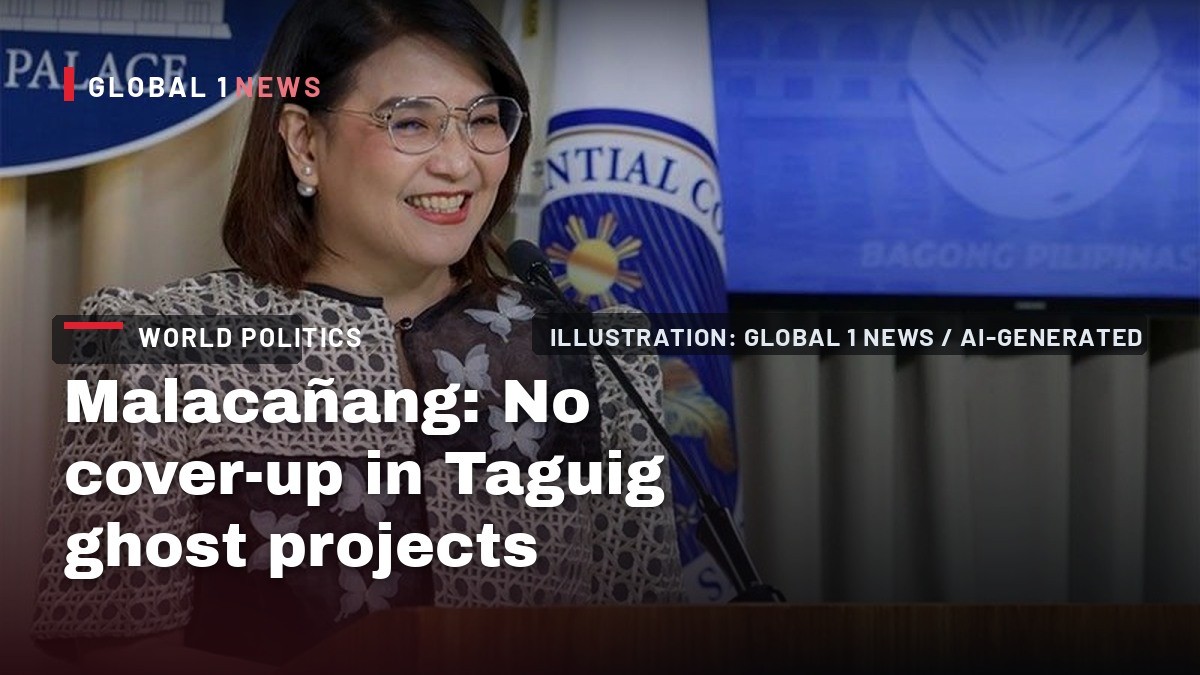
Palace press officer Claire Castro stepped into the fray after the Senate hearing, emphasizing that the government will not engage in a cover‑up. Castro said she spoke directly with Secretary Dizon, who clarified that his earlier remarks referred to “confirmed” ghost projects, not to any alleged phantom works in Taguig. The press officer reiterated that the DPWH is currently investigating the coordinates of the disputed sites, signaling that the agency is still gathering data before drawing final conclusions.
Castro’s assurances aim to restore public confidence in the administration’s handling of infrastructure projects. By pledging a “deeper probe” and rejecting any notion of a cover‑up, the Palace seeks to distance itself from accusations of political interference. However, the insistence that investigations are ongoing also leaves room for further revelations, especially as the DPWH continues to validate its own records.
DPWH’s ongoing investigation
Secretary Dizon’s testimony highlighted the complexity of the issue. He explained that when asked how many ghost projects have been identified nationwide, he answered ten. When probed whether any of those ten were located in Taguig, he replied “none,” emphasizing that his earlier comment about “no ghost projects” in Taguig referred to the lack of a conclusive finding, not an outright denial. Dizon stressed that the DPWH is “validating continuously,” indicating that the agency is still cross‑checking site coordinates, project documents and field reports.
During an inspection of a flood‑control project in Talomo, Davao City, Dizon reiterated that the agency’s stance is one of caution: “We should not draw conclusions prematurely because the investigation is still ongoing.” This measured approach reflects the DPWH’s procedural rigor but also fuels frustration among those who demand swift accountability for any misuse of public funds.
Senator Lacson’s warning and potential legal implications
Sen. Panfilo Lacson, a longtime advocate for transparency in government contracts, warned Secretary Dizon that any attempt to conceal or manipulate evidence could result in criminal liability. Lacson’s warning is rooted in the Philippines’ anti‑graft laws, which empower the Office of the Ombudsman to prosecute officials who engage in corrupt practices. By publicly flagging the geotagging error and demanding a thorough probe, Lacson is positioning himself as a watchdog for the Filipino taxpayer.
The senator’s stance resonates with ordinary citizens who have witnessed the impact of faulty flood‑control infrastructure in their own barangays. When projects fail to deliver, families are left to fend for themselves during the rainy season, often resorting to makeshift barriers or evacuating to relatives’ homes. Lacson’s call for accountability thus taps into a broader demand for government projects that actually protect communities rather than becoming placeholders for corruption.
Implications for flood‑control policy
If the investigation uncovers genuine ghost projects, the fallout could prompt a sweeping review of the DPWH’s project approval and monitoring mechanisms. Such a review might lead to stricter verification of site coordinates, tighter oversight of contractors, and more transparent reporting to Congress. For the Department of Public Works and Highways, this would mean re‑examining how flood‑control projects are prioritized and funded, especially in fast‑growing urban centers like Taguig where rapid development often outpaces infrastructure planning.
Conversely, if the probe finds that the alleged ghost projects are merely data errors, the DPWH could use the episode to bolster its credibility, emphasizing its commitment to continuous validation. Either outcome will shape public perception of how effectively the government can safeguard against misallocation of funds, a concern that has become especially salient after recent typhoons that exposed gaps in the nation’s flood‑mitigation network.
Community impact and the human side of the debate
Beyond the political theater, the real story is how these alleged ghost projects affect everyday Filipinos. In many Taguig barangays, residents rely on flood‑control structures to protect their homes and small businesses from seasonal rains. When a promised project turns out to be nonexistent, families are left vulnerable, often turning to community‑based solutions such as building sandbag walls or pooling resources for temporary pumps. The sense of betrayal can erode trust in local officials and fuel a feeling that the government is more interested in grandiose announcements than in delivering tangible safety measures.
Moreover, the controversy highlights the broader challenge of ensuring that public works truly serve the people. As the Philippines continues to urbanize, the demand for resilient infrastructure grows. Citizens expect that the money they pay in taxes—whether through the barangay’s small contributions or the national budget—will be used to build roads, schools and flood barriers that stand the test of time. The Taguig ghost‑project saga is a reminder that transparency and diligent oversight are essential to turning policy promises into real, life‑saving outcomes.
Looking ahead: what to watch for
The next steps will likely involve a detailed audit of the DPWH’s project database, focusing on the coordinates that have raised red flags. Observers will be watching for a formal report from the agency, which may be submitted to the Senate’s Committee on Public Works. In addition, the Office of the Ombudsman may consider filing a complaint if evidence of intentional misrepresentation emerges. For now, the Palace’s pledge of “no cover‑up” remains a promise that will be tested by the rigor of the forthcoming investigation.
As the nation braces for another rainy season, the outcome of this probe will reverberate beyond Taguig, influencing how future flood‑control projects are planned, monitored and delivered. For the Filipino community—whether in Manila’s bustling streets, a remote barangay in Leyte, or a sari‑sari store owner in Taguig—the hope is that the government’s response will translate into safer neighborhoods, stronger accountability, and a reaffirmed belief that public service truly serves the people.
This article was produced with AI-assisted research and editorial support. Reporting is based on the source material cited below. Sources: Philstar.com; Global1.News (29 September 2026).
By Bella Reyes, Staff Writer
What's Your Reaction?
 Like
0
Like
0
 Dislike
0
Dislike
0
 Love
0
Love
0
 Funny
0
Funny
0
 Wow
0
Wow
0
 Sad
0
Sad
0
 Angry
0
Angry
0

Philippines/Southeast Asia Correspondent at Global1.News. Manila-based journalist covering Philippine politics, environment, maritime security, and social issues. Passionate about marine conservation and the communities protecting the Philippines' natural heritage.












Comments (0)