
UK Sanctions on Settlements Trigger Israeli Retaliation: Consulate Closed, Diplomats Expelled
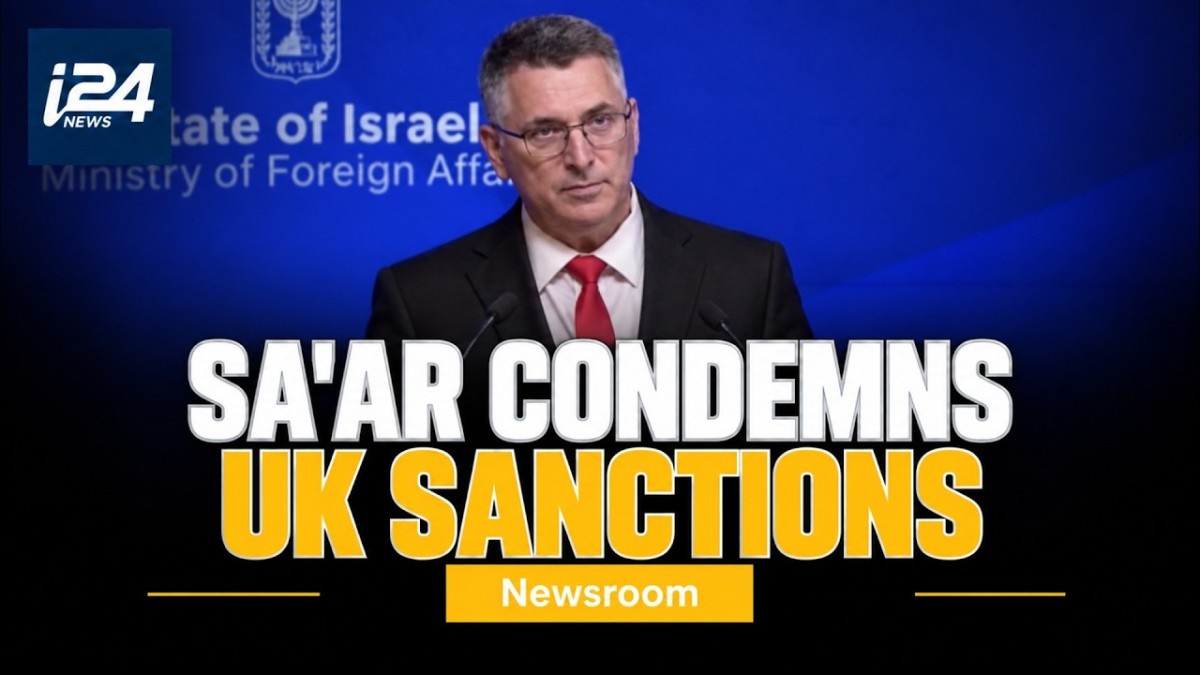
In a recent i24NEWS English report, Israeli Foreign Minister Gideon Sa'ar confirmed the dramatic escalation in the UK-Israel diplomatic crisis, announcing the closure of Britain's consulate in East Jerusalem. The move came as a direct retaliation to London's sweeping new sanctions regime against Israeli settlements, a policy shift that has sent shockwaves through Jerusalem's political establishment and triggered a rapid-fire diplomatic confrontation between the two countries.
In a recent i24NEWS English report, Israeli Foreign Minister Gideon Sa'ar confirmed the dramatic escalation in the UK-Israel diplomatic crisis, announcing the closure of Britain's consulate in East Jerusalem. The move came as a direct retaliation to London's sweeping new sanctions regime against Israeli settlements, a policy shift that has sent shockwaves through Jerusalem's political establishment and triggered a rapid-fire diplomatic confrontation between the two countries.
UK Sanctions on Settlements Trigger Israeli Retaliation: Consulate Closed, Diplomats Expelled
Jerusalem, Israel — The diplomatic rupture between Israel and the United Kingdom deepened this week as Foreign Minister Gideon Sa'ar ordered the closure of Britain's consulate in East Jerusalem and expelled British diplomats, responding to what Jerusalem views as an unprecedented and hostile sanctions package announced by London on Tuesday. The confrontation, which unfolded over 48 hours, marks the most significant deterioration in UK-Israel relations in decades and has placed the two-state solution, settlement policy, and the very nature of the occupation at the center of a bitter international dispute.
What London Announced: The Sanctions Regime
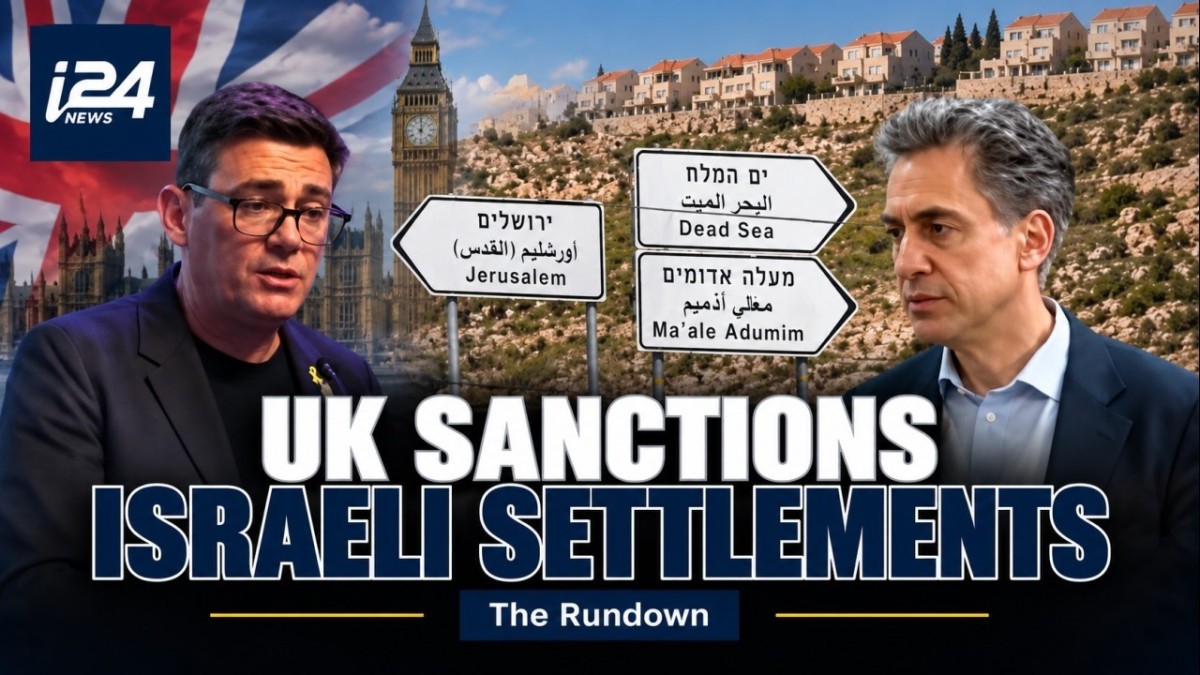
UK Foreign Secretary Ed Miliband stood before the House of Commons on Tuesday and unveiled a comprehensive sanctions regime targeting Israeli settlements in the occupied West Bank, declaring it the "beginning of a new approach" to the Israeli-Palestinian conflict that "not only calls out injustice and suffering but acts." The measures include an import ban on goods produced in settlements, sanctions against companies and individuals providing construction, financing, real estate, or other services supporting settlement expansion, and a ban on advertising settlement properties in the United Kingdom.
Miliband, who described himself as "a proud British Jew," also announced immediate personal sanctions against extremist settlers who supported or incited violence, alongside restrictions on arms and export licenses that materially contribute to the occupation. Full legislation is expected to take effect over six to nine months. In a statement that drew sharp condemnation from Jerusalem, Miliband told the Commons: "The British government agrees that there is ethnic cleansing of Palestinians in areas of the West Bank, perpetrated by settler terrorists. And all too often the Israeli government has turned a blind eye to this and worse, members of it have made statements and taken actions to support the forced displacement of Palestinians."
The UK government said it now regards Israel's occupation of the West Bank as unlawful because of the "entrenchment of its control, its intention to extend permanent sovereignty, and its expansionist agenda via illegal settlements," aligning with the 2024 International Court of Justice advisory opinion. Miliband stressed the regime targets illegal settlements, not Israel, and said the UK "absolutely opposes" the BDS movement. Prime Minister Andy Burnham said the measures are "aimed not at the Israeli people, but in support of the two-state solution."
Israel's Response: Consulate Closed, Diplomats Expelled
Foreign Minister Sa'ar responded furiously the same day, calling Miliband's statement an "outrageous lie" and announcing a series of retaliatory measures from Jerusalem. The consulate in East Jerusalem, accredited to the Palestinian Authority, will be closed. British representatives have been removed from the U.S.-backed International Gaza Support Center in Kiryat Gat in southern Israel, and all British training programs for Palestinian Authority security forces have been terminated.
By Wednesday, Reuters reported Israel had formally told the British consulate it must close and that diplomats assigned there will lose their accreditation within 30 days. British representatives assigned to the US-led Gaza coordination mission in Israel, as well as British diplomats based in Ramallah, must leave within seven days, according to an Israeli official and two sources. Sa'ar also announced entry bans against 11 British politicians — including former Labour leader Jeremy Corbyn, MP Diane Abbott, and all five Green Party MPs — whom he accused of "antisemitic and anti-Israel activity."
Speaking at a press conference in Jerusalem, Sa'ar said: "We know that we have many friends in Britain. Unfortunately, we have a hostile Labour government that is consistently operating against the State of Israel, and it has left us no choice but to respond to its hostile actions." The Israeli government, which expected the sanctions, was set to meet Wednesday to discuss responses to the other countries that signed Britain's action. Prime Minister Benjamin Netanyahu's office did not respond to requests for comment.
The E1 Trigger and the West Bank Context
The immediate trigger for the UK's action was Israel's recent decision to open tenders for roughly 1,200 housing units in the E1 zone east of Jerusalem. Miliband warned that E1 construction would render a viable Palestinian state impossible by "cutting through the heart of Palestine." Israel had held off on E1 plans for decades under sustained global pressure, and the decision to move forward now has been interpreted in Jerusalem as a signal of the government's commitment to settlement expansion regardless of international opinion.
The broader context is stark: approximately 160 settlements house roughly 700,000 Jewish residents across the West Bank and East Jerusalem, with an estimated 3.3 million Palestinians living alongside them. Settler violence against Palestinians has surged since the October 7, 2023 Hamas attack and the subsequent Gaza war. Under international law, settlements are considered illegal. Israel rejects the two-state solution framing, insisting that any final status must come through negotiations. The E1 tender, long considered a red line by the international community, has now become the flashpoint for a major diplomatic crisis.
Diplomatic and International Reactions
Israeli President Isaac Herzog said from Jerusalem that the UK decision "will fall on the wrong side of history," calling it "a gross interference in the democratic elections of a sovereign nation." He added that "sanctions are not a solution" and warned the move would harm Palestinians directly. The sanctions were announced alongside France and Canada, which also said they would ban imports of settlement goods. A broader joint declaration was issued by 12 countries — the UK, France, Canada, Denmark, Spain, Finland, Ireland, Iceland, Norway, Poland, Portugal, and Sweden — reaffirming commitment to the two-state solution.
The United States, however, signaled it would not follow suit. US Secretary of State Marco Rubio said the White House would not replicate the UK measures. US Ambassador to Israel Mike Huckabee told the BBC that Washington would "without a doubt" respond, warning of a "huge economic impact on British businesses" through possible state and federal actions. The Palestinian presidency praised the sanctions as "an important step towards confronting Israel's colonial system." In Jerusalem, the political class framed the dueling reactions as evidence that the crisis is about election-year politics as much as settlement policy.
British Politics and the Jewish Community Divide
The UK domestic reaction was sharply divided, reflecting deep fissures within British Jewry and the political establishment. Chief Rabbi Sir Ephraim Mirvis called the announcement "a truly dark day for British Jews," while the Board of Deputies of British Jews expressed "deep regret" over the measures. Conservative shadow foreign secretary Tom Tugendhat said the government was "enacting policies that the Foreign Office knows won't work," framing the move as politically motivated rather than diplomatically effective.
Miliband's personal framing as "a proud British Jew" did little to assuage concerns in the Jewish community, many of whom view the sanctions as singling out Israel while ignoring Palestinian incitement and terrorism. The inclusion of Corbyn, Abbott, and the Green Party MPs in Israel's entry ban list highlights the extent to which the UK political landscape has shifted on Israel-related issues. Miliband also announced sanctions on the financing wing of Lebanon's Hezbollah and new sanctions on Iran in line with the US and European Union, a move that appeared designed to balance the settlement measures with continued pressure on Israel's adversaries.
Analysis and What This Means
The timing of this crisis is particularly significant given Israel's election season, with elections expected later in 2026. The UK move lands amid a reset in British policy under Prime Minister Andy Burnham's Labour government; a year ago under Keir Starmer, the UK recognized a state of Palestine. For Netanyahu and his coalition, the sanctions provide a convenient external enemy to rally against during an election campaign, allowing the government to portray itself as standing firm against foreign interference while defending Israeli sovereignty.
For Israeli readers, the practical implications are immediate and tangible. The closure of the British consulate in East Jerusalem disrupts consular services for British nationals and Palestinian residents alike. The expulsion of British diplomats from the Gaza coordination mission in Kiryat Gat complicates humanitarian coordination efforts in the Gaza Strip, where the UK has been a significant donor and facilitator. The termination of British training programs for Palestinian Authority security forces weakens a key pillar of security coordination in the West Bank, potentially creating a vacuum that could be filled by more radical elements.
The broader strategic question is whether this marks the beginning of a coordinated European shift or an isolated British initiative. The 12-country joint declaration suggests coordination, but the absence of Germany, Italy, and other major EU powers from the sanctions coalition indicates that London may have overreached. Israel's government, which expected the sanctions, is now weighing responses to the other signatory countries, with officials in Jerusalem suggesting that France and Canada could face similar retaliatory measures if they proceed with their import bans.
The coming months will test whether the UK's "new approach" yields any tangible change on the ground or merely hardens positions on both sides. For Israel, the immediate challenge is managing the diplomatic fallout while maintaining normal relations with the broader international community. For the UK, the risk is that sanctions without a credible political horizon will be seen as punitive rather than constructive, alienating Israeli public opinion without advancing Palestinian statehood. As the 30-day deadline for the consulate closure approaches and the seven-day deadline for British diplomats in Ramallah looms, both governments appear locked in a confrontation with no obvious off-ramp. The E1 tenders, meanwhile, continue to move forward, a concrete reminder that in the West Bank, actions on the ground often speak louder than diplomatic declarations.
By Hannah Berg, Staff Writer
This article was produced with AI-assisted research and editorial support. Sources: i24NEWS English, Reuters, BBC News, The Straits Times.
What's Your Reaction?
 Like
0
Like
0
 Dislike
0
Dislike
0
 Love
0
Love
0
 Funny
0
Funny
0
 Wow
0
Wow
0
 Sad
0
Sad
0
 Angry
0
Angry
0

Israel Correspondent at Global1.News. Based in Tel Aviv, covering Israeli politics, security, technology, and society. Provides balanced, deeply-sourced reporting on one of the most closely-watched regions in the world.













Comments (0)