
Supermarkets Report Quiet Pre-Rosh Hashanah Rush as Holiday Table Prices Jump
With Rosh Hashanah beginning at sundown on Friday, Israeli supermarket chains are reporting unusually weak customer traffic just two days before the holiday — and the slowdown is leading retailers to pull back on the deep discounts that typically define this shopping period, according to a new price survey. A manager at one supermarket described a sleepy morning hour, telling reporters: "You do not feel the holiday yet....
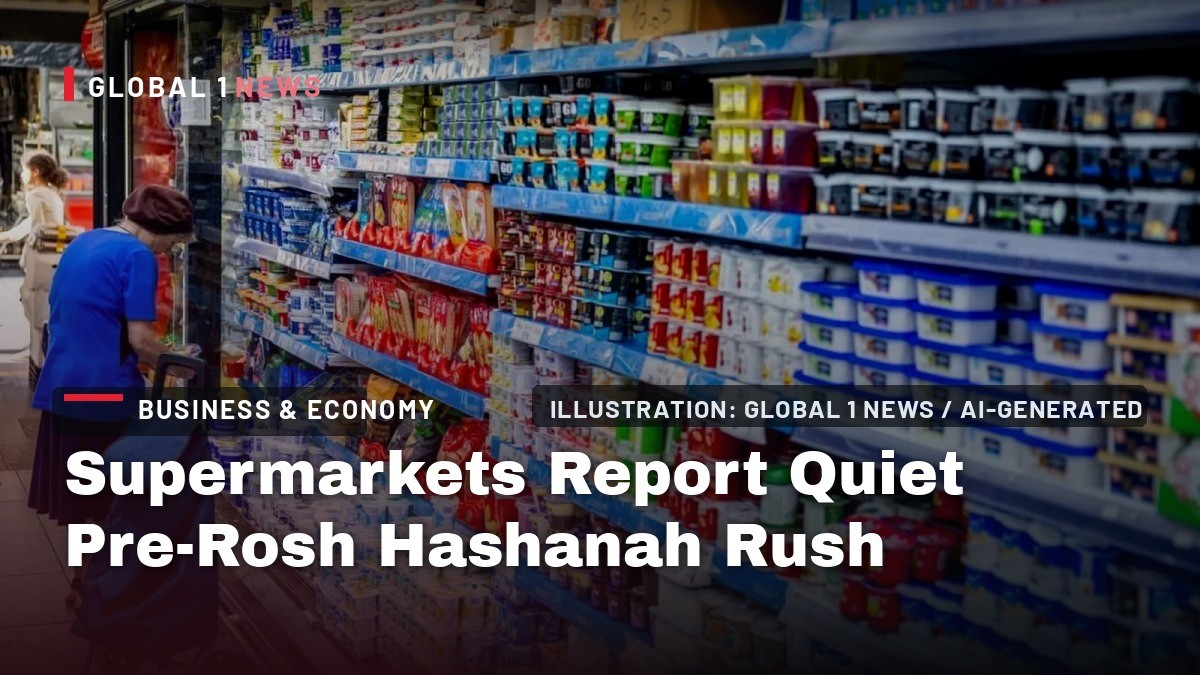
With Rosh Hashanah beginning at sundown on Friday, Israeli supermarket chains are reporting unusually weak customer traffic just two days before the holiday — and the slowdown is leading retailers to pull back on the deep discounts that typically define this shopping period, according to a new price survey.
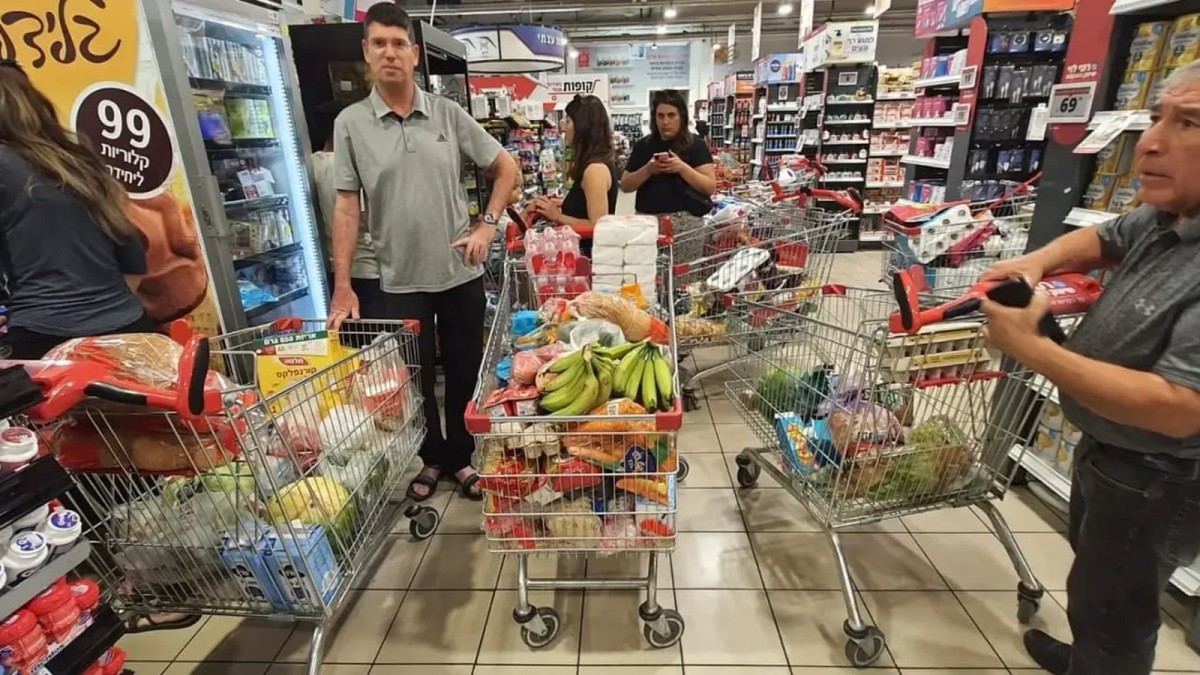
A manager at one supermarket described a sleepy morning hour, telling reporters: "You do not feel the holiday yet. A lot of people are flying abroad and will not be here. Usually there are more shoppers." The disappointing sales so far are prompting chains to protect their profit margins rather than engage in the aggressive price competition that usually characterizes the run-up to the festive meal.
The subdued atmosphere comes as a price comparison conducted by the Institute for Retail Research — which examined 52 products across eight chains — reveals sharp price hikes for several items that star on the Rosh Hashanah table, even as the overall basket shows no sweeping increase.
A Holiday Rush That Hasn't Arrived
The days before Rosh Hashanah are traditionally among the busiest of the year for Israeli supermarkets, as families stock up for the festive meals that mark the Jewish New Year. Shelves are typically packed with shoppers buying apples and honey for the symbolic sweet new year, along with chicken, fish, wine, and an array of fruits and vegetables for the holiday table.
This year, however, the expected surge has not materialized. Retail chains report customer traffic that is far from what usually characterizes this period, with many Israelis apparently choosing to travel abroad for the holiday rather than host family gatherings at home.
The weak demand is having a direct effect on retail strategy. Rather than slashing prices to attract shoppers, chains are reportedly cutting back on the deep discounts that typically accompany this season, preferring for now to maintain their profit margins in the face of slower turnover.
What the Price Survey Found
The Institute for Retail Research's price comparison, which tracked 52 products across eight major chains, paints a mixed picture of the market ahead of the holiday. While there is no sweeping price increase across the overall basket, very sharp price hikes were recorded for several products that occupy a central place in the holiday meal.
Dr. Hezi Gur Mizrahi, founder and CEO of the Institute for Retail Research, said the findings point to a weakening of competitive pressures in the sector. "Competition in the sector has not disappeared, but it has certainly weakened," he said. "In a long line of segments, we see higher prices both compared to last year and compared to last month."
The survey found that fruit and vegetable prices are leading the price hikes, with an average increase of 7.3% compared to last year. Wine went up by 6.3% and fresh chicken by 4.4% — precisely the products that dominate the holiday spread, from vegetables for cooked dishes and salads to chicken, wine, and fruit.
The Biggest Price Jumps
Among the most striking findings are the steep increases recorded for produce items that feature prominently in holiday cooking and dining. Avocados saw the sharpest rise, with prices jumping 44.3% compared to last September. Dry onions went up by 39.3%, while Yakhin sweet corn kernels rose by 21.8%.
Fresh chicken liver increased by 21.3%, and packaged carrots went up by 19.6%. Nectarines rose by 17.2%, packaged white potatoes by 16.5%, and peaches by 15.5%. Even the holiday wine selection was affected, with Carmel Private Collection Cabernet Sauvignon up by 16.4%.
These are not peripheral items — they are the building blocks of the traditional Rosh Hashanah meal. Avocados and onions go into salads and side dishes, chicken liver is a classic appetizer, carrots feature in the symbolic side dishes meant to evoke prosperity, and wine is central to the Kiddush blessing that opens the festive dinner.
Why Retailers Are Pulling Back on Discounts
The combination of quiet stores and rising prices for key holiday products is not coincidental, according to Gur Mizrahi. When customer traffic slows and turnover is eroded, he explained, chains reduce the depth of sales and the intensity of price competition to protect their profitability.
"The meaning is less of a price war and more of an attempt to maintain the margin, and ultimately the consumer encounters this at the register," Gur Mizrahi said.
This dynamic marks a shift from recent years, when Israeli supermarket chains engaged in highly visible price wars during the holiday season, competing aggressively for shoppers with deep discounts on holiday staples. This year, with fewer customers coming through the doors, the incentive to slash prices appears to have diminished.
Where Shoppers Still Find Relief
Despite the sharp increases in produce and other holiday staples, the survey found that not everything is more expensive this year. Shelf products remained almost unchanged compared to last year, offering some relief for budget-conscious shoppers.
Fresh meat prices dropped by an average of 0.9%, fresh salmon fell by 2%, and coffee prices declined by a notable 8.7%. These decreases mean the price increases do not encompass the entire shopping basket, but are felt mainly in several core products of the Rosh Hashanah meal.
For families planning their holiday menus, this creates a complex budgeting picture: the centerpiece items — chicken, wine, and fresh produce — are costing more, while some other categories have become more affordable.
The Gaps Between Chains
The examination also found large gaps between the chains, even for products whose average price barely changed over the past year. This means that where shoppers choose to buy their holiday provisions can make a substantial difference in the final bill.
Whole fresh chicken, for example, was sold at one chain for NIS 27.54 per kilogram, compared to an average of about NIS 19.6 at other chains — a gap of about 40%. Wings were priced at NIS 13.21 per kilogram at one chain, compared to an average of about NIS 9.5 elsewhere, a gap of about 39%.
Large gaps were also found in fresh chicken schnitzel. At one chain, the price reached NIS 59.40 per kilogram, while another chain charged NIS 50.52, compared to an average of about NIS 42.5 at other chains. A significant gap was also found in 750-gram Osem ketchup, with a price of NIS 10.53 at one chain, compared to an average of about NIS 8.4 at other chains — a gap of about 25%.
What It Means for the Holiday Table
The combination of rising prices for holiday staples and weakened competition among chains presents a challenging picture for Israeli consumers preparing for Rosh Hashanah. Even if the average price of a particular product has barely changed, the survey shows that where you do your shopping can make a big difference in the bill.
In fresh chicken, for example, the gap between chains reaches about 40% — a significant difference for families purchasing several kilograms for the holiday meal. The problem for consumers, as Gur Mizrahi noted, is that price hikes are meeting weaker competition among retail chains this year.
The quiet stores and reduced discounting reflect a broader reality of the Israeli retail market in 2026, as chains navigate changing consumer behavior, increased travel abroad, and ongoing cost-of-living pressures. For the millions of Israelis who will gather around the holiday table on Friday evening, the survey offers a clear warning: compare prices carefully, because this year, the chains are not doing the competing for you.
As the holiday approaches, the question remains whether the expected last-minute rush will materialize — and whether retailers will respond with the deep discounts that shoppers have come to expect. For now, the data suggests that consumers should expect to pay more for the staples of the Rosh Hashanah meal, and that shopping around between chains may be the best strategy for keeping the holiday bill in check.
This article was produced with AI-assisted research and editorial support. Sources: The Jerusalem Post; Institute for Retail Research price survey.
By Hannah Berg, Staff Writer
What's Your Reaction?
 Like
0
Like
0
 Dislike
0
Dislike
0
 Love
0
Love
0
 Funny
0
Funny
0
 Wow
0
Wow
0
 Sad
0
Sad
0
 Angry
0
Angry
0

Israel Correspondent at Global1.News. Based in Tel Aviv, covering Israeli politics, security, technology, and society. Provides balanced, deeply-sourced reporting on one of the most closely-watched regions in the world.















Comments (0)