
UAE Declares Total Trade Embargo on Iran Amid Gulf Missile Escalation
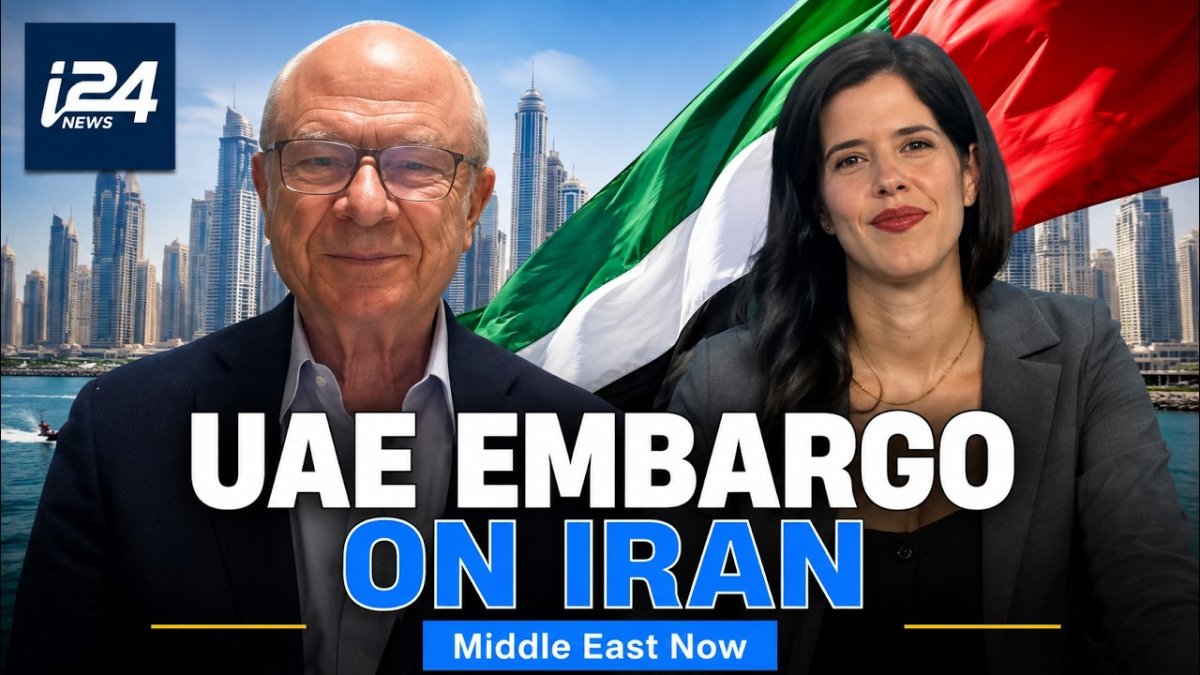
In a recent i24NEWS English report, the United Arab Emirates announced an indefinite and total trade embargo on Iran, accusing Iranian forces of firing two ballistic missiles at its territory on Wednesday.
In a recent i24NEWS English report, the United Arab Emirates announced an indefinite and total trade embargo on Iran, accusing Iranian forces of firing two ballistic missiles at its territory on Wednesday. The decision, announced by the UAE Ministry of Foreign Affairs, marks a dramatic escalation in the Gulf confrontation that has been simmering since the US-Israeli war on Iran began on February 28, and it carries profound implications for Israel, the Abraham Accords alliance, and the global energy supply chain.
The move comes just days after Abu Dhabi accused Tehran of attacking two ADNOC (Abu Dhabi National Oil Company) vessels in the Strait of Hormuz, an accusation Iran denied, and it signals that the UAE is no longer willing to maintain its delicate balancing act between Western security guarantees and lucrative trade with the Islamic Republic.
UAE declares total trade embargo on Iran amid Gulf missile escalation
Jerusalem, Israel – Wednesday — The United Arab Emirates has severed all economic ties with Iran, announcing an indefinite trade embargo after its Ministry of Defence reported that air defences detected two ballistic missiles launched from Iranian territory on Wednesday morning. According to the UAE military, one missile fell in the country's territorial waters and the other outside, with both "targeting maritime traffic" in the region. The Ministry of Defence promised to "resolutely confront any attempt to undermine the security of the nation or maritime navigation in the region."
The UAE Ministry of Foreign Affairs issued a stark statement confirming the decision: "All trade, commercial exchanges and financial transactions with Iran have been halted until further notice." The ministry said the move was made "in light of escalations that undermine peace and security in the region." Tehran immediately rejected the accusation as "baseless," with Foreign Ministry spokesperson Esmaeil Baghaei suggesting the missile report was a "false flag operation" orchestrated amid the ongoing US-Israel war on Iran — an accusation that implicitly implicates Jerusalem and Washington in a provocation designed to isolate Tehran further.
On the Ground: A Gulf Nation Under Fire
Wednesday's missile report is the first confirmed Iranian projectile targeting the UAE since May, ending a three-month lull that had allowed Dubai's bustling ports and Abu Dhabi's energy infrastructure to operate with a semblance of normalcy. But the broader picture is far more violent. In the first six weeks of the war, Iran hit the UAE more than any other country, launching more than 530 ballistic missiles, 26 cruise missiles, and more than 2,200 drones toward targets it described as US assets. The UAE maintains that civilian sites were also struck by missiles or debris intercepted by US-supplied THAAD and Patriot systems. The Iranian barrages killed 15 people in the UAE and injured 246 others.
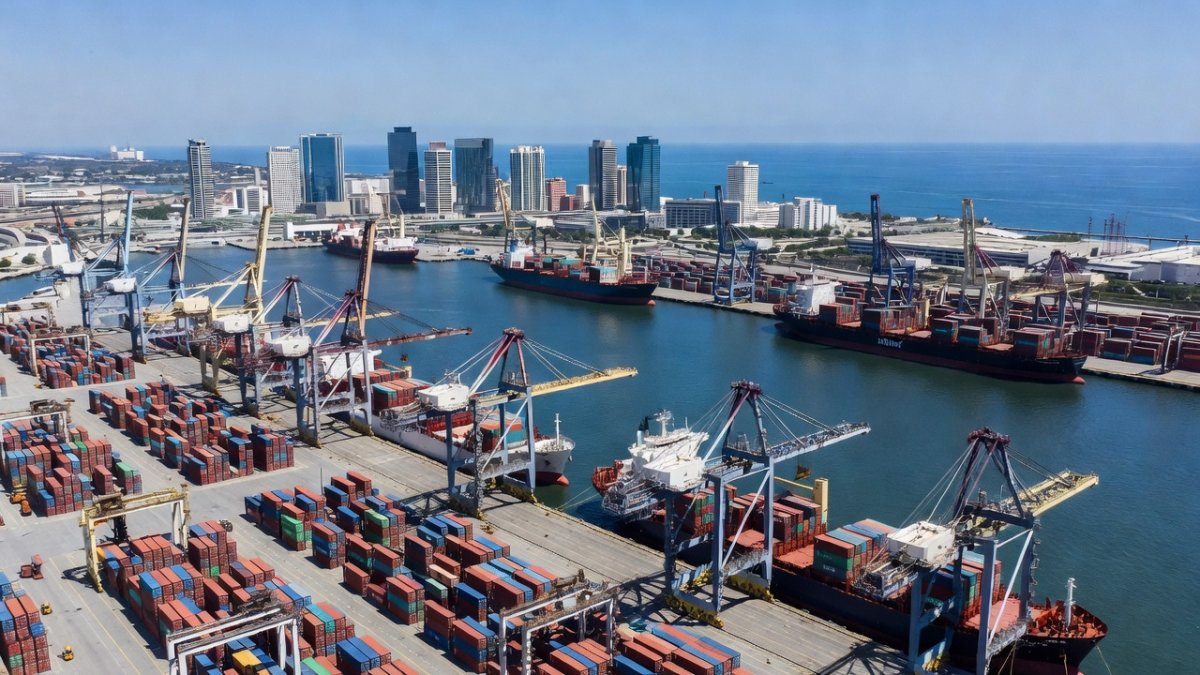
The targets have been strategic and deeply symbolic. In March, Iran struck Dubai's Jebel Ali Port, the largest constructed deep-water harbour in the world, operated by DP World. The Musaffah fuel terminal in Abu Dhabi, the Fujairah oil terminal, the Shah gasfield, and the Barakah Nuclear Energy Plant — which caught fire on May 18 — have all come under attack. On March 17, oil loading at Fujairah was partly halted after a drone attack, sending ripples through global energy markets. The UAE suspended direct cargo shipping with Iran in early March, days after the war began, and only resumed trade in late June via Jebel Ali Port. That fragile resumption was dealt a blow in July when an explosion at the port caused a fire after US strikes resumed.
Regional Context: The Abraham Accords and the Anti-Iran Coalition
For Israel, the UAE's embargo is a validation of the strategic logic underpinning the Abraham Accords, the 2020 normalization agreement that transformed the Gulf state into Jerusalem's most important Arab partner. Israel and the UAE share intelligence and defence coordination against Iran, and Israeli officials have long warned Gulf states about Iranian aggression. The UAE's decision to sever trade ties entirely — not merely suspend them — reflects a hardening of the Gulf position that Israeli defence officials have been advocating since the war began.
The timing is critical. The June 17 memorandum of understanding between the US and Iran lapsed on Monday, with little prospect of renewal. The US naval blockade of Iranian ports continues, and President Donald Trump has stated the blockade remains in effect. US Treasury Secretary Scott Bessent said last week that Washington plans to intensify economic pressure on Iran, partly through the naval blockade, applying measures "never been seen in the history of economic isolation on a country." The UAE's embargo now reinforces that blockade from the southern flank, closing off the primary maritime and commercial corridor that Tehran has used to circumvent sanctions.
Diplomatic and International Reactions
Retired US General Mark Kimmitt, a former assistant secretary of state, told Al Jazeera that the UAE embargo "is even more significant than the embargo being put on by the United States." Kimmitt noted that Dubai has become Tehran's most important trading partner, surpassing China and Turkiye, supplying roughly one-third of Iran's annual imports. Dubai's standing as a global financial hub has long given Iran a discreet way to move money around sanctions, and Kimmitt warned that the move could be interpreted by Tehran as "bordering on an act of war," likening it to the near-total US embargo on Japan after World War II.
Iran's response has been defiant. Top negotiator Mohammad Baqer Qalibaf reiterated that the Strait of Hormuz will remain shut until the US meets the conditions of the interim deal signed in June. Iran holds Hormuz as leverage to release frozen assets, lift sanctions, and end the naval blockade. The strait, through which roughly 20% of global oil passes, remains the single most dangerous flashpoint in the region, and the UAE's embargo raises the stakes for any Iranian retaliation.
Economic Impact: The Numbers Behind the Embargo
The economic dimensions of the UAE's decision are staggering. Official goods trade between the UAE and Iran stood at $6.2 billion in 2023, with UAE exports accounting for approximately $5.8 billion and imports from Iran at around $450 million. Iran imported $2.81 billion of telephones from the UAE that year alone, a figure that underscores Dubai's role as Tehran's primary gateway to global markets. The embargo effectively severs that lifeline, cutting off not only legal trade but also the informal networks of currency exchange, gold smuggling, and re-export that have sustained the Iranian economy for decades.
Iran's economy is already in freefall. Sanctions have caused GDP per capita to fall from $8,000 in 2012 to $5,000 in 2024, and Iran is now one of the most heavily sanctioned countries in the world. The loss of the UAE trade channel — combined with the ongoing naval blockade and the lapse of the June memorandum — could push the Iranian economy toward a breaking point. For Israeli analysts, the question is whether economic collapse will force Tehran to the negotiating table or provoke a desperate military escalation.
Analysis and What This Means for Israel
The UAE's embargo is a watershed moment in the war against Iran, and it carries direct implications for Israel's security calculus. First, it validates the Israeli strategy of building a regional coalition against Tehran, anchored by the Abraham Accords. The UAE's willingness to absorb Iranian missile fire and still sever economic ties sends a powerful signal to other Gulf states — Saudi Arabia, Bahrain, and Oman — that the cost of accommodation with Iran now outweighs the benefits.
Second, the embargo complicates Iran's ability to sustain its war effort. Iran's missile and drone programs rely on imported components and materials, many of which flowed through Dubai's ports and financial system. Cutting that channel will degrade Iran's military-industrial capacity over time, potentially shortening the war and reducing the threat to Israeli cities. Israeli officials have long argued that economic strangulation is the most effective non-kinetic tool against the Iranian regime, and the UAE's decision now aligns Gulf policy with that doctrine.
Third, the false-flag accusation from Tehran — implicating Israel and the United States in the missile incident — is a predictable but dangerous narrative. It signals that Iran may escalate its attacks on the UAE to punish Abu Dhabi for its alignment with Washington and Jerusalem. Israeli defence officials are closely monitoring Iranian naval activity in the Gulf and the Strait of Hormuz, and the IDF has reportedly increased intelligence-sharing with UAE counterparts in recent days.
What's Next: A Region on the Brink
The coming weeks will determine whether the UAE's embargo is a prelude to a broader Gulf alignment against Iran or a trigger for further escalation. The lapse of the June memorandum has removed the last diplomatic framework for de-escalation, and the US naval blockade remains in force. Iran's threat to keep the Strait of Hormuz shut is a direct challenge to the global economy, and any Iranian attempt to interdict shipping in response to the UAE embargo would draw a swift and overwhelming response from US, Israeli, and Gulf naval forces.
For Israeli readers, the UAE's decision is a reminder that the Abraham Accords have evolved from a diplomatic achievement into a military and economic alliance under fire. The war that began with the killing of Supreme Leader Ayatollah Ali Khamenei on February 28 has reshaped the Middle East, and the UAE's total embargo on Iran is the latest proof that the old order of Gulf neutrality is dead. The question now is whether Tehran will accept its isolation or lash out in a final, desperate attempt to break the siege. Either way, Israel's security is now inextricably linked to the fate of the Gulf states that chose to stand with it.
By Hannah Berg, Staff Writer
This article was produced with AI-assisted research and editorial support. Reporting is based on sources cited in the article.
What's Your Reaction?
 Like
0
Like
0
 Dislike
0
Dislike
0
 Love
0
Love
0
 Funny
0
Funny
0
 Wow
0
Wow
0
 Sad
0
Sad
0
 Angry
0
Angry
0

Israel Correspondent at Global1.News. Based in Tel Aviv, covering Israeli politics, security, technology, and society. Provides balanced, deeply-sourced reporting on one of the most closely-watched regions in the world.










Comments (0)