
Desert Deluge: Tocopilla's Aluvion Exposes Chile's Climate Whiplash
The roar came not from the Pacific, but from the earth itself. In Tocopilla, a city carved into the bone-dry coastal cliffs of northern Chile, the quebradas-ravines that have been silent for years-turned into liquid thunder. Water, mud, and boulders surged through the streets, sweeping cars downhill like toys in a bathtub, transforming a desert city into a brown, churning river. This is the new face of climate whiplash in Latin America, where the Atacama, the driest place...
The roar came not from the Pacific, but from the earth itself. In Tocopilla, a city carved into the bone-dry coastal cliffs of northern Chile, the quebradas-ravines that have been silent for years-turned into liquid thunder. Water, mud, and boulders surged through the streets, sweeping cars downhill like toys in a bathtub, transforming a desert city into a brown, churning river. This is the new face of climate whiplash in Latin America, where the Atacama, the driest place on Earth, is now ground zero for a terrifying new kind of disaster.
As the floodwaters recede, they leave behind a landscape of ruin and a stark question: how does a region that measures rainfall in millimeters per decade prepare for a deluge measured in hours? The answer, as the people of Tocopilla are discovering, is that they can't-not without a fundamental rethinking of how we build, live, and adapt on a warming planet.
Desert Deluge: Tocopilla's Aluvion Exposes Chile's Climate Whiplash
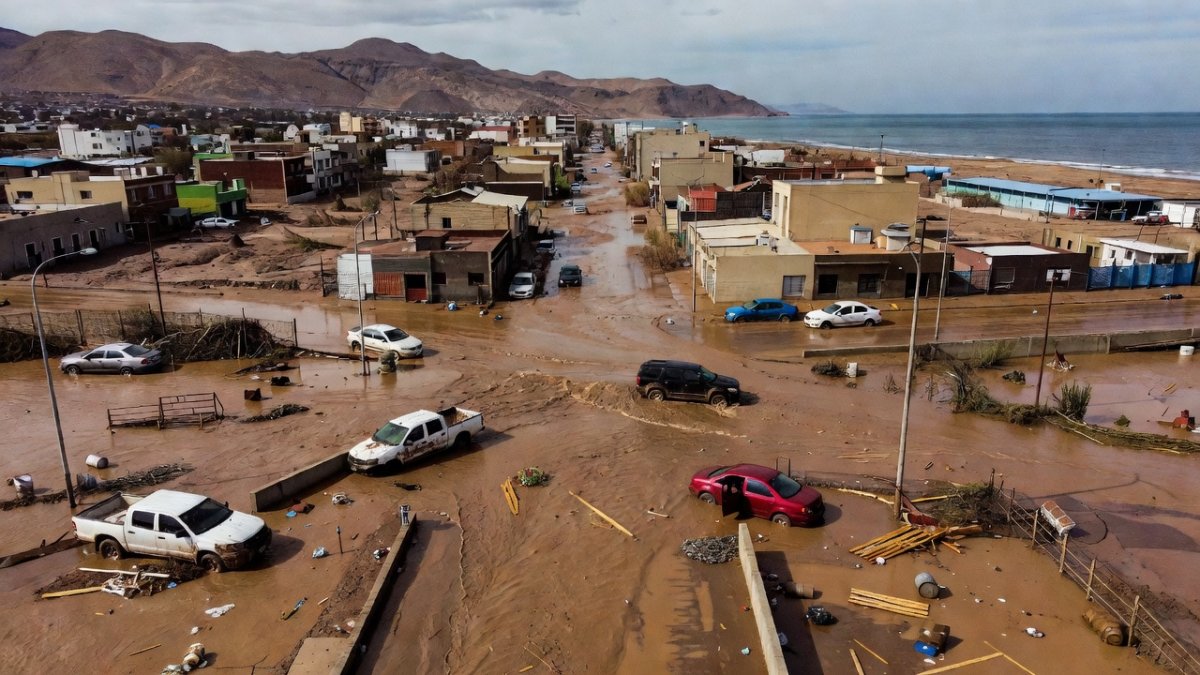
Tocopilla, Antofagasta Region, Chile - August 19, 2026 - A violent and unprecedented aluvion has devastated this coastal city of 25,000, forcing the government to declare a state of catastrophe. The trigger was a freak frontal system that dumped 30 millimeters (1.2 inches) of rain on Tocopilla in a matter of hours on Tuesday-a volume that represents roughly six times the city's average annual rainfall of just 5 millimeters (0.2 inches). The deluge overwhelmed the region's notoriously dry ravines, sending torrents of mud, rock, and debris crashing into urban areas, isolating the city from the rest of the world and leaving a trail of destruction that officials say "exceeded all expectations."
The Deluge That Shook the Driest Place on Earth
The numbers are almost incomprehensible to those who know the Atacama Desert. Tocopilla, perched between the Pacific Ocean and the coastal escarpment, received 30 millimeters of rain in a few hours. To put that in perspective, the nearby city of Iquique had accumulated just 0.1 millimeter of rain all year before receiving about 25 millimeters (nearly 1 inch) in a few hours Tuesday, along with thunderstorms and strong winds. This is not a gentle drizzle; it is a violent, concentrated assault on a landscape that has evolved over millennia to repel water. The rain overflowed normally dry ravines, sending water, mud and debris into urban and coastal areas across the Antofagasta, Tarapaca and Atacama regions.
Videos posted on social media and captured by Al Jazeera showed the terrifying reality: cars being swept downhill by torrents of water and mud, their drivers helpless against the force of nature. The Atacama Desert has little soil or vegetation, so rainfall instantly forms torrential runoff. As catastrophe modeling firm RMS documented after the 2015 disaster, the lack of absorbent ground means every drop of rain becomes a destructive agent. The ground, baked hard by years of relentless sun, cannot absorb the water; it simply runs off, gathering speed and debris as it plunges toward the sea, turning quiet desert arroyos into lethal highways of mud and stone.
State of Catastrophe: A City Cut Off From the World
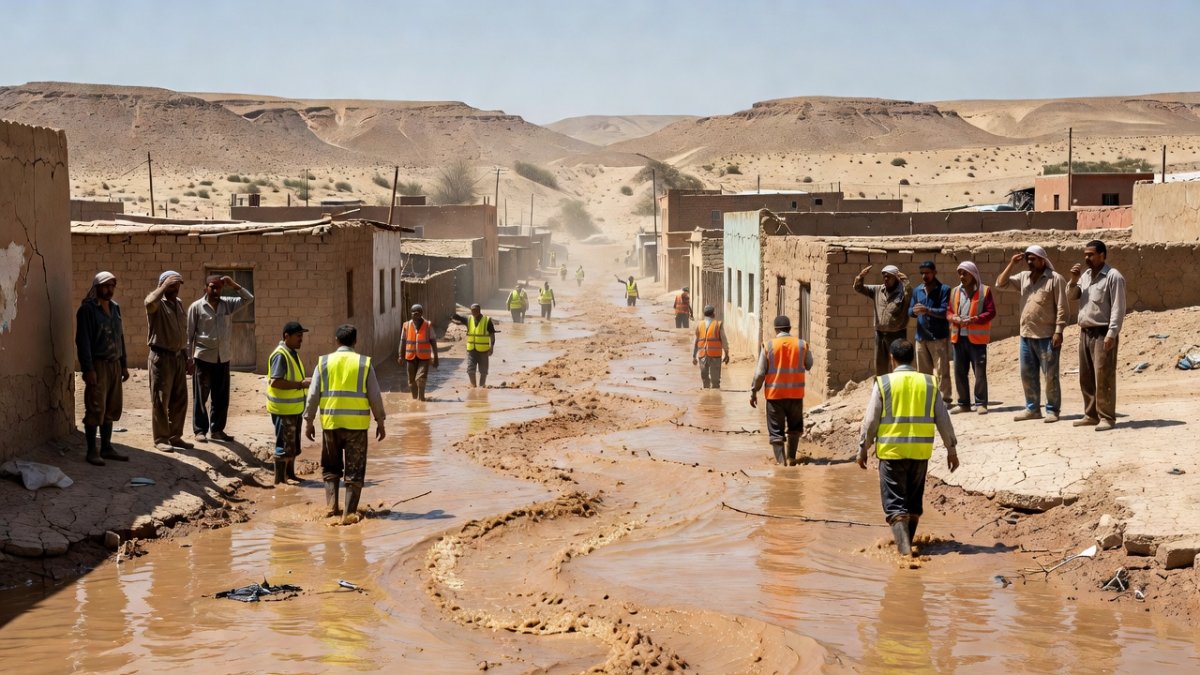
The immediate aftermath is one of isolation and shock. The aluvion blocked every access route to Tocopilla, severing the commune from the rest of Chile. Emergency crews are working around the clock to clear streets of mud, debris and wrecked vehicles, but the scale of the task is immense. Chilean President Jose Antonio Kast declared a state of catastrophe, a move that allows the government to allocate emergency resources and places the military in charge of coordination and security operations. This is not a symbolic gesture; it is a recognition that the city's own resources are utterly overwhelmed.
Tocopilla Mayor Ljubica Kurtovic reported that 2,000 people lost their homes and are now staying in shelters. She told reporters that authorities still needed to assess the full extent of the damage because the disaster "exceeded all expectations of what had been forecast." Governor Ricardo Diaz painted an even grimmer picture, telling Radio Pauta: "Sixty percent of the homes in Tocopilla have been damaged and many of them have structural damage. We have to restore access to the city." At least one person died in nearby Taltal, and more than 300 people were evacuated to shelters across the region, with Tocopilla and Taltal the most affected municipalities. The SAE emergency alert system (Sistema de Alerta de Emergencia) was activated for Tocopilla as the quebradas surged, a desperate warning that for many came too late.
The Health Fallout Beneath the Mud
Beyond the immediate physical destruction lies a more insidious threat: disease. The floodwater that surged through Tocopilla is not clean rainwater; it is a toxic cocktail mixed with sewage, chemicals, and decaying debris. This contaminated sludge threatens water supplies, creating a public health emergency in a city already struggling to cope. The lessons of 2015 are stark. After the northern Chile floods of that year, the Health Ministry (MINSAL) launched a massive vaccination campaign, sending 89,000 flu vaccines, 27,000 tetanus vaccines and 7,600 Hepatitis A vaccines to affected areas. Health officials also issued urgent warnings for people to boil drinking water for at least 1 minute or use purification tablets.
Those protocols are now being reactivated. The risk of a waterborne disease outbreak is high, and the combination of a displaced population, damaged infrastructure, and a strained medical system is a recipe for a secondary disaster. The mud itself is a hazard, harboring bacteria and creating a breeding ground for pests. For the families huddled in shelters, the fear of the next mudslide is now compounded by the fear of the next illness. The psychological toll is immense, but the physical threat is immediate. The city's water treatment plants, if damaged, could leave thousands without safe drinking water, turning a climate disaster into a humanitarian one.
Why a Few Millimeters Can Wreck a Desert City
To understand why 30 millimeters of rain can cause such catastrophic damage, you must understand the unique geology of northern Chile. Cristobal Ramirez de Arellano, director of the geology program at Andres Bello University and president of the Geological Society of Chile, explained to UPI that only a few millimeters of rain can saturate the soil in northern Chile, producing mud and causing widespread damage. "The cities are usually located on narrow plains between the sea and the coastal escarpment," he said. "This condition increases the risk of mudslides, considering the role of gravity, which ultimately moves the water, mud and debris."
The geography is a trap. The city is squeezed between the ocean and a steep, barren cliff. There is nowhere for the water to go but down, and down means through the city. The lack of vegetation and soil means there is nothing to hold the ground in place. When the rain hits, it doesn't soak in; it erodes, carrying everything in its path. The 2015 disaster, which killed at least 24 people and left 69 missing, was a brutal lesson in this dynamic. Antofagasta saw 24.4mm of rain in 24 hours-about 7 years of rainfall in a single day. This week's event in Tocopilla, while smaller in volume, hit a city that was perhaps even less prepared, exposing the fragility of human infrastructure against the raw power of a desert in flood.
El Nino and Climate Change: The Storm Makers
This isn't just a random weather event; it is a symptom of a larger, more dangerous pattern. Ramirez de Arellano noted that the presence of El Nino favors the development of this type of rainfall. El Nino, a natural climate pattern that warms Pacific waters, has always brought the potential for extreme weather to South America. But, as the geologist emphasized, climate change has intensified it. The warmer the ocean, the more energy is available for storms. The warmer the atmosphere, the more moisture it can hold. This combination is turning rare, extreme events into more frequent and more violent occurrences.
Chile has had a punishing 2026 winter. Heavy rains in central and southern Chile in July killed at least 3 people and displaced hundreds. A deadly storm severed a key mining highway in the Antofagasta region in late July. Bolivia's altiplano also suffered extreme snowstorms this month. This is not an isolated incident; it is a regional pattern of climate whiplash, where decades of drought are punctuated by sudden, violent floods. The hyper-arid north, a region that defines the very concept of a desert, is now on the front lines of a climate crisis that is rewriting the rules of meteorology. The old models, based on historical data, are no longer reliable. The future is one of uncertainty, where the "unprecedented" becomes the new normal.
Learning From the 2015 Tragedy
In the wake of the 2015 floods that killed 24 people and affected nearly 30,000, northern Chilean cities promised to do better. Since 2012, they have invested in mudflow channels, sediment retention basins, and expanded green areas such as Tocopilla's Geopark to absorb rainwater and make the city more permeable. These were not cosmetic changes; they were engineered solutions designed to prevent a repeat of the tragedy. The Geopark, in particular, was hailed as a model for integrating natural infrastructure into urban planning, creating spaces that could absorb water and slow its destructive path.
But this week's deluge exceeded those defenses. The channels were overwhelmed, the retention basins filled to capacity, and the green spaces were buried under meters of mud. The infrastructure, designed for a certain magnitude of event, was simply not built for the reality of a warming world. This is the cruel irony of climate adaptation: we build for the last disaster, but the next one is always bigger. The failure is not necessarily in the design, but in the assumptions. The engineers planned for a 1-in-100-year event, but the climate crisis is making those events 1-in-10-year occurrences. The lesson from 2015 was clear, but the lesson from 2026 is even more urgent: we must build for a future that is more extreme than anything we have seen before.
What This Means for Latin America
The disaster in Tocopilla is a warning shot for the entire continent. If the driest place on Earth can be brought to its knees by a few centimeters of rain, what does that mean for the rest of Latin America? The region is already grappling with a cascade of climate impacts, from melting Andean glaciers to intensifying hurricanes in the Caribbean. Tocopilla is also a port and energy hub, home to thermoelectric plants that supply the mining-rich north. The infrastructure damage has economic ripple effects for copper and lithium production corridors, the very industries that power the global green energy transition. A single storm can disrupt the supply chain for the world's batteries.
This is not just an environmental story; it is an economic and social one. The most vulnerable communities, like those in Tocopilla, are bearing the brunt of a crisis they did little to create. The state of catastrophe declaration is a recognition of failure-a failure of global emissions reductions, a failure of adaptation planning, and a failure to protect the most exposed populations. As the mud dries and the cleanup begins, the people of Tocopilla face a long and uncertain road. But their story is a call to action for all of Latin America. We must listen, we must learn, and we must act with the urgency that this crisis demands, before the next desert deluge catches us all unprepared.
By Elena Vasquez, Staff Writer
This article was produced with AI-assisted research and editorial support. Reporting is based on sources cited in the article.
What's Your Reaction?
 Like
0
Like
0
 Dislike
0
Dislike
0
 Love
0
Love
0
 Funny
0
Funny
0
 Wow
0
Wow
0
 Sad
0
Sad
0
 Angry
0
Angry
0

Latin America Correspondent at Global1.News. Based in Mexico City, covering politics, economics, energy, and culture across the region. Brings an on-the-ground perspective to stories spanning from the Rio Grande to Patagonia.












Comments (0)