
Lebanon's PM Vows to Find Everyone Behind the C-4 Truck Stopped Short of Beirut
Lebanon's Prime Minister Nawaf Salam vowed Monday to track down everyone behind an explosives-laden vehicle stopped at the Dahr al-Baidar checkpoint, as four different weights for the haul were given on the record and no authority confirmed the identity of the two detainees.
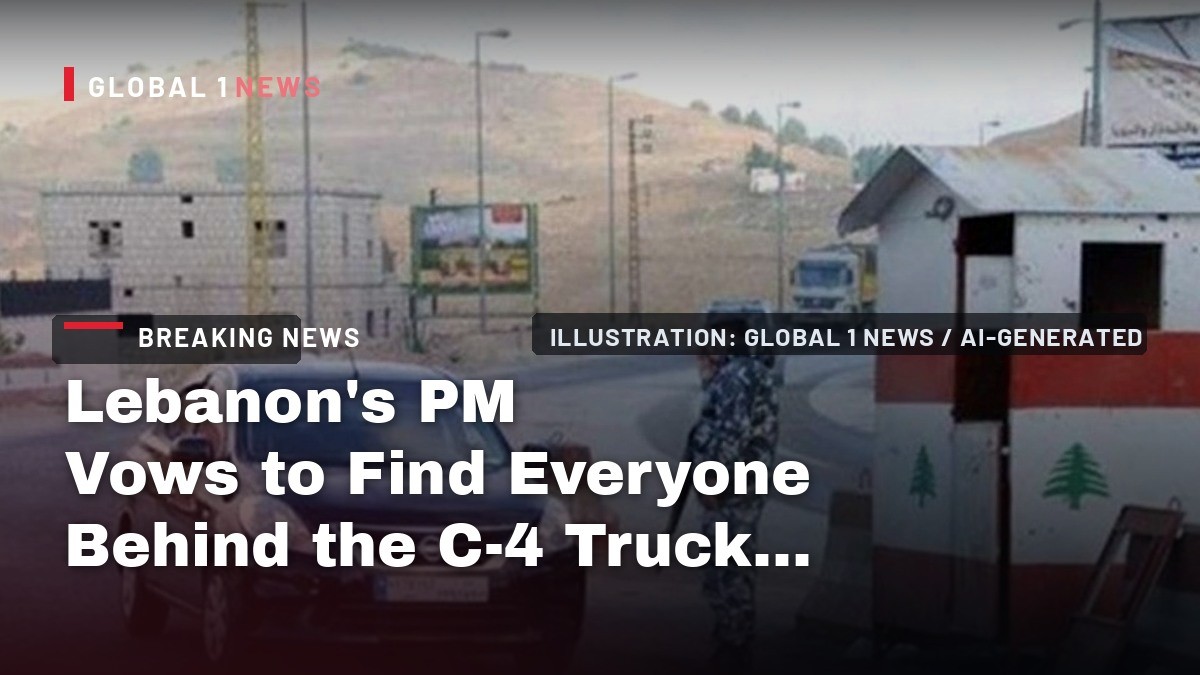
Lebanon's prime minister vowed Monday to hunt down everyone behind an explosives-laden vehicle stopped at a mountain checkpoint, as four different weights for the haul were given on the record and no authority confirmed who the two detainees are. The interception at Dahr al-Baidar, on a road linking Lebanon's interior with Syria, has revived a question the government has spent months trying to answer: who moves weapons in Lebanon now.
Lebanon PM vows manhunt after explosives seizure
Beirut, Lebanon — Prime Minister Nawaf Salam said Monday that Lebanon would carry out a thorough investigation to track down suspected members of Hezbollah believed linked to the vehicle, and that his government would not hesitate to widen the case to identify "all those involved in this criminal operation and those behind them." Information Minister Paul Morcos, who briefed reporters on the cabinet meeting, said two people detained in the vehicle had been referred to judicial authorities and that security agencies would pursue others involved.
The Truck That Never Reached Beirut
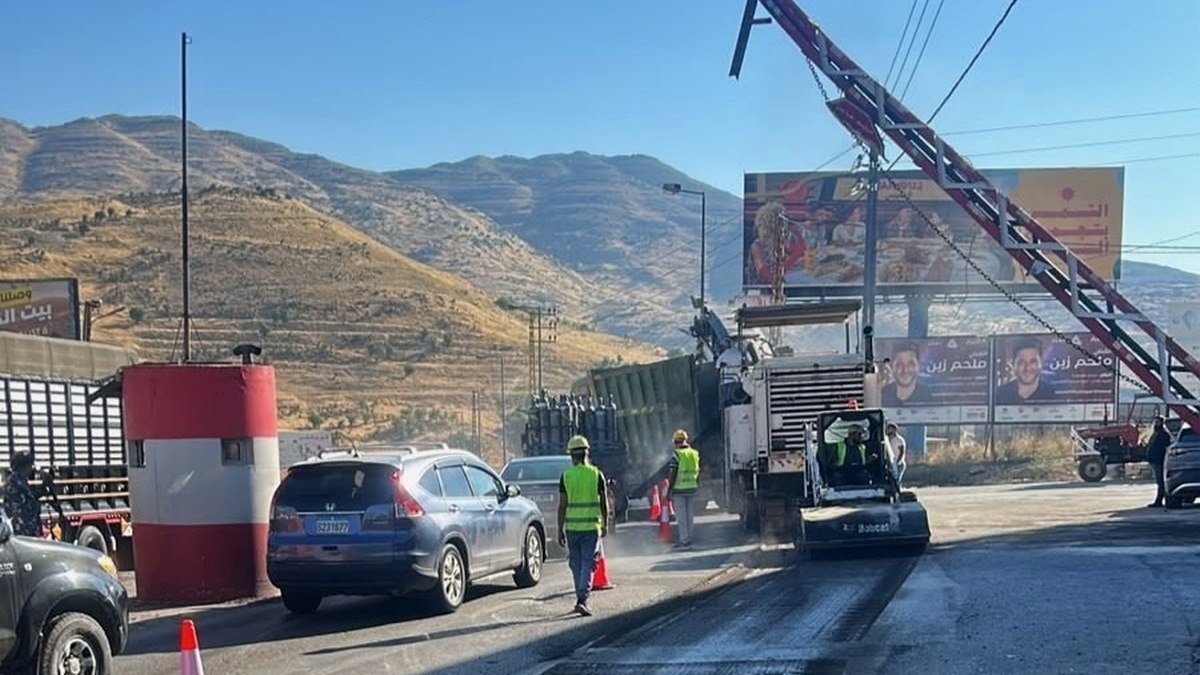
The vehicle was stopped at the Dahr al-Baidar checkpoint in Lebanon's east, near the road linking the country with Syria, according to AFP's judicial source, which put the interception at Thursday afternoon. The Associated Press described the vehicle as a truck and placed the seizure "last week"; AFP and MTV Lebanon both described a car or vehicle. The two people inside were heading towards Beirut, AFP's source said. The Associated Press reported that the two detained said they were told only to take the material from the northeastern Baalbek region to Beirut without being told what it would be used for, and that they were to hand it to a man south of Beirut identified by a nom de guerre, Zulfiqar. No account in the record places the load in Beirut. It was stopped at the checkpoint.
What Salam Said on Monday
Morcos quoted Salam telling the cabinet he understood public concern about the shipment, noting that C-4 explosives had been used in several "infamous political assassinations in Lebanon's modern history." Salam said Lebanese should be confident the government would not hesitate to pursue and broaden the investigation, and that "our government will not tolerate anyone who dares to tamper with the country's security, safety, and stability." Morcos added that the government would act firmly against the possession, transport or use of weapons outside state control. In a separate statement on X, Salam wrote in Arabic that there would be no leniency and no looking away, only truth and accountability, and saluted the security forces. He said a truck had been stopped at Dahr al-Baidar days earlier, heading from the Bekaa toward Greater Beirut, carrying hundreds of kilograms of explosive materials including highly explosive C-4.
One Shipment, Four Different Numbers
The accounts do not agree on how much explosive was seized. Judicial officials told the Associated Press the vehicle carried 780 kilograms (1,720 pounds) in total, including 250 kilograms of TNT and 250 kilograms of C-4 plastic explosives. AFP's judicial source described "half-a-tonne" of explosives and specified 250 kilograms of TNT-type material and 250 kilograms of C-4-type substance. L'Orient Today's military source said the seized explosives weighed 300 kilograms, while a judicial source cited by the same outlet put the amount at twice that figure, 600 kilograms. The military source identified the material as trinitrotoluene, or TNT. Four figures, four carriers, no reconciliation: 780 kilograms, roughly 500, 300 and 600. The Internal Security Forces handed the two detainees to the Army's Military Police, which has launched an investigation, L'Orient Today reported.
Two Men and Two Aliases
Who the detainees are is equally unresolved. A military source and a judicial source told L'Orient Today the two men belonged to Hezbollah; a Hezbollah source and two security sources contacted by the same outlet did not confirm it. AFP's judicial source said one suspect is the son of a Hezbollah official and the other is also a member of the group, adding that Lebanese authorities have not confirmed that information. MTV Lebanon attributed the Hezbollah identification to "MTV's website sources." Hezbollah has declined comment, the Associated Press reported. The security sources told L'Orient Today that one detainee is from Baalbek and the other from Saadnayel, in the Zahle district. MTV's sources said the two admitted during questioning that Hezbollah had asked them to deliver the explosives to a commander in Beirut's southern suburbs, and that a commander known as "Mr. Sajed" handed them the material. Both "Mr. Sajed" and "Zulfiqar" are aliases reported by press sources; no named individual has been identified or arrested.
Why C-4 Carries Its Own History in Lebanon
The presence of C-4 is what turned a checkpoint seizure into a national argument. Morcos, quoting Salam, tied the public's alarm directly to the substance's record in "infamous political assassinations in Lebanon's modern history." AFP carried the same framing in Salam's words: "The Lebanese people's concern stems from the fact that the shipment of explosives contained C-4, a substance used in political assassinations." That is the prosecution-side reading of the material's significance, not a finding about this shipment. L'Orient Today's military source said a link to a planned assassination had not yet been confirmed, and added that the explosives could also be used to booby-trap buildings amid Israel's ongoing occupation of southern Lebanon. The Associated Press reported it was unclear whether Hezbollah planned to use the explosives — and pebbles — in the fiber-optic drones it has been deploying against Israeli troops occupying parts of southern Lebanon. Assassination, booby-traps, drones: none confirmed.
The March Decision That Changed Everything
For years, Hezbollah moved weapons freely in parts of Lebanon, the Associated Press noted. That changed in March, when the Lebanese government declared all military activities by the Iran-backed group "illegal." The decision came hours after Hezbollah fired rockets into northern Israel, triggering a three-month war that killed nearly 4,000 people in Lebanon, according to the AP account. The group fired those rockets two days after Israel and the United States launched a war on Iran, its main backer. Lebanon had approved a plan to disarm Hezbollah in 2025, following a ceasefire the previous November that ended a devastating war between the group and Israel, AFP reported. The conflict flared back to life in March when Hezbollah attacked Israel in support of Iran in the Middle East war.
An Israeli Interceptor Over Khiam, the Same Day
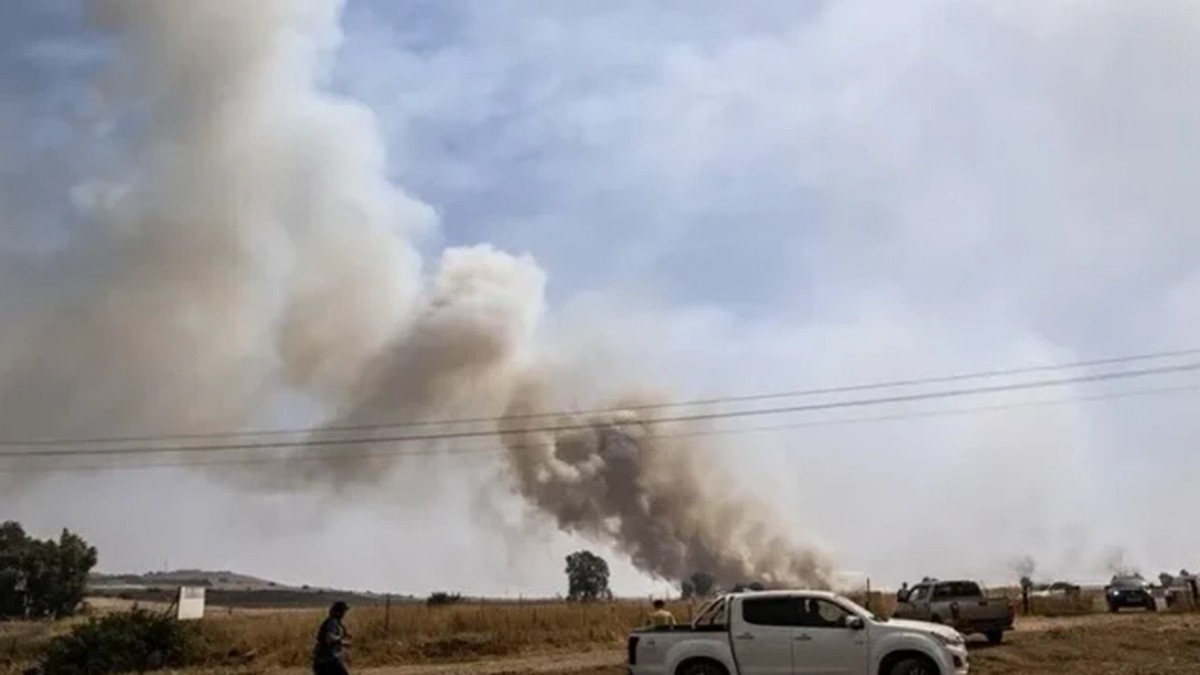
On the same day Salam spoke in Beirut, an Israeli interceptor missile exploded over the town of Khiam in southern Lebanon, Lebanon's National News Agency reported, according to Anadolu. The Israeli military confirmed it had engaged a "suspicious aerial target" detected near its forces operating in the border region. The explosion occurred over Khiam in the Marjayoun district, the agency said, without providing details on casualties or damage. The Israeli army said it launched an interceptor toward the target and was reviewing the circumstances; no warning sirens had sounded in line with standard alert protocols. Lebanese and Israeli officials have engaged in US-led negotiations since March, seeking security arrangements and an end to Israel's occupation of Lebanese territory, though Israeli forces have continued military action in the south throughout the dialogue. Beirut has repeatedly called for a halt to attacks and a full withdrawal. No breakthrough.
The Disarmament Deal Nobody Has Implemented
Israel invaded and now occupies a band of territory in Lebanon's south, AFP reported. A new ceasefire was struck in June, and Israel and Lebanon have agreed to a framework deal involving Hezbollah's disarmament, a gradual Israeli withdrawal and the deployment of the Lebanese army to the region. The Israeli army has carried out daily demolitions and attacks in southern Lebanon for months despite the ceasefire, according to L'Orient Today. Hezbollah halted its attacks in June, except for operations to repel Israeli forces that attacked and later occupied the Ali Taher hills in early September. Justice Minister Adel Nassar vowed on X on Saturday that "the investigation into the seized explosives, and everything that follows from it, will continue to the very end," insisting that work towards "disarming illegal groups, combating terrorism and prosecuting all outlaws is... irreversible and speeding up."
What the Government Will Not Say
Lebanese authorities have not confirmed the identity or affiliation of the two detainees, and no official has said where the explosives entered Lebanon or from whom. No charge, court appearance or named suspect has been announced by any official. Hezbollah has issued no statement; the Associated Press reported the group declined comment. No casualty of any kind has been reported from the interception. The government has said nothing about how the material was to be used. Syria, under former ruler Bashar al-Assad, served as a major route for supplies channelled to Hezbollah by Tehran, AFP noted, and since the new authorities toppled Assad at the end of 2024, Syria has regularly announced the interception of weapons shipments destined for Lebanon. Hezbollah, which fought on Assad's side in Syria's civil war, denies having any presence on Syrian territory. That is background. No Syrian link has been confirmed in this case.
What Comes Next
The Military Police investigation is now the centre of the case, with the two detainees in judicial hands and Morcos saying security agencies will go after others involved. MTV's sources said military police were questioning the two suspects to determine whether others were involved, and that security services were working to identify remaining individuals in order to arrest them. Salam's public commitment was to broaden the investigation to "all those involved in this criminal operation and those behind them." What remains open is nearly everything material: the weight of the haul, the affiliation of the men in the vehicle, the intended target, and the route by which the explosives reached the Bekaa. On the record as of Monday night, the only agreed facts are the checkpoint, the arrests, and the prime minister's promise.
By Jessica Ali, Staff Writer
This article was produced with AI-assisted research and editorial support. Sources: The Associated Press (Bassem Mroue, via Winnipeg Free Press and The Washington Post); AFP (via Arab News and Dawn); L'Orient Today; MTV Lebanon; Anadolu Agency (via Yeni Safak English); Lebanese National News Agency, cited by Anadolu; Lebanese Prime Minister Nawaf Salam's X account.
What's Your Reaction?
 Like
0
Like
0
 Dislike
0
Dislike
0
 Love
0
Love
0
 Funny
0
Funny
0
 Wow
0
Wow
0
 Sad
0
Sad
0
 Angry
0
Angry
0

Editor-in-Chief at Global1.News. Atlanta-based journalist who cuts through the BS and tells it like it is. Lead anchor, host, and the voice you hear when the spin stops and the truth starts.











Comments (0)