
The AI telling farmers when to harvest
When the first day of the apple harvest rolled around in Washington State last year, the fruit was ripe but the heat turned the orchard into a sauna. Seeing the orchard through a camera lens Okanagan Specialty Fruits has been trialling a system from Canadian startup Vivid Machines.
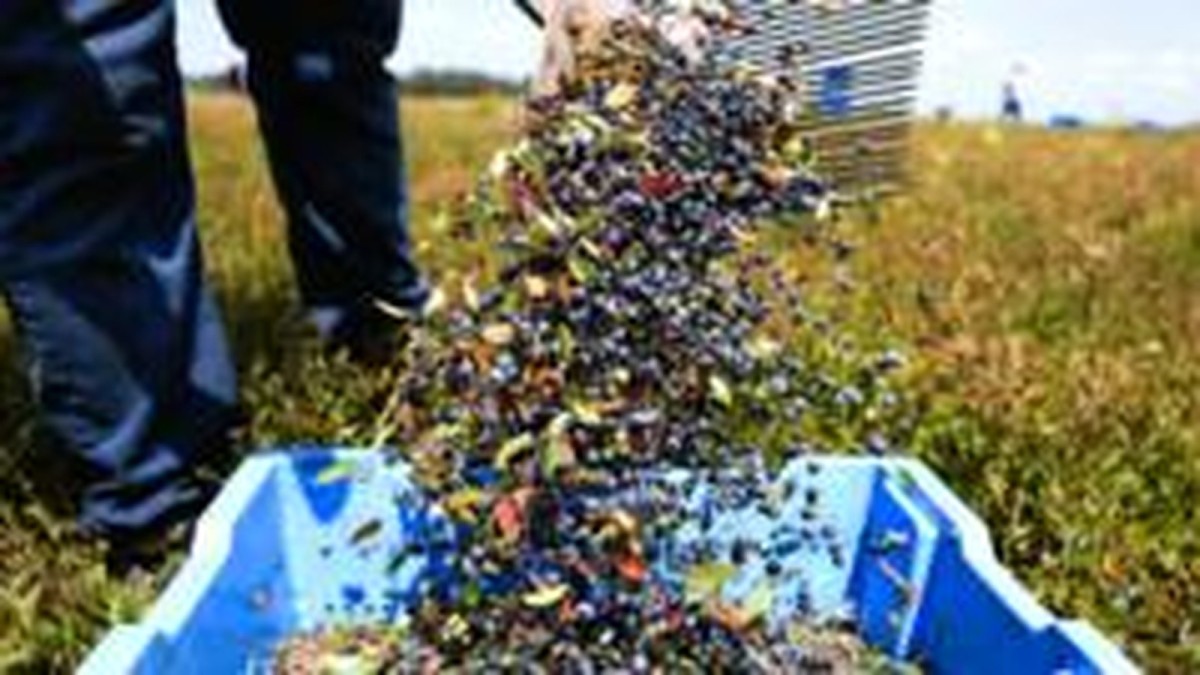
When the first day of the apple harvest rolled around in Washington State last year, the fruit was ripe but the heat turned the orchard into a sauna. Joel Carter of Okanagan Specialty Fruits remembers the temperature hitting the mid‑30s Celsius and the crew having to call it quits by ten in the morning. “It’s not safe for people to work in that heat,” he says, underscoring a problem that goes beyond bruised fruit – it’s about worker safety, labor costs and the narrow window when a crop can be picked. That moment sparked Carter’s interest in AI models that can predict not just ripeness but the exact days left before a heat wave makes harvesting impossible.
Seeing the orchard through a camera lens
Okanagan Specialty Fruits has been trialling a system from Canadian startup Vivid Machines. The setup mounts cameras on tractors, capturing a continuous stream of images as the vehicle moves through the rows. An on‑board AI parses the footage, flagging buds, flowers and fruit that would be invisible to the naked eye. Carter notes that the technology excels at spotting tiny flower buds, a detail that can help fine‑tune yield estimates. The cameras are already feeding back crop estimates and tentative harvest dates, giving the orchard a data‑driven “weather‑adjusted calendar” that could replace gut‑feel decisions.
However, Carter warns that the system’s forecasts hinge on the quality of the historical data fed into it. “It’s not something where an AI can scrape the internet and figure out the average yield for Granny Smith,” he explains. The model must be trained on farm‑specific records, making it a bespoke tool rather than a one‑size‑fits‑all solution.
FruitCast’s weather‑aware forecasts
Across the Atlantic, UK‑based FruitCast is offering a broader suite of AI‑driven predictions for berries, tomatoes and, soon, grapes. Co‑founder Raymond Martin says the platform ingests drone footage, smartphone video and vehicle‑mounted camera feeds, then layers weather and irrigation data to generate harvest windows. The company claims its forecasts land within 10 % of actual picked volume a week out (90 % accurate) and within 17 % three weeks out (83 % accurate), promising “less than 20 % error.”
FruitCast’s model is already being used by growers such as Angus Soft Fruits and by Driscoll’s independent growers in the UK, showing that larger commercial operations are testing the technology in real‑world conditions.
Why data matters more than gadgets
The accuracy gap between camera‑based counting and weather‑adjusted modelling highlights a core tension: raw imagery can tell you what’s on the tree, but without context it can’t tell you when to pull it. Carter points out that apples enjoy a three‑week harvest window, while berries may have only a few days before spoilage sets in. Martin adds that thermal stress from this year’s hot, drought‑stricken UK summer pushed many fruit plants into dormancy, shrinking the viable window and making precise forecasts even more critical.
Both Vivid Machines and FruitCast stress that their AI is only as good as the data streams they receive. Inconsistent sensor readings, gaps in historical yield records, or sudden micro‑climate shifts can degrade prediction quality, forcing growers to keep a human eye on the process.
Beyond the camera: millimetre‑wave ripeness detectors
Researchers at Princeton University, led by Yasaman Ghasempour, are probing a different angle: measuring the internal chemistry of fruit without cutting it. Their prototype uses millimetre‑wave radiation, which penetrates flesh and responds to humidity, water and sugar levels. In a trial at a New Jersey market, the device startled staff, but the underlying science suggests a future where a handheld scanner could tell a shopper—or a farmer—exactly how ripe a piece of fruit is, complementing visual AI cues with biochemical data.
If such detectors become affordable, they could feed richer datasets into models like FruitCast’s, tightening the link between measured sugar content and predicted harvest dates, especially for crops where a few days of over‑ripeness can mean disease loss.
Cost, confidence and the adoption hurdle
Cost remains a decisive factor for many growers. Kevin Wang at the University of Florida has demonstrated a crop‑counting tool that can be built from drones priced around $100, showing that low‑budget solutions exist. Yet Jing Zhang of North Carolina State University cautions that growers need confidence in the research behind any tool before committing resources. “Adoption is very complicated,” she says, noting that farmers must trust that a model will deliver actionable insight without exposing proprietary agronomic strategies.
Neill Finlayson, operations director at Angus Soft Fruits, echoes that sentiment, describing the current state as “still ongoing” and acknowledging that the industry is “some way from achieving a fully integrated forecasting ecosystem.” The gap between experimental pilots and a seamless, farm‑wide AI platform remains a key barrier.
What the next season could look like
Despite the challenges, the momentum is clear. Okanagan Specialty Fruits is already integrating Vivid Machines’ camera feed into daily planning, while FruitCast is expanding its crop roster to include grapes next year. As more growers experiment with low‑cost imaging and as academic labs refine non‑invasive ripeness sensors, the data pool will grow richer, potentially narrowing error margins further.
For the average farmer, the promise is simple: avoid a costly labor mismatch, dodge weather‑induced losses, and lock in better prices by hitting the exact ripeness window. For the tech firms, the prize is a subscription‑based service that could become as essential as irrigation pumps. The coming harvest season will be a live test of whether AI can move from a promising side‑kick to a core decision‑making partner on the orchard floor.
This article was produced with AI-assisted research and editorial support. Reporting is based on the source material cited below. Sources: BBC Technology; bbc.co.uk; Global1.News (02 October 2026).
By Nova Chen, Staff Writer
What's Your Reaction?
 Like
0
Like
0
 Dislike
0
Dislike
0
 Love
0
Love
0
 Funny
0
Funny
0
 Wow
0
Wow
0
 Sad
0
Sad
0
 Angry
0
Angry
0

Trend Reporter at Global1.News. Based in San Francisco, tracking the stories crossing from social platforms, forums, and community discussions into mainstream news — tech breakthroughs, cultural shifts, and world events that real people are engaging with right now.












Comments (0)