
Myanmar’s Leaders Tried to Erase My Rohingya Identity 11 Years Ago
In July 2015, a senior figure of Myanmar’s Union Solidarity and Development Party (USDP) invited a Rohingya parliamentarian to his residence in Naypyidaw.
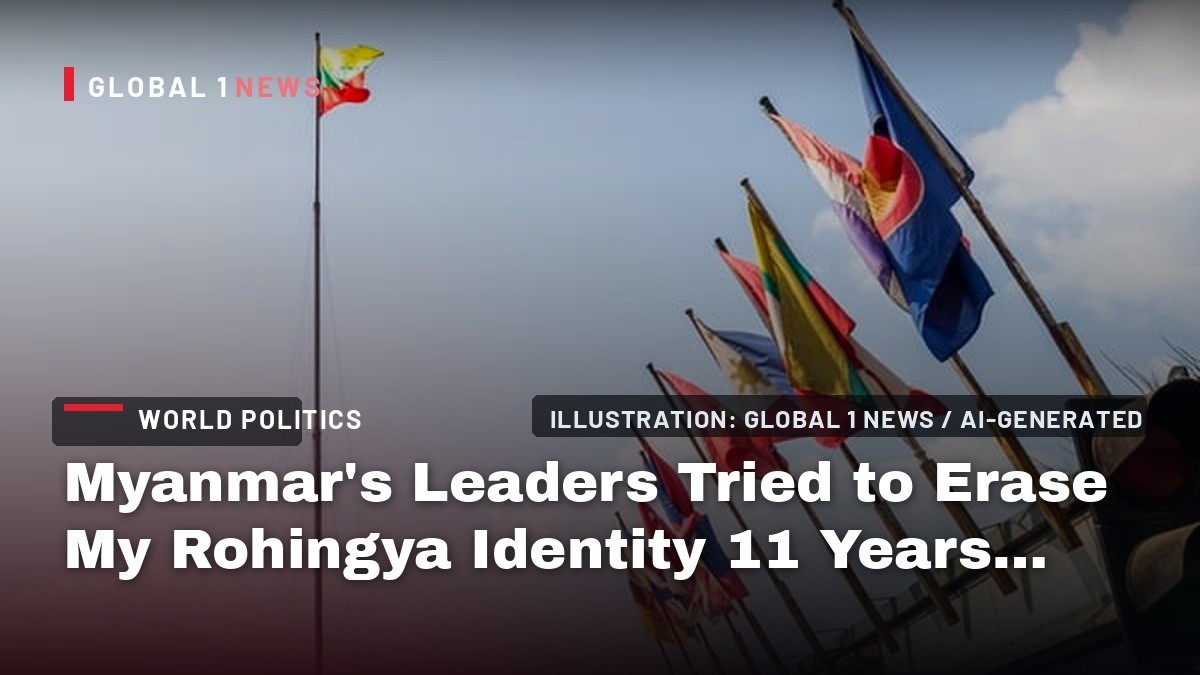
In July 2015, a senior figure of Myanmar’s Union Solidarity and Development Party (USDP) invited a Rohingya parliamentarian to his residence in Naypyidaw. The private meeting, which remained hidden for more than a decade, revealed the extent to which the ruling elite sought to suppress Rohingya identity in exchange for political survival. The episode, disclosed now by the former MP, underscores a persistent pattern of identity‑based bargaining that continues to shape ASEAN’s engagement with Myanmar’s military‑backed government.
The clandestine proposal
During the conversation, U Aung Thaung told the MP that the USDP leadership, President U Thein Sein, and then Commander‑in‑Chief Min Aung Hlaing did not recognise “Rohingya” as an ethnic group. He urged the MP to abandon advocacy for that identity and to persuade his constituents to identify as “Bengali” instead, presenting the shift as a pathway to citizenship documents and restored political participation. The request extended to a public media statement denying Rohingya identity, without naming the senior official who had made the demand.
The MP was told that his parliamentary nomination depended on his willingness to endorse the “no Rohingya, only Bengali” position. He refused, arguing that representation should protect community rights rather than barter them away. The request thus placed the MP at a crossroads between personal political ambition and the collective identity of his constituents.
Visual symbols of exclusion
While at the residence, the MP observed large portraits of President Thein Sein, Min Aung Hlaing, and nationalist Buddhist monk U Wirathu displayed together. An assistant confirmed that the office also served U Wirathu when he visited Naypyidaw. The presence of these three figures—military leadership, civilian president, and a hard‑line Buddhist nationalist—signalled a convergence of forces that have historically framed the Rohingya as “Bengali” migrants, thereby denying them citizenship.
Although the MP could not claim that he heard the president or commander‑in‑chief personally authorize the proposal, the visual tableau reinforced the perception that the request reflected a coordinated stance among Myanmar’s political and religious hardliners.
From resignation to disqualification
On 4 August 2015, the MP resigned from the USDP and, two days later, applied to run as an independent candidate for Buthitaung. On 22 August, the Maungdaw District Election Sub‑commission rejected his candidacy, citing the lack of Myanmar citizenship for his parents at the time of his birth in 1965. The MP appealed, presenting the same family documents he had used in the 2010 election, but the Rakhine State Election Sub‑commission upheld the rejection on 1 September, and the Union Election Commission affirmed the decision on 6 September.
This sequence highlighted a stark contradiction: the Union Election Commission had formally recognised the MP as an elected member after the 2010 election, issuing a certificate on 10 January 2011 that recorded his citizenship card. Five years later, the same authority deemed the same family documentation insufficient for candidacy, effectively barring the MP from contesting the seat he had previously held.
Documentation versus politics
The State Election Sub‑commission acknowledged that the MP’s father possessed a national registration card—a primary document for full citizenship—and that the MP’s maternal grandparents also held such cards. Nevertheless, the commission concluded that these records did not meet the citizenship qualifications required under election law. The MP maintained that he had submitted identical family documentation in both electoral processes, suggesting that the shift in interpretation was not purely legal but politically motivated.
While the official rulings do not directly link the disqualification to the private proposal, the timing and the abrupt change in standards raise serious questions about the role of political pressure in shaping electoral outcomes for Rohingya candidates.
Public advocacy and the broader Rohingya struggle
In November 2015, the former MP wrote an opinion piece for the New York Times describing the disenfranchisement of Rohingya voters and candidates. At that time, he did not disclose the private conversation that had precipitated his departure from the USDP. By revealing the meeting now, he aims to illustrate that the denial of Rohingya identity is not an isolated administrative issue but a systemic strategy employed by Myanmar’s power brokers.
The Rohingya question has long been framed by successive Myanmar authorities as a matter of “Bengali” migration, intertwining citizenship, documentation, and political participation with an identity narrative that delegitimises the community. The mass atrocities of 2017, which forced hundreds of thousands of Rohingya into Bangladesh, intensified international calls for accountability and highlighted the human cost of this identity politics.
Implications for ASEAN engagement
The episode underscores a broader challenge for ASEAN, which has traditionally treated the Rohingya crisis as a refugee‑management problem rather than a fundamental flaw in Myanmar’s political order. The private coercion of a Rohingya MP in 2015 demonstrates how the military and its civilian allies use identity denial as a tool to maintain control, complicating any diplomatic effort that does not address the root cause of exclusion.
Since the February 2021 military coup, Myanmar’s political landscape has become even more volatile, with the military consolidating power and further marginalising minority groups. ASEAN’s principle of non‑interference, while preserving regional stability, risks perpetuating a status quo that tolerates systematic discrimination against the Rohingya.
Looking forward: the need for an inclusive political order
The former MP’s testimony reveals that the struggle for Rohingya recognition is inseparable from Myanmar’s broader failure to establish an inclusive political order where citizenship and fundamental rights are protected without ethnic discrimination. The coercive attempt to rebrand Rohingya as “Bengali” in 2015, the subsequent disqualification despite consistent documentation, and the continued presence of nationalist symbols in official spaces all point to a governance model that privileges exclusion over inclusion.
For ASEAN to move beyond a humanitarian response and engage constructively with Myanmar’s military leadership, it must confront the political logic that underpins identity suppression. Only by linking the Rohingya question to the country’s overall democratic deficit can regional actors help create conditions where citizenship is defined by law, not by the whims of a ruling elite that equates dissent with disloyalty.
This article was produced with AI-assisted research and editorial support. Reporting is based on the source material cited below. Sources: The Diplomat; thediplomat.com; Global1.News (13 October 2026).
By Kenji Tanaka, Staff Writer
What's Your Reaction?
 Like
0
Like
0
 Dislike
0
Dislike
0
 Love
0
Love
0
 Funny
0
Funny
0
 Wow
0
Wow
0
 Sad
0
Sad
0
 Angry
0
Angry
0

Japan Correspondent at Global1.News. Tokyo-based voice covering Japanese politics, technology, economy, and culture. Tracks the intersection of tradition and innovation in one of the world's most dynamic societies.











Comments (0)