
Trump Pauses Tariffs on Canada, Cites Pending Trade Deal
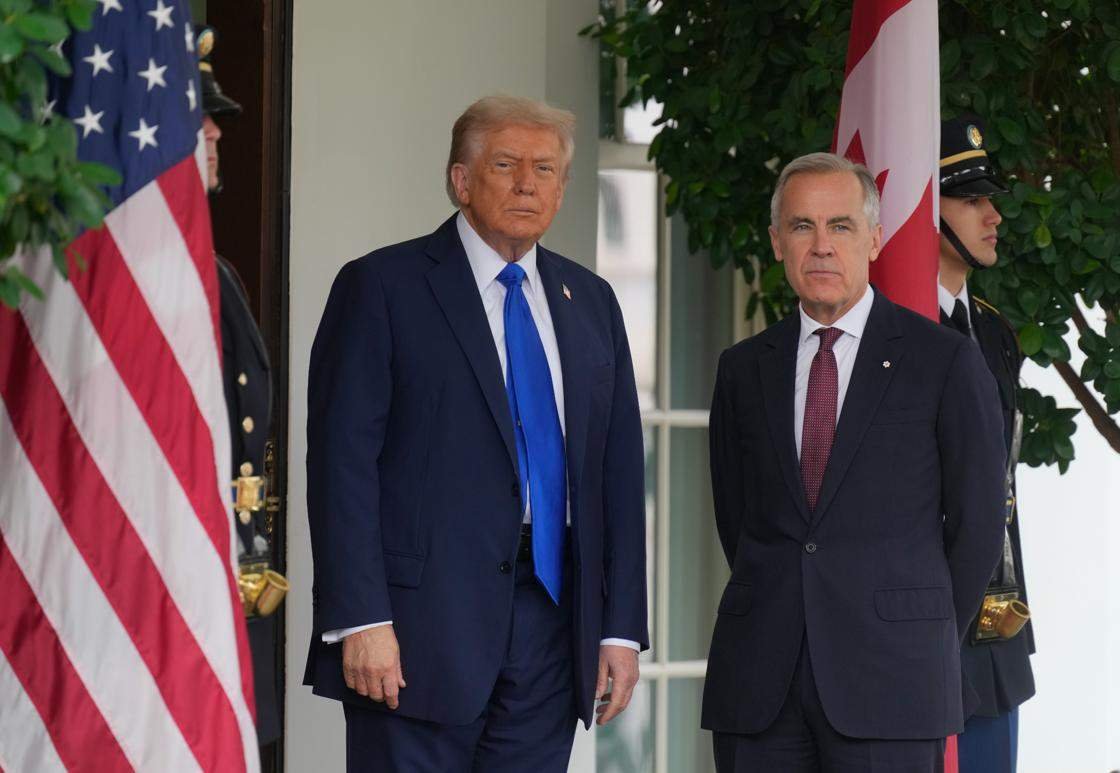
U.S. President Donald Trump announced late Tuesday that he has paused 50 per cent tariffs on Canadian goods for a three-day period, citing a pending agreement between the two countries. Prime Minister Mark Carney confirmed the suspension, which delays duties that were scheduled to take effect Wednesday morning, but cautioned that there was "important work still to be done" before a final deal could be secured.
Trump Pauses Tariffs on Canada, Cites Pending Trade Deal
U.S. President Donald Trump announced late Tuesday that he has paused 50 per cent tariffs on Canadian goods for a three-day period, citing a pending agreement between the two countries. Prime Minister Mark Carney confirmed the suspension, which delays duties that were scheduled to take effect Wednesday morning, but cautioned that there was "important work still to be done" before a final deal could be secured.
Tags: Trump tariffs, Canada trade deal, Mark Carney, Keystone XL, CUSMA, trade war, Canadian economy, US tariffs, Section 338, dairy, wine, Alberta oil
Eleventh-Hour Breakthrough
Ottawa – August 19, 2026 — The surprise announcement came via Trump's Truth Social platform late Tuesday evening, when the president declared the duties were delayed "based on the fact that Canada and the U.S.A., subject to the finalization of documents, have a DEAL!" The tariffs, which would have applied to roughly US$20.2 billion worth of Canadian exports, were set to take effect "tomorrow morning" before the last-minute pause.
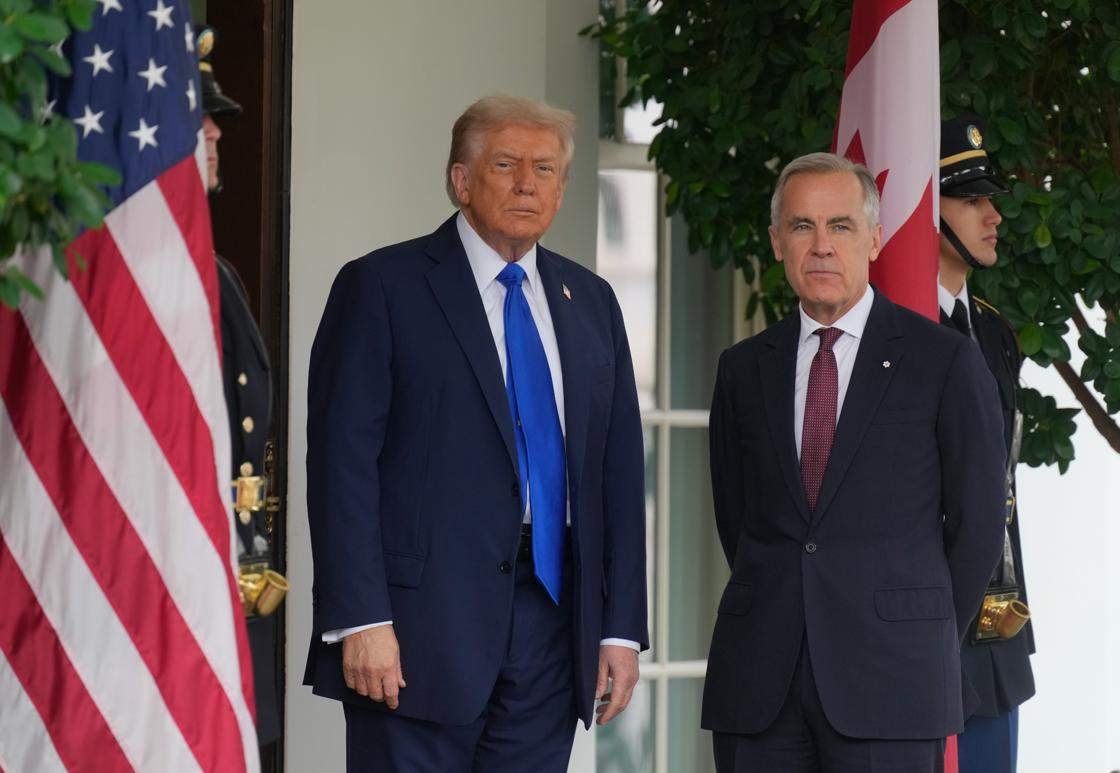
Prime Minister Carney confirmed shortly afterwards that Washington had agreed to suspend the tariffs until Aug. 22, 2026. The breakthrough followed direct talks between Trump and Carney on Tuesday, building on a phone call late Monday, after weeks of fraught trade negotiations that have strained the Canada-U.S. relationship to its breaking point.
The suspended tariffs would have targeted Canadian electronics, industrial machinery, furniture, dairy products and wine — goods that account for approximately five per cent of Canadian exports to the United States. Unlike previous tariff actions, these duties included no exemptions for goods covered under the Canada-United States-Mexico Agreement (CUSMA), marking a significant escalation in the trade dispute.
The Deal on the Table
Trump linked the breakthrough to reviving the Keystone XL Pipeline, a project that would carry approximately 830,000 barrels of crude oil per day between Alberta and Nebraska. "The great Keystone XL Pipeline, long ago killed by Sleepy Joe Biden, may be awoken from the grave!" the president wrote on Truth Social. Former U.S. president Joe Biden revoked a key permit for the pipeline in 2021, effectively killing the project after years of legal and environmental battles.
Carney acknowledged that "substantial progress" had been made in the negotiations but stopped short of declaring victory. "While we continue this work, Canada remains focused on building a stronger, more independent, and more competitive economy at home," the Prime Minister said in a statement. He has previously described the talks as "nasty," "delicate" and "intense," offering a glimpse into the difficult negotiations unfolding behind closed doors.
The inclusion of Keystone XL in the discussions has raised eyebrows among trade analysts. Andreas Schotter, professor of international business at Ivey Business School in London, Ont., suggested the pipeline's revival appeared to be an attempt to appeal to Trump's ego rather than a practical energy policy decision. "Not because of the oil transport benefits, but because it was President Biden who actually stopped it, and this, among many things, pushed the loudest of the multitude of big red 'ego' buttons with President Trump," Schotter said. "Let's see if we really get to a deal by Friday or if we are back at a Groundhog Day moment."
Canadian Context and Stakes
The trade dispute has its roots in Trump's invocation of Section 338 of the U.S. Tariff Act of 1930 — the first time the provision has been used — in response to what Washington called Ottawa's "discriminatory treatment" of U.S. automobiles, dairy products and alcoholic drinks. The move escalated tensions that have simmered since early last year, when the U.S. imposed earlier tariffs on Canadian goods and Canada retaliated.
The stakes could hardly be higher for the Canadian economy. Approximately 70 per cent of Canadian exports go to the United States, while the U.S. sends about 30 per cent of its exports to Canada. This deep economic integration means that disruptions to cross-border trade have immediate and significant consequences for businesses, workers and consumers on both sides of the border.
Canada's response to the earlier tariffs has been robust. Eight of Canada's 10 provinces have blocked sales of U.S.-made alcoholic beverages since early last year in retaliation, a measure that has reshaped retail shelves from Victoria to Halifax. The boycotts appear to have had a lasting impact on consumer behaviour: a Nanos Research poll conducted in July found that 69 per cent of Canadians said they were not likely to buy U.S. alcohol even if authorities lifted the bans.
Impact on Canadians
For Canadian businesses, the three-day pause offers a temporary reprieve but little certainty. The threatened tariffs would have hit a wide range of sectors, including wine producers in British Columbia and Ontario, dairy farmers in Quebec, and manufacturers of industrial machinery and electronics across the country. The Guardian reported that the duties would have affected a range of Canadian exports including wine and hockey sticks — a symbolic blow to Canadian cultural touchstones.
The broader economic context remains challenging. The trade dispute has already contributed to rising costs for Canadian consumers, and businesses have been forced to navigate a volatile policy environment that makes long-term planning difficult. Candace Laing of the Canadian Chamber of Commerce said it was paramount that the two countries secure a long-term agreement, warning that short-term pauses do little to address the underlying uncertainty facing Canadian businesses.
Public sentiment in Canada has shifted notably in response to the trade war. Angus Reid Institute polling conducted earlier in August found that 48 per cent of respondents had an unfavourable view of Americans, while 45 per cent held positive views — a significant deterioration in attitudes toward Canada's closest ally and largest trading partner. The polling suggests that the trade dispute has had a lasting impact on how Canadians view their southern neighbours.
Reactions and Analysis
Stewart Prest, lecturer of political science at the University of British Columbia, said the Canadian public's mood should not be underestimated as negotiations continue. "The majority of Canadians want to see our sovereignty defended, and are not interested in trade peace at any price," Prest said. His comments reflect a growing sentiment that Canada must stand firm on core principles even as it seeks to resolve the dispute.
The political dynamics in Ottawa are equally complex. Carney's government has walked a careful line between de-escalating tensions with Washington and demonstrating resolve to Canadian voters who have grown increasingly wary of U.S. pressure. The Prime Minister's framing of the negotiations as "nasty" and "delicate" suggests the talks have been far from smooth, even as both sides signal a willingness to reach an agreement.
For Trump, the pause represents an opportunity to claim a victory on a signature issue. The revival of Keystone XL, if it materialises, would deliver a symbolic win that resonates with his political base, particularly in energy-producing states. Whether the pipeline project can actually be revived after years of legal and regulatory obstacles remains an open question, however.
What Happens Next
The three-day window before the tariffs are scheduled to take effect will be critical. Negotiators on both sides are expected to work intensively to finalise the details of an agreement, with the Keystone XL pipeline appearing to be a central element of any deal. The Aug. 22 deadline looms large, and the consequences of failure would be immediate and severe: the reimposition of 50 per cent tariffs on US$20.2 billion worth of Canadian goods.
Carney's statement that "important work still to be done" suggests that significant hurdles remain. The scope of the agreement, the treatment of dairy and wine exports, and the fate of Keystone XL are all reportedly on the table. Whether the two leaders can bridge their differences within the tight timeframe is far from certain.
For Canadians, the coming days will determine whether the country can avoid the economic pain of renewed tariffs or whether it faces another round of uncertainty in a trade relationship that has become increasingly unpredictable. The outcome will also shape the political landscape in Ottawa, where Carney's handling of the negotiations will be closely scrutinised.
As the clock ticks toward Friday's deadline, one thing is clear: the Canada-U.S. trade relationship has entered a new and volatile phase, one in which the rules of the game can change at any moment. Canadians will be watching closely — and hoping that this time, a deal actually materialises.
By Alex Thompson, Staff Writer
This article was produced with AI-assisted research and editorial support. Reporting is based on sources cited in the article.
What's Your Reaction?
 Like
0
Like
0
 Dislike
0
Dislike
0
 Love
0
Love
0
 Funny
0
Funny
0
 Wow
0
Wow
0
 Sad
0
Sad
0
 Angry
0
Angry
0

Canada Correspondent at Global1.News. Based in Toronto, covering Canadian politics, energy, trade, and US-Canada relations. Provides the Canadian perspective on North American and global affairs.















Comments (0)