
Judgement day for Kenya pastor accused of ordering parents to starve their children to death
In the coastal district of Malindi, a courtroom drama is unfolding that has shaken Kenya and reverberated across the continent. The judge’s pronouncement marks the first time the pastor will be formally judged on the most serious of these accusations.
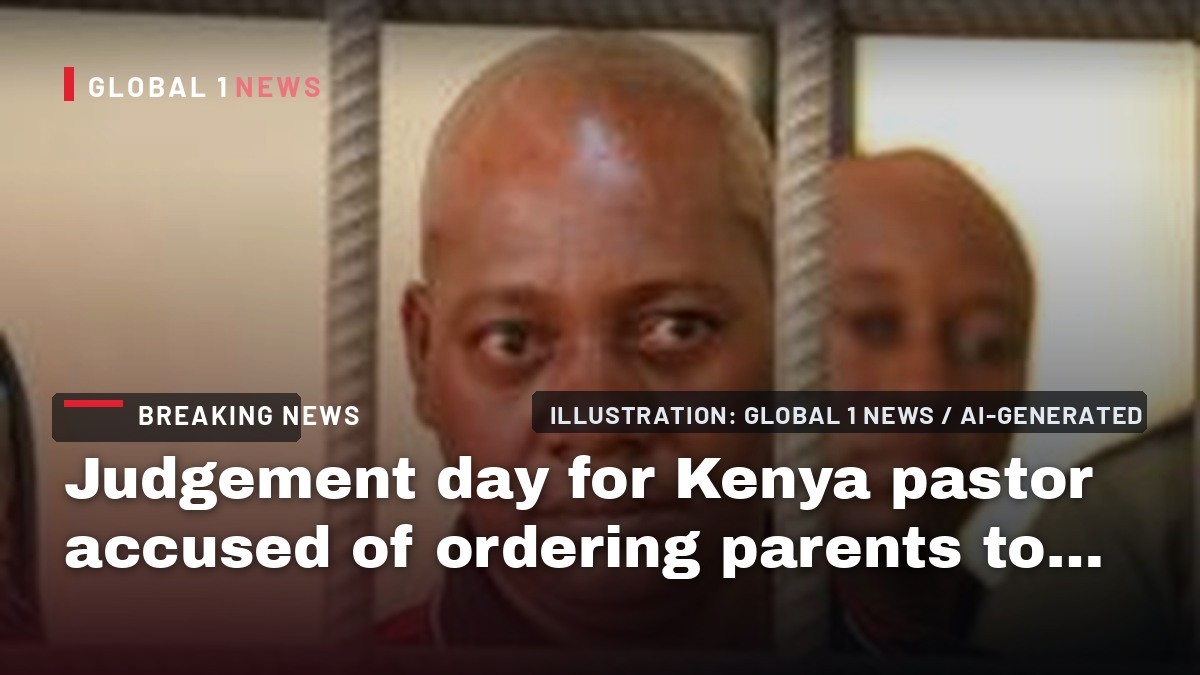
In the coastal district of Malindi, a courtroom drama is unfolding that has shaken Kenya and reverberated across the continent. Pastor Paul Mackenzie, the self‑styled doomsday preacher who built a sprawling cult known as Good News International Ministries, is now facing a verdict on the gravest of charges – the murder of 191 people, almost all of them children. As the judge reads the findings, the harrowing testimonies and the stark evidence of mass graves in Shakahola forest lay bare a tragedy that intertwines faith, fear and the denial of basic human rights.
The courtroom showdown
On 19 October 2026, a Kenyan judge began delivering a verdict in the case that has come to be known as the “Shakahola massacre.” Mackenzie and 29 of his followers have pleaded not guilty, insisting that no one was forced to die. Yet the prosecution, bolstered by the testimony of former head of security Enos Amanya Ngala – who turned state witness after a plea deal – has presented a damning dossier of 191 murder charges, 190 of them involving children.
The judge’s pronouncement marks the first time the pastor will be formally judged on the most serious of these accusations. While separate cases on terrorism, radicalisation and the denial of education continue to loom, the murder verdict will determine whether the court will label Mackenzie a mass murderer or a misguided religious leader whose followers chose a fatal path.
Shakahola forest: the hidden killing ground
Authorities uncovered more than 400 bodies in shallow graves scattered across Shakahola forest, a remote area near the Kenyan coast where Mackenzie relocated his followers after the main church closed in 2019. Gravediggers, hired from the nearby town, described the grisly task of digging the graves – often for a meagre wage of just eight dollars a day – and the shocking sight of multiple bodies stacked together.
One worker, identified only as James, recounted finding at least three bodies in every grave, with some graves holding twelve children arranged “like clothes, one on top of another.” The remains of infants only weeks old were described as having their hands and legs tied and wrapped in bedsheets, underscoring the calculated nature of the killings.
Survivors speak: lives torn apart
The human cost of Mackenzie’s doctrine is best heard in the voices of those who escaped the forest. Stephen Mwiti, 48, lost all six of his children to the cult. He recalled confronting Mackenzie and seeing “many bald women and tens of children” surrounding the pastor in his house, a scene that illustrated the total control the leader exerted over families.
Peter Shukrani, now 23, was rescued from the forest in March 2023 after weeks of illness. He described a community of mud‑walled houses where fasting was routine and medicine was banned. “My mother would throw away all the medicine I was supposed to take because she believed only God could heal me,” he said, a testimony that highlights how Mackenzie’s rejection of modern healthcare directly contributed to suffering and death.
The cult’s ideology: education, medicine and the ‘mark of the devil’
Good News International Ministries, founded in 2003, grew to thousands of followers across Kenya. Its sermons, broadcast on the church’s own Times TV station, blended apocalyptic warnings with conspiracy theories. Education was branded “evil,” modern medicine “against the doctrine,” and digital identity cards “the mark of the devil.” Such rhetoric created an environment where followers willingly abandoned school, refused medical treatment and accepted starvation as a path to spiritual salvation.
Followers were also instructed to forgo cosmetics and hairstyles, with women forced to shave or keep hair unkempt. The doctrine’s emphasis on “meeting Jesus” through extreme fasting led many to voluntarily abstain from food, a choice that, in the context of the forest’s isolation and lack of supplies, proved fatal for countless children.
The mechanics of the killings
Evidence presented in court shows that deaths occurred through a combination of starvation, strangulation and blunt force. Gravediggers described bodies that were “frail” and died in their arms as they were carried out of the forest. The sheer number of shallow graves – each holding multiple bodies – indicates a systematic process of disposing of the dead, rather than isolated incidents.
While Mackenzie’s supporters claim that no one was forced to fast, the testimonies of former members suggest a culture of coercion. Mothers, convinced by the pastor’s teachings, discarded life‑saving medication for their children. Men, women and children alike were told that modern medicine was “evil,” a belief that left the most vulnerable without any chance of survival.
Family divisions and internal dissent
The fallout has fractured families as well as the wider community. Dan Paul Mackenzie, the pastor’s son and former cameraperson for the church, testified that his father should be found guilty, describing him as “the leader, someone they were looking up to.” In contrast, Peter Shukrani, who grew up under Mackenzie’s influence, still views the pastor as “a good person who cares for me,” insisting that “Mackenzie didn’t force anyone to fast. People made those choices by themselves because of their beliefs.”
These divergent perspectives illustrate the deep psychological grip Mackenzie held over his followers, a grip that persisted even after the main church closed and the community retreated into the forest. The split also underscores the challenge of disentangling genuine belief from manipulation in cases of extremist religious movements.
What the verdict means for Kenya and beyond
Should the judge convict Mackenzie on the murder charges, Kenya will set a precedent for confronting religious cults that violate basic human rights. A conviction would reinforce the state’s commitment to protect children from harmful doctrines, and could pave the way for stricter regulation of faith‑based organisations that operate outside the law.
Beyond the legal ramifications, the Shakahola tragedy forces a broader reflection on how poverty, limited education and fragile health systems can make communities vulnerable to charismatic leaders promising salvation. As Africa continues to grapple with the balance between religious freedom and the protection of fundamental rights, the outcome of this case will serve as a stark reminder that faith, when weaponised, can become a conduit for unspeakable cruelty.
This article was produced with AI-assisted research and editorial support. Reporting is based on the source material cited below. Sources: BBC News Africa; bbc.co.uk; Global1.News (19 October 2026).
By Amara Diop, Staff Writer
What's Your Reaction?
 Like
0
 Dislike
0
 Love
0
 Funny
0
 Wow
0
 Sad
0
 Angry
0

West Africa/Sahel Correspondent at Global1.News. Dakar-based journalist covering politics, security, climate, and development across Francophone and Anglophone West Africa. Tells the stories of a region undergoing profound transformation.











Comments (0)