
Why stealing pumpkins for newlyweds is a blessing in ancient Chinese tradition
In the waning light of the Mid‑Autumn Festival, a tradition once whispered among the fields of northern China continues to echo in modern cultural memory: the clandestine gathering of youths to pilfer pumpkins from the harvest.
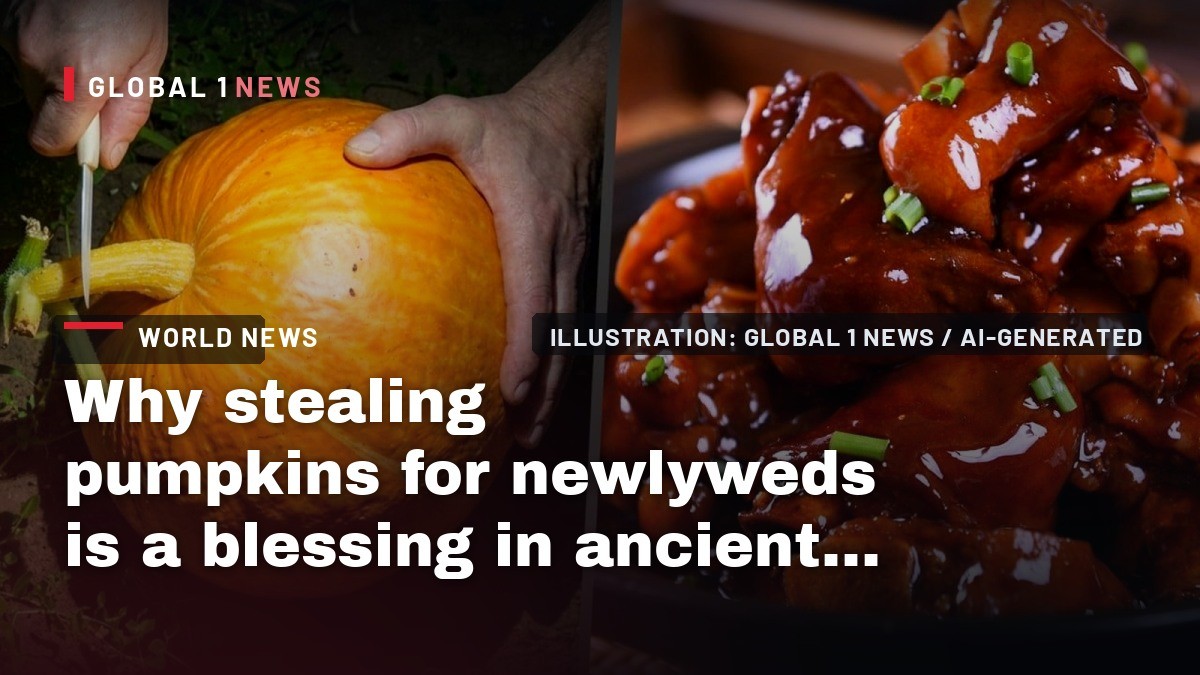
In the waning light of the Mid‑Autumn Festival, a tradition once whispered among the fields of northern China continues to echo in modern cultural memory: the clandestine gathering of youths to pilfer pumpkins from the harvest. Far from a petty crime, this ritual, recorded in Qing‑era documents and persisting into the Republican period, was woven into the seasonal tapestry of fertility, health and communal good fortune. Understanding why such an act was not merely tolerated but celebrated offers a window into how ancient Chinese societies linked the rhythms of nature with the aspirations of family and the social fabric of rural life.
Seasonal Symbolism and the Autumn Harvest
The pumpkin, with its robust, round form and abundant flesh, has long stood as a symbol of abundance and vitality in Chinese agrarian culture. In the northern provinces, where the harvest season marks a decisive turn from the toil of summer to the preparation for winter, the pumpkin’s arrival was a visual affirmation of the year’s success. The act of placing a pumpkin under a wedding quilt, as noted in some northern communities, directly connected this seasonal bounty to the hope for future generations, suggesting that the fruit’s capacity to nurture could be transferred to the marital bond.
Beyond its symbolic weight, the pumpkin’s physical presence in the ritual calendar reinforced the deep interdependence between agricultural cycles and social rites. By aligning the theft of pumpkins with the Mid‑Autumn Festival—a night already steeped in moonlit reverence and communal gatherings—participants embedded their personal desire for prosperity within the broader communal celebration of the harvest.
The Mid‑Autumn Night Pilgrimage
Historical accounts from the Qing dynasty (1644–1912) describe groups of young people assembling under the full moon to stealthily enter fields and seize pumpkins. This nocturnal venture was not a random act of mischief; it was a coordinated, seasonal pilgrimage that mirrored the festival’s themes of reunion and reflection. The timing—mid‑autumn—was crucial, as the moon’s brightness offered both cover and a celestial backdrop that underscored the ritual’s connection to natural cycles.
Participants approached the act with a mixture of reverence and youthful daring. The secrecy of the night, the communal coordination required, and the shared risk of being caught created a bond among the youths that extended beyond the immediate act. In many ways, the pumpkin theft functioned as a rite of passage, marking the transition from adolescence to a more socially engaged adulthood within the rural community.
Farmers’ Tolerance and Communal Reciprocity
Contrary to modern expectations of property rights, farmers in the Qing era often tolerated, and even welcomed, the pumpkin raids. Records indicate that the practice was not viewed as wrongdoing; instead, it was perceived as a mutually beneficial exchange. By allowing youths to take pumpkins, farmers reinforced communal ties and ensured that the symbolic blessings associated with the fruit would circulate back to the community, enhancing collective goodwill.
This tolerance can be understood as part of a broader system of reciprocity that underpinned rural life. In societies where the success of the harvest depended on communal labor and shared resources, the act of gifting—or allowing the taking of—a pumpkin carried a social currency that strengthened relationships between landowners and younger generations.
Evolution Through the Republican Era
By the Republican era (1912–1949), the pumpkin‑stealing tradition had become especially prevalent in rural locales. The continuity of the practice across dynastic change suggests that its cultural resonance transcended political transformations. As China grappled with modernization and shifting social structures, the ritual persisted as a touchstone of rural identity, offering continuity amid uncertainty.
The prevalence of the custom during this period also reflects the adaptability of folk practices. While the political landscape evolved, the core symbolism—linking the pumpkin to fertility, health and good fortune—remained intact, allowing the tradition to survive as a living expression of communal values.
Ritual Elements: Scales and Meat
The source material mentions related customs such as sitting on giant hanging scales and consuming extra meat during the autumn celebrations. These practices, like the pumpkin theft, illustrate a broader pattern of physically manifesting abstract hopes for prosperity. The hanging scales, often used in market settings, symbolized balance and fairness, while the act of eating additional meat signified abundance and the sharing of wealth.
When combined, these rituals formed a cohesive narrative: the community measured its fortunes, partook in the bounty, and engaged in symbolic acts—like stealing pumpkins—to invite continued prosperity. Each element reinforced the others, creating a layered ceremonial experience that tied the physical act of consumption to the metaphysical desire for ongoing good fortune.
Contemporary Reflections and Cultural Memory
Although the practice of nocturnal pumpkin theft is no longer commonplace, its memory persists in regional folklore and cultural festivals. Modern observers can trace the lineage of contemporary autumn celebrations back to these ancient rites, recognizing how historical practices inform present‑day customs. The lingering image of a pumpkin placed beneath a wedding quilt, for instance, continues to appear in wedding preparations in certain northern areas, serving as a tangible link to ancestral hopes for generational continuity.
In today’s Japan‑centric perspective on East Asian traditions, the pumpkin ritual offers a comparative lens for understanding how societies embed agricultural symbols within life‑stage ceremonies. It underscores a shared cultural logic across the region: the use of seasonal produce as a conduit for expressing aspirations related to health, fertility and communal well‑being.
Analytical Insights: What the Tradition Reveals About Rural Social Structures
From an analytical standpoint, the pumpkin‑stealing tradition illuminates several key aspects of historical rural Chinese society. First, it demonstrates the fluidity of property concepts in agrarian contexts, where communal benefit could outweigh strict individual ownership. Second, it highlights the role of youth in perpetuating cultural continuity, using daring yet symbolic acts to cement their place within the community.
Finally, the endurance of the practice through dynastic and republican transitions suggests that deeply rooted rituals can act as stabilizing forces, preserving social cohesion even as external political forces shift. By examining such customs, scholars gain insight into the mechanisms by which rural societies negotiate change, maintain identity, and embed their values in the natural cycles that dominate their livelihoods.
This article was produced with AI-assisted research and editorial support. Reporting is based on the source material cited below. Sources: South China Morning Post; scmp.com; Global1.News (18 October 2026).
By Kenji Tanaka, Staff Writer
What's Your Reaction?
 Like
0
Like
0
 Dislike
0
Dislike
0
 Love
0
Love
0
 Funny
0
Funny
0
 Wow
0
Wow
0
 Sad
0
Sad
0
 Angry
0
Angry
0

Japan Correspondent at Global1.News. Tokyo-based voice covering Japanese politics, technology, economy, and culture. Tracks the intersection of tradition and innovation in one of the world's most dynamic societies.













Comments (0)