
Gaza security-linked website warns of increased Israeli intelligence activity ahead of parliamentary elections
As Israel prepares for its parliamentary elections on 27 October 2026, a new wave of intelligence activity is sweeping the Gaza Strip, raising fresh fears of targeted killings among Palestinian armed groups.
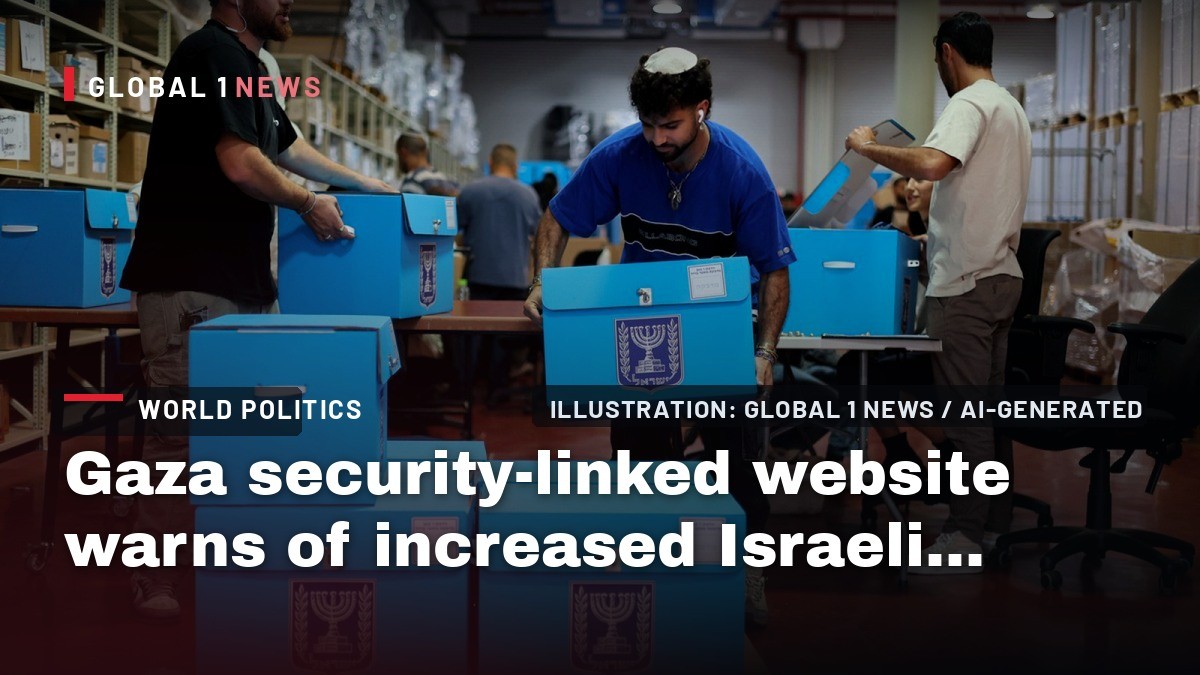
As Israel prepares for its parliamentary elections on 27 October 2026, a new wave of intelligence activity is sweeping the Gaza Strip, raising fresh fears of targeted killings among Palestinian armed groups. The warning, issued by Al‑Majd Security—a website that describes itself as close to the security networks of Gaza’s armed factions—highlights a surge in Israeli drone surveillance and low‑altitude flights over residential neighborhoods. The alert underscores the human cost of a conflict that increasingly folds electoral politics into the calculus of security operations, and it brings into sharp focus the international‑law implications of extrajudicial killings in a densely populated enclave.
Election‑time escalation of Israeli intelligence
Al‑Majd Security reported that field observations and intelligence assessments collected over the past week indicate a marked increase in Israeli surveillance across Gaza. The website specifically noted a higher frequency of unmanned aerial vehicles, including the locally known “zannana” drones, which are used for real‑time imaging and signal interception. The presence of these drones, according to the source, signals a deliberate intensification of intelligence gathering as the Israeli election campaign reaches its climax.
The report also mentioned that other, unnamed drones have been seen operating at low altitudes near civilian homes. Such low‑level flights, the website warned, could be a prelude to surprise attacks, a tactic that would heighten the risk of collateral damage in already crowded neighborhoods. The timing of these operations, coinciding with the final weeks before the 27 October vote, suggests that Israeli security agencies are seeking to shape the security environment ahead of the ballot.
Threats of targeted assassinations
Al‑Majd Security linked the surge in aerial surveillance to a broader threat narrative emerging from Israeli security officials. The website cited statements from Israel’s internal security agency, Shin Bet, indicating that the agency is prepared to carry out targeted assassinations of leaders, members and security personnel affiliated with Palestinian armed groups, both within Gaza and beyond its borders. This threat, articulated in the days leading up to the election, reflects a strategic calculus that seeks to neutralise perceived threats before a new government takes office.
The prospect of targeted killings raises profound concerns under international humanitarian law, which obliges parties to a conflict to distinguish between combatants and civilians and to take all feasible precautions to minimise civilian harm. Extrajudicial killings, especially when conducted without transparent legal processes, risk violating the right to life protected by the International Covenant on Civil and Political Rights, to which Israel is a party. The heightened surveillance, therefore, is not merely a technical development but a prelude to actions that could breach fundamental human‑rights norms.
Human impact on Gaza’s civilian population
For residents of Gaza, the increased drone activity translates into a daily sense of vulnerability. The low‑altitude flights reported by Al‑Majd Security have been observed hovering over residential districts, where families live in tightly packed homes and where any miscalculation could result in civilian casualties. The psychological toll of living under constant aerial observation is compounded by the fear that a sudden strike could follow the surveillance, a pattern that has been witnessed in previous operations.
Human‑rights organisations have long documented the trauma inflicted on Gaza’s civilian population by military operations that blur the line between combatants and non‑combatants. The current escalation, set against the backdrop of an upcoming Israeli election, threatens to intensify that trauma. Families are forced to adopt heightened security measures, limit movement, and endure the constant hum of drones overhead—conditions that erode the basic right to a safe and secure environment.
Political calculations behind the intelligence surge
The timing of the intelligence escalation suggests that Israeli authorities are seeking to influence the electoral narrative. By demonstrating a robust security posture ahead of the vote, political leaders can present themselves as protectors of national security, a theme that has historically resonated with Israeli voters. The reference to Shin Bet’s willingness to conduct targeted assassinations abroad also serves to project an image of decisive action against perceived threats.
Such political calculus, however, carries the risk of normalising the use of lethal force as a tool of domestic politics. When electoral cycles become intertwined with military operations, the line between legitimate security measures and political intimidation can become dangerously thin. This dynamic threatens to undermine democratic norms by allowing security considerations to dominate political discourse, potentially marginalising voices that call for restraint and adherence to international law.
International‑law perspective on targeted killings
Targeted assassinations, especially when carried out outside the territory of an active armed conflict, are subject to stringent legal scrutiny. International law requires that any use of lethal force be proportionate, necessary, and directed at individuals who are actively participating in hostilities. The statements attributed to Shin Bet, indicating a willingness to conduct such operations both within and beyond Gaza, raise questions about the legal basis for these actions.
Moreover, the principle of sovereignty underpins the prohibition against extrajudicial killings on foreign soil without the consent of the host state. While Israel contends that armed groups operating from Gaza constitute a security threat, the lack of transparent judicial oversight for targeted killings challenges the legitimacy of such operations under both international humanitarian law and human‑rights law. The current surge in surveillance could be interpreted as preparatory steps for operations that may test these legal boundaries.
Responses from Palestinian armed groups
Al‑Majd Security’s warning reflects a broader concern among Gaza’s armed factions about the heightened Israeli intelligence presence. The website urged members and senior figures within these groups to increase vigilance and adhere to security precautions. This call for heightened alertness indicates that the groups anticipate possible Israeli operations and are preparing defensive measures to protect their leadership and infrastructure.
The public nature of the warning also serves a communicative function: it signals to the Palestinian population that the armed groups are aware of the threat and are taking steps to mitigate it. By broadcasting the intelligence surge, Al‑Majd Security seeks to rally internal solidarity and perhaps deter Israeli planners by demonstrating that the groups are not passive targets but are actively monitoring the situation.
Potential scenarios and the way forward
Given the convergence of electoral politics, heightened surveillance, and explicit threats of targeted assassinations, several scenarios could unfold in the coming weeks. One possibility is that Israeli forces will conduct limited, precision strikes against identified leaders of armed groups, leveraging the intelligence gathered by drones to locate targets. Such strikes could trigger retaliatory attacks, further escalating the cycle of violence.
Another scenario involves a broader security clampdown, with increased checkpoints, raids, and arrests aimed at dismantling the operational networks of Palestinian factions. This approach would intensify the humanitarian impact on Gaza’s civilian population, as more areas become subject to military control.
Regardless of the path taken, the international community must monitor these developments closely. Human‑rights observers and legal experts should document any incidents of targeted killings, assess compliance with international law, and call for accountability where violations occur. For the people of Gaza, the immediate priority remains survival under an increasingly oppressive security environment, while the broader political context underscores the need for a durable solution that respects both security concerns and the fundamental rights of Palestinians.
This article was produced with AI-assisted research and editorial support. Reporting is based on the source material cited below. Sources: Middle East Monitor; middleeastmonitor.com; Global1.News (19 October 2026).
By Fatima Al-Rashid, Staff Writer
What's Your Reaction?
 Like
0
 Dislike
0
 Love
0
 Funny
0
 Wow
0
 Sad
0
 Angry
0

Gulf/MENA Correspondent at Global1.News. Based in Doha, covering Gulf politics, energy markets, diplomacy, and development across the Middle East and North Africa. Tracks the economic transformation of the Gulf states.














Comments (0)