
Lebanon Finds a Tunnel in Metn as the Army Closes Ranks Around a Hezbollah Explosives Case
Lebanese Army Intelligence and the Engineering Regiment were sent to a pine forest in Metn after municipal police found a concealed tunnel, as the army stepped up patrols in Beirut and President Joseph Aoun prepared to meet his security chiefs over a Hezbollah explosives case.
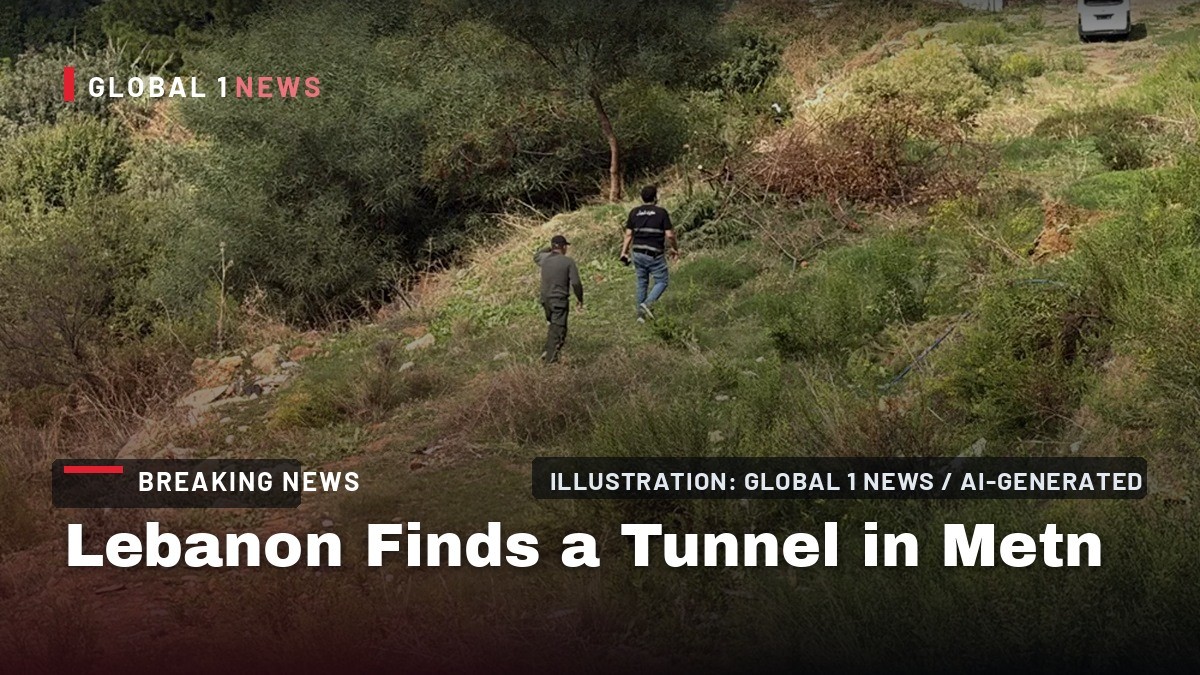
Lebanese Army Intelligence personnel and the Engineering Regiment were sent to a pine forest in the Metn district east of Beirut on Monday after municipal police found a tunnel with its entrance hidden under tree branches. The find landed the same day the army put armed convoys back on the capital's streets, and with President Joseph Aoun due to sit down with his security commanders over a separate but connected file: hundreds of kilograms of explosives seized from Hezbollah.
Lebanon Finds a Tunnel in Metn as the Army Closes Ranks Around a Hezbollah Explosives Case
Beirut, Lebanon — The tunnel, roughly 20 metres long with an iron ladder visible inside, sits in woodland between the neighbourhoods of Al-Fanar and Al-Zaatriya, next to the Ruwaisat al-Jadida area. Its nature has not been determined. The find lands in the middle of a widening confrontation over half a tonne of explosives seized at a Bekaa checkpoint on 5 October, a shipment Hezbollah has publicly claimed as its own.
A Tunnel Behind the Pines
Fanar municipal police found the tunnel inside a pine forest lying between Al-Fanar and Al-Zaatriya, adjacent to the Ruwaisat al-Jadida area in the Metn district, according to Al-Quds Al-Arabi. The entrance had been concealed with tree branches. An iron ladder was visible inside. The passage runs about 20 metres. Army Intelligence personnel and the Army's Engineering Regiment went to the site to inspect it, An-Nahar reported. The area is described as adjacent to a zone under Hezbollah influence. The army has not said who built the tunnel or who used it, and no confirmed link has been established between the tunnel and the explosives shipment seized in the Bekaa. Some Lebanese reports played the find down, describing it as an unfinished tunnel project of roughly 20 metres that is not currently in service but could be preparatory, Al-Liwaa reported. The site remained under investigation on Monday.
What the Army Actually Found
The army has not determined what the tunnel is for. Reporting states explicitly that its nature has not been established, that it is not known whether it is for military use, and that investigations are ongoing at the site. The Engineering Regiment's presence points to a technical assessment rather than a conclusion. No statement has been issued naming a builder, a user or a purpose. Some Lebanese reports played the find down, describing what was uncovered as an unfinished tunnel project of roughly 20 metres that is not currently in service but could be preparatory. The location is what gave the find its weight: the woodland sits on the boundary between the Christian-majority neighbourhoods of Al-Fanar and Al-Zaatriya and the Ruwaisat al-Jadida area, which is described as falling under Hezbollah's influence. Officials have not connected the tunnel to the explosives seized in the Bekaa, and the army has not attributed it to any party.
Gemayel's Demand: A Full Sweep
Kataeb Party leader Sami Gemayel said he contacted the Defence Minister on the morning of 19 October and asked him to have the army and the security forces carry out a comprehensive security sweep of the Ruwaisat al-Jadida area and its surroundings after the tunnel was found. Gemayel said the minister responded positively to the request, according to a statement on the Kataeb Party website. He described the tunnel in Metn, the explosives shipment at Dahr al-Baidar and the confrontations with the security forces in the Dahieh as "dangerous indicators" that required a final end to what he called the duality of weapons and of Hezbollah's military organisation across all Lebanese territory. The demand places the tunnel inside the broader argument over weapons outside state control, the same argument that has run since the government's March decision banning Hezbollah's military and security activities. The Defence Ministry has not published its own account of the call.
The Army on the Streets of Beirut
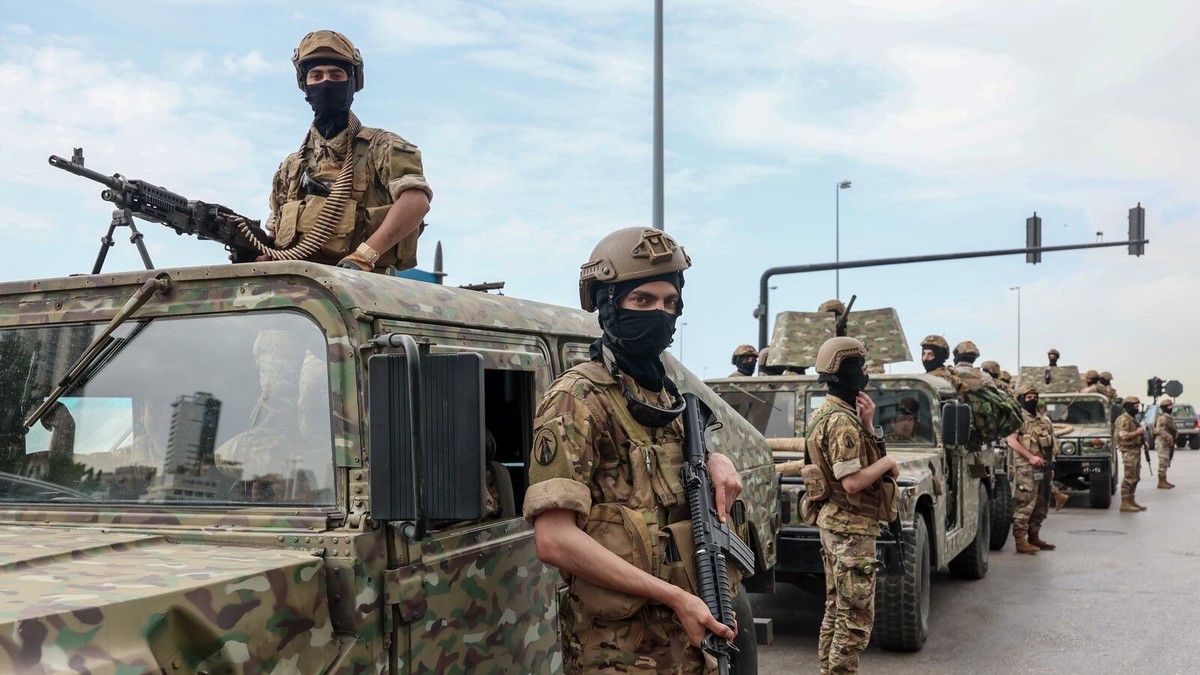
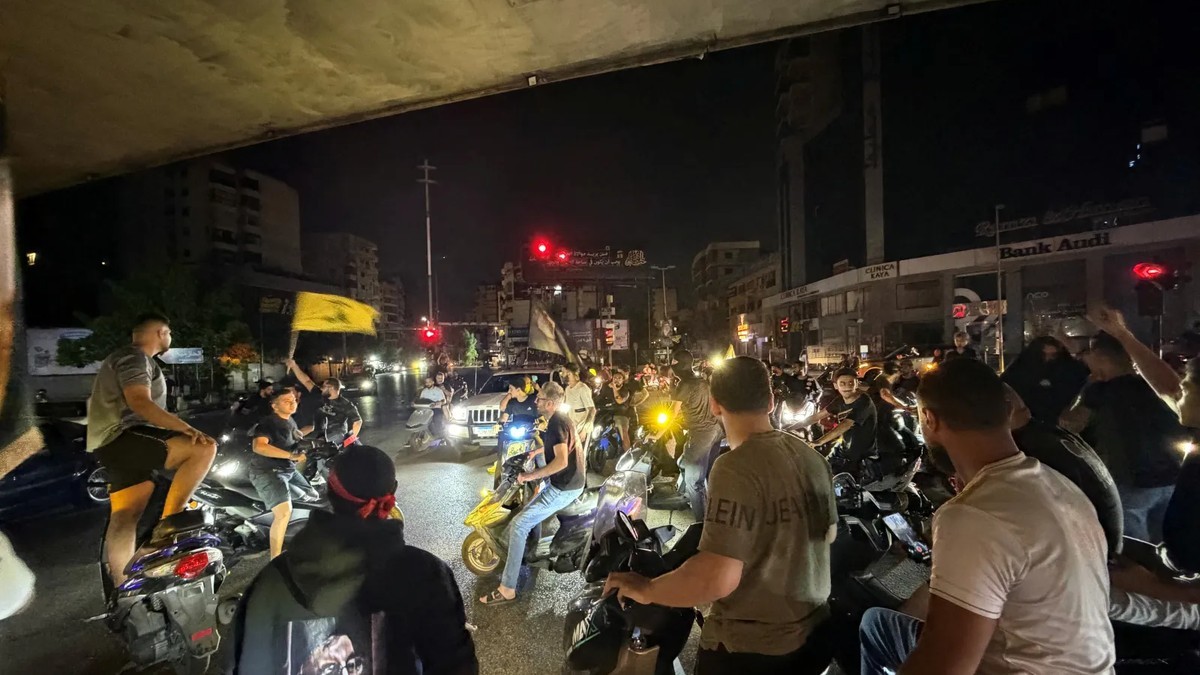
The Lebanese Armed Forces stepped up patrols in Beirut and its southern suburbs on Monday, publishing images of heavily armed convoys and temporary checkpoints set up "to pursue wanted individuals and those disrupting security", The National reported. The deployment followed a raid that turned into a standoff. Police were sent to a warehouse holding spoiled medicines in the Gallerie Semaan neighbourhood on the edge of the southern suburbs, acting on a prosecutor's order. According to the Internal Security Forces, officers were quickly surrounded by "a number of young men gathered on their motorcycles [who] attempted to prevent the force from raiding the warehouse". The army was deployed to calm the situation and the depot was sealed. Hezbollah said the ISF had entered "without following the agreed procedures between the group and security authorities". Mohammed Qassem, son of Hezbollah Secretary General Naim Qassem, denied any link to the warehouse after rumours circulated online. Prime Minister Nawaf Salam separately ordered authorities to "expand the investigation" into the explosives interception at Dahr Al Baidar.
The Shipment at Dahr al-Baidar
On 5 October a minivan was stopped at a checkpoint at Dahr el-Baydar on the highway between the Bekaa Valley and Mount Lebanon. Lebanese security forces found hundreds of kilograms of explosives, including TNT and C-4, and detained the two people in the vehicle. The quantity is disputed. The National reports that Hezbollah claimed ownership of 250kg of TNT-type explosives and 250kg of C-4. The Long War Journal and other Lebanese reports say nearly 800 kilograms. Al Jazeera and Reuters say hundreds of kilograms. The precise total is not settled. Sources familiar with the investigation told LBCI the explosives originated in Syria, crossed the border and were handed over in the Hermel area before being moved to Baalbek, from where they were to be taken to Beirut's southern suburbs before the ISF checkpoint intercepted them. No charges connected to a specific attack have been announced.
Hezbollah's Answer
On Thursday 15 October Hezbollah MP Hassan Fadlallah said the explosives belonged to Hezbollah and demanded their return along with the release of the two detainees. "From the moment the vehicle was detained, the relevant bodies within [Hezbollah] immediately contacted the security and judicial agencies and informed them that the vehicle and its cargo belonged to the resistance," Fadlallah said, according to Al Jazeera. "They demanded the immediate release of those detained and the return of the vehicle and everything inside it, as these are capabilities used by the resistance to confront the Israeli occupation of our land in the south." He said the material was meant for use against Israel, not internally against the Lebanese government or other factions. "We therefore warn the [Lebanese] authorities of the consequences of continuing to escalate their measures," he said. Hezbollah's opponents fear smuggled explosives will be turned against the group's detractors. Prime Minister Salam has pointed out that C-4 had been used in previous assassinations, though investigators have not established that the seized shipment was intended for such an attack.
Drones, or Something Else
A Hezbollah official and a Lebanese security source told Reuters the seized explosives were intended for explosive drones targeting Israeli troops. Hezbollah has not admitted carrying out assassinations, despite repeated accusations, including the 2005 killing of former prime minister Rafik Hariri. Marcel Baloukji, a former brigadier general who oversaw the Lebanese Army's border committee with Syria, told Al Jazeera that the recent busts, particularly Dahr el-Baydar, were connected to the wider regional security situation, including the US-Israeli war on Iran and the intensification of violence between Yemen's Houthis and Saudi Arabia. He said Hezbollah may need explosives for drones to attack Israeli forces in the south. The group's own account, given by Fadlallah, frames the material as resistance stockpile against Israel. Its critics frame it otherwise. No published finding has settled the question, and the investigation ordered by Salam on Monday is meant to identify those involved and those behind them.
A Warrant Report and a Back Channel
On Saturday 17 October the newspaper Al-Akhbar reported that Lebanon's Public Prosecutor Rami Al-Hajj had issued arrest warrants for Hussein al-Abdallah, head of Hezbollah's Liaison and Coordination Committee. No further details were given about the reasons or whether other warrants were issued. The report has not been independently confirmed. Al-Abdallah succeeded Wafiq Safa as head of Hezbollah's Liaison and Coordination Unit, known as Unit 927, in February 2026, a change reported by Al Jadeed and confirmed by two Hezbollah officials to the Associated Press. The unit manages the group's relations with Lebanese state institutions, including the judiciary, the security agencies, the army and political parties. On 13 October Asharq Al-Awsat reported that al-Abdallah had contacted Lebanese military and security commanders to recover the shipment, without success. Citing a parliamentary source close to Hezbollah and its ally Amal, the newspaper said Hezbollah wanted the explosives to counter a possible Israeli advance into southern Lebanon.
Washington, Tehran and the Money
US Secretary of State Marco Rubio spoke with President Aoun on 15 October about the confiscation. A US State Department official said Rubio urged Aoun to hold accountable those who ordered, financed and directed the shipment and "underscored that returning explosives to (Hezbollah) should be out of the question". Rubio also urged direct military-to-military communication between Lebanese and Israeli forces "for deconfliction". Aoun told Rubio the army and security forces were fully carrying out decisions to prevent armed displays, confiscate weapons and combat smuggling, and asked him to press Israel to halt attacks on southern towns and villages. Separately, Reuters reported that Iran had provided Hezbollah with $200m to ease the burden on Lebanon's Shia population after three years of war. A US State Department official denied that Iran, under stringent economic pressure, was able to transfer the funds to its Lebanese ally. Hezbollah announced on 13 October it would pay $14,000 for each destroyed home in Beirut and its suburbs and $12,000 for homes outside the capital, plus a furniture allowance. At the weekend, at a meeting of the Organisation of Islamic Cooperation in Baghdad, Lebanese Foreign Minister Youssef Raggi demanded that Iran stop interfering in Lebanon's internal affairs and stop supplying Hezbollah with weapons and funds. "Convinced that there can be no sovereignty when weapons are held by multiple parties, no stability when decisions are made outside state institutions, and no sustainable development without a strong and capable state," Raggi said, the government had decided in August 2025 to place weapons exclusively in the hands of the legitimate security forces.
The Meeting at the Palace
President Joseph Aoun was due to chair a meeting of the country's security chiefs at the presidential palace on the afternoon of Monday 19 October to review recent developments, including the explosives shipment, Asharq Al-Awsat reported. The meeting was scheduled, and no outcome had been announced. It follows a weekend visit to Beirut by French Foreign Minister Jean-Noel Barrot, accompanied by Armed Forces Minister Alice Rufo, who said a "new international framework" was needed to support Lebanese security forces after UNIFIL ends its mandate at the end of the year and warned a "security vacuum" must not develop. They met Aoun, Salam, Parliament Speaker Nabih Berri and army commander Gen. Rodolphe Haykal. Aoun said that if UNIFIL's mandate could not be extended, Beirut would welcome "any formula that ensures an international presence in the south". A Lebanese military delegation is expected in Tampa, Florida, on Tuesday 20 October for US-hosted trilateral talks.
By Jessica Ali, Staff Writer
This article was produced with AI-assisted research and editorial support. Sources: Al Jazeera, The National, Asharq Al-Awsat, Reuters, Jerusalem Post, Israel Hayom, Long War Journal, LBCI, Al-Akhbar, Al-Liwaa, An-Nahar, Al-Quds Al-Arabi, MTV via NewsLeb, Kataeb Party. Photographs: An-Nahar (woodland in Metn); EPA via The National (Beirut checkpoint); Ibrahim Amro/AFP via Al Jazeera (file photo, June 2026).
What's Your Reaction?
 Like
0
 Dislike
0
 Love
0
 Funny
0
 Wow
0
 Sad
0
 Angry
0

Editor-in-Chief at Global1.News. Atlanta-based journalist who cuts through the BS and tells it like it is. Lead anchor, host, and the voice you hear when the spin stops and the truth starts.










Comments (0)