
Türkiye signs $15B in new defense contracts in 2026 so far
Turkey’s defence sector is once again at the centre of a regional industrial surge, a development that reflects both Ankara’s long‑term strategy to reduce reliance on foreign arms and the broader geopolitical currents shaping the Middle East.
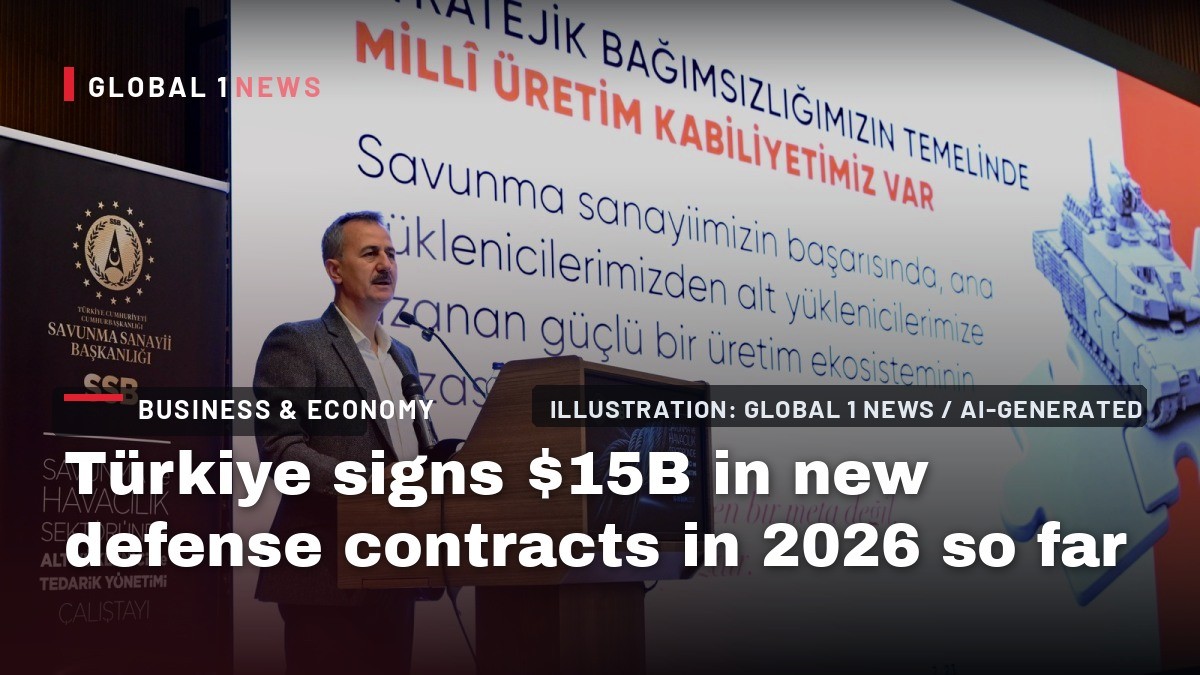
Turkey’s defence sector is once again at the centre of a regional industrial surge, a development that reflects both Ankara’s long‑term strategy to reduce reliance on foreign arms and the broader geopolitical currents shaping the Middle East. In a statement made on 18 October 2026, Haluk Görgün, head of the Presidency of Defence Industries (SSB), announced that contracts signed with domestic defence firms this year have already reached a value of $15 billion, with a target of $20 billion by year‑end. This milestone, set against the backdrop of a shifting Sunni‑Shia balance, great‑power competition and the quest for energy security, offers a window into how Turkey is leveraging its industrial base to buttress national security and export ambitions.
Scale of the 2026 Contracts and Year‑End Ambitions
According to Görgün, the $15 billion in contracts signed so far cover a range of programmes across the defence and aerospace spectrum. The official underscored that the figure is expected to climb to $20 billion before the calendar closes, signalling a sustained tempo of procurement that aligns with Ankara’s broader defence‑industrial roadmap.
The announced contracts are not limited to a single platform or service; they encompass the full suite of activities managed by Turkey’s principal defence contractors—Aselsan, Roketsan, Turkish Aerospace Industries (TAI), Havelsan and STM. By channeling such a volume of orders through domestic firms, Turkey is deepening its supply‑chain resilience, a strategic imperative given the volatility of external sourcing amid sanctions, regional rivalries and shifting alliances.
Domestic Supply Chain Depth and Subcontractor Engagement
The SSB’s recent workshop in Bursa, a hub of Turkey’s industrial capacity, highlighted the extensive network of local suppliers feeding the defence ecosystem. Görgün reported that the main contractors have collaborated with more than 16,000 domestic companies over the past three years, placing orders that cumulatively exceed $20 billion. This breadth of participation underscores the sector’s role as a catalyst for broader industrial development, extending beyond the traditional defence sphere into high‑tech manufacturing, software development and precision engineering.
During the workshop, 209 companies took part in a series of B2B meetings—over a thousand in total—facilitating direct dialogue between the presidency, prime contractors and the subcontractor base. This level of interaction is intended to fine‑tune the supply chain, address bottlenecks, and ensure that the components sourced domestically meet the quality standards demanded by modern combat systems.
Export Performance and Value‑Added Growth
Görgün highlighted a striking metric: the export value per kilogram of Turkish defence products is forty times the national average. While the precise calculation methodology is not disclosed, the ratio illustrates the high‑value nature of the sector’s output, which is dominated by sophisticated systems rather than bulk commodities.
Export data for 2026 further reinforces this narrative. In September alone, the defence and aerospace industry’s exports rose by 10.7 % compared with the same month a year earlier, reaching $634 million. Over the first nine months of the year, the sector recorded a 15.6 % increase, amounting to $6.92 billion. These figures demonstrate that growth in defence exports is outpacing the overall export expansion of the Turkish economy, positioning the industry as a key driver of trade surpluses and foreign‑exchange earnings.
Outstanding Domestic Orders and Future Capacity
The SSB disclosed that the current value of outstanding domestic orders exceeds $13.4 billion. This backlog reflects both the scale of ongoing procurement programmes and the confidence of the defence establishment in the capacity of Turkish firms to deliver. It also points to a pipeline that will keep production lines occupied, sustain employment, and generate continuous R&D activity throughout the remainder of the year and beyond.
By maintaining a robust order book, Turkey mitigates the risk of production idle time—a common challenge for defence manufacturers worldwide—while also preserving the industrial base needed for rapid scaling in response to emergent security threats.
Strategic Rationale Behind the National Competence Initiative
The workshop’s concluding remarks referenced the “National Competence Initiative,” a policy framework aimed at deepening expertise across every link of the defence value chain. Görgün stressed that the initiative targets everything from subsystems and critical components to supply‑chain logistics and production capabilities. This holistic approach seeks to embed self‑reliance into the sector, reducing vulnerability to external pressure points such as embargoes or geopolitical shifts.
In practice, the initiative translates into targeted investments in research and development, the establishment of specialised testing facilities, and the cultivation of a skilled workforce capable of designing, manufacturing and maintaining complex platforms. By embedding these competencies domestically, Turkey not only safeguards its own security needs but also enhances its attractiveness as a supplier to allied nations seeking alternatives to Western or Russian equipment.
Implications for Regional Power Dynamics
The acceleration of Turkey’s defence procurement and export capacity carries weighty implications for the broader Middle East. As Ankara consolidates its industrial base, it gains leverage in diplomatic negotiations, particularly with countries that are increasingly looking to diversify their arms sources away from traditional suppliers. This trend dovetails with the wider Sunni‑Shia competition, where regional actors are keen to secure reliable, high‑tech weaponry without becoming overly dependent on a single patron.
Moreover, Turkey’s growing export profile contributes to its soft power, allowing it to forge deeper defence ties with nations across the Gulf, North Africa and the Balkans. Such relationships often translate into broader strategic alignments, influencing the calculus of great‑power rivalry in the region, especially as the United States, Russia and China vie for influence through arms sales and security assistance.
Outlook: Sustaining Momentum and Addressing Challenges
Looking ahead, the sector’s ability to sustain the projected $20 billion contract target will hinge on several factors. Continued investment in R&D, the successful integration of subcontractors into the supply chain, and the maintenance of export growth rates are essential. Additionally, the sector must navigate potential bottlenecks in raw material procurement and component shortages that have affected global defence industries in recent years.
Nevertheless, the data presented by the SSB suggests a sector that has matured from a heavy importer of foreign systems to a self‑sufficient producer of high‑value defence solutions. The combination of a sizeable order backlog, a broad domestic supplier network and a clear policy framework positions Turkey to solidify its role as a regional defence hub, while also contributing to its broader strategic objectives of economic diversification and geopolitical influence.
This article was produced with AI-assisted research and editorial support. Reporting is based on the source material cited below. Sources: Daily Sabah Middle East; dailysabah.com; Global1.News (19 October 2026).
By Malik Hassan, Staff Writer
What's Your Reaction?
 Like
0
 Dislike
0
 Love
0
 Funny
0
 Wow
0
 Sad
0
 Angry
0

Middle East Correspondent at Global1.News. Based in Beirut, covering politics, conflict, energy, and society across the Middle East. Brings context and depth to a region often reduced to headlines.















Comments (0)