
After War of Words, China Says Relations With Philippines at ‘Critical Juncture’
China’s recent diplomatic overture to the Philippines underscores a volatile moment in bilateral ties, as both sides navigate a “critical juncture” shaped by domestic political rivalry and external pressure.
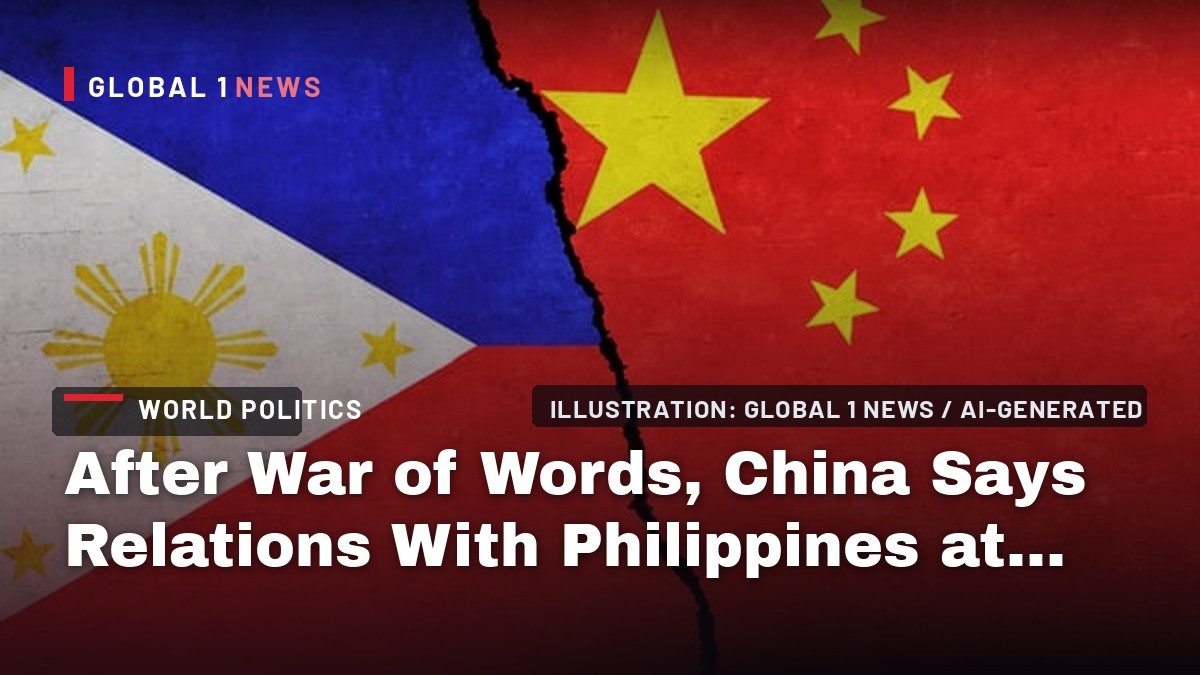
China’s recent diplomatic overture to the Philippines underscores a volatile moment in bilateral ties, as both sides navigate a “critical juncture” shaped by domestic political rivalry and external pressure. The exchange, sparked by a series of public remarks between senior officials, illustrates how Manila’s internal polarization can reverberate through its delicate balancing act between Beijing and Washington. This article examines the sequence of events, the rhetoric employed, and the broader strategic implications for the Philippines as it approaches the 2028 presidential election.
Escalating Rhetoric Between Officials
On Friday, Chinese Ambassador to Manila Jing Quan declared that China could “easily win” a war with the Philippines, a statement made in response to Philippine Defense Secretary Gilberto Teodoro’s description of China as the sole “troublemaker” in Southeast Asia. Jing dismissed Teodoro’s comment as “nonsense” and framed China’s stance as one of peace, saying, “If we want to use force, we may easily win. But no, we will not choose force, and we love peace.”
President Ferdinand Marcos Jr. interpreted Jing’s words as a threat, announcing his intention to summon the ambassador for clarification. This reaction follows a pattern of confrontations: Jing was previously summoned in July after a Philippine marine was injured in a melee with the China Coast Guard at Second Thomas Shoal, and after a Chinese state media outlet published a derogatory video depicting Filipinos as “monkeys and U.S. puppets.”
China’s Diplomatic Messaging
In a statement released by the Chinese embassy, the Philippines was described as a “close neighbor and friend with deep historical and cultural ties.” The communiqué emphasized that Manila need not choose between China and the United States, urging both sides to “maintain dialogue, manage differences, and expand cooperation in trade, investment, people‑to‑people exchanges, and law enforcement.”
The embassy also warned against “outside forces” – implicitly the United States and its allies – steering the bilateral relationship toward confrontation. It accused “anti‑China politicians” of distorting China’s position for political gain, and pledged readiness to work with all sectors of Philippine society to promote dialogue and deepen trust.
Domestic Political Rivalry Fuels the Dispute
The diplomatic flare‑up cannot be understood without reference to the Philippines’ internal political dynamics. On October 6, allegations surfaced that Chinese entities had sent just over $5 million in remittances to a company linked to the husband of Vice President Sara Duterte, a prominent rival of President Marcos. The claim emerged during Duterte’s impeachment trial in the Senate and prompted Marcos to label the alleged Chinese money as a “national security issue.” He warned that, if true, it represented “a threat at the highest level to the republic.”
Duterte countered on October 12, accusing the Marcos administration of portraying business ties with China as a national security concern and branding the Philippines as the “main troublemaker of Southeast Asia.” Defense Secretary Teodoro’s remark about China being the region’s primary troublemaker was a direct response to Duterte’s criticism, illustrating how partisan battles are increasingly framed in terms of foreign influence.
Historical Shifts in Manila’s China Policy
Manila’s approach to China has swung dramatically over the past decade. Under President Rodrigo Duterte, who began his term in 2016, the Philippines pursued a bold turn toward Beijing, downplaying maritime disputes to secure Chinese financing for major infrastructure projects. This policy shift marked a departure from the traditionally U.S.-aligned stance of previous administrations.
When Ferdinand Marcos Jr. assumed the presidency in 2022, he reversed course, strengthening ties with the United States and adopting a more confrontational tone toward Beijing’s actions in the South China Sea. The recent diplomatic incident reflects the ongoing tension between these two strategic orientations, now amplified by the domestic rivalry between Marcos and Duterte camps.
Implications for South China Sea Management
The South China Sea remains the core flashpoint underlying the diplomatic exchange. Over the past few years, Chinese and Philippine coast guards have engaged in a series of confrontations, some involving the use of physical force, pushing bilateral relations to their lowest point in years. The current “critical juncture” described by Beijing highlights the fragility of dialogue mechanisms that have traditionally been used to manage overlapping maritime claims.
Analysts note that the intensifying domestic polarization could impair Manila’s ability to maintain a stable and predictable approach to China’s “aggressive actions” in the contested waters. If political factions increasingly cast each other as proxies for foreign powers, the Philippines may find it harder to present a coherent policy, potentially leading to more frequent incidents at sea and a higher risk of miscalculation.
Strategic Calculus for the 2028 Election
Looking ahead to the 2028 presidential election, the rivalry between the Marcos and Duterte camps may intensify the tendency to frame foreign policy debates in binary terms—China versus the United States. Both sides stand to gain politically by portraying the other as beholden to an external adversary, a narrative that could further polarize public opinion and constrain diplomatic flexibility.
Such dynamics could have broader regional ramifications. As the Philippines grapples with its internal divisions, neighboring states may interpret Manila’s wavering stance as an opportunity to advance their own interests in the South China Sea, potentially reshaping the balance of power in the broader Indo‑Pacific arena.
Prospects for Dialogue and Risk Management
Despite the heightened rhetoric, the Chinese embassy’s statement reiterates a willingness to engage in “dialogue, manage differences, and expand cooperation.” Whether this overture translates into concrete confidence‑building measures will depend on Manila’s capacity to separate partisan disputes from core national security concerns.
For the Philippines, the immediate challenge is to navigate the “extremely sensitive and critical juncture” without allowing domestic politics to derail strategic stability. Maintaining open channels with both Beijing and Washington, while reinforcing a consistent policy on maritime sovereignty, will be essential to prevent the current war of words from escalating into a more serious confrontation.
This article was produced with AI-assisted research and editorial support. Reporting is based on the source material cited below. Sources: The Diplomat; thediplomat.com; Global1.News (19 October 2026).
By Kenji Tanaka, Staff Writer
What's Your Reaction?
 Like
0
 Dislike
0
 Love
0
 Funny
0
 Wow
0
 Sad
0
 Angry
0

Japan Correspondent at Global1.News. Tokyo-based voice covering Japanese politics, technology, economy, and culture. Tracks the intersection of tradition and innovation in one of the world's most dynamic societies.











Comments (0)