
Demand for AI skills surges in non-tech jobs as high tech layoffs persist
The numbers are stark, and they tell a story of a job market in transition. As Israel's hi-tech sector continues to shed workers, demand for artificial intelligence skills is exploding in places that have little to do with coding or software development.
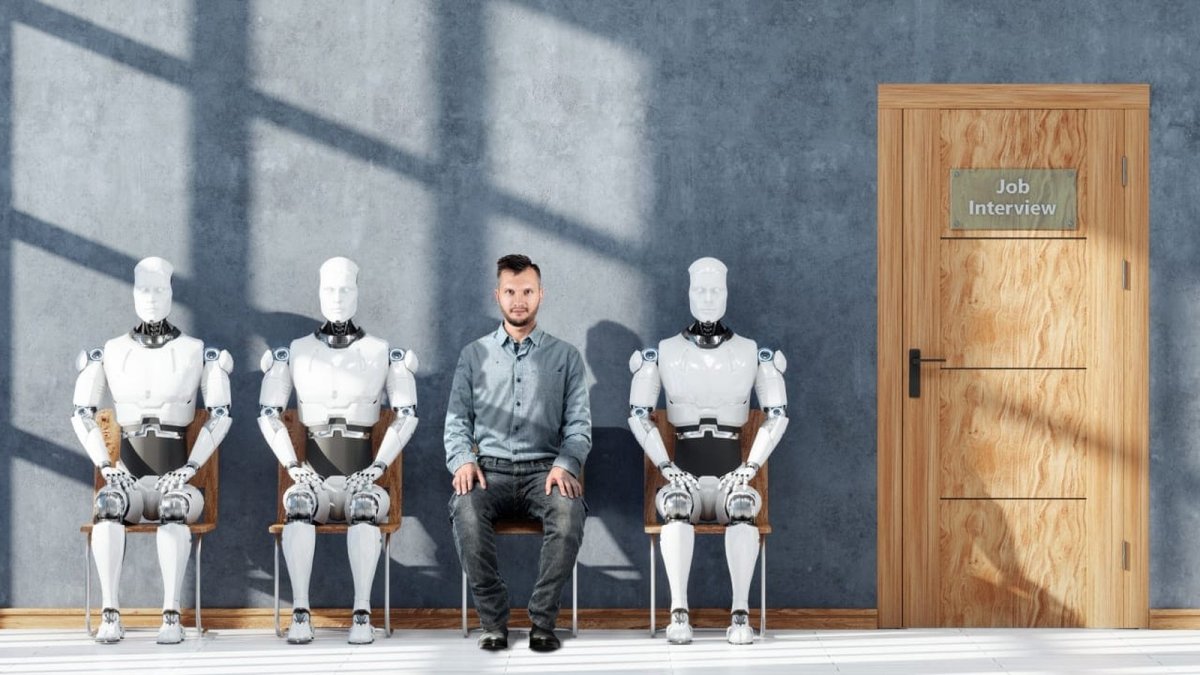
The numbers are stark, and they tell a story of a job market in transition. As Israel's hi-tech sector continues to shed workers, demand for artificial intelligence skills is exploding in places that have little to do with coding or software development. According to new data from ALLJOBS, an Israeli career and recruitment website, the demand for AI proficiency has surged by as much as 267 percent — and much of that growth is happening in professions that have traditionally been considered non-technological. The finding, presented this week on 103FM by Liat Ben-Torah Shoshan, ALLJOBS' career and recruitment vice president, paints a picture of an economy where AI is no longer a niche skill for engineers in Herzliya, but a baseline requirement for accountants in Petah Tikva and HR managers in Tel Aviv.
The data arrives at a delicate moment. While unemployment in Israel remains low and the job market shows a stable base of listings, the hi-tech sector — long the engine of the country's economy — is navigating a painful correction. The juxtaposition is telling: even as companies lay off software developers and product managers, they are scrambling to hire workers who can wield AI tools effectively. The result is a labor market that is simultaneously contracting and transforming, demanding that workers adapt or risk being left behind.
The 267 Percent Surge: Beyond the Buzzword
The headline figure from ALLJOBS is striking: demand for AI skills has grown by as much as 267 percent, a jump that reflects a fundamental shift in how Israeli employers view the technology. Ben-Torah Shoshan, speaking on 103FM on Tuesday, framed the numbers as evidence that AI has moved from hype to substance. "As we sum up the year in the research department, we are seeing very strong increases, certainly in the world of AI," she said. "And in non-technological fields as well, we are seeing some very interesting jumps."
The growth is not limited to the usual suspects. While investment in AI is visible across technological fields, the most surprising increases are showing up in mid-tech and low-tech areas: finance, human resources, and teaching. Ben-Torah Shoshan was careful to note that the percentage growth is amplified by a low baseline — demand for AI skills was minimal just a few years ago — but the trend is unmistakable. "We are seeing astronomical numbers because we are comparing them with periods when demand for AI was low, so we are seeing significant growth," she explained.
The data also reveals a two-way street. Candidates are increasingly mentioning AI on their resumes, while job postings are increasingly demanding proficiency in AI tools. It is a feedback loop that is reshaping the language of the Israeli job market. "We are identifying changes, and the world of AI is growing significantly," Ben-Torah Shoshan said. "It is not just a buzzword."
AI Moves Into Finance, HR, and the Classroom
Perhaps the most telling detail in the ALLJOBS data is where the demand is concentrated. Accountant and bookkeeping positions are among the fastest-growing categories for AI skill requirements, alongside financial manager roles. These are professions that, until recently, relied on manual data processing and traditional spreadsheet work. Now, employers are asking for candidates who can deploy AI tools to automate reporting, analyze financial patterns, and flag anomalies.
The trend extends to human resources, where AI is being used to screen resumes, predict employee turnover, and personalize training programs. In teaching, AI tools are being integrated into lesson planning and student assessment. The common thread is efficiency: in a tight labor market, employers are looking for workers who can do more with less, and AI literacy is becoming the shorthand for that capability.
Ben-Torah Shoshan noted that the investment is visible across the board. "Investment is visible in technological fields and in mid-tech and low-tech areas such as finance, human resources, and teaching," she said. The implication is clear: AI is no longer the domain of the R&D lab in the hi-tech park. It is becoming a standard tool in the office, the classroom, and the accounting firm.
The Layoff Wave: 9,500 Jobs Lost in Six Months
The surge in AI demand comes against a backdrop of persistent layoffs in Israel's hi-tech sector. According to reporting by The Jerusalem Post, approximately 9,500 employees were laid off across Israeli hi-tech, technology, and startup companies during the first half of 2026. The cuts have hit a wide range of departments, including software development, quality assurance, product management, marketing, communications, and customer support.
The numbers are sobering for a sector that has long been the pride of the Israeli economy. For quite some time, hi-tech has seen rounds of layoffs, and the current cycle shows no signs of abating. Displaced workers are being forced to make professional adjustments, undergoing training and learning the tools required for their positions. The question on many minds is whether the sector is contracting for good, or simply reshaping itself around AI.
A survey of 100 affected workers, reported by The Jerusalem Post, offers a glimpse into the mindset of those who have been let go. About 30 percent of respondents said they question their long-term future in the sector because of AI's rapid growth. Meanwhile, roughly 65 percent plan to look for similar roles within the industry, suggesting that most still believe their skills are transferable. About 20 percent intend to explore alternative professions or pursue self-employment, a sign that some are already planning their exit.
The Reskilling Imperative: Adapt or Fall Behind
For those who remain in the sector, the message is clear: reskilling is no longer optional. The roles themselves are changing in nature, and the skills that were in demand five years ago are not necessarily the skills that will secure a job next year. Ben-Torah Shoshan emphasized that the shift is structural, not cyclical. "The world of AI is growing significantly," she said. "It is not just a buzzword."
The data from ALLJOBS suggests that workers who invest in AI proficiency — whether through formal training, online courses, or on-the-job learning — are positioning themselves for the jobs of the future. For displaced hi-tech workers, this may mean pivoting from pure software development to roles that combine domain expertise with AI tooling. For workers in traditional industries, it means adding a new layer of technical competence to their existing skill set.
The challenge is access. Training programs exist, but they require time and money, and not all displaced workers have the luxury of a six-month sabbatical to learn new tools. The Israeli government and private sector have a role to play in bridging this gap, though specific programs remain a work in progress. What is clear is that the window for adaptation is narrowing.
Longer Job Searches and the Senior Executive Squeeze
The job market is also becoming more patient — or more brutal, depending on one's perspective. Job-search timelines are lengthening across the board. Specialized technology professionals may secure roles within about three months, according to career consultants cited in the report. General staff often require up to half a year. Senior managers and C-level executives face the longest wait, with searches stretching from six months to a year.
The senior executive squeeze is particularly acute. Career consultants estimate that fewer than half of senior executives will find comparable positions quickly, and roughly 10 percent are expected to exit the sector entirely. These are the people who once led teams, raised capital, and set strategy. Now, they are competing for a shrinking pool of top-tier roles, often against younger candidates who are more fluent in AI tools.
The dynamic is creating a two-tier job market. On one level, there is robust demand for workers with AI skills, even in non-tech fields. On another level, there is a glut of experienced managers whose traditional skill sets are being devalued. The result is a mismatch that is likely to persist until the market fully recalibrates.
What This Means for the Israeli Economy
The convergence of these trends — surging AI demand and persistent layoffs — has profound implications for the Israeli economy. Hi-tech has long been the driver of growth, accounting for a disproportionate share of exports and tax revenue. If the sector is shedding jobs while simultaneously demanding new skills, the transition will be painful but potentially productive.
The low unemployment rate offers some cushion. The broad, stable base of job listings on ALLJOBS suggests that the economy is still generating opportunities, even as the hi-tech sector contracts. But the quality of those opportunities matters. If displaced hi-tech workers are forced to take lower-paying jobs in non-tech fields, the economic impact could be significant.
There is also a global dimension. Companies in many countries are paying premiums for AI-literate workers, and AI skills are in high demand beyond tech roles, according to a September 2025 report from CNBC. Israel, with its deep talent pool and entrepreneurial culture, is well-positioned to benefit from this trend — provided it can reskill its workforce quickly enough.
The Road Ahead: Hardware, Engineering, and AI as a Baseline
Looking forward, the signs are mixed but not discouraging. The hardware field has grown significantly alongside AI development, and more students are choosing to study engineering and electronics. This suggests that the next generation of Israeli workers is already aligning itself with the demands of the AI economy.
The nature of roles is changing, but the underlying strengths of the Israeli tech ecosystem — innovation, risk-taking, and a culture of problem-solving — remain intact. The challenge is to ensure that the transition is inclusive, that workers in traditional industries are not left behind, and that the hi-tech sector emerges from this period leaner and more productive.
Ben-Torah Shoshan's data offers a roadmap of sorts. The demand for AI skills is not a fad; it is a structural shift that is reshaping the Israeli job market from the ground up. For workers, the message is to invest in learning. For employers, the message is to invest in training. For policymakers, the message is to invest in the infrastructure that makes reskilling possible.
The road ahead will not be easy, but the direction is clear. AI is becoming a baseline skill, as fundamental as reading, writing, and arithmetic. The Israeli job market is adapting, and those who adapt with it will find opportunity. Those who resist may find themselves on the wrong side of a 267 percent surge.
This article was produced with AI-assisted research and editorial support. Sources: The Jerusalem Post, ALLJOBS, 103FM, LatestLY.
By Hannah Berg, Staff Writer
What's Your Reaction?
 Like
0
Like
0
 Dislike
0
Dislike
0
 Love
0
Love
0
 Funny
0
Funny
0
 Wow
0
Wow
0
 Sad
0
Sad
0
 Angry
0
Angry
0

Israel Correspondent at Global1.News. Based in Tel Aviv, covering Israeli politics, security, technology, and society. Provides balanced, deeply-sourced reporting on one of the most closely-watched regions in the world.














Comments (0)