
Kazakhstan Arrests Russian Rapper Navai on Drug Smuggling Charges
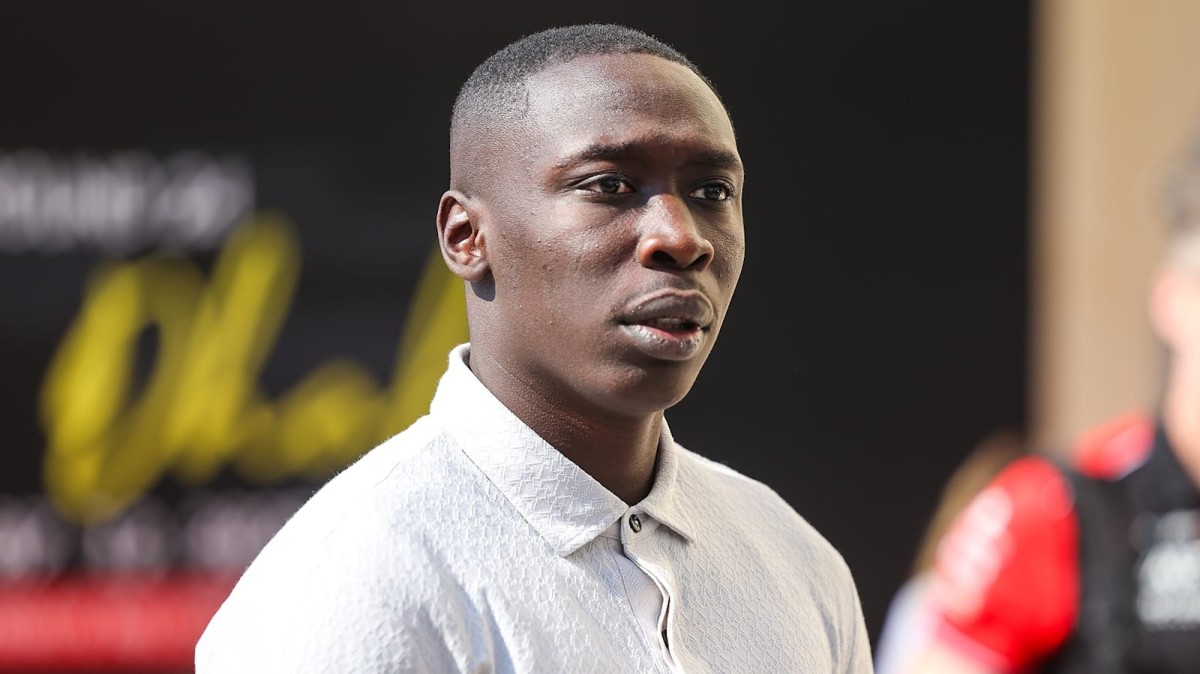
In mid‑October 2026, Kazakh authorities placed Russian hip‑hop star Navai Bakirov in pre‑trial detention on suspicion of drug smuggling, a development that reverberates beyond the personal misfortune of a popular entertainer.
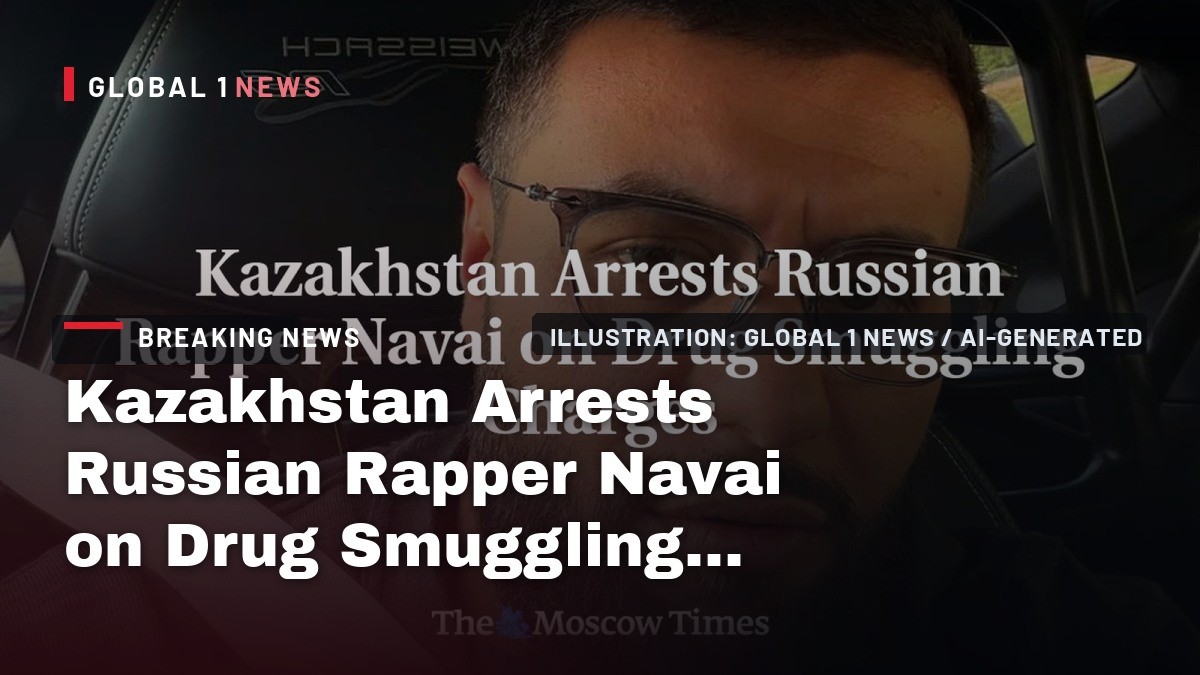
In mid‑October 2026, Kazakh authorities placed Russian hip‑hop star Navai Bakirov in pre‑trial detention on suspicion of drug smuggling, a development that reverberates beyond the personal misfortune of a popular entertainer. The case, reported by The Moscow Times, illustrates how cultural figures can become entangled in the security apparatus of post‑Soviet states and how such incidents intersect with broader Kremlin concerns about the image of Russian artists abroad, the management of cross‑border crime, and the political utility of high‑profile arrests.
Arrest at the Korday border checkpoint
The Korday District Court ordered a two‑month pre‑trial detention for Navai after border guards detained him at a checkpoint while he attempted to cross from Kyrgyzstan into Kazakhstan. According to the Telegram channel Baza, which claims links to Russia’s security services, the guards discovered 2.5 grams of marijuana in his vehicle after a sniffer dog gave the alert. Baza further reported that Bakirov allegedly admitted during police questioning to having purchased the drugs in Bishkek, the Kyrgyz capital, where he performed on the Monday preceding his arrest.
The arrest triggered the immediate cancellation of his scheduled concert in Astana on Wednesday, and forced a rescheduling of a show in Chisinau, Moldova, from the upcoming Friday to 8 December. The swift operational response by Kazakh border services underscores the heightened vigilance among Central Asian states toward narcotics trafficking, especially when it involves high‑profile foreigners whose movements can attract public attention.
Legal backdrop in Moscow
Bakirov’s troubles in Central Asia follow a separate civil dispute he settled in Moscow earlier in the year. In May 2026, the rapper was involved in a traffic incident that resulted in the crash of his Ferrari in central Moscow. He compensated the city for damages, thereby resolving the case. While the Moscow Times article provides only a brief mention of this episode, the juxtaposition of the two incidents suggests a pattern of legal entanglements that could affect the artist’s standing both domestically and abroad.
From a Kremlin perspective, the resolution of the Moscow civil dispute demonstrates an effort by the artist—or his legal team—to mitigate reputational damage within Russia. However, the subsequent arrest in Kazakhstan raises questions about the effectiveness of such damage‑control measures when Russian citizens encounter law‑enforcement actions in neighboring jurisdictions.
Implications for Russian cultural diplomacy
Since the early 2010s, Russian pop culture, particularly the hip‑hop scene, has been leveraged as a soft‑power tool across the post‑Soviet space. Navai, a native of Samara, rose to fame as part of the duo HammAli & Navai before launching a solo career, gaining a substantial following throughout the Commonwealth of Independent States. His concerts in Kazakhstan, Kyrgyzstan, and Moldova form part of a broader pattern of Russian entertainers touring the region, often with tacit support from state cultural agencies.
The arrest threatens to undermine this cultural outreach. A high‑profile detention can be framed by Kazakh authorities as a demonstration of their commitment to combating drug trafficking, while simultaneously casting a shadow over the conduct of Russian performers abroad. For the Kremlin, any narrative that associates Russian cultural exports with criminal activity is undesirable, potentially prompting diplomatic pressure to secure the artist’s release or to negotiate mutually acceptable outcomes.
Security services and media narratives
The source of the information, the Telegram channel Baza, claims links to Russia’s security services. Its reporting aligns with a pattern of Russian‑aligned outlets providing detailed accounts of incidents involving Russian nationals abroad, often emphasizing cooperation between host‑nation law‑enforcement and Russian security agencies. By highlighting the sniffer dog alert and the alleged admission of purchase in Bishkek, Baza constructs a narrative that frames the arrest as a routine law‑enforcement action rather than a politically motivated move.
Nevertheless, the channel’s proximity to security services suggests that the information may be curated to serve broader strategic interests. Emphasizing the artist’s cooperation and the swift legal process could be intended to reassure domestic audiences that Russian citizens are treated fairly abroad, while also signaling to foreign partners that Russia monitors the welfare of its cultural emissaries.
Kazakhstan’s law‑enforcement posture
Kazakhstan’s decision to detain a Russian celebrity on drug‑smuggling charges reflects the country’s ongoing efforts to bolster border security amid rising concerns over narcotics trafficking from Central Asian transit routes. The use of a sniffer dog at the Korday checkpoint indicates an investment in detection technologies and a willingness to act decisively when contraband is discovered.
The two‑month pre‑trial detention ordered by the Korday District Court follows standard procedural norms for drug‑related offenses in Kazakhstan. By applying the same legal standards to a foreign national as to Kazakh citizens, the authorities reinforce a message of impartiality, which may be intended to counter accusations of preferential treatment for Russian elites.
Potential diplomatic fallout
While the article does not detail any official response from the Russian foreign ministry, the arrest of a well‑known Russian artist is likely to generate diplomatic communications between Moscow and Nur‑Sultan. Historically, the Kremlin has intervened on behalf of Russian citizens detained abroad, especially when the cases attract media attention. The incident could prompt a request for consular access, a formal protest, or a behind‑the‑scenes negotiation to secure Bakirov’s release or to mitigate the length of pre‑trial detention.
Given the broader context of strained Russia‑Kazakhstan relations—particularly in the wake of sanctions and divergent foreign‑policy orientations—the case may be leveraged by either side to advance strategic narratives. Kazakhstan may present the arrest as evidence of its sovereign right to enforce law, while Russia could portray it as an overreach affecting a cultural ambassador, thereby rallying domestic public opinion around the protection of Russian nationals.
Broader cultural and political significance
The Navai episode underscores how individual legal troubles can illuminate systemic intersections between culture, security, and geopolitics in the post‑Soviet space. The artist’s rise from a regional duo to a solo star illustrates the potency of Russian pop culture as a unifying thread across former Soviet republics. At the same time, his entanglement with law‑enforcement agencies reveals the vulnerabilities that accompany high visibility.
For the Kremlin, managing the fallout from such incidents is part of a larger strategy to safeguard the image of Russian cultural influence while navigating the complexities of cross‑border criminal enforcement. The case also highlights the role of semi‑official media channels like Baza in shaping narratives that align with state interests, providing a controlled flow of information that can be used to reassure domestic audiences and to signal to foreign partners the existence of coordinated monitoring of Russian citizens abroad.
As the pre‑trial detention proceeds, the evolution of this case will likely be watched by cultural promoters, security officials, and diplomatic actors alike. Its outcome may set a precedent for how future incidents involving Russian artists in Central Asia are handled, and it will inform the Kremlin’s calculus in balancing cultural outreach with the protection of its nationals in an increasingly contested regional environment.
This article was produced with AI-assisted research and editorial support. Reporting is based on the source material cited below. Sources: The Moscow Times; themoscowtimes.com; Global1.News (19 October 2026).
By Irina Volkov, Staff Writer
What's Your Reaction?
 Like
0
 Dislike
0
 Love
0
 Funny
0
 Wow
0
 Sad
0
 Angry
0
Russia/Eastern Europe Correspondent at Global1.News. Covering Russian politics, energy, security, and the shifting dynamics of the post-Soviet space. Provides clear-eyed analysis on one of the world's most opaque regions.










Comments (0)