
Israel Strikes Syrian Airbase as Turkey, Syria Condemn IDF
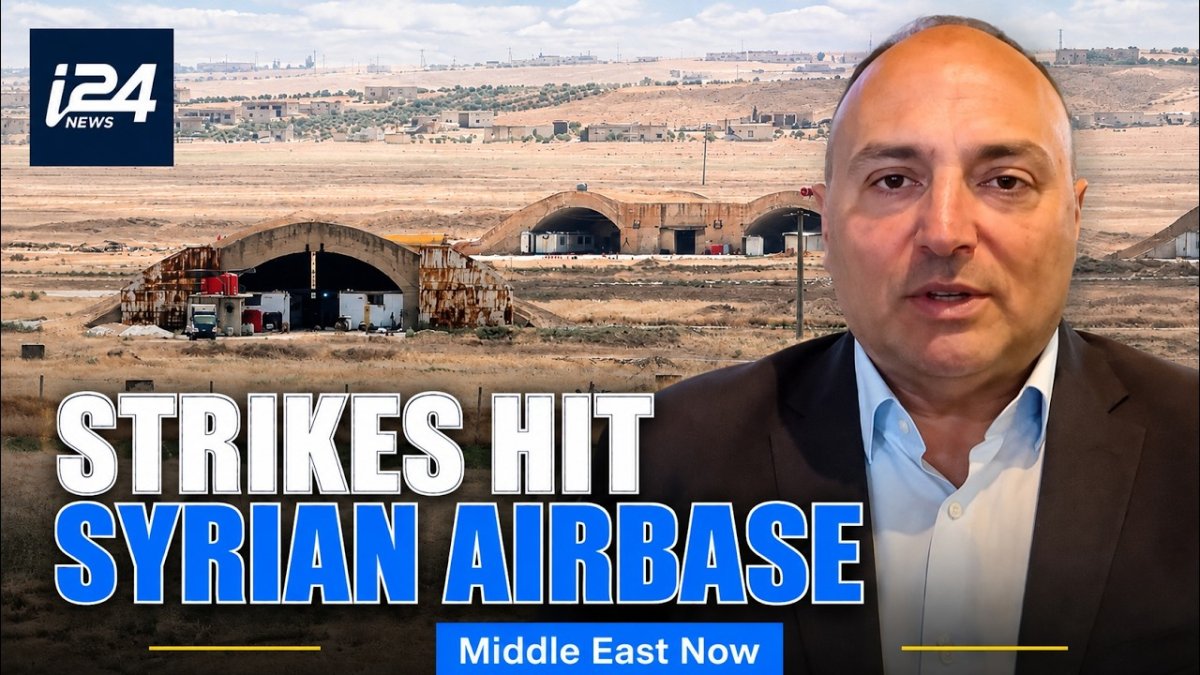
In a recent i24NEWS English report, Turkey and Syria issued sharp condemnations of Israel for a series of airstrikes on a Syrian airbase attributed to the IDF, marking the first Israeli attack on Syrian government military assets since March.
In a recent i24NEWS English report, Turkey and Syria issued sharp condemnations of Israel for a series of airstrikes on a Syrian airbase attributed to the IDF, marking the first Israeli attack on Syrian government military assets since March. The strikes, which targeted the Abu al-Duhur military airbase in eastern Idlib province, have ignited a diplomatic firestorm that pits Jerusalem against Ankara and places Prime Minister Benjamin Netanyahu at odds with the Trump administration over the future of Syria.
Israel Strikes Syrian Airbase to Block Turkish Buildup, Drawing Regional Condemnation
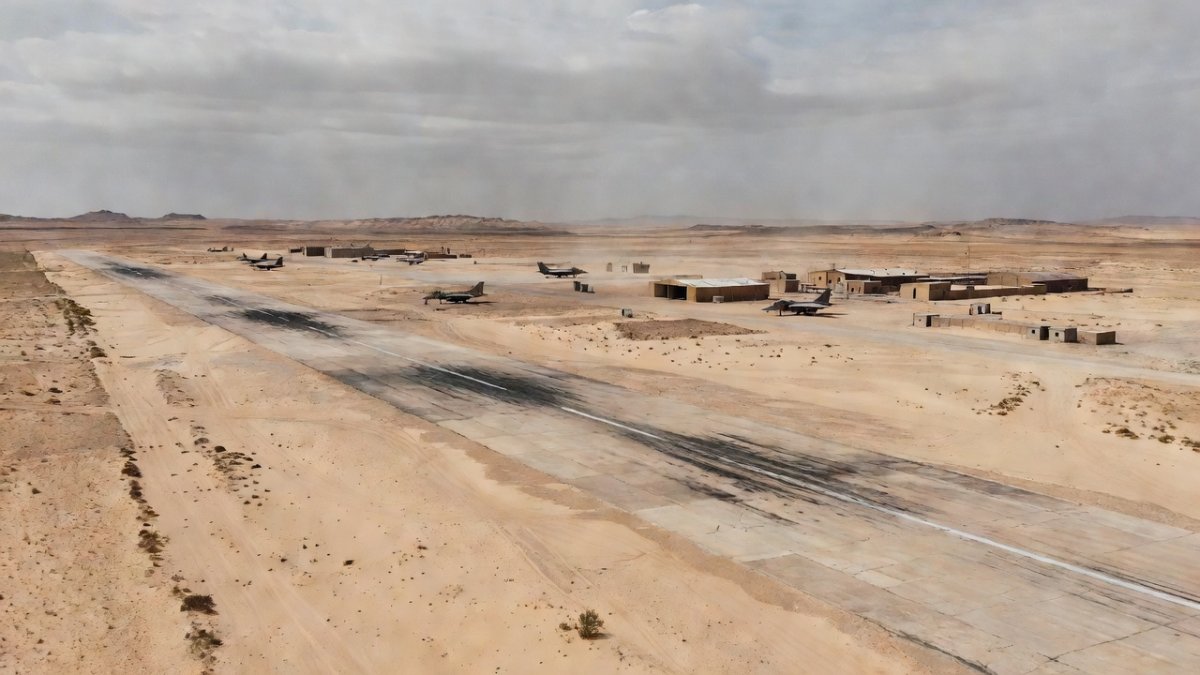
Jerusalem, Israel — Eight Israeli airstrikes hit the Abu al-Duhur military airbase in eastern Idlib province, northwestern Syria, early Tuesday, damaging the runway and storage facilities. The base, located approximately 70 kilometers (44 miles) from the Turkish border, has been largely out of service since 2013 and changed hands several times during Syria's civil war. No casualties were reported in the attack, but the political shockwaves are reverberating across the region.
On the Ground — The Strike and Its Immediate Aftermath
Syrian state media, specifically Ekhbariya citing a Syrian military source, first reported the strikes and blamed Israel. Turkey and U.S. Special Envoy for Syria Tom Barrack also publicly referred to the attack as Israeli. Israel initially did not take responsibility, with an Israeli military censor imposing a gag order on reporting that confirmed the IDF conducted the strike. Israel later acknowledged its role, a move that signals the operation was deemed significant enough to warrant public ownership despite the diplomatic cost.
The choice of target is telling. Abu al-Duhur is not a front-line facility in the ongoing conflict between Israel and Iranian proxies; it is a dormant airbase in a region where Turkey has been expanding its influence. Israeli officials told Washington, via Axios citing U.S. and Israeli sources, that the strikes were intended to block a Turkish military buildup at the base. An Israeli security source cited by Kan said Israel had shared intelligence with Washington regarding alleged Turkish plans and launched the strikes only after diplomatic efforts with Syria failed.
Regional Context — The Turkish Factor and Syrian Sovereignty
Prime Minister Benjamin Netanyahu's office said Israel and Syria had agreed to "a status quo in security matters," and that a Turkish deployment at the base would have violated that understanding. The PMO stated: "Israel repeatedly warned Syria that such a deployment would pose a threat to Israel's security. Syria chose to ignore these warnings." This framing positions the strike as a defensive measure against a creeping Turkish military presence that could fundamentally alter the balance of power over Syrian skies.
Turkey rejected the Israeli justification outright, calling the allegations "frivolous" and an attempt to legitimize "unlawful" attacks against Syria's sovereignty. An unnamed Turkish official denied to Axios that Turkey was preparing a military presence at Abu al-Duhur: "There was no Turkish presence at the airbase. Israel is inventing pretexts to bomb neighboring countries and destabilize the region." Damascus, for its part, denounced the strikes as a violation of its sovereignty, aligning itself with Ankara in a rare moment of Syrian-Turkish unity against Israeli action.
Former Turkish ambassador Cengiz Kamil Firat told i24NEWS' Middle East Now: "This was quite reckless. This was quite near to the Turkish border." He argued the strike was part of a broader escalation between Israel and Turkey: "There's an escalation, there's an aggressive behavior coming from the Israeli side with actions, not only words, but actual actions." Firat also noted that the current Syrian government has not attacked Israel: "Not a single attack has come Israel's way. Israel has enlarged its territory. Turkey is, yes, building the network there so that the government can function."
Diplomatic and International Reactions — Washington's Balancing Act
U.S. Special Envoy for Syria Tom Barrack, who also serves as U.S. Ambassador to Turkey, called the strike an "unnecessary escalation" and warned it risked rapid escalation into a direct military confrontation, possibly including Turkey. He said Washington was working to establish a deconfliction mechanism involving Israel, Turkey and Syria. Axios reported the strike puts Prime Minister Netanyahu at odds with President Trump over Turkey, a significant development given the close personal relationship between the two leaders.
The American position reflects a delicate balancing act. Washington has emphasized strengthening Damascus as a path toward stability, a stance shared by Turkey. The new Syrian government, led by self-appointed president Abu Muhammad al-Jolani (formerly of HTS), says it does not seek war with Israel and has pursued a security agreement. Both Turkey and the United States see a functioning Syrian state as essential to preventing the country from becoming a permanent safe haven for terrorist groups or a staging ground for Iranian influence.
Analysis and What This Means — The IAF's Freedom of Operation
Israeli concern is focused on what a rebuilt Syrian military could become. A Turkish presence involving radar, aircraft or air defense systems at Abu al-Duhur could restrict the Israeli Air Force's ability to operate over Syria. For decades, Israel has maintained near-total aerial dominance over Syrian territory, conducting strikes against Iranian weapons transfers, Hezbollah infrastructure, and more recently, remnants of the Assad regime's strategic arsenal. Any foreign military deployment that could challenge that dominance is viewed in Jerusalem as an unacceptable red line.
The precedent for this strike is clear. In spring 2025, Turkish efforts to expand a military presence in Syria collided with Israeli security concerns. Turkish teams inspected T4 (Tiyas) near Palmyra in Homs province and the main military airport in Hama as Ankara considered a possible defense agreement with Damascus. Israeli aircraft struck both bases hours before a Turkish delegation was due to arrive on March 25, 2025. Israel publicly acknowledged those strikes and struck T4 again in early April 2025. After those clashes, Israel and Turkey established a communication channel to prevent their forces from accidentally colliding in Syria.
That channel has not resolved their disagreement over Turkey's military role in Syria. Neither Israel nor Turkey says it wants a direct military conflict, but the pattern of escalation is concerning. Firat warned: "we are upping the ante all the time." He added a stark caution: "If you want to have another country like Turkey on your warpath, go ahead. I don't recommend it at all."
What Happens Next — Deconfliction or Dangerous Drift
The immediate question is whether Washington can broker a deconfliction mechanism that satisfies both Jerusalem and Ankara. Barrack's involvement suggests the Trump administration is taking the risk of Israeli-Turkish military confrontation seriously. But the underlying tension remains unresolved: Israel views any Turkish military entrenchment in Syria as a direct threat to its security, while Turkey views Israeli strikes on Syrian territory as an infringement on a sovereign state and a provocation against Ankara's interests.
After Assad's fall in December 2024, Israel launched hundreds of strikes destroying Syrian aircraft, missiles, naval assets, air defense systems and other strategic weapons it feared could fall into hostile hands. That campaign was largely uncontested. The Abu al-Duhur strike signals a new phase, one in which Israel is willing to target infrastructure that could host Turkish forces, even at the risk of a direct confrontation with a NATO member.
For Israeli readers, the stakes are existential. The IDF's freedom to operate over Syria is not a matter of convenience; it is the cornerstone of Israel's strategic deterrence against Iran and its proxies. A Turkish air defense system at Abu al-Duhur, or anywhere in Syria, would complicate every future Israeli operation in the region. For Turkish readers, the strike is an unacceptable violation of a neighbor's sovereignty and a pattern of Israeli aggression that cannot go unanswered.
The coming weeks will test whether the communication channel established in 2025 can be expanded into a genuine deconfliction framework, or whether the region is sliding toward a confrontation neither side claims to want. The i24NEWS report captured the essence of the dilemma: Israel is acting to preserve its security envelope, Turkey is acting to assert its influence in a post-Assad Syria, and Washington is caught in the middle, trying to prevent a collision between two of its most important regional partners. The status quo, as Netanyahu's office described it, is clearly no longer holding.
By Hannah Berg, Staff Writer
This article was produced with AI-assisted research and editorial support. Reporting is based on sources cited in the article.
What's Your Reaction?
 Like
0
Like
0
 Dislike
0
Dislike
0
 Love
0
Love
0
 Funny
0
Funny
0
 Wow
0
Wow
0
 Sad
0
Sad
0
 Angry
0
Angry
0

Israel Correspondent at Global1.News. Based in Tel Aviv, covering Israeli politics, security, technology, and society. Provides balanced, deeply-sourced reporting on one of the most closely-watched regions in the world.















Comments (0)