
Thousands take part in Mangaluru Dasara Marathon
On Saturday, 17 October 2026, the streets of Mangaluru pulsed with the rhythm of thousands of feet, as the city hosted the fourth edition of the Mangaluru Dasara Marathon.
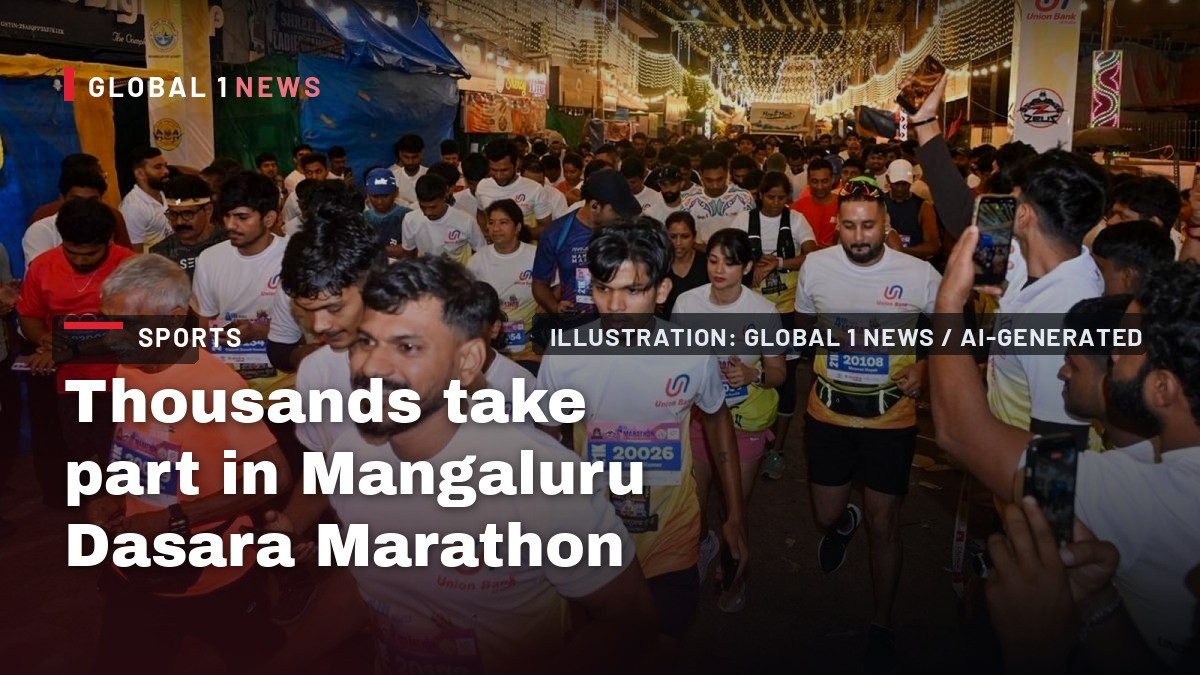
On Saturday, 17 October 2026, the streets of Mangaluru pulsed with the rhythm of thousands of feet, as the city hosted the fourth edition of the Mangaluru Dasara Marathon. Organized by the Kudroli Sri Gokarnanatha Temple as part of the annual Dasara celebrations, the event drew participants across four distance categories – a full 21 kilometre run, a 10 kilometre race, a 5 kilometre sprint and a 3 kilometre dash. The marathon not only showcased the city’s enthusiasm for mass‑participation sport but also highlighted the growing intersection of cultural festivals, public health initiatives and urban governance in India.
Marathon logistics and civic coordination
The marathon’s route began at the temple premises in Kudroli and wound through some of Mangaluru’s most illuminated thoroughfares, including Alike Road, Mannagudda and the bustling M.G. Road. Spectators lined the streets, offering encouragement that turned the event into a city‑wide celebration of fitness. Behind the scenes, the Mangaluru City Police orchestrated elaborate traffic arrangements, ensuring smooth flow for both participants and everyday commuters. Such coordination underscores the increasing capacity of municipal authorities to manage large‑scale public events without disrupting urban mobility, a skill set that has become essential in a country where festivals and sports meet on crowded streets.
From a policy perspective, the police’s involvement reflects the broader framework of the National Urban Transport Policy, which encourages multi‑modal planning and temporary road closures for health‑promoting activities. By integrating the marathon into existing traffic management plans, Mangaluru demonstrated a practical model for other Indian cities seeking to balance cultural festivities with the imperatives of safe, efficient transport networks.
Health promotion through cultural platforms
The Kudroli Sri Gokarnanatha Temple’s decision to host the marathon aligns with a national push to embed health promotion within community events. The organisers explicitly stated that the marathon aims to promote fitness while upholding the spirit of unity championed by reformer Narayana Guru, the founder of the temple. By linking physical activity to a revered cultural narrative, the event leverages existing community trust to encourage participation across age groups, from students to senior citizens.
This approach resonates with the objectives of the National Programme for Health Care of the Elderly (NPHCE) and the School Health Programme, both of which seek to embed preventive health measures within everyday life. The marathon’s inclusive categories – especially the shorter 3 kilometre and 5 kilometre runs – provide accessible entry points for older adults and school‑age children, reinforcing the idea that public health can be woven into the fabric of cultural celebrations.
Economic and tourism implications
While the source material does not provide explicit financial data, the scale of the event – thousands of participants and a route that traverses major commercial arteries – suggests a notable boost to local commerce. Vendors along Alike Road and M.G. Road likely experienced increased footfall, and the illuminated streets that framed the race added a festive ambience attractive to tourists. Such events dovetail with the Karnataka Tourism Development Corporation’s strategy to position cultural festivals as drivers of short‑term tourism revenue.
In the broader economic context, the marathon illustrates how public‑private‑community partnerships can generate ancillary benefits. The temple’s role as organiser, the police’s logistical support and the participation of local businesses create a collaborative ecosystem that can be replicated in other Indian cities seeking to stimulate micro‑economic activity through sport‑linked cultural events.
Urban infrastructure and future scalability
The marathon’s successful navigation of key city arteries highlights the adequacy of Mangaluru’s existing urban infrastructure to host large‑scale public events. The route’s passage through Alike Road, Mannagudda and M.G. Road – all well‑lit and maintained thoroughfares – demonstrates that the city’s road network can accommodate temporary closures without severe disruption. This capability is crucial for scaling up future events, whether expanding participant numbers or adding new categories such as a wheelchair division, which aligns with the government’s emphasis on inclusive sports under the National Sports Policy.
Moreover, the event’s reliance on existing public spaces, rather than constructing new venues, reflects a sustainable model of urban event planning. By repurposing streets and temple grounds, Mangaluru minimizes capital expenditure while maximizing community reach, a principle that aligns with the Smart Cities Mission’s emphasis on efficient use of public assets.
Social cohesion and community identity
Beyond the physical act of running, the marathon served as a conduit for social cohesion. The organisers cited the spirit of unity espoused by Narayana Guru, a reformer whose legacy includes the building of the Kudroli Gokarnanatha Temple. By invoking this legacy, the marathon positioned itself as more than a sporting event; it became a symbolic affirmation of collective identity. Participants ranging from school students to senior citizens shared the same route, fostering inter‑generational interaction that is often lacking in urban settings.
This communal aspect resonates with research on the social determinants of health, which underscores that strong community ties can improve mental well‑being and encourage healthier lifestyles. The marathon’s ability to bring together diverse demographic groups under a shared cultural banner illustrates how cultural institutions can act as catalysts for both physical and social health.
Policy implications for sport and health integration
The Mangaluru Dasara Marathon offers a case study for policymakers aiming to integrate sport into public health strategies. The event’s alignment with existing health programmes – such as the National Programme for Prevention and Control of Cancer, Diabetes, Cardiovascular Diseases and Stroke (NPCDCS) – demonstrates how mass‑participation events can complement clinical interventions by encouraging active lifestyles. By situating the marathon within a religious festival, the organisers effectively tapped into an existing mobilisation mechanism, reducing the need for separate outreach campaigns.
For the Ministry of Health and Family Welfare, the marathon underscores the potential of leveraging cultural calendars to schedule health‑promoting activities. Aligning future health drives – for example, blood pressure screening or diabetes awareness – with festivals could enhance reach, especially in regions where religious and cultural gatherings command high attendance.
Future directions and recommendations
Looking ahead, the success of the fourth edition suggests several avenues for expansion. First, integrating digital health monitoring – such as wearable trackers linked to a city‑wide health dashboard – could provide real‑time data on participant demographics, exertion levels and post‑event health outcomes. Such data would be valuable for refining future health promotion strategies and for academic research on the impact of mass‑participation sport on public health metrics.
Second, formalising partnerships with local schools and senior citizen clubs could institutionalise the marathon’s inclusive ethos. By offering training programmes in the months leading up to the event, organisers could improve readiness, reduce injury risk and deepen community engagement. Finally, extending the event’s branding to include a “green marathon” component – encouraging participants to adopt sustainable practices such as reusable water bottles – would align the race with the national emphasis on environmental stewardship under the Swachh Bharat Mission.
This article was produced with AI-assisted research and editorial support. Reporting is based on the source material cited below. Sources: The Hindu; thehindu.com; Global1.News (18 October 2026).
By Dr. Raj Patel, Staff Writer
What's Your Reaction?
 Like
0
Like
0
 Dislike
0
Dislike
0
 Love
0
Love
0
 Funny
0
Funny
0
 Wow
0
Wow
0
 Sad
0
Sad
0
 Angry
0
Angry
0

India/South Asia Correspondent at Global1.News. Analytical voice with a background in science and health journalism. Based in New Delhi, covering Indian politics, education, healthcare, technology, and policy. Breaks down complex data into clear, actionable reporting.












Comments (0)