
Patients in chains rescued from suspected illegal rehab centre in South Africa
In the early hours of Thursday, police in Mpumalanga province uncovered a grim scene that has reignited South Africa’s ongoing battle against illegal rehabilitation centres.
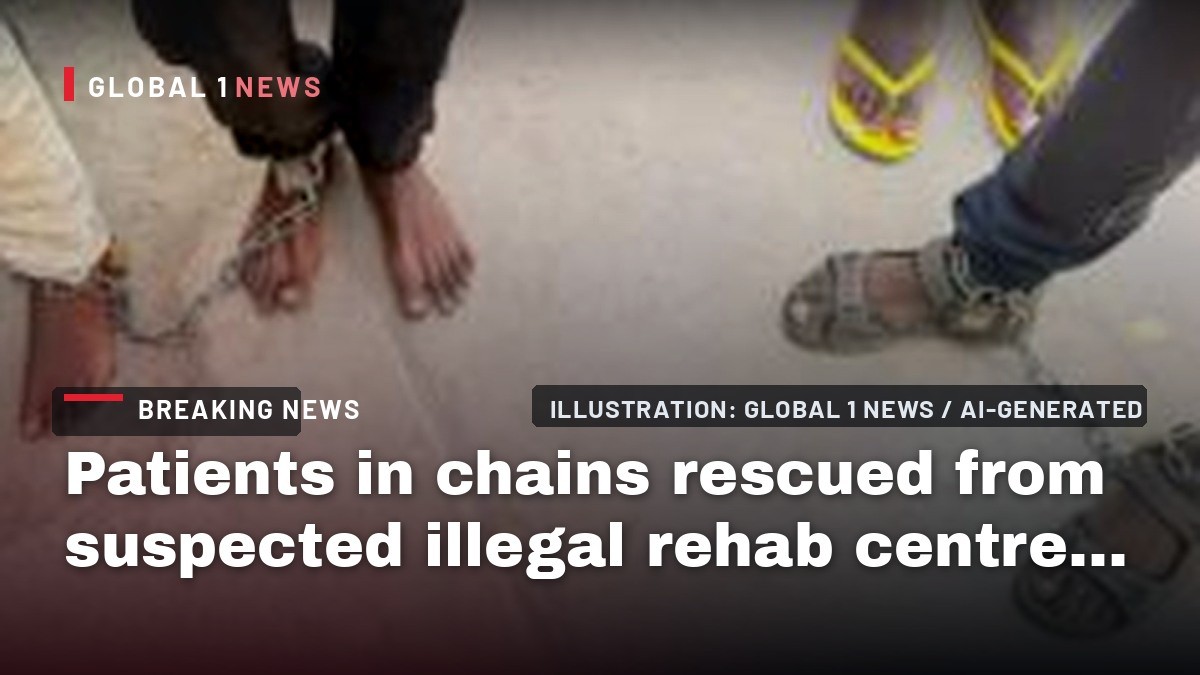
In the early hours of Thursday, police in Mpumalanga province uncovered a grim scene that has reignited South Africa’s ongoing battle against illegal rehabilitation centres. Inside a church‑run facility, officials found roughly two hundred individuals, many of them shackled together, living in overcrowded rooms without basic sanitation. The discovery has sparked fresh scrutiny of a shadow network of unregulated “rehab” homes that have proliferated as the country grapples with a deepening drug crisis.
The raid and what officials found
When the operation began, authorities described the conditions as “gross inhumane.” Patients were discovered with “sores all over their bodies,” a sign of neglect and possible abuse. Several adults were literally chained to each other, a practice the detainees themselves described as a form of punishment. The lack of functioning bathrooms and running water added to the misery, turning the space into a makeshift detention centre rather than a place of healing.
Among those rescued were a 16‑year‑old girl and an 11‑year‑old boy, who were being held in the same room as adults. Fourteen of the detainees required immediate medical attention and were taken to hospital, while officials have already managed to reunite 132 individuals with their families. The scale of the operation—more than three times the number the owners claimed to house—underscores how deeply entrenched these illegal facilities have become.
The operators and their alleged motives
The church‑run centre was managed by a pastor and his wife, who were arrested on charges of kidnapping. While the couple has not yet spoken publicly, police reports indicate they charged a monthly fee of 3,000 rand per patient. Almost half of that amount, according to the report, was earmarked for the church, suggesting a financial incentive behind the operation. The fee structure points to a troubling commodification of addiction treatment, where vulnerable individuals are exchanged for revenue.
One former resident, Gift Skhosana, told local broadcaster Newzroom Afrika that chaining patients was “common practice.” Yet he also claimed the centre helped him become clean and overcome his addiction. This paradox—simultaneously offering a path to sobriety while inflicting physical restraint—highlights the murky ethical landscape of unregulated rehab services.
Legal context and the rise of illegal centres
South Africa’s drug problem has intensified in recent years, prompting a surge in unlicensed rehabilitation homes. The Department of Social Development disclosed that, in the previous year, it uncovered over one hundred unlawful facilities across the nation, with a concentration in Gauteng province, home to Johannesburg. These centres often operate under the guise of religious or community organisations, exploiting the desperation of addicts and their families.
The legal framework struggles to keep pace. While the pastor and his wife face kidnapping charges, authorities acknowledge that additional charges may follow as investigations deepen. The complexity of prosecuting such cases lies in distinguishing between genuine, albeit poorly resourced, community‑based support and outright exploitation.
Human impact: stories from survivors
Beyond the numbers, the personal testimonies reveal the human cost of these illegal operations. Skhosana’s account of being chained “as punishment” paints a picture of coercion that borders on imprisonment. Yet his admission that the centre helped him achieve sobriety adds a layer of nuance, suggesting that some detainees may perceive a trade‑off between physical freedom and the promise of recovery.
Another unnamed individual recounted that the experience left him needing mental health support, indicating that the trauma of confinement can linger long after physical chains are removed. The presence of children in the same cramped rooms as adults also raises concerns about the long‑term psychological effects on young minds exposed to such environments.
Community and family repercussions
The raid’s aftermath saw 132 patients reunited with their families, a bittersweet reunion for many who had been cut off from loved ones for months. The sudden return of family members can be both a relief and a challenge, as households must now navigate the reintegration of individuals who may be dealing with withdrawal, trauma, and the stigma of addiction.
Local communities, particularly in Mpumalanga, are left to grapple with the revelation that a place of worship—a church—was being used to house a large, hidden population of addicts. This breach of trust can erode confidence in religious institutions that traditionally serve as pillars of social support.
Policy implications and the road ahead
The incident underscores the urgent need for stronger regulation and oversight of rehabilitation services. While the Department of Social Development has identified a growing number of illegal centres, the sheer scale of the problem suggests that current monitoring mechanisms are insufficient. A coordinated response involving health, law enforcement, and social services is essential to close the gaps that allow such facilities to flourish.
Furthermore, the financial model exposed—charging a substantial monthly fee and diverting a portion to a church—highlights the profit motive that can drive exploitation. Policymakers may need to consider stricter licensing requirements, transparent funding structures, and harsher penalties for those who profit from illegal rehab operations.
Broader reflections on South Africa’s addiction crisis
South Africa’s struggle with drug addiction is not new, but the emergence of illegal rehabilitation centres adds a new layer of complexity to an already dire public health challenge. The desperation of families seeking help for loved ones creates a market that unscrupulous operators are quick to exploit. The presence of chains, overcrowded rooms, and inadequate sanitation in a facility that claims to offer recovery is a stark reminder that the fight against addiction must be fought on both health and human‑rights fronts.
As the legal process unfolds and the pastor and his wife appear in court, the nation watches closely. Their case could set a precedent for how South Africa addresses the dark underbelly of its addiction treatment landscape. For now, the rescued patients begin a difficult journey of healing—physically, mentally, and socially—while the country confronts the uncomfortable truth that the promise of recovery has, in some corners, become a prison.
This article was produced with AI-assisted research and editorial support. Reporting is based on the source material cited below. Sources: BBC News Africa; bbc.co.uk; Global1.News (18 October 2026).
By Amara Diop, Staff Writer
What's Your Reaction?
 Like
0
Like
0
 Dislike
0
Dislike
0
 Love
0
Love
0
 Funny
0
Funny
0
 Wow
0
Wow
0
 Sad
0
Sad
0
 Angry
0
Angry
0

West Africa/Sahel Correspondent at Global1.News. Dakar-based journalist covering politics, security, climate, and development across Francophone and Anglophone West Africa. Tells the stories of a region undergoing profound transformation.












Comments (0)