
IMF urges Thailand to broaden tax base for stronger public finances
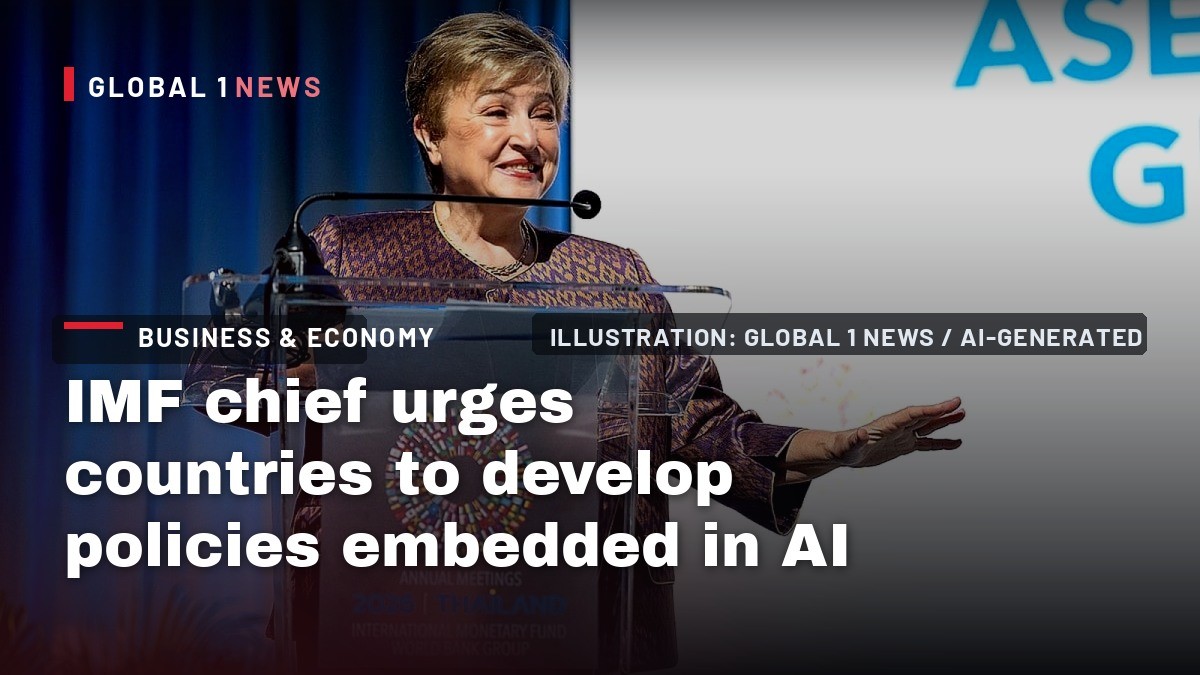
In a recent segment of Thai PBS World’s “This Week” programme, the International Monetary Fund (IMF) laid out a clear message for Thailand’s economic policymakers: to secure the nation’s fiscal health, the tax system must be widened and modernised.
In a recent segment of Thai PBS World’s “This Week” programme, the International Monetary Fund (IMF) laid out a clear message for Thailand’s economic policymakers: to secure the nation’s fiscal health, the tax system must be widened and modernised. The interview, recorded on 17 October 2026, resonated with the familiar cadence of Thai public discourse, where financial stewardship is often linked to the broader values of community welfare and Buddhist principles of responsible stewardship. As Global1.News brings this report to our readers, we explore what the IMF’s advice means for Thailand’s budget, for the everyday lives of Thais, and for the country’s role in the ever‑shifting tapestry of Southeast Asian geopolitics.
Why the IMF is focusing on Thailand’s tax base
The IMF’s recommendation comes at a time when Thailand, like many of its regional neighbours, is navigating a post‑pandemic recovery while also confronting the fiscal pressures of an ageing population and rising social spending. In the Thai PBS World footage, the IMF representative explained that a broader tax base would provide a more stable revenue stream, reducing the need for ad‑hoc borrowing that can weigh on future generations.
Broadening the tax base, as described in the interview, does not simply mean raising rates. Rather, it involves extending coverage to sectors and activities that have historically been under‑taxed or exempted. The IMF highlighted that such reforms can be undertaken without imposing heavy burdens on low‑income households, aligning with Thailand’s long‑standing cultural emphasis on protecting the most vulnerable.
For Thai policymakers, the message is both a technical fiscal suggestion and a moral invitation. In Buddhist thought, the concept of “dana” – generous giving – is balanced by “sacca” – truth and honesty in one’s dealings. A tax system that captures contributions fairly from all economic participants can be seen as an expression of collective responsibility, a theme that resonated throughout the PBS interview.
The current shape of Thailand’s tax system
While the video did not provide a detailed breakdown of Thailand’s existing tax structure, it implied that the current system relies heavily on a narrow set of revenue sources. This concentration leaves the public finances vulnerable to economic fluctuations, especially in sectors like tourism that have been volatile in recent years.
The IMF’s call to broaden the base suggests that there are untapped opportunities within the informal economy, digital services, and perhaps even certain agricultural activities that remain lightly taxed. By bringing these sectors into the formal tax net, the government could increase revenues without necessarily raising the headline tax rates that often spark public concern.
In the Thai context, any move toward a wider tax net must be handled with sensitivity to local customs and community expectations. Rural villages, for instance, often view tax collection as a communal duty that funds schools, temples, and health clinics. Framing reforms as a way to better support these community assets could ease the transition and reinforce the social contract.
Potential impacts on everyday Thais
For the average Thai citizen, the IMF’s recommendation may feel abstract, but its implications are tangible. A broader tax base could mean more reliable funding for public services such as healthcare, education, and infrastructure—areas that directly affect daily life. In the PBS footage, the IMF stressed that stronger public finances enable the government to maintain and improve these services without resorting to sudden tax hikes or borrowing spikes.
Moreover, the suggestion aligns with Thailand’s growing digital economy. As more Thais engage in e‑commerce, freelance work, and online platforms, a modernised tax framework that captures income from these sources could ensure that new forms of work contribute fairly to the national budget. This would help sustain the social safety nets that many rely on, especially in the countryside where traditional employment opportunities may be limited.
From a cultural perspective, the idea of shared responsibility mirrors the Buddhist principle of “interdependence.” When individuals see that their contributions help fund schools for their children or improve roads that connect villages to markets, the sense of communal harmony is reinforced. The IMF’s advice, therefore, is not just a fiscal technicality but a potential catalyst for strengthening the social fabric.
Regional implications and ASEAN dynamics
Thailand’s fiscal health does not exist in isolation. Within ASEAN, fiscal stability is a cornerstone of economic cooperation and competitiveness. The IMF’s emphasis on a broader tax base can be read as a signal to neighbouring countries that Thailand is committed to sound macro‑economic management, a factor that can enhance investor confidence across the region.
In the broader Southeast Asian context, several countries are also wrestling with narrow tax bases and the need to modernise their revenue systems. Thailand’s steps, if successful, could serve as a model for peers such as Vietnam and the Philippines, where informal economies are sizable. The PBS interview subtly underscored that Thailand’s reforms could contribute to a more resilient ASEAN economic community, especially as the bloc navigates global supply‑chain shifts and the rise of digital trade.
Furthermore, a fiscally robust Thailand can play a more active role in regional initiatives, from infrastructure projects under the “Master Plan for ASEAN Connectivity” to joint disaster‑relief funds. Strong public finances enable the country to contribute more effectively to these collective endeavours, reinforcing its standing as a central player in Southeast Asian geopolitics.
Challenges and considerations for implementation
While the IMF’s recommendation is clear, the path to a broader tax base is fraught with practical challenges. The PBS segment hinted at the need for administrative capacity building, especially in tax collection agencies that must adapt to new technologies and data‑driven approaches. Modernising tax administration requires investment in digital infrastructure and training, which in turn depends on the very fiscal strength the reforms aim to achieve.
Political consensus is another critical factor. Thailand’s political landscape, with its history of frequent changes in government, means that long‑term fiscal reforms must garner cross‑party support to survive shifts in leadership. The IMF’s advice, delivered through an international channel, may add pressure on policymakers to demonstrate commitment, but domestic political will remains essential.
Lastly, public perception must be managed carefully. Any perception that tax reforms disproportionately affect small businesses or low‑income households could trigger resistance. The PBS interview suggested that transparent communication, emphasizing how the reforms will fund public goods and protect vulnerable groups, is key to building public trust.
Looking ahead: the road to a more resilient fiscal future
As Thailand moves forward, the IMF’s call to broaden the tax base offers a roadmap for strengthening public finances while staying true to Thai cultural values. By extending tax coverage to emerging sectors and the informal economy, the government can generate a steadier flow of revenue that supports essential services without over‑burdening any single group.
In the spirit of “sangkhom,” the Thai concept of community cooperation, a well‑designed tax reform can become a shared project that benefits all layers of society—from bustling Bangkok markets to remote hill‑tribe villages. When citizens see the tangible outcomes—better schools, improved roads, more reliable healthcare—the moral underpinnings of the reform become evident.
Regionally, Thailand’s success in this endeavour could inspire similar reforms across ASEAN, fostering a more stable and integrated economic environment. The IMF’s recommendation, delivered through Thai PBS World’s trusted platform, thus carries weight far beyond the borders of the kingdom. As Global1.News follows the unfolding story, we will continue to watch how Thailand balances fiscal prudence, cultural values, and regional responsibilities in the years ahead.
By Ann Srisawat, Staff Writer
This article was produced with AI-assisted research and editorial support. Reporting is based on the source material cited below. Sources: Thai PBS World video report (17 October 2026); Thai PBS World; Global1.News
What's Your Reaction?
 Like
0
 Dislike
0
 Love
0
 Funny
0
 Wow
0
 Sad
0
 Angry
0

Southeast Asia Correspondent at Global1.News. Based in Bangkok, covering Thai and Southeast Asian politics, economy, technology, and culture. Deep regional perspective on one of the world's most dynamic regions.












Comments (0)