
Trump Halts Iran Strike as Hormuz Deal Framework Emerges
The abrupt US decision to pause military strikes on Iran, following direct appeals from Tehran and several Gulf capitals, has injected a fragile diplomatic opening into a conflict already reshaping energy flows and alliance calculations across the Middle East.
The abrupt US decision to pause military strikes on Iran, following direct appeals from Tehran and several Gulf capitals, has injected a fragile diplomatic opening into a conflict already reshaping energy flows and alliance calculations across the Middle East. This development arrives as Washington demands the immediate reopening of the Strait of Hormuz and an end to Iran's nuclear program, while regional actors weigh the risks of escalation against the costs of sustained confrontation. The standoff now tests whether sustained pressure can force a durable agreement or merely delay renewed strikes.
Behind the pause lies a calculated US assessment that 154 days of Operation Epic Fury have already degraded Iranian capabilities enough to make a negotiated Hormuz reopening viable, yet not so far that Tehran feels existential collapse is inevitable. Gulf sovereign wealth funds managing trillions in assets from Riyadh to Abu Dhabi are recalibrating exposure to energy infrastructure risks, while CENTCOM maintains its blockade and escort operations to prevent further IRGC disruptions. The coming 60 days of safe passage guarantees floated in back-channel talks will determine whether this window produces verifiable Iranian concessions or collapses into broader confrontation involving 10 countries already under US security alerts.
Trump's Strike Pause Opens Narrow Window for Hormuz Deal Amid Gulf and Israeli Calculations
Beirut, Lebanon – August 2, 2026 — President Donald Trump announced on Truth Social that he had canceled a planned military strike after Iran and other Middle Eastern countries requested a pause to finalize a deal framework that would require the immediate, complete, and total reopening of the Strait of Hormuz plus an end to Iran's nuclear threat. Israel has signaled support for the effort. White House press secretary Karoline Leavitt stated that the United States had signed an MOU with Iran that Tehran subsequently broke by attacking commercial ships and killing American soldiers, adding that Iran would continue to face consequences until it negotiates meaningfully.
Deal Framework Emerges as Trump Halts Strike
Trump's Truth Social post described US forces as locked and loaded at levels of military strength not seen since World War II, yet he agreed to hold off subject to rapid progress on the deal. The framework explicitly ties any agreement to Hormuz reopening and nuclear concessions. Fox News reporting confirmed that the United States and Israel would pause further strikes while talks proceed on Sunday. Leavitt emphasized that President Trump would not tolerate continued terrorist behavior and that Iran must return to the table on terms he deems meaningful.
Trump's leverage stems from the combination of sustained CENTCOM strikes and Treasury Secretary Scott Bessent's financial targeting that has already driven the rial from 900,000 to 1.9 million per dollar, creating domestic inflationary pressures that Iranian leaders cannot ignore ahead of any succession maneuvers. Tehran seeks relief from the blockade and a face-saving nuclear freeze that preserves enrichment infrastructure, while Israel under Netanyahu and Herzog calculates that any deal must still degrade IRGC proxy networks to prevent future October-style attacks. Second-order effects include potential spikes in global energy prices if Hormuz remains contested, directly affecting import-dependent economies in Asia and Europe.
Rubio's Red Lines: Regime Change and Consequences
Secretary of State Marco Rubio, speaking in an interview on "My View with Lara Trump," stated that the Iranian regime has never faced a president like President Trump and argued that Tehran can no longer rely on negotiations without consequences. Reuters reporting noted that exiled Crown Prince Reza Pahlavi is positioning himself as a bridge for a post-regime transition, describing the Islamic Republic as very close to collapse. The Trump administration has publicly distanced itself from endorsing any specific successor while maintaining that the regime must change.
Rubio's stance reflects a broader administration view that past deals like the collapsed April Islamabad MOU allowed Iran to buy time for proxy rebuilding, and that only sustained pressure from figures like MBS and Khalid bin Salman can align Gulf interests with US goals. Iran wants regime survival above all, using Pakistan-mediated channels to test whether Trump will accept partial Hormuz access without full nuclear dismantlement. The risk for Washington is that overly rigid red lines could push Tehran toward deeper alignment with Russia and China, complicating energy market stabilization efforts.
Regional Fallout: Kuwait, Bahrain and the Gulf Calculation
Kuwait intercepted multiple Iranian drones targeting vital facilities, with its army destroying the hostile aircraft. Bahrain's foreign ministry condemned the attacks as a flagrant violation of Kuwait's sovereignty and reaffirmed solidarity. Crown Prince Mohammed bin Salman spoke with Trump on Saturday, while Saudi Defense Minister Khalid bin Salman met Trump and Vice President JD Vance in Washington earlier in the week; Saudi Arabia joined US strikes on logistics sites used by Iranian-backed militias in Iraq. The State Department issued security alerts for Americans in ten countries including Bahrain, Israel, Iraq, Jordan, Kuwait, Lebanon, Oman, Qatar, Saudi Arabia, and the UAE, citing risks of flight cancellations and airspace closures.
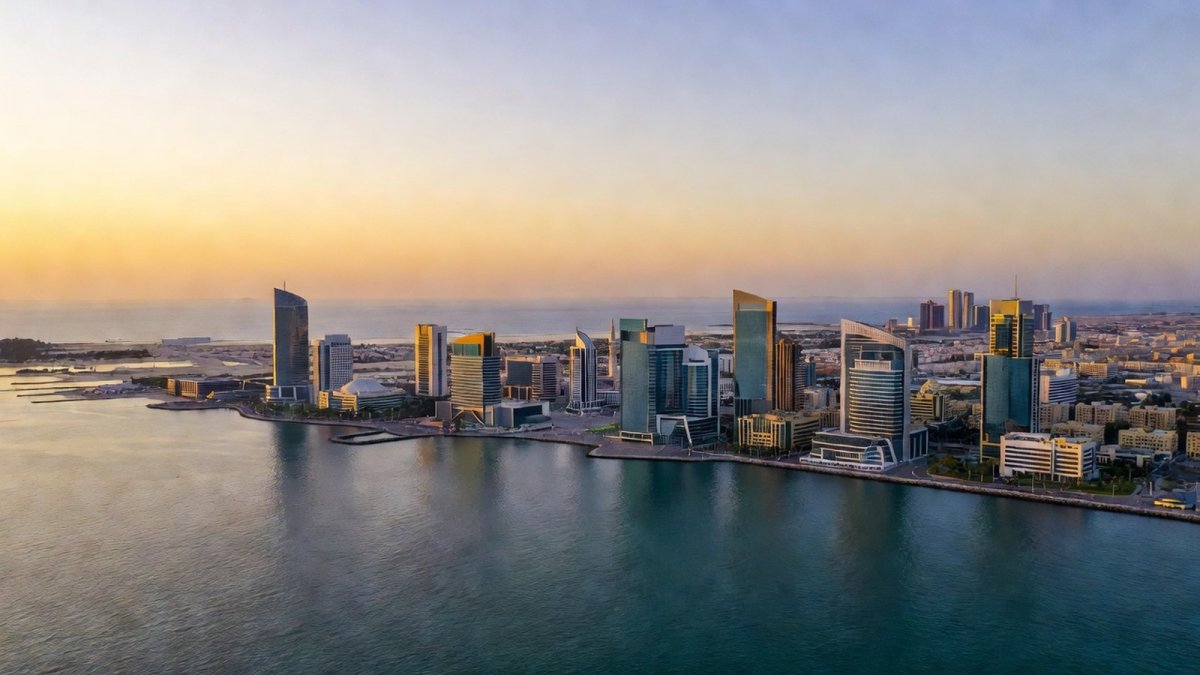
MBS's direct outreach to Trump underscores Saudi Arabia's priority of protecting Vision 2030 projects from Iranian retaliation, even as Riyadh hedges by urging de-escalation to avoid oil infrastructure strikes that could disrupt 20 percent of global flows through Hormuz. Bahrain and Kuwait seek stronger US security guarantees in exchange for hosting operations, while Iran's Foreign Ministry warnings about retaliation against third countries highlight Tehran's leverage through asymmetric threats. These calculations reveal a Gulf consensus that favors managed pressure over all-out war, provided the 14-point deal framework delivers verifiable Hormuz access.
Historical Background: From JCPOA to Operation Epic Fury
The 2015 JCPOA lifted sanctions in exchange for nuclear limits before the United States withdrew in 2018 under a maximum-pressure approach. The 2020 killing of IRGC Quds Force commander Qassem Soleimani marked an earlier escalation. An April 2026 Islamabad MOU collapsed after failing to reopen the Strait of Hormuz or advance nuclear talks. Operation Epic Fury, launched February 28, has now run for 154 days, shifting from launch-site targeting to strikes on drone and missile production facilities. Iran has continued proxy attacks on US troops in Iraq using explosively formed penetrators, as documented in court findings involving hundreds of American victims.
Retired Vice Adm. Robert Harward's assessment that Iran is in its "last gasp" aligns with the campaign's pivot to production facilities, aiming to starve IRGC capabilities over the longer term. Gen. Jack Keane's skepticism about Iranian deal-making stems from the April MOU's failure, suggesting that only continued strikes can force concessions before US midterms. For Tehran, the historical pattern of surviving maximum pressure campaigns informs its current strategy of limited compliance to buy time for proxy reconstitution.
Regional Dynamics: Energy, Shipping and the Hormuz Chokepoint
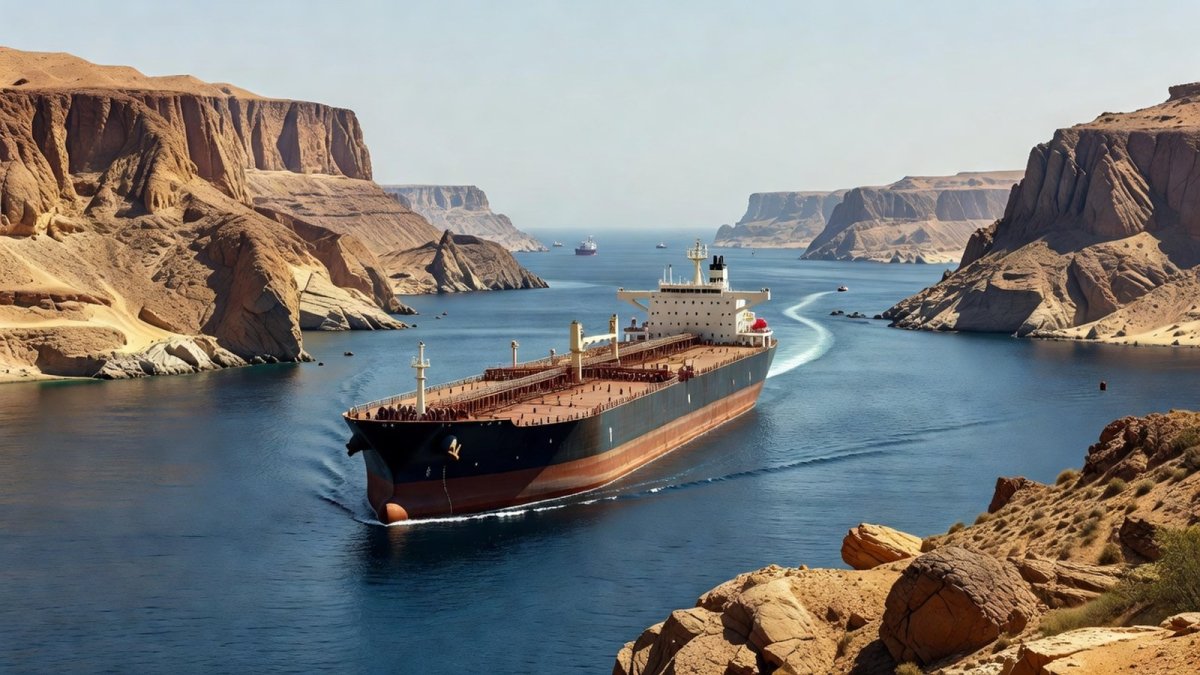
The Strait of Hormuz remains the chokepoint for roughly 20 percent of global oil consumption and about one-fifth of global LNG trade. UKMTO reported a tanker struck 11 nautical miles northeast of Lima, Oman, damaging its engine room, and a separate explosion 21 nautical miles northeast of Khasab. CENTCOM continues enforcing a blockade of Iranian ports while escorting humanitarian traffic. Iran's rial has collapsed from roughly 900,000 to 1.9 million per dollar under Treasury Secretary Scott Bessent's financial targeting. Gulf states managing trillions in sovereign wealth assets under Vision 2030 diversification plans now face direct risks to energy infrastructure if strikes expand.
UKMTO incidents near Oman illustrate how even limited Iranian responses can raise insurance costs and disrupt shipping lanes critical to Asian economies. CENTCOM's escort operations provide temporary relief but cannot fully offset the threat of IRGC speedboat swarms if talks fail. Energy market implications include upward pressure on Brent crude if Hormuz tensions persist, benefiting US shale producers while straining European and Indian importers already navigating post-Ukraine supply shifts.
Strategic Calculus: What Each Side Wants
Trump holds leverage through military readiness, sanctions, and the approach of US midterms, while Iran prioritizes regime survival, Khamenei succession planning, and preservation of proxy networks. Israeli Prime Minister Benjamin Netanyahu has urged prosecution of the war, and President Isaac Herzog has described Iran as a decades-long strategic threat that diverts national resources to terror. Gulf states have hedged by urging talks while participating in limited strikes on militia sites. Pakistan continues mediation efforts to revive the Islamabad MOU. Second-order effects include potential rial-driven domestic instability in Iran and renewed pressure on global energy prices ahead of November elections.
Netanyahu and Herzog seek to lock in long-term degradation of Iranian capabilities to free Israeli resources for other fronts, while MBS and Khalid bin Salman balance support for US strikes with calls for rapid de-escalation to safeguard Gulf energy exports. Iran's leverage lies in its ability to threaten Hormuz closure and proxy escalation, forcing Washington to weigh the costs of prolonged operations against midterm political risks. Pakistan's Tahir Andrabi mediation role offers Tehran a face-saving off-ramp but requires credible US commitments on sanctions relief.
Regional Implications
A finalized deal could stabilize energy markets and reduce immediate risks to Gulf infrastructure, yet collapse would likely trigger renewed US and Israeli strikes with wider spillover. The coming weeks will test whether sustained military and financial pressure forces Tehran into verifiable concessions on Hormuz and nuclear activities or simply accelerates regime entrenchment. Regional capitals from Riyadh to Islamabad are watching closely to determine whether the current window produces lasting de-escalation or merely postpones the next round of confrontation.
Should the 14-point framework hold, it could reshape alliance calculations by demonstrating that combined US-Gulf-Israeli pressure yields results without full-scale war, encouraging further normalization talks. Failure risks entrenching Iranian hardliners and drawing in additional actors like Hezbollah or Iraqi militias, with ripple effects on global oil prices and US domestic politics. The next 60 days will clarify whether this pause marks a genuine turning point or another cycle in the region's long confrontation.
By Malik Hassan, Staff Writer
This article was produced with AI-assisted research and editorial support. Reporting is based on sources cited in the article.
What's Your Reaction?
 Like
0
Like
0
 Dislike
0
Dislike
0
 Love
0
Love
0
 Funny
0
Funny
0
 Wow
0
Wow
0
 Sad
0
Sad
0
 Angry
0
Angry
0

Middle East Correspondent at Global1.News. Based in Beirut, covering politics, conflict, energy, and society across the Middle East. Brings context and depth to a region often reduced to headlines.











Comments (0)