
Trump Halts Iran Strikes as Deal Perimeters Emerge
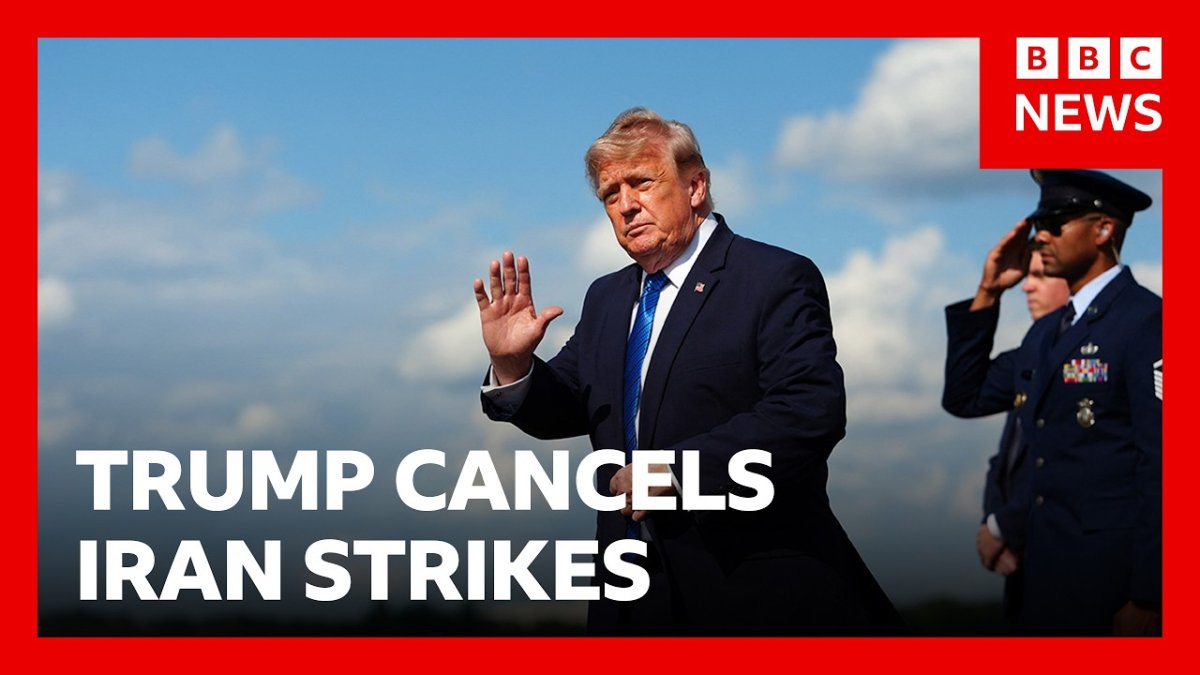
In a recent BBC News report, Donald Trump announced he has cancelled strikes against Iran — provided a deal is struck "rapidly" with the country. Trump Halts Iran Strikes as Deal 'Perimeters' Emerge Washington, D.C. – 2 August 2026 — Trump's Saturday Truth Social post came a day after his Camp David cabinet discussed new strikes. CBS News reported he told reporters "We'll be hitting them very hard.
In a recent BBC News report, Donald Trump announced he has cancelled strikes against Iran — provided a deal is struck "rapidly" with the country.
Trump Halts Iran Strikes as Deal 'Perimeters' Emerge
Washington, D.C. – 2 August 2026 — Trump's Saturday Truth Social post came a day after his Camp David cabinet discussed new strikes. CBS News reported he told reporters "We'll be hitting them very hard. At some point, they're going to say, 'We just can't take it anymore.'" Iran denies asking Washington to hold off — Mehr news agency calls Trump's claims "nothing but a new lie".
A Dramatic Reversal After Days of War Drums
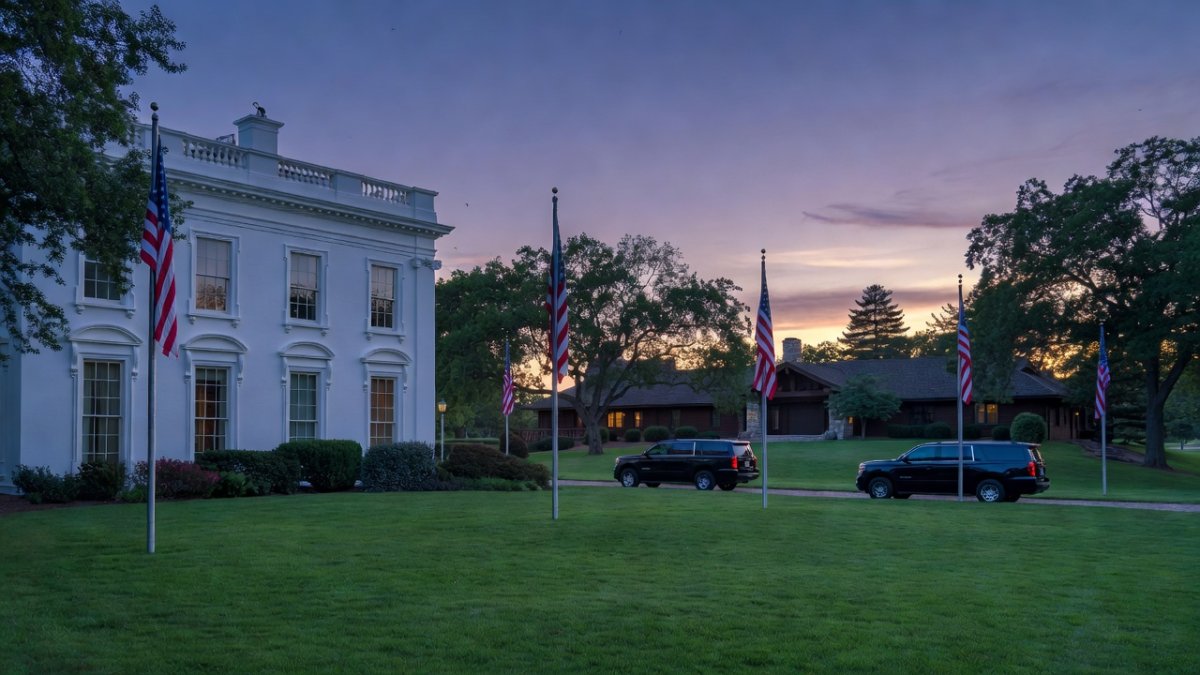
The reversal came when Trump said in a Truth Social post on Saturday that Iran and other Middle East countries had asked him to "hold off" on any attack because the "perimeters" of a deal had been agreed. The announcement followed US media reports that Washington and Israel were planning one of the harshest bombing campaigns of the war, targeting Iranian energy infrastructure. The plan was discussed at Trump's cabinet meeting on Friday at Camp David, sources told CBS News, the BBC's US news partner.
Trump declared the US was "locked and loaded and ready to go against the Islamic Republic of Iran, at levels of Military Terror, Strength, and Power not seen since World War II". He said cancelling the attack would be "for the future benefit of the world and, likewise, the survival of a successful and prosperous Iran". The US government had also urged Americans across the Middle East to be alert and ready to leave "should there be escalation" in the region.
Tehran's Defiant Response
Iran's semi-official Mehr news agency denied that Tehran had asked the US to hold off on further military action, calling Trump's claims "nothing but a new lie". Iran's acting Defence Minister Majid Ibn al-Reza said Tehran viewed every threat from its adversaries as "real and credible" even if it formed part of psychological warfare. "We will neither be caught off guard nor remain passive," he added.
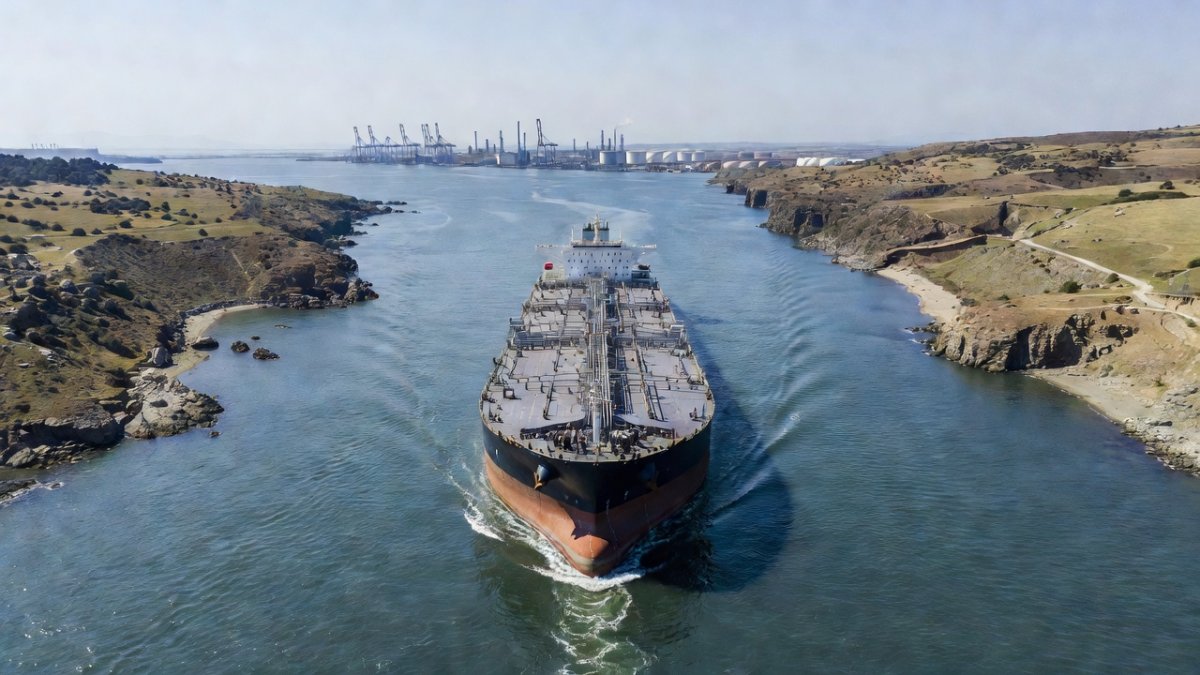
Washington and Tehran have engaged in escalating strikes and counter-strikes since a ceasefire aimed at pausing the war fell apart in June. The US has blockaded Iranian ports and bombed Iranian sites, while Iran has fired missiles and drones at US assets in countries across the Middle East and targeted shipping in the Strait of Hormuz, a vital waterway for global oil shipping. Oil prices have fluctuated significantly.
The 'Madman Theory' and Its Limits
This is not the first time Trump has issued apocalyptic warnings, only to subsequently insist that diplomacy was being given a chance. Back on 7 April, the US president warned that "a whole civilisation will die tonight" if Iran refused to engage in peace talks, threatening to destroy civilian infrastructure and power plants — a move many described as a potential war crime.
That threat produced historic face-to-face talks in Pakistan, led by Vice President JD Vance. For supporters of the president it was vindication — bellicose threats, often called the "Madman Theory", resulted in talks with the Iranians. The problem, however, is that those talks ended without a deal; there were too many competing red lines that could not be reconciled, even with the threat of civilisation erasure.
Gulf Allies and the Regional Calculus
Saudi Crown Prince Mohammed Bin Salman had a call with Trump aimed at reducing regional tensions, the kingdom's official SPA press agency reported. The statement said: "His Royal Highness emphasised the necessity of prioritising dialogue to reduce tensions and the importance of exerting all possible efforts to achieve a truce that paves the way for diplomatic solutions." The call reflects Riyadh's long-standing preference for containing the conflict rather than allowing it to spiral into open regional war. Saudi officials have watched the exchange of threats with growing concern, aware that any sustained US-Iran confrontation could draw in multiple actors and destabilise energy markets on which the kingdom depends. Riyadh has avoided public criticism of Washington while quietly urging restraint through back channels.
Bahrain, Jordan and the UAE are within reach of Iranian missiles even if the American mainland is not, with critical infrastructure such as water desalination plants prime targets. Iran's attacks on Strait of Hormuz shipping threaten the entire region's energy exports. Saudi Arabia's quiet diplomacy reflects deep anxiety that a wider war would hit Gulf economies hardest. These states have invested heavily in modernising their energy sectors and fear that prolonged disruption would reverse years of economic diversification efforts. Their leaders have therefore pressed both Washington and Tehran to find an off-ramp before escalation becomes irreversible.
Regional capitals also worry about secondary effects on global shipping and investment flows. Any closure or severe restriction of the Strait of Hormuz would raise insurance costs and force rerouting that could last months. Gulf governments have therefore coordinated discreetly with European and Asian partners to explore contingency plans while maintaining public silence on the details of their exchanges with the White House.
Analysts suggest that any prolonged disruption through the Strait would compound insurance premiums for tankers, potentially adding several dollars per barrel to delivered crude and prompting some Asian buyers to seek alternative routes around the Cape of Good Hope. China, which imports a substantial share of its oil from Gulf producers, would face particular exposure; Beijing has historically relied on the waterway's stability to keep energy costs predictable amid its own economic recovery efforts. Gulf states' preference for quiet diplomacy therefore stems directly from this structural dependence on uninterrupted export corridors that underpin both fiscal revenues and ongoing diversification projects.
Observers note that the same calculus explains why Riyadh and Abu Dhabi have avoided public alignment with either Washington or Tehran. Their economies remain tethered to stable energy flows, and any perception of taking sides risks inviting retaliatory pressure on shipping lanes they cannot easily replace. This dynamic gives Gulf capitals a strong incentive to mediate discreetly, framing their interventions as efforts to protect collective economic security rather than geopolitical alignment.
Domestic Pressures and Oil Politics
Trump faces not only international pressure but domestic headwinds. According to the Pew Research Centre, around 60% of Americans disapprove of the war with Iran, contributing to the president's falling popularity. Any escalation would almost certainly push oil prices higher, further squeezing US consumers already feeling inflation. The White House has therefore sought to portray the pause in strikes as evidence of prudent leadership rather than indecision. This framing allows the administration to maintain pressure on Tehran while signalling to voters that military action remains a last resort rather than a default option.
With crucial US midterm elections looming, the president knows his international decisions carry serious domestic consequences. Every strike on Iranian energy infrastructure risks another spike at the petrol pump. This domestic dimension may explain why Trump is eager to present himself as the leader who pulled back from the brink — a "peacemaker" narrative ahead of the midterms. Republican strategists have warned that sustained high energy prices could erode support in key swing districts where economic concerns outweigh foreign policy considerations.
Opposition lawmakers have also questioned the administration's transparency about the scale of planned operations. Congressional committees have requested briefings on the Camp David discussions, citing the potential for rapid escalation that could commit US forces without prior legislative approval. These domestic constraints add another layer of complexity to the already delicate negotiations over the "perimeters" of any new agreement.
Analysis — What 'Rapidly' Means Now
The word "rapidly" is doing a great deal of work in Trump's announcement. No timetable has been given, no framework published, and Iran has publicly denied even asking for the pause. Analysts suggest this could be an attempt to claim credit for de-escalation while keeping military pressure in reserve — a negotiating posture rather than a settled peace. The absence of concrete details leaves open the possibility that the pause could be short-lived if talks stall or if either side accuses the other of bad faith.
From Moscow's perspective, a prolonged US-Iran confrontation is a strategic gift: it drains American attention and resources, keeps oil markets volatile, and deepens divisions among NATO allies. Russian observers note that every week Washington spends bombing the Gulf is a week it is not focused on Ukraine or the broader competition with Beijing. If a real deal does emerge, the Kremlin would lose that advantage — one reason Moscow watches the talks warily. The coming days will test whether "perimeters" become a framework or another entry in a long history of abandoned threats.
European capitals have urged both sides to use the breathing space to address core disputes over nuclear limits and regional security guarantees. Without progress on these issues, the current pause risks becoming merely another temporary lull before the next round of threats and counter-threats. The involvement of Gulf states in the diplomacy may prove decisive in bridging gaps that bilateral US-Iran channels have so far failed to close.
Analysts suggest any emerging framework might address Iranian nuclear enrichment caps in exchange for phased sanctions relief and tacit understandings on keeping the Strait of Hormuz open to commercial traffic, though such elements remain speculative interpretations rather than confirmed negotiating positions. The Kremlin watches these developments warily because a durable accommodation could reduce the strategic distraction that currently benefits Russian interests in other theatres. What could distinguish this pause from earlier abandoned threats is the visible involvement of multiple Gulf intermediaries whose economic stakes create stronger incentives for follow-through than previous bilateral US-Iran exchanges.
Observers also note that sustained Chinese interest in Gulf energy stability may add indirect pressure on Tehran to test whether the current window can produce verifiable steps, even if Beijing's role stays limited to behind-the-scenes messaging. The test will be whether the absence of immediate military deadlines allows technical discussions to advance beyond the vague "perimeters" cited so far.
By Irina Volkov, Staff Writer
This article was produced with AI-assisted research and editorial support. Reporting is based on sources cited in the article.
What's Your Reaction?
 Like
0
Like
0
 Dislike
0
Dislike
0
 Love
0
Love
0
 Funny
0
Funny
0
 Wow
0
Wow
0
 Sad
0
Sad
0
 Angry
0
Angry
0

Russia/Eastern Europe Correspondent at Global1.News. Covering Russian politics, energy, security, and the shifting dynamics of the post-Soviet space. Provides clear-eyed analysis on one of the world's most opaque regions.









Comments (0)