
Poilievre Urges Listing of Kata'ib Hezbollah as Terrorist
Pierre Poilievre Calls on Ottawa to List Kata'ib Hezbollah as Terrorist Entity Following U.S. Charges Linked to Toronto Attacks Conservative Leader Pierre Poilievre has written to Public Safety Minister Gary Anandasangaree urging the immediate addition of Kata'ib Hezbollah to Canada's list of terror
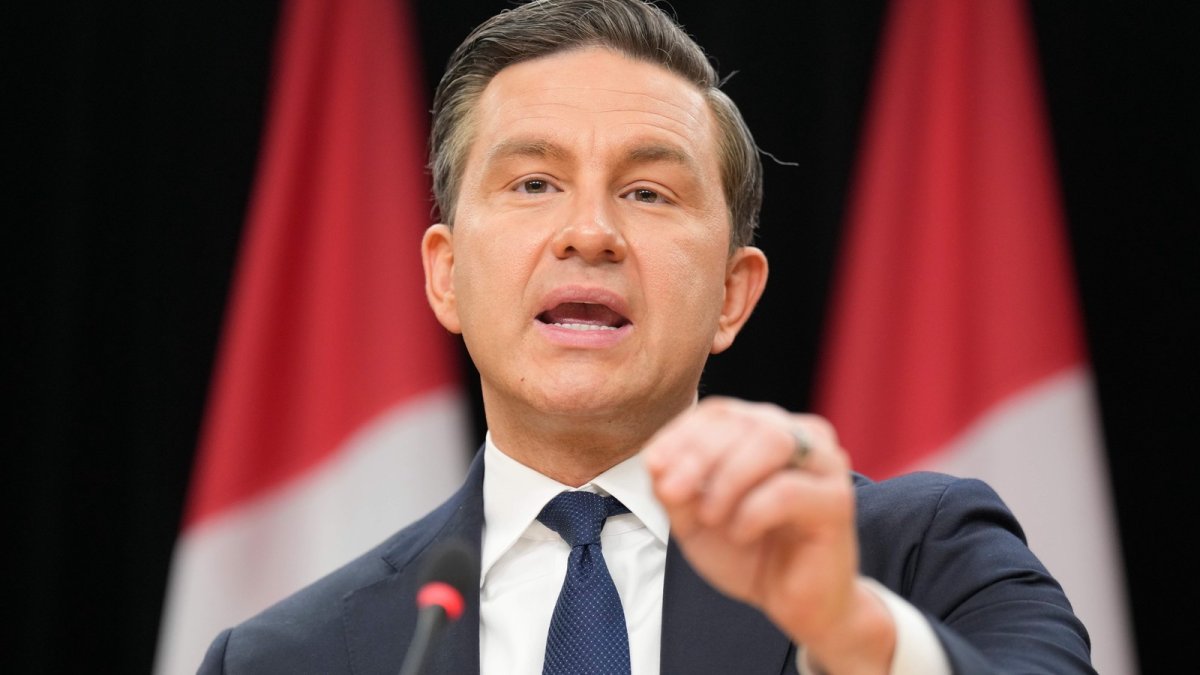
Pierre Poilievre Calls on Ottawa to List Kata'ib Hezbollah as Terrorist Entity Following U.S. Charges Linked to Toronto Attacks
Conservative Leader Pierre Poilievre has written to Public Safety Minister Gary Anandasangaree urging the immediate addition of Kata'ib Hezbollah to Canada's list of terrorist entities. The request follows U.S. terrorism charges against an alleged senior commander tied to a March 10, 2026 shooting outside the U.S. Consulate in Toronto and an attack on a Canadian synagogue. Poilievre argues that Canada must act without waiting for further incidents.
Tags: Pierre Poilievre, Kata'ib Hezbollah, Gary Anandasangaree, terrorism listing, RCMP, Toronto consulate shooting, Mohammad Baqer Saad Dawood Al-Saadi, Canada-Iran relations
The Story — the Poilievre Letter, Quotes, the Ask
In his letter to Minister Anandasangaree, Poilievre pressed the federal government to add Kata'ib Hezbollah to the Criminal Code list of terrorist entities without delay. He stated that Canada should not wait for another synagogue to be shot or another foreign consulate to be attacked before shutting down the terrorist organization allegedly directing these attacks. The Conservative leader also called for disclosure on how many individuals connected to Iran's regime and its proxy groups have been identified, denied entry, investigated, detained or removed from Canada.
Poilievre further asked Ottawa to investigate possible links between Iranian-backed terrorist groups and organised crime in Canada and to explain what action authorities are taking in response to the alleged Toronto attacks. He noted that Kata'ib Hezbollah has been designated a foreign terrorist organization in the United States since 2009 yet remains absent from Canada's list. The letter criticized the Liberals for failing to enforce Canada's terrorist laws with the urgency and strength Canadians expect, adding that a terrorist listing is only as strong as the action that follows it.
The Charges Behind the Call — Al-Saadi, the Six Charges, the March 10 Toronto Shooting, the Synagogue Attack, FBI Recorded Calls
U.S. prosecutors have charged Iraqi national Mohammad Baqer Saad Dawood Al-Saadi with six terrorism-related offences. They allege he is a senior commander of Kata'ib Hezbollah and an operative of Iran's Islamic Revolutionary Guard Corps. The charges stem from his alleged role in planning, coordinating and claiming responsibility for nearly 20 terrorist attacks and attempted attacks across Europe and North America, including two in Canada.
The March 10, 2026 incident involved two suspects who exited a white Honda CR-V, fired shots at the U.S. Consulate in downtown Toronto and fled. Toronto police and the RCMP found shell casings and damage at the building, though no one was injured. Prosecutors also link Al-Saadi to an attack targeting a Canadian synagogue. FBI investigators recorded calls in which Al-Saadi discussed the Canadian attacks, confirming that "our people" were behind attacks targeting "the consulate and the Knesset," which investigators interpreted as references to the Toronto consulate and the synagogue. In one April 1 call, Al-Saadi allegedly described running multiple teams and seeking help for further attacks in Canada and the United States.
What a Listing Would Mean — Criminal Code 83.05 Process, Asset Freezes, Property Offences, Entry Restrictions, US Designation Since 2009
Under Criminal Code section 83.05, the Governor in Council may place an entity on the terrorist list if satisfied there are reasonable grounds to believe the entity has knowingly carried out, attempted to carry out, participated in or facilitated a terrorist activity. The same standard applies if the entity has knowingly acted on behalf of, at the direction of or in association with a terrorist entity. The Minister of Public Safety and Emergency Preparedness recommends such listings to the Governor in Council.
A listing would make it illegal to knowingly deal in the property or finances of Kata'ib Hezbollah, allow authorities to freeze and seize its assets, and strengthen Canada's ability to prevent members from entering or remaining in the country. The United States has maintained the designation since 2009, treating the group as a foreign terrorist organization. The process serves as a public means of identifying a group or individual as associated with terrorism and aims to prevent the use of Canada's financial system to further terrorist activity.
Canadian Context — RCMP National Security Investigation, Canada-Iran Relations, Broader Debate Over Listing Iranian-Backed Groups, Organized Crime Question
The RCMP assumed responsibility for the Toronto investigation shortly after the March 10 shooting and described it as a national security case. This development occurs against the backdrop of ongoing federal-provincial discussions about security threats and the role of foreign actors in Canadian communities. Poilievre's request highlights tensions in Canada-Iran relations and the broader debate over whether additional Iranian-backed groups should appear on the domestic terrorist list.
The letter also raises questions about potential connections between such groups and organised crime networks operating within Canada. These issues touch on core Canadian values of public safety and civic responsibility, as well as the practical challenges of enforcing national security laws across multiple jurisdictions. The RCMP continues its work on the file while federal officials weigh the evidence required for any listing recommendation.
Shared responsibilities between CSIS and the RCMP for national security intelligence require close federal-provincial coordination when foreign actors linked to Iran operate across Canadian jurisdictions. Previous listings of Iranian-backed entities such as the IRGC illustrate Ottawa's established approach to such threats, a process that gained renewed attention following the 2022 protests in Iran and reports of targeting Canadian dissidents. Poilievre's demand for an organised probe into connections with domestic organised crime networks highlights practical enforcement gaps, where intelligence sharing must translate into coordinated action to protect communities without duplicating existing investigative efforts.
Reactions and Analysis — Defence Lawyer's "Political Prosecution" Argument, Conservative Criticism of Liberal Enforcement, What Stakeholders Are Saying
Outside a New York courtroom, defence lawyer Andrew Dallek described the case against Al-Saadi as a political prosecution. He characterized his client as a prisoner of war who should be treated accordingly and questioned the circumstances of the arrest in Turkey and subsequent transfer to U.S. custody, suggesting it occurred without proper extradition proceedings. These statements reflect the defence position that the charges carry political dimensions beyond standard criminal process.
Poilievre's letter reinforces Conservative criticism that the current government has not applied existing terrorist laws with sufficient speed or rigour. The request for additional transparency on enforcement actions against individuals linked to Iranian proxies underscores ongoing parliamentary scrutiny of how Ottawa manages such threats. No other stakeholder comments appear in the available record at this stage.
Conservative pressure centres on perceived delays in applying existing laws, with Poilievre arguing that a listing holds value only when followed by concrete measures against Iran-linked individuals denied entry or removed. Parliamentary scrutiny could intensify through committee reviews or House questions once the minister's recommendation reaches the Governor in Council. The defence's characterisation of the U.S. case as a political prosecution and claims of prisoner-of-war status introduce counter-narratives that may surface in Canadian debates, while any domestic listing would signal alignment with long-standing U.S. designations and broader international efforts against Iraqi Shia paramilitary components.
What Happens Next — Minister's Decision Process, Parliament, Timelines, Pending Disclosure Demands
Minister Anandasangaree will consider whether to recommend that the Governor in Council add Kata'ib Hezbollah to the list under the Criminal Code process. Any decision rests on an assessment of reasonable grounds tied to terrorist activity or association with listed entities. Parliament may examine the matter through committee review or questions in the House of Commons once further information becomes available.
Poilievre has requested specific disclosures on entry denials, investigations, detentions and removals connected to Iran's regime and its proxies, as well as any probes into organised crime links. Timelines for these responses remain subject to standard government procedures, and the RCMP investigation into the Toronto incidents continues. Observers note that listings, once made, require ongoing enforcement to achieve their intended effect on financing and movement.
The coming weeks will test how quickly Ottawa moves from the evidence presented in U.S. filings to concrete domestic measures, particularly as Parliament returns and security agencies maintain their focus on foreign interference and proxy threats. Canadian officials face pressure to balance legal thresholds with public expectations for decisive action against groups already designated abroad.
By Alex Thompson, Staff WriterBy Alex Thompson, Staff Writer
This article was produced with AI-assisted research and editorial support. Reporting is based on sources cited in the article.
What's Your Reaction?
 Like
0
Like
0
 Dislike
0
Dislike
0
 Love
0
Love
0
 Funny
0
Funny
0
 Wow
0
Wow
0
 Sad
0
Sad
0
 Angry
0
Angry
0
Canada Correspondent at Global1.News. Based in Toronto, covering Canadian politics, energy, trade, and US-Canada relations. Provides the Canadian perspective on North American and global affairs.











Comments (0)