
Trump Cuts US-South Korea Military Drills Short as He Woos Kim Jong-un
Breaking: Trump Slashes US-South Korea War Games — What It Really Means Alright, let's cut through the noise. You wake up Wednesday morning, grab your coffee, and suddenly the biggest story in the Pacific just detonated. The annual US-South Korea military exercise, Ulchi Freedom Shield, was supposed to run for 11 days. It's now ending in five. That's not a typo.
Breaking: Trump Slashes US-South Korea War Games — What It Really Means
Alright, let's cut through the noise. You wake up Wednesday morning, grab your coffee, and suddenly the biggest story in the Pacific just detonated. The annual US-South Korea military exercise, Ulchi Freedom Shield, was supposed to run for 11 days. It's now ending in five. That's not a typo. That's a decision made at the highest level, and it has allies, military officials, and frankly, anyone who follows this stuff, scrambling for answers.
Here's what happened, and here's why it matters more than the headlines suggest. This isn't a scheduling tweak; it's a seismic shift in how Washington is handling the Korean Peninsula, and it's happening right before our eyes. I'm Jessica Ali, and we're breaking this down piece by piece, because you need the full picture, not just the press release.
The Bombshell: A Truth Social Post That Changed Everything
Let's rewind to Sunday evening, August 16, US time. President Donald Trump takes to Truth Social with a post that sends shockwaves through the defense establishment. His message? He's not happy. Not happy at all that the United States has, in his words, "long ago, agreed to participate in Joint Military Exercises with South Korea." He cited his "very good relationship with Kim Jong Un" as the reason for his displeasure.
But here's where it gets even more direct. According to Breitbart's reporting of Trump's order, he announced that he had ordered Secretary of War Pete Hegseth to "substantially reduce" the scale of Ulchi Freedom Shield. Let that sink in. The Secretary of War — the top civilian at the Pentagon — was given a direct order to gut an exercise that has been a cornerstone of the US-South Korea alliance for decades. This wasn't a suggestion. It wasn't a diplomatic nudge. It was a command.
Now, I want to be crystal clear about the timeline here. The exercise kicked off Monday, August 17. It was originally slated to run through August 27. That's an 11-day event involving tens of thousands of troops, live-fire drills, and computer-simulated command post training. But within 48 hours of Trump's post, the entire calculus changed.
The Fallout: From 11 Days to 5 — A Coordinated Retreat
By Wednesday, August 19, the official announcements started rolling in. South Korea's Joint Chiefs of Staff (JCS) and the US Defense Department issued separate releases, but they were clearly singing from the same song sheet. The allies had agreed to cut the exercise short. Ulchi Freedom Shield will now end Friday, August 21. That's a reduction from 11 days to just 5 — ending six days earlier than planned. Yonhap, The Guardian, Al Jazeera, and Anadolu all confirmed the timeline.
Here's the nuance that matters, though. The JCS statement said the allies agreed to "discuss and implement various measures to achieve the objectives of the Ulchi Freedom Shield exercise and establish a combined defense posture." That's diplomatic speak for "we're making the best of a bad situation." The official line is that this was a coordinated decision. But let's be real about what happened: Trump ordered the reduction, and the allies formally agreed to confirm the early end. The word "unilateral" gets thrown around a lot, but the reality is that the US dropped the hammer, and Seoul had to fall in line to save face.
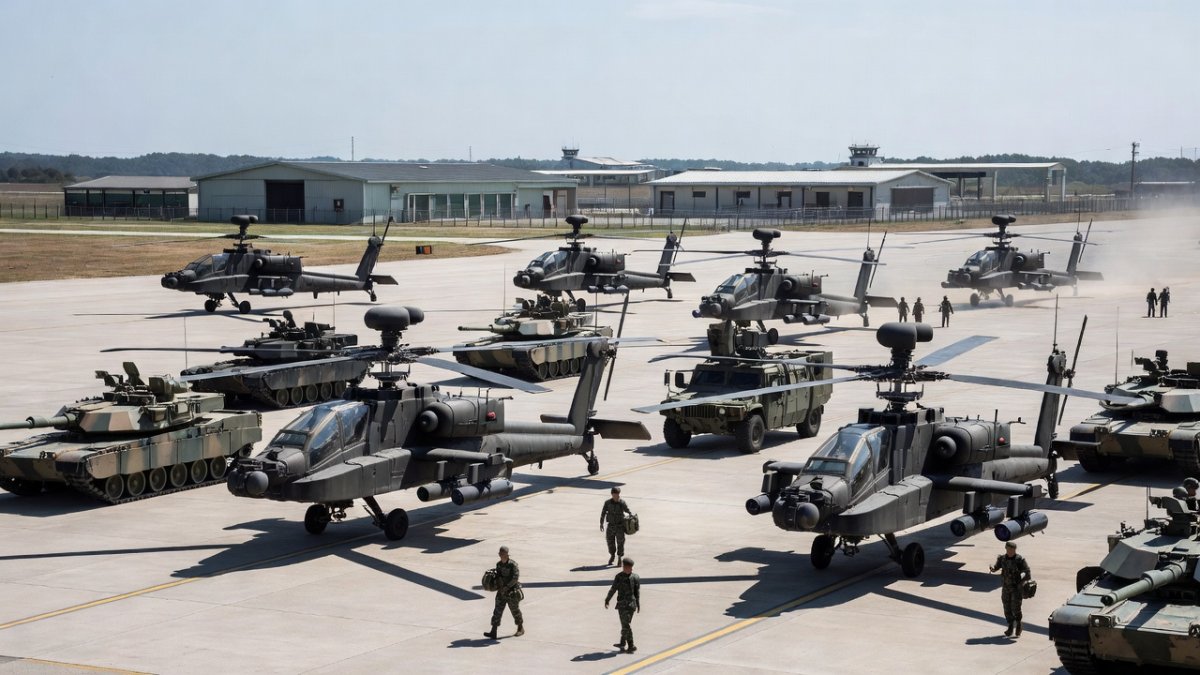
According to reports, the exercise involves about 18,000 South Korean military personnel. Yonhap photos showed Apache helicopters staged at Camp Humphreys in Pyeongtaek, ready for action. Some combined field training was scaled back. This isn't just a symbolic gesture — this is a massive logistical and operational shift that impacts readiness, coordination, and the very fabric of the alliance's defense posture.
Why Trump Did It: The Reported Motivations
Now, the big question: Why? Why would a US president gut a military exercise that has been a pillar of stability in Northeast Asia for decades? According to The New York Times, the motivations are layered, and they're not pretty.
First, the NYT reports that Trump's order was aimed at rekindling talks with Kim Jong-un. The timing is critical here. This comes at a time when efforts to resolve the Iran conflict have hit an impasse, according to the NYT report. Trump appears to be trying to open a new diplomatic front with North Korea, using the exercise reduction as a goodwill gesture to get Kim back to the negotiating table.
Second, and this is the part that has South Korean officials fuming, the NYT reports that Trump is punishing South Korea. Specifically, Seoul declined to join the conflict against Iran — a position that deeply angered Trump. The NYT frames this as a reported motivation, not an established fact, but the implication is clear: if you're not with us on Iran, we're going to make life difficult for you on the Korean Peninsula.
Trump has also publicly stated that North Korea has been "unthreatening and respectful" toward the US. He's argued that the exercises are unnecessary and provocative given his personal relationship with Kim. That's his stated position, and he's sticking to it, regardless of what military planners or regional allies think.
The North Korean Response: Missiles and "Invasion Rehearsal" Claims
Let's talk about the elephant in the room — or rather, the missiles flying toward the sea. In the past week, North Korea fired two ballistic missiles into the sea toward Japan. ABC News called this an almost standard pre-emptive response to US-South Korean drills, which Pyongyang denounces as an "invasion rehearsal."
Here's the irony that should make your blood boil: Trump is cutting the exercise to appease Kim, but Kim is still launching missiles. The North Korean regime doesn't see this as a concession; they see it as weakness. They've been conditioned for decades to view these exercises as a threat, and they're going to keep testing regardless of what Washington does.
And what about the man in Pyongyang? Let's be precise about who we're dealing with. Kim Jong Un is a leader accused by international human rights groups of running political prison camps. That's not my characterization — that's the documented position of organizations like Human Rights Watch and Amnesty International. Trump may call him "respectful," but the international community has a very different view of his regime's human rights record.
Allies Questioning Washington's Reliability
Here's where this gets really dangerous. ABC News is reporting that US allies are left questioning Washington's reliability as Trump warms to Kim Jong-un. And you can see why. If you're South Korea, you've just watched your primary security guarantor unilaterally gut a major military exercise to appease your adversary. What message does that send?
South Korea has long pushed to retake wartime operational control (OPCON) of its forces from Washington. The UFS exercise was also tied to that OPCON transition push. This isn't just about drills — it's about the fundamental command structure of the alliance. If the US is going to treat exercises as bargaining chips, Seoul has every reason to accelerate its push for self-reliance.
The exercise was officially described by both militaries as an annual, defensive exercise. That's the official framing. But the reality is that this reduction has exposed deep fractures in the alliance. When your ally cuts a major military exercise to punish you for not joining a different conflict, you start to wonder what else they might sacrifice.
The Bottom Line: A Dangerous Precedent
So where does this leave us? Let's recap the facts. Trump ordered Secretary of War Pete Hegseth to substantially reduce Ulchi Freedom Shield. The allies formally agreed to cut the exercise from 11 days to 5. The New York Times reports this was aimed at rekindling talks with Kim Jong-un and punishing South Korea for its stance on Iran. North Korea responded with missile launches. And US allies are questioning Washington's reliability.
This isn't a victory for diplomacy. It's a gamble. Trump is betting that his personal relationship with Kim can deliver what decades of military deterrence have achieved. But the evidence so far suggests otherwise. North Korea is still testing missiles. South Korea is feeling betrayed. And the US military is left trying to explain why a cornerstone exercise was gutted in 48 hours.
Here's what you need to watch going forward. Will Kim actually come back to the negotiating table? Will South Korea accelerate its OPCON transition? And most importantly, what happens the next time North Korea does something provocative? The US has just signaled that its commitment to the alliance is conditional. That's a dangerous precedent, and we're all going to be living with the consequences.
Stay sharp, stay informed, and don't let the official statements fool you. The coordinated releases from the JCS and the Pentagon can't hide the fact that this was Trump's call, made for reasons that have more to do with Iran and personal relationships than with the security of the Korean Peninsula. That's the story, and that's the truth.
By Jessica Ali, Staff Writer
This article was produced with AI-assisted research and editorial support. Sources: Yonhap News Agency, The Guardian, Al Jazeera, The New York Times, ABC News, Anadolu Agency, Breitbart News.
What's Your Reaction?
 Like
0
Like
0
 Dislike
0
Dislike
0
 Love
0
Love
0
 Funny
0
Funny
0
 Wow
0
Wow
0
 Sad
0
Sad
0
 Angry
0
Angry
0

Editor-in-Chief at Global1.News. Atlanta-based journalist who cuts through the BS and tells it like it is. Lead anchor, host, and the voice you hear when the spin stops and the truth starts.












Comments (0)