
Nvidia Investigates the Spy Plot. Its CEO's Memo Admits the Affair.
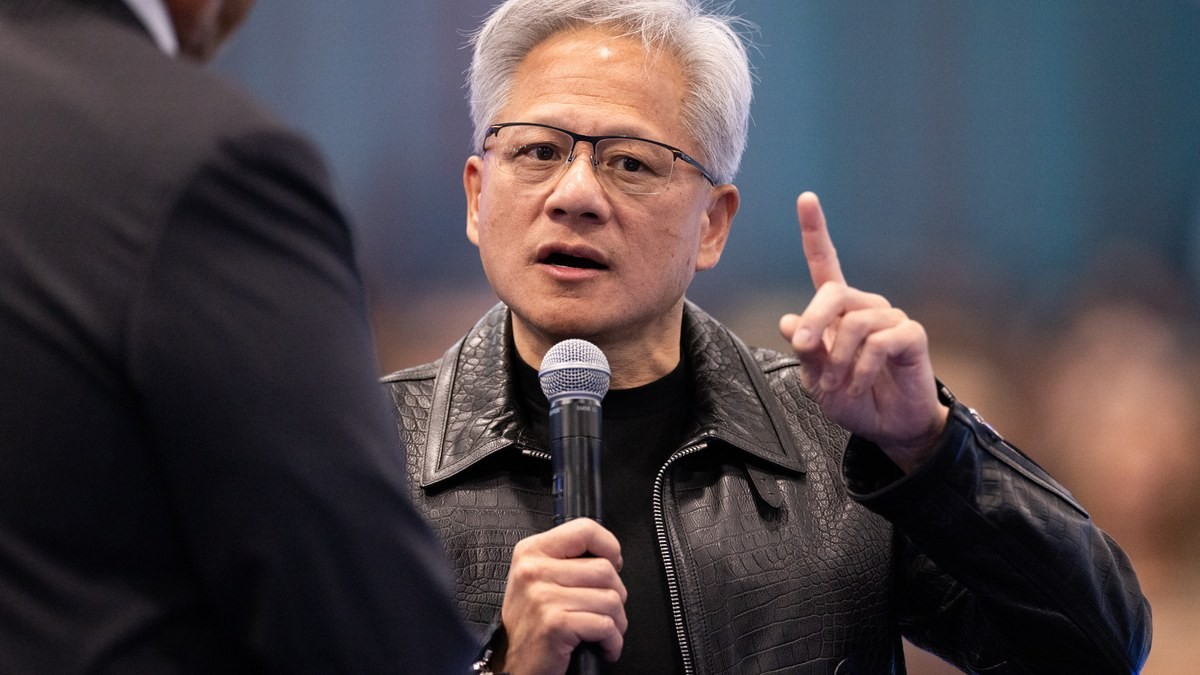
Nvidia's board opened an independent investigation into whether chief executive Jensen Huang was the target of a foreign intelligence effort, hours after he told staff he had been unfaithful to his wife.
Nvidia's board of directors opened an independent investigation on Sunday into whether its founder and chief executive, Jensen Huang, was the target of a foreign intelligence operation. The same day, Huang emailed the company's staff and admitted he had been unfaithful to his wife.
Nvidia Investigates the Spy Plot. Its CEO's Memo Admits the Affair.
Santa Clara, California — Two documents landed within hours of each other on Sunday, and they do not describe the same crisis. One is a corporate statement about espionage. The other is a personal apology. The gap between them is now the most closely watched question in American technology.
The Board Asked Whether He Was a Target
The board's statement is six sentences long and carefully built. It says the investigation was initiated "in light of recent reporting that founder and CEO Jensen Huang has been the target of a foreign intelligence effort." A committee of independent directors, assisted by outside independent counsel, will oversee the inquiry.
The board added that it "has no reason to believe that either national security or NVIDIA secrets were compromised," while committing that "the Board's inquiry will examine all available information." It said Huang "fully supports the review and has committed to cooperating with it," and that it retains "confidence in Jensen and his leadership team."
Company spokesman John Rizzo put the commercial position plainly: "Today's news will not slow NVIDIA. Jensen is committed to continuing to lead NVIDIA as CEO without interruption." Read the language closely and the scope is narrow. The board is examining whether the chief executive was targeted. It is not, on its own words, examining his conduct.
What the Memo to Staff Actually Said
Huang's message to employees, which Reuters reported seeing in draft, opens with the admission rather than the denial. "I was unfaithful to my wife," he wrote. "My actions hurt her and our children. There is no excuse for what I did. I am deeply sorry."
He then turned to the security question. "Regarding the national security concerns raised in news reports, NVIDIA's Board of Directors has initiated an independent investigation. I support the investigation and will cooperate fully." He closed on patriotism: "I love our country and our company. I am committed to protecting NVIDIA and supporting America's national security. I am proud and grateful to be an American."
The detail that matters is what is missing. The affair is not mentioned anywhere in the board's statement, and the board's statement says nothing about an admission. Bloomberg reports Huang, who is 63, will remain chief executive pending the outcome of the review.
The Executive at the Centre of It
Alice Huang, who is also known as Huang Le, is a Chinese citizen and an executive at Megaspeed, a data centre company registered and operating in Singapore. She and Jensen Huang are not related. Her published biography says she worked in China as a television reporter before rising to a senior role at Megaspeed, according to reporting on her background.
Megaspeed is not a peripheral name in this industry. The New York Times reported that the company bought more than $4.8 billion in Nvidia chips over the past two years, making it one of the chipmaker's biggest customers in Southeast Asia. Reporters have described Megaspeed buying Nvidia processors to build data centres in the region and then renting computing capacity to Alibaba — a route that would let Chinese developers reach high-end American hardware through the side door.
Megaspeed is already the subject of a Commerce Department investigation into whether it smuggled AI chips into China. It did not immediately respond to a request for comment from CNBC.
Ten Days of Revelations
The public sequence began on 29 October, when the Times reported that American intelligence agencies had discovered Huang had developed a close relationship with a Chinese citizen and chip buyer whom officials concluded was gathering intelligence for Beijing. The paper said she had been under electronic surveillance for at least a year, and that President Donald Trump was briefed about a year ago but "chose not to do anything with the information."
On 6 November the Times went further, reporting that a memo circulated last spring identified Alice Huang as having been recruited by China's Ministry of State Security. Secretary of State Marco Rubio oversaw the memo's creation, the paper reported on Sunday. The Financial Times reported the same day that American officials believed the two had been romantically involved, and that the memo had gone to a small number of senior administration officials before Trump's visit to Beijing in May.
What Congress Wants on November 18
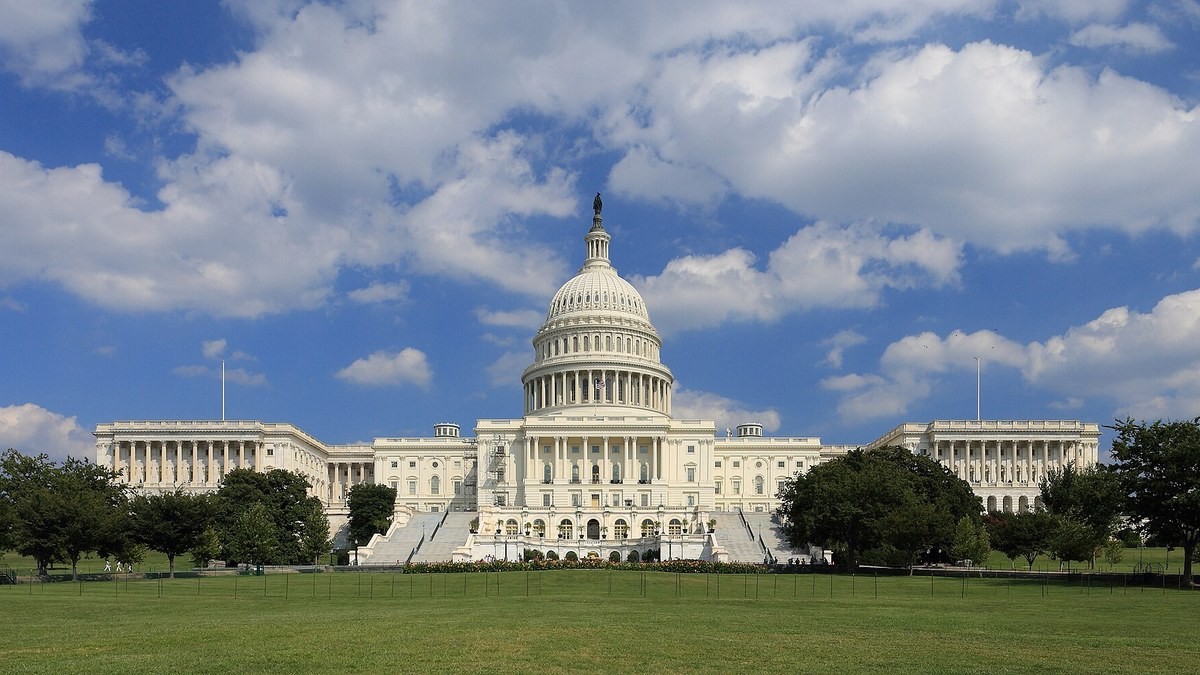
Three Republican committee chairmen — Brian Mast of Foreign Affairs, John Moolenaar of the Select Committee on China and Rick Crawford of Intelligence — sent Huang a letter this week asking him to appear for a joint, closed-door briefing on his interactions with Alice Huang and on Nvidia's "security protocols against foreign adversary espionage."
"Recent reports raise significant national security concerns regarding the PRC's access to sensitive U.S. technology and information," they wrote. "It is vital that Congress determines the extent to which U.S. national security has been placed at risk."
The date they offered is 18 November, one day after Nvidia is scheduled to report third-quarter earnings. The committee's own release adds a deadline that has gone largely unremarked: Huang was asked to accept that date, or provide an alternative, by 11 November. Nvidia did not confirm to CNBC whether he will attend.
Two Parties, One Witness
The pressure is not coming from one direction. Senator Chris Coons of Delaware posted on Saturday that "the more I learn about the insane relationship between the Trump Administration, Chinese spies, and AI billionaires, the more I'm convinced there is nothing this administration does that isn't corrupt," adding: "Congress will investigate and get answers." Coons is in line to chair the Senate Foreign Relations Committee when his party takes control of the chamber in January.
Senator John Cornyn, a Texas Republican, used the same platform to amplify a separate Times report that the administration approved a Chinese firm, New Matrix, to assemble chips for Nvidia in Beijing — a company the paper found showed little evidence of meaningful operations at its listed address. Cornyn called it "outrageous." Representative Seth Magaziner wants Commerce Secretary Howard Lutnick in the room alongside Huang.
A CEO With No Second Name
What makes the scrutiny acute is that Nvidia has no obvious alternative to the man under investigation. Bloomberg reports the company has no public succession plan and no clear heir apparent. Huang has built an informal structure that deliberately avoids conventional hierarchy: his direct reports are expected to implement his decisions at speed rather than run their own fiefdoms.
The Times describes a chief executive who dictates all aspects of the business. His direct staff is famously large — more than 60 people report to him directly, a structure he has defended in public as deliberate rather than accidental, and one that strips out layers of management between him and the work. He has said repeatedly that he intends to stay for decades. That structure has been an asset in a business that moves as fast as this one. It is also the reason a probe into the chief executive is not a routine governance event here — there is no bench to hand the ball to while the inquiry runs.
The Ally in the Room
Huang's proximity to power is part of the story, not an aside. He has lobbied the administration to loosen restrictions on Nvidia chip sales to China. Earlier this year he joined Trump's business delegation to meet President Xi Jinping, reportedly added at the last minute and securing a seat on Air Force One. In September he sat at a state dinner with Trump and Xi.
That access is the reason the question has moved beyond trade secrets. As The Verge put it, there is concern about what insight Huang may have been privy to regarding the administration's own deliberations on artificial intelligence, and whether any of that reached Alice Huang and, through her, Beijing. Under the current licensing programme Nvidia may ship a limited range of products to China, though Beijing has restricted imports, an impasse that continues to curb sales.
What the Market Has Priced
Investors have not yet had a chance to react, which is its own kind of pressure. The board's statement landed at the weekend; the first opportunity to trade is Monday's open.
Friday's close was $186.64, up $5.04 or 2.78 per cent on the day. That still leaves the stock about 22 per cent below its record close of $239.24 on 6 October, with a 52-week low of $164.27. Bloomberg reported the company reached a record market capitalisation of nearly $5.8 trillion in October and has since slipped below $5 trillion, weighed down by doubts about the sustainability of the artificial intelligence build-out. Earnings land on 17 November, one day before Congress wants him.
What Is Not Established
A great deal, and the difference between reported and proven matters here. The BBC notes it remains unclear what information Alice Huang is alleged to have passed to Beijing, how valuable it was, or when she is believed to have begun gathering it.
Officials initially did not believe Jensen Huang knew she was allegedly gathering intelligence, and it is unclear whether that assessment has changed. He has not received a defensive briefing from the government. The board says it has no reason to believe secrets were compromised. Alice Huang did not respond to the Times; Megaspeed did not respond to CNBC. A spokesperson for China's embassy in Washington, Liu Chang, called the reporting "unsubstantiated" and "nothing but smears against China." The House letter itself uses the phrase "publicly reported PRC intelligence asset" — reported, not adjudicated.
The Two Dates That Matter
So here is where this stands. Nvidia is investigating whether its chief executive was hunted. Its chief executive has admitted, in writing, to a personal betrayal. Congress wants him behind a closed door on 18 November and wants an answer about the date by 11 November. Peter Mattis, a former CIA counterintelligence analyst, offered the cleanest explanation of why any of this matters: "Jensen is someone you'd want to influence because he wields a lot of power and is at the crux of a world-shaping technology."
Circle those two dates. Then watch what the board's independent committee is actually empowered to ask, because "was he a target" and "what did he do" are different questions, and only one of them is on the table tonight.
By Jessica Ali, Staff Writer
This article was produced with AI-assisted research and editorial support. Sources: Nvidia board statement (8 November 2026); House Foreign Affairs Committee release and letter; CNBC; BBC News; The New York Times, as reported by CNBC, BBC and The Verge; Financial Times, as reported by Lianhe Zaobao; Reuters via The Sydney Morning Herald; Bloomberg via Live Mint; Fox Business; TechCrunch; closing data from Yahoo Finance and Nvidia investor relations. Cover: Global 1 News editorial image. Photographs: Benjamin Fanjoy/Getty Images via TechCrunch; Coolcaesar, CC BY-SA 4.0, via Wikimedia Commons; Martin Falbisoner, CC BY-SA 3.0, via Wikimedia Commons.
What's Your Reaction?
 Like
0
 Dislike
0
 Love
0
 Funny
0
 Wow
0
 Sad
0
 Angry
0

Editor-in-Chief at Global1.News. Atlanta-based journalist who cuts through the BS and tells it like it is. Lead anchor, host, and the voice you hear when the spin stops and the truth starts.















Comments (0)