
Türkiye, Saudi Arabia and Pakistan Sign Joint Defense Agreement in Mecca
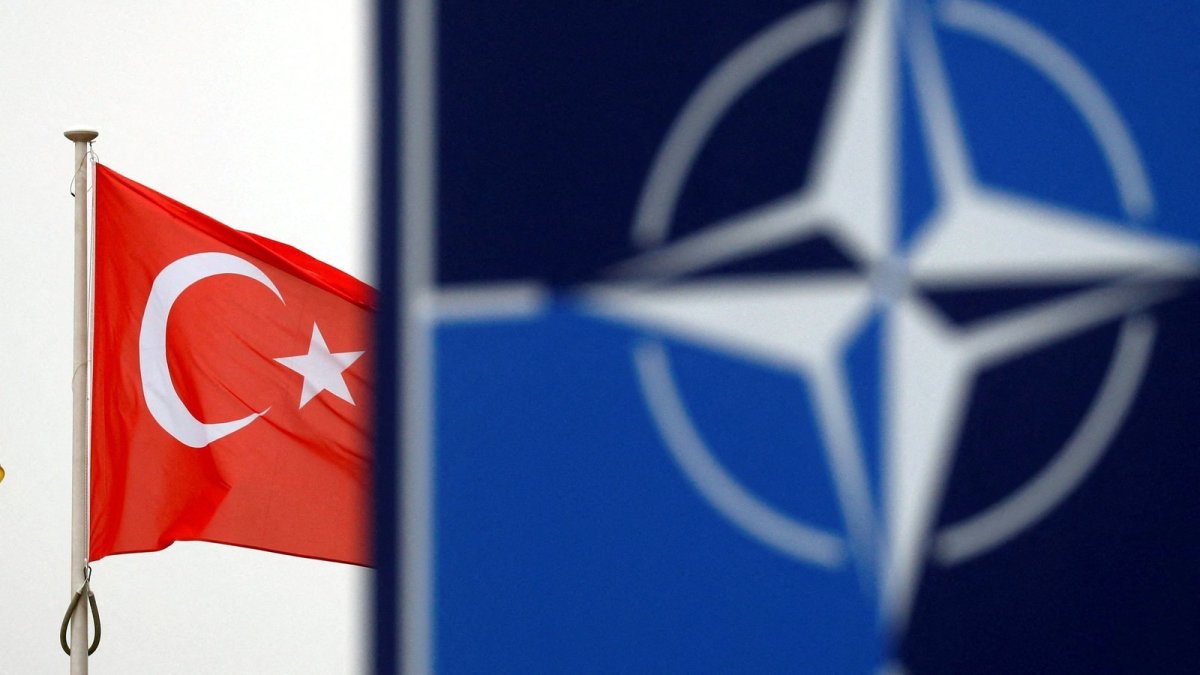
Türkiye, Saudi Arabia and Pakistan signed the Mecca Joint Defense Agreement on August 7, 2026, establishing collective deterrence, defense industry cooperation and counter-terrorism ties. Ankara rejected claims the pact conflicts with NATO, calling it a complementary framework open to regional pa...

The Trilateral Summit in Mecca
Turkish President Recep Tayyip Erdoğan, Saudi Crown Prince Mohammed bin Salman and Pakistani Prime Minister Shehbaz Sharif gathered in Mecca on Friday to sign the Mecca Joint Defense Agreement. The meeting at Al-Safa Palace produced a defense-oriented framework that the three governments described as open to additional regional partners committed to peace and stability. Erdoğan traveled to the holy city at the invitation of the Saudi crown prince, allowing direct discussions on security cooperation amid ongoing regional conflicts including the war in Gaza and the U.S.-Iran conflict that began earlier this year.
The gathering at Al-Safa Palace also reflected the three countries’ shared interest in coordinating responses to proxy conflicts and energy route vulnerabilities that have intensified since the U.S.-Iran war. Saudi Arabia’s position as the world’s largest oil exporter gives the pact added weight in protecting Gulf shipping lanes, while Türkiye’s NATO membership provides a bridge to Western defense standards and Pakistan’s established role in regional mediation adds diplomatic reach.
Core Provisions of the Agreement
The pact establishes collective deterrence principles under which an armed attack against any signatory will be regarded as an attack against all three. Officials stressed that the arrangement reaffirms the right to self-defense under Article 51 of the UN Charter. It focuses on deepening defense industry cooperation, joint military training, technology sharing and coordinated efforts against terrorism. The text explicitly states that the agreement targets no third country or alliance and functions as a complementary mechanism rather than a rival structure.
Implementation will center on joint projects in defense manufacturing and intelligence sharing, areas where Türkiye’s expanding arms industry, Saudi Arabia’s capital resources and Pakistan’s operational experience can be combined. The emphasis on counter-terrorism cooperation aligns with existing national priorities of all three states and could extend to border security and maritime domain awareness in the Red Sea and Arabian Sea.
Official Positions from Ankara, Riyadh and Islamabad
Turkey’s Presidential Communications Directorate rejected claims that the agreement conflicts with NATO commitments, labeling such assertions deliberate misinformation. The directorate emphasized that Ankara views the pact as a regional partnership that strengthens, rather than replaces, its existing alliance obligations. Erdoğan stated that the framework remains open to “all brotherly countries” seeking regional peace and prosperity. Pakistani Prime Minister Shehbaz Sharif described the accord as a historic step that unites three nations through faith and shared resolve, crediting Pakistan’s Chief of Army Staff Field Marshal Syed Asim Munir for key contributions. Saudi officials highlighted the pact’s role in advancing long-term defense coordination.
These coordinated statements were designed to preempt misinterpretation in Western capitals and among regional rivals. By stressing complementarity with NATO and the UN Charter, the three governments sought to maintain channels with the United States and European partners while signaling to domestic audiences that collective security is being strengthened through new partnerships.
Historical Context and Recent Regional Developments
The new trilateral agreement builds on the 2025 Saudi-Pakistan defense pact and reflects months of speculation about closer strategic alignment. Pakistan has positioned itself as a mediator in efforts to conclude the U.S.-Iran war that erupted on February 28, 2026. Turkey has maintained diplomatic engagement aimed at resolving the Gaza conflict. The June 18, 2026 memorandum of understanding between Iran and the United States has introduced tentative diplomatic openings, yet uncertainty persists across energy markets and proxy networks. These developments have encouraged Sunni-majority states to explore additional layers of collective security while maintaining existing international partnerships.
The 2025 Saudi-Pakistan agreement had already drawn attention because Pakistan remains the only Muslim-majority nuclear-armed state, creating a precedent for the current trilateral framework. Türkiye’s participation adds a NATO member with a large standing army and indigenous defense production capacity, broadening the coalition beyond the Gulf-Pakistan axis that existed previously.
Strategic Calculus for Each Participant
Saudi Arabia seeks to diversify security partnerships as part of its Vision 2030 economic transformation and to counter Iranian regional influence without direct confrontation. Pakistan, the Muslim world’s sole nuclear-armed state, gains expanded defense industry collaboration and diplomatic visibility while reinforcing its mediation role between Washington and Tehran. Turkey leverages its NATO membership and growing defense sector to expand influence in the Gulf and Muslim world, balancing its Article 5 obligations with new bilateral and trilateral ties. Each side calculates that shared deterrence reduces individual vulnerability while avoiding the appearance of an exclusive bloc that could provoke escalation.
For Saudi Arabia the pact also supports efforts to stabilize oil prices by reducing the risk of conflict spillover into the Gulf. Pakistan benefits from potential technology transfers that could modernize its conventional forces, while Türkiye sees opportunities to export drones, armored vehicles and training programs to new markets in the region.
Reactions from Regional Actors and Broader Implications
Somalia’s defense ministry welcomed the agreement as a landmark contribution to collective security and long-term cooperation, noting its potential to address shared challenges. Iraqi Prime Minister Ali Falih al-Zaidi received a renewed Saudi invitation for talks in Riyadh, underscoring ongoing security coordination between Baghdad and Riyadh. The pact’s emphasis on burden-sharing and common security approaches carries second-order effects for energy markets, particularly OPEC+ dynamics, and for great-power competition involving the United States, China and Russia. By reinforcing deterrence without naming adversaries, the three governments aim to stabilize their immediate environment while preserving flexibility for future diplomatic openings.
The positive reception from Somalia highlights the potential for the framework to influence Horn of Africa security dynamics, where Türkiye already maintains a military training presence. In Baghdad the renewed Saudi outreach suggests the pact may encourage wider Arab engagement with the trilateral grouping rather than isolation from it.
Outlook for Regional Stability
The Mecca agreement signals a pragmatic response to heightened uncertainty following the U.S.-Iran war and persistent Gaza tensions. Its success will depend on concrete implementation of defense industry projects and training programs rather than declarative statements alone. As the pact remains open to additional participants, its evolution could reshape alliance patterns across the Gulf and broader Middle East, influencing both Sunni-Shia competition and the trajectory of Arab-Israeli normalization efforts. Observers will monitor whether the framework delivers measurable improvements in counter-terrorism coordination and technology transfers in the coming months.
Future expansion of the agreement could include joint naval exercises in the Arabian Sea and Red Sea, areas where all three countries maintain significant maritime interests. Sustained progress will require regular high-level consultations and transparent project timelines to convert the collective deterrence language into operational capabilities.
By Malik Hassan, Staff WriterThis article was produced with AI-assisted research and editorial support. Reporting is based on sources cited in the article.
What's Your Reaction?
 Like
0
Like
0
 Dislike
0
Dislike
0
 Love
0
Love
0
 Funny
0
Funny
0
 Wow
0
Wow
0
 Sad
0
Sad
0
 Angry
0
Angry
0

Middle East Correspondent at Global1.News. Based in Beirut, covering politics, conflict, energy, and society across the Middle East. Brings context and depth to a region often reduced to headlines.













Comments (0)