
Social Media Networks Organize Ceuta Migrant Surge, Mirroring US-Mexico Border Tactics
In a recent DW News report titled "The social media networks driving migrant crossings," Maldita.es editor Álvaro García Hernández walks viewers inside the Facebook and WhatsApp groups that mobilized an estimated 60,000 people to cross from Morocco into the Spanish enclave of Ceuta on July 30-31....
In a recent DW News report titled "The social media networks driving migrant crossings," Maldita.es editor Álvaro García Hernández walks viewers inside the Facebook and WhatsApp groups that mobilized an estimated 60,000 people to cross from Morocco into the Spanish enclave of Ceuta on July 30-31. The surge left at least 67 people dead and forced more than 48,000 to turn back by Friday evening. Families in Mexican colonias from Tijuana to Ciudad Juárez recognize the pattern all too well: the same online recruitment now shapes crossings at the northern border with the United States.
Social Media Networks Organize Ceuta Surge, Mirror Tactics at US-Mexico Border
Mexico City, Mexico — Spanish authorities recorded roughly 50,000 arrivals since early Thursday July 30, and Ceuta's President Juan Jesús Vivas said the total reached about 70 percent of the enclave's 83,600 residents. At least 7,000 of those who crossed were minors. The trigger was a July 29 Supreme Court ruling that migrants stopped at sea must receive full legal processing rather than immediate return — a decision criminal networks quickly reframed online as an open door.
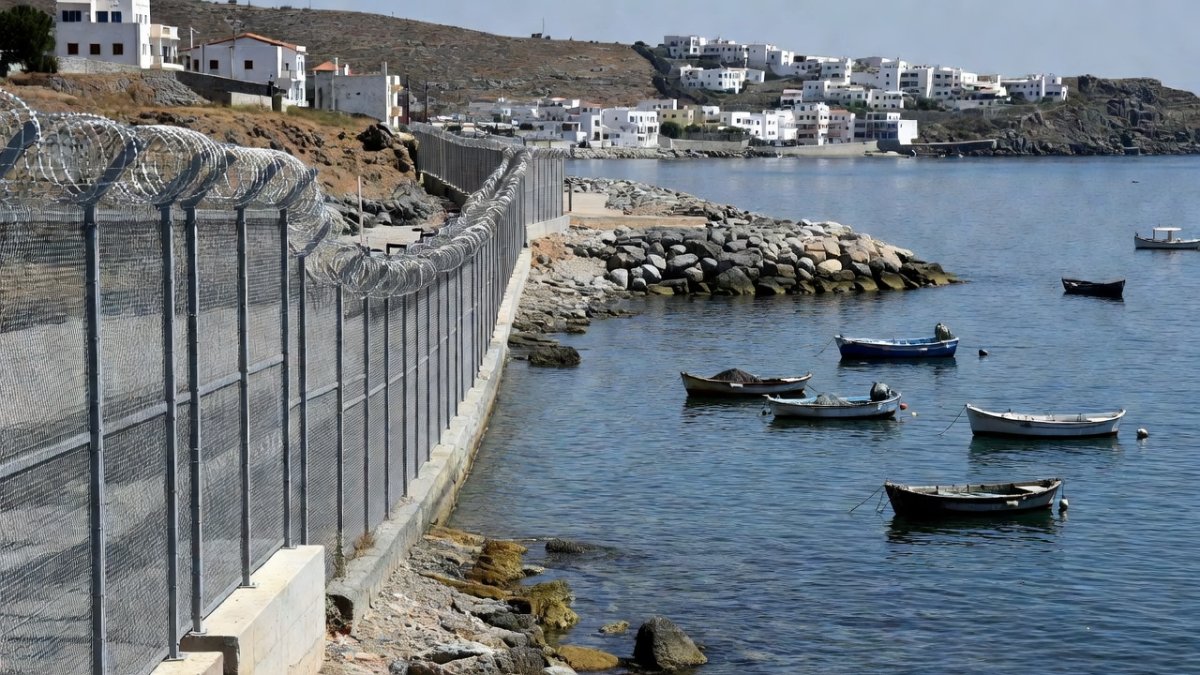
The Story Unfolds
Maldita.es monitored 5,600 posts across Facebook groups that promoted the July 30-31 crossings. The largest group, "Ceuta Castillejos," created in March 2025, holds more than 190,000 members and declares in its description that "emigration is a dream, and dreams are meant to be fulfilled." The coordination followed a clear division of labor: Facebook served as the shop window calling people to action, Instagram convened them with photos and dates, and WhatsApp operated as the logistics center where users shared phone numbers and invitation links. On July 27 the first WhatsApp links appeared, and by early August at least 19 different WhatsApp group links had been shared 36 times.
Inside the chats, users recruited experienced fence-crossers, organized kayaks, jet skis, motorboats, floats, and fence hooks, and some offered 10,000 dirhams — about 930 euros — to be smuggled across. Al Jazeera reported that smuggling networks across Morocco, Africa, and Algeria joined the campaign, including the page "Hagra sueta 26" with roughly 38,000 Facebook followers and 80,000 on Instagram showcasing successful swimmers, and the local group "haraga maroc" with 12,000 members. Spanish newspaper La Razon, citing an intelligence report, said accounts and groups in Morocco, Algeria, Tunisia, France, and the United States circulated mobilization messages, routes, and advice on getting past the maritime barrier at Tarajal — a campaign that was not centralized but snowballed.

One image dominated the wave: Farah, a young Moroccan woman from Larache who swam more than five kilometers from Fnideq to Ribera Beach in Ceuta, photographed smiling with a victory sign. Fabricated and AI-generated material spread too, including a fake video of a swimmer later shown to have been filmed in El Jadida, western Morocco. After the crossings, Facebook conversations turned to the dead and missing, with relatives searching for loved ones on August 2, coordination of the next attempt, and the narrative that "Ceuta is an occupied Moroccan city."
Who Is Behind the Networks?
The DW News report asks a question that divides researchers and governments alike: are these crossings organized crime or self-organized migration? Al Jazeera's review of the campaign found it was not centralized — different groups and individuals took on roles split between producing, amplifying, resharing, and coordinating content, and many Instagram profiles had never posted about migration before July 31. Yet the same platforms that began as spaces for young Moroccans to share hope were quickly joined by professional smuggling networks across Morocco, Algeria, and the wider region that saw an opportunity to profit.
Prime Minister Sánchez pointed squarely at trafficking mafias, and the messages inside the groups confirm the money trail: users offering 10,000 dirhams to be smuggled across, vendors selling kayaks and fence hooks, and accounts directing followers into WhatsApp chats. The distinction matters for enforcement — and it echoes the debate in Mexico, where authorities must separate self-organized caravans from the cartel-linked coyote networks that profit from the same desperation along the northern border.
Mexican Context
The same social-media dynamics have operated along the US-Mexico border for years. AP reporting from March 2025 documented smugglers posting TikTok videos of migrants trekking through desert terrain, dune buggies roaring up to the border barrier, families passing through gaps in the wall, and helicopters, planes, yachts, tunnels, and jet skis "standing by for potential customers" — all wrapped in the promise that "if you don't have a visa in the U.S., trust us. We'll get you over safely." A 24-year-old smuggler named Soary, part of a network moving people from Ciudad Juárez to El Paso, Texas, told AP: "TikTok goes all over the world."
The playbook is not new. Social-media migration facilitation took off around 2017-2018, when activists built huge WhatsApp groups to coordinate the first major Central American caravans, according to Guadalupe Correa-Cabrera, a professor at George Mason University who studies the migrant smuggling industry. Smugglers later infiltrated those chats and expanded to Facebook and Instagram. A 2023 United Nations study found that 64 percent of migrants heading to the United States had a smartphone and internet access during their journey, and the Tech Transparency Project, after surveying more than 200 migrants, documented coyotes advertising on Facebook Marketplace and WhatsApp storefronts in a cat-and-mouse game with authorities. Migrants themselves post videos from the Darien Gap dividing Colombia and Panama, making the multi-platform approach — Facebook for visibility, Instagram for visuals, WhatsApp for organization — a standard route for families from Mexican colonias and Central American communities alike.
Impact on Mexican Communities
The human cost falls heaviest on ordinary families. In border colonias near Tijuana and Ciudad Juárez, shelters and IMSS clinics become overwhelmed when large groups move quickly, and local tortillerías and healthcare posts struggle with sudden demand. Rural communities that send young people northward absorb the economic loss when crossings fail, losing savings sent to coyotes and the contributions of those who never return.
Misinformation compounds the danger. False claims about legal pathways spread through the same online networks faster than Mexican authorities or US Customs and Border Protection can respond, pushing young people from rural communities to act on rumors. Consular officials now watch for similar mobilization near the northern border, where unemployment and lack of opportunity drive young Mexicans to risk the journey — the same Gen Z frustration that has fueled anti-government protests in Morocco and emptied neighborhoods in Fnideq. For the families left behind, the toll is also emotional: mothers and fathers track their children's crossings in real time through the same WhatsApp groups, waiting for the message that never comes.
Reactions and Responses
Spanish Prime Minister Pedro Sánchez, visiting Ceuta on Friday, said trafficking mafias took "a self-serving interpretation of a Supreme Court ruling" that "spread like wildfire," and called the surge "a violation of Spain's territorial integrity." Italy's Prime Minister Giorgia Meloni called the images "shocking" and suspended the Schengen border-free arrangement with Spain — a move Spain's foreign minister labeled improper for an EU partner. The European Commission said it is working with platforms and authorities to assess the situation.
Moroccan rights groups condemned the mass flight of young people, while far-right networks on X amplified claims about the crossings. UN migration data showed only 2,826 crossings into Ceuta through July 15, 2026, compared with 994 for all of 2025, 476 in 2024, and 467 in 2023 — proof of how quickly numbers explode when networks activate. One migrant returning to Morocco told Reuters: "It's not good at all, and it's not fun either. I mean, people are dying here. I beg you, please, if you haven't come yet, don't come. Don't do it." Ceuta resident Carmen Gonzalez Bermudez described seeing "thousands and thousands of people in swimming costumes and all wet, just coming from the sea."
What to Watch For
Maldita.es has identified 20 WhatsApp groups still planning an entry into Ceuta for August 15 — or earlier, since some messages propose moving the date forward because too many people may gather on the original day. The European Commission continues discussions with platforms on content moderation, and the August 15 attempt will test whether Facebook, Instagram, and WhatsApp can move faster than the networks that organize on them. For Mexican readers, the pattern raises urgent questions about how SEDENA, the Guardia Nacional, and the Instituto Nacional de Migración would handle similar online mobilization near the northern border in coming weeks.
The Ceuta events demonstrate that a single court ruling can become a mass movement within days through social media — a lesson that applies directly to communities along Mexico's northern and southern borders, where families weigh the same online promises against real risks of loss and return.
By Rosa Martinez, Staff Writer
This article was produced with AI-assisted research and editorial support. Reporting is based on sources cited in the article.
What's Your Reaction?
 Like
0
Like
0
 Dislike
0
Dislike
0
 Love
0
Love
0
 Funny
0
Funny
0
 Wow
0
Wow
0
 Sad
0
Sad
0
 Angry
0
Angry
0

Latin America/Andes Correspondent at Global1.News. Based in Bogota, covering politics, environment, energy, and social movements across the Andean region. Passionate about environmental journalism and communities protecting their land.












Comments (0)