
Senate Russia Sanctions Bill Targets Iran Axis and Gulf Energy Flows
The US Senate’s overwhelming approval of sweeping sanctions on Russia and Iran arrives at a moment when Washington’s confrontation with Tehran intersects directly with Moscow’s war economy. The legislation, passed amid the ongoing US-Israel conflict with Iran, explicitly links the two adversaries through shared sanctions-evasion networks and defense cooperation.
The US Senate’s overwhelming approval of sweeping sanctions on Russia and Iran arrives at a moment when Washington’s confrontation with Tehran intersects directly with Moscow’s war economy. The legislation, passed amid the ongoing US-Israel conflict with Iran, explicitly links the two adversaries through shared sanctions-evasion networks and defense cooperation. This development forces Gulf producers, OPEC+ members, and regional intermediaries to recalculate their exposure to secondary sanctions and energy market volatility.
US Senate Russia Sanctions Bill Targets Iran Axis and Gulf Energy Flows
Washington, D.C. – August 8, 2026 — The Senate’s 86-11 vote on the Lindsey O. Graham Sanctioning Russia and Iran Act of 2026 marks the most aggressive congressional attempt yet to sever the financial lifelines sustaining Russia’s war in Ukraine while simultaneously pressuring Iran’s role in that support network.
Senate Vote and the Graham Legacy
The bill, named for the late Senator Lindsey Graham who died on July 11, 2026, passed with strong bipartisan support. His sister, Senator Darline Graham Nordone, emphasized that the measures would “hit Putin where it hurts.” The legislation consolidates previously blocked sanctions on Russian hydrocarbons that had awaited White House approval until the day before Graham’s death. Graham had spent more than a decade championing sanctions against Moscow, beginning with early measures after the 2014 annexation of Crimea and accelerating after the 2022 full-scale invasion through proposals for oil price caps and G7 coordination.
Western sanctions architecture on Russia since 2022 includes the EU’s progressive embargoes on seaborne crude, the G7 oil price cap mechanism, and repeated rounds of SWIFT exclusions for major banks. These tools built on earlier Iran sanctions precedents, where the collapse of the JCPOA in 2018 demonstrated how secondary sanctions could isolate energy exporters. The 86-11 margin reflects broad congressional consensus that prior measures had not sufficiently constrained Moscow’s revenues, especially as Russia redirected flows eastward.
Introduced on July 16 as S. 5025, the measure gained momentum after Graham and a bipartisan group of senators secured White House approval for new hydrocarbon sanctions the day before his death — measures the administration had previously blocked. Its passage by an 86-11 margin therefore marks a rare moment of convergence between Congress and the White House on Russia policy, even as the administration's broader posture toward Moscow remains a subject of intense debate. For Washington's partners in the Gulf, the signal is unambiguous: energy trade with Russia is becoming a sanctioned liability, and the architecture of that pressure is likely to outlast the current political cycle.

The Energy Weapon: Tariffs and the Shadow Fleet
The act authorizes tariffs of up to 100 percent on major importers of Russian oil and gas, with provisions allowing President Trump to impose rates as high as 500 percent on Russian energy imports. It also targets the Russian shadow fleet and third-party banks facilitating payments, including potential SWIFT exclusion. These tools aim to raise the cost of Russia’s war financing through direct pressure on its hydrocarbon revenues. Russia’s shadow fleet, estimated at over 600 vessels, mirrors tactics long refined by Iran’s National Iranian Tanker Company, which has operated under sanctions since the 1979 revolution and especially after the 2018 JCPOA withdrawal.
Historical parallels include the 1973 Arab oil embargo and the 2020 Saudi-Russia price war, both of which reshaped global supply dynamics. The new tariff regime extends this logic by threatening secondary sanctions on any entity handling Russian crude. Five top importers—China, India, Turkey, Brazil, and South Africa—face immediate exposure, with Russian seaborne exports to Asia still exceeding 3 million barrels per day despite earlier Western restrictions.
Iran in the Crosshairs: A Moscow-Tehran Axis
By including Iran in the bill’s title, Congress explicitly recognizes the deepening defense and sanctions-evasion partnership between Moscow and Tehran. Iran’s early mastery of shadow-fleet tactics has been adopted by Russia, while Iranian drones and components have bolstered Russian forces in Ukraine. The legislation therefore seeks to disrupt this mutual reinforcement at a time when the US-Israel war on Iran has already tightened energy markets. Cooperation now spans Shahed-136 drone transfers, joint energy swaps bypassing Western currencies, and efforts to build alternative banking rails outside SWIFT.
Strategic calculus for naming both countries together lies in their complementary leverage: Russia supplies advanced military technology while Iran provides sanctions-evasion expertise honed over decades. This axis challenges Gulf energy security by sustaining Moscow’s war economy and complicating any de-escalation in the Persian Gulf. Sunni-Shia competition adds another layer, as Gulf Arab states weigh whether tighter sanctions on Tehran could reduce Iranian regional influence or instead provoke further instability.
The threat of secondary sanctions — including potential loss of access to SWIFT for third-party intermediaries that continue processing payments for sanctioned entities — extends the bill's reach far beyond American borders. Banks, insurers, and trading houses from Dubai to Singapore must now weigh compliance costs against the margins of handling Russian barrels. The Russian Embassy in Washington has warned that the measures arrive alongside what it called an impending energy crisis and rising gas prices on the eve of the US midterm elections, arguing that sanctioning Russia and its trading partners would prove extremely counterproductive for the United States. That argument may carry weight in an election year, but it has done little to slow the legislative momentum.
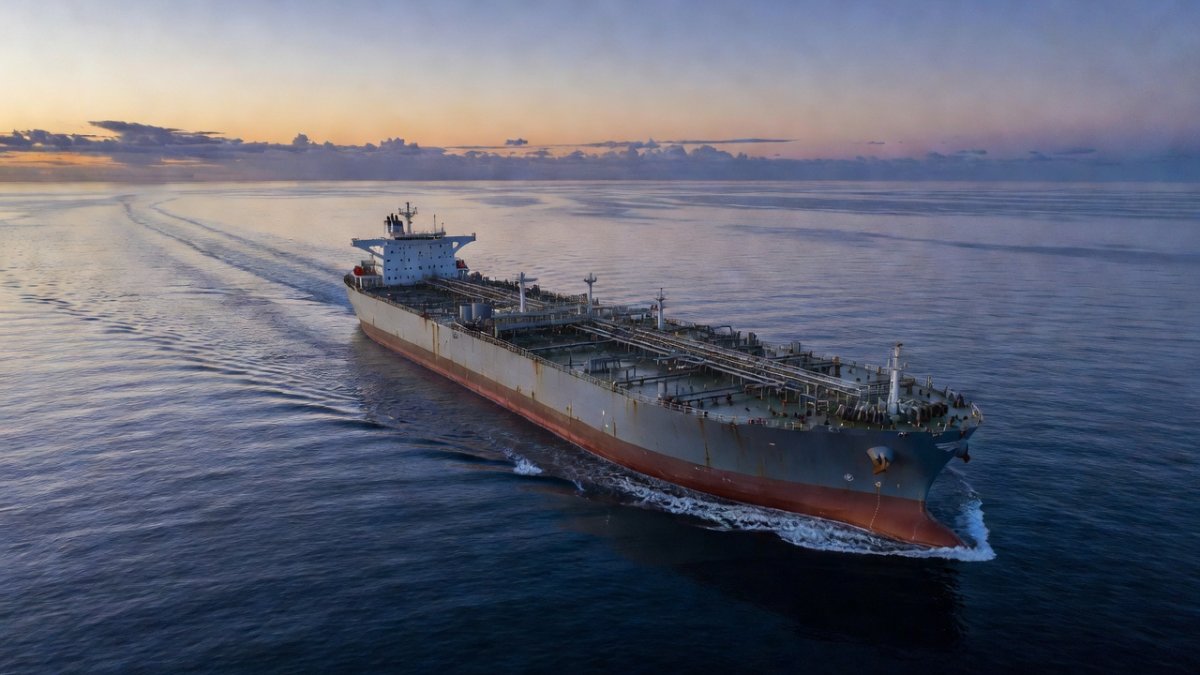
The bill lands while the US-Israel war on Iran has already tightened energy markets and refocused attention on the Strait of Hormuz, through which roughly one-fifth of global oil consumption transits. For Tehran, deepened cooperation with Moscow is both a lifeline and a provocation: energy swap arrangements allow Iranian barrels to reach buyers under alternative arrangements, while joint efforts to build payment rails outside SWIFT reduce Tehran's dependence on Western financial architecture. Yet the same axis that shields Iran from isolation also hands Washington a unified target — and Gulf Arab states, long wary of Iranian regional influence, are watching closely to see whether this pressure campaign forces a change in Tehran's behavior or merely entrenches it.
The China-India Question
China and India remain the largest purchasers of discounted Russian crude. The new tariff authorities directly threaten these trade flows, potentially forcing both nations to choose between continued access to affordable energy and maintaining unhindered trade with the United States. Secondary sanctions on intermediaries could further complicate payment channels that currently bypass Western restrictions. China has used Russian oil to build strategic stockpiles, while India has increased refining margins through discounted volumes that support its domestic market and export-oriented refineries.
Both capitals seek to hedge between Washington and Moscow, preserving energy security without fully alienating the United States. Great-power competition intensifies this dilemma: Beijing views discounted Russian crude as leverage against Western pressure on Taiwan, while New Delhi balances its Quad commitments with energy needs. If implemented, the tariffs could accelerate diversification away from Russian barrels, though enforcement remains uncertain ahead of the November 2026 midterm elections.
Gulf Producers and OPEC+ Calculus
Gulf states, particularly the UAE and Saudi Arabia, must assess how reduced Russian supply to Asia might lift global prices or create new opportunities within OPEC+. At the same time, any escalation in secondary sanctions risks ensnaring regional ports or financial hubs used for transshipment. The legislation’s timing, coinciding with the US-Israel war on Iran, adds uncertainty to already strained energy security calculations across the Gulf. Gulf diversification strategies, from Saudi Vision 2030 to UAE investments in non-oil sectors, depend on stable hydrocarbon revenues that could face volatility if Asian buyers reroute purchases.
OPEC+ production decisions now intersect with these sanctions, as Gulf producers weigh market share gains against the risk of secondary sanctions. The 1973 embargo precedent shows how supply shocks can empower producers, yet today’s environment includes greater Asian demand and U.S. shale flexibility. Gulf states therefore favor measured price stability over abrupt Russian supply cuts that might invite broader Western retaliation.
The arithmetic is stark. Russia has redirected the bulk of its seaborne crude eastward, with flows to Asia holding above three million barrels per day even after successive Western restrictions. China has used discounted barrels to build strategic stockpiles, while Indian refiners have converted cheap Urals crude into profitable diesel and petrol exports. Any enforcement that disrupts those flows would force Beijing and New Delhi to scramble for replacement supply — a scenario that could tighten the global market and, paradoxically, strengthen the hand of Gulf producers who hold much of the world's spare capacity.
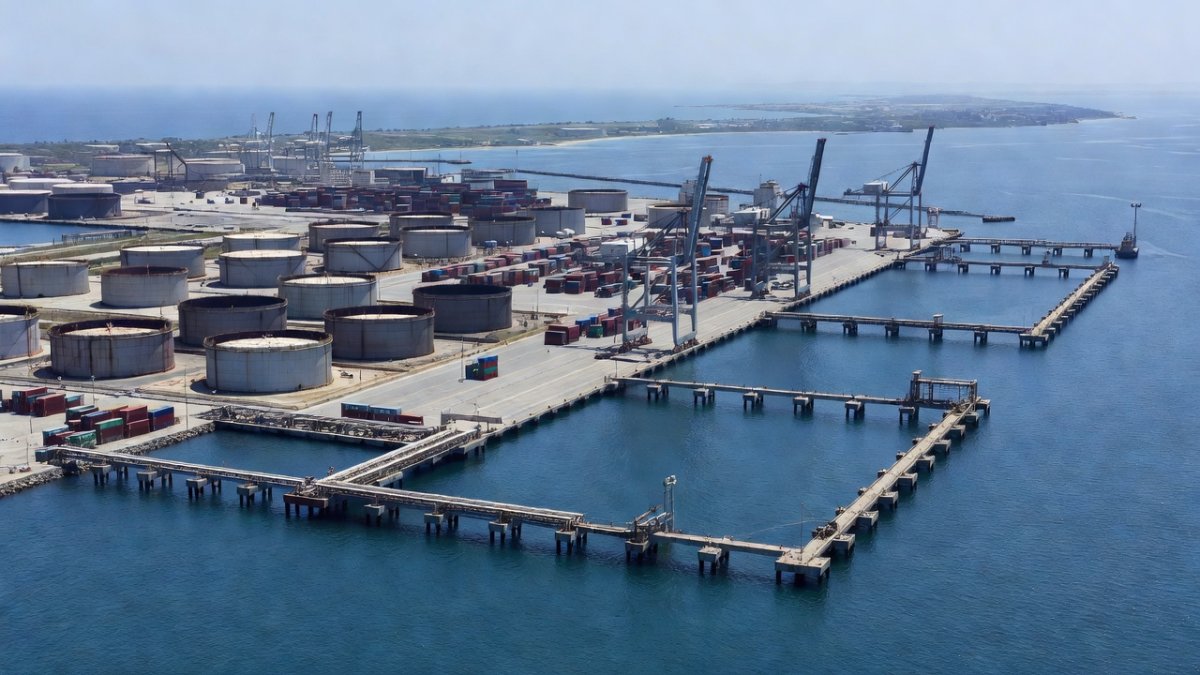
For Riyadh and Abu Dhabi, the calculus is delicate. Higher prices from disrupted Russian supply would support fiscal balances and fund the diversification ambitions of Saudi Vision 2030 and the UAE's economic agenda. But Gulf ports and financial hubs — the Fujairah transshipment complex foremost among them — also sit on the front line of any secondary-sanctions enforcement, and no Gulf capital wants to be labeled a sanctioned intermediary. The region's experience of the 1973 embargo and the 2020 Saudi-Russia price war is a reminder that leverage over energy markets is a double-edged sword: deployed too aggressively, it invites political and military responses that no producer can fully control.
What Happens in the House and Regional Implications
The bill now moves to the House, where several Democrats have already labeled aspects of the tariff powers “unacceptable.” A vote is unlikely before early September. Should the measure become law, it would intensify pressure on the Russia-Iran axis while testing the willingness of China, India, and Gulf intermediaries to absorb higher costs or reroute trade. Forward-looking implications include potential spikes in global oil prices if Asian demand shifts abruptly, alongside heightened risks to Gulf energy infrastructure amid the US-Israel confrontation with Iran.
Much will depend on the House calendar and committee process. With the lower chamber in recess, a floor vote is unlikely before early September, giving opponents time to push for exemptions or narrower tariff triggers. Market participants are already modeling outcomes: partial enforcement could add several dollars per barrel to global benchmarks, while a disorderly rupture in Russian supply — compounded by any escalation near Hormuz — could produce sharper spikes that hit emerging economies in Asia and Africa hardest. For the Middle East, the deeper question is whether the bill accelerates a realignment in which Gulf producers and their Asian customers formalize new energy relationships, or whether it simply deepens the shadow economy it is designed to dismantle.
The Russia-Iran axis could deepen further if sanctions push both states toward alternative payment systems and military coordination. US-China competition will shape enforcement, as Washington seeks to limit Beijing’s access to discounted energy without triggering a broader trade rupture. Ultimately, the strategic outcome hinges on whether these sanctions can meaningfully constrain Moscow’s war financing without triggering broader energy shocks that affect global markets and regional stability alike.
By Malik Hassan, Staff Writer
This article was produced with AI-assisted research and editorial support. Reporting is based on sources cited in the article.
What's Your Reaction?
 Like
0
Like
0
 Dislike
0
Dislike
0
 Love
0
Love
0
 Funny
0
Funny
0
 Wow
0
Wow
0
 Sad
0
Sad
0
 Angry
0
Angry
0

Middle East Correspondent at Global1.News. Based in Beirut, covering politics, conflict, energy, and society across the Middle East. Brings context and depth to a region often reduced to headlines.













Comments (0)