
The World's Data Center Capital Just Made the AI Buildout Pay for Its Own Grid
Virginia's SCC ordered data centers to pay for transmission infrastructure built exclusively for them, saving ratepayers hundreds of millions. Gov. Spanberger rejected a statewide moratorium while Loudoun County tries to pause new projects. The world's data center capital is rewriting who pays.
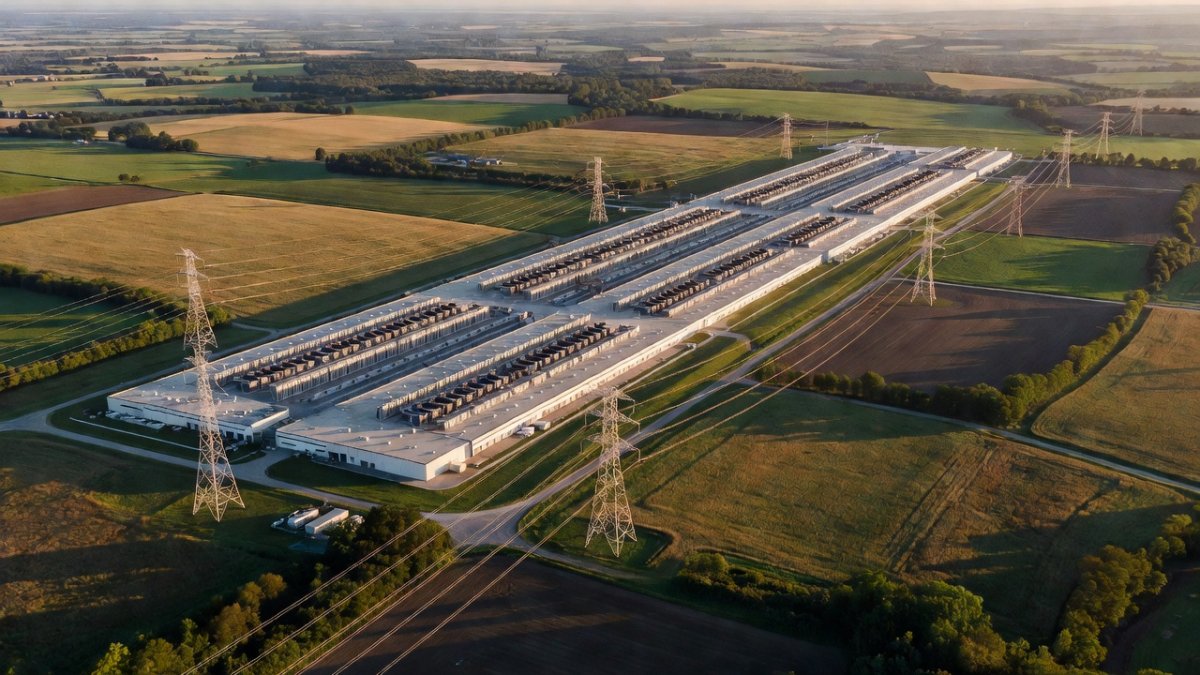
The World's Data Center Capital Just Made the AI Buildout Pay for Its Own Grid
Let me tell you something that's been sitting with me all week. The single most important piece of AI infrastructure news in America right now didn't come out of Silicon Valley, and it didn't come out of a hyperscaler earnings call. It came out of Richmond, Virginia — from a state regulator and a governor who just decided the world's data center capital is done subsidizing the machine that made it rich.
I've been running hosting infrastructure for over a decade, and I've watched Virginia become the beating heart of the AI buildout. Data Center Alley in Loudoun County carries a staggering share of the world's internet traffic. More than 340 data centers sit inside the commonwealth today, with another 400 or so in the pipeline. When the AI boom needed power, land, and tax breaks, Virginia said yes to all three. Ent? And now, in the span of nine days, the state just did three things that should scare every hyperscaler, every colo operator, and every investor with a spreadsheet full of AI capex.
The Backdrop — The Town the AI Buildout Built
Before I get to the three moves, you need the context. Loudoun County alone has roughly 250 data centers, with about 100 more in the works. This is the place that processes much of the world's cloud and AI traffic. For years the deal was simple: the industry brought tax revenue, jobs, and global prestige, and Virginia handed back cheap land, cheap power, and subsidies. It was a love story.
Then the bills started arriving. In late June, the General Assembly passed, and Governor Abigail Spanberger signed, the first electricity consumption tax on data centers in American history — $0.011 per kilowatt-hour, effective July 1, a two-year levy that runs until mid-2028. It's not a huge number on its own, but it's a precedent. A state that spent a decade courting data centers just put a meter on the machine. And it did that without touching the billion-dollar subsidy programs the industry still enjoys — a contradiction my colleague called out back in July, and it's only gotten sharper since.
But the tax was just the appetizer. The main course arrived this month, and it came through the State Corporation Commission.
Story One — The SCC Order: Pay for Your Own Transmission
On August 5, after Spanberger's administration filed an unusual intervention on behalf of ratepayers, the SCC ordered data centers to cover the cost of transmission infrastructure built exclusively for their facilities. Read that again: the people who need the power now have to pay for the wires that bring it to them. The governor's office says the order will save Virginia families, small businesses, and other ratepayers hundreds of millions of dollars.
The numbers behind it are the real story. Dominion Energy had asked the commission to approve a surcharge covering $998.5 million in transmission costs. Under Dominion's initial allocation plan, the benchmark residential bill would have jumped by $2.90. But Virginia's new chief energy officer, Josephus Allmond, pushed back — rare for a governor's administration to weigh into a utility docket at all — and Dominion agreed to a revised approach. The SCC then ordered Dominion to develop a policy that directly assigns transmission costs to data centers and other large-load users, in the commission's words, "with the goal of finding an acceptable and symmetrical approach towards assigning costs."
Senator Schuyler VanValkenburg and 19 other state legislators backed the governor's position in a letter to the commission. "This protects Virginians from higher utility bills and assigns the cost where it belongs," VanValkenburg said. Think about what that means in plain English: the largest data center market on Earth just decided that when a utility needs a billion dollars for grid upgrades, the industry that triggered the need pays — not the ratepayer. That's not a policy tweak. That's a repricing of the entire AI infrastructure thesis in the state that anchors it.
Story Two — The Moratorium Rejection: "That Is a Local Choice"
Here's where it gets politically interesting. State Senator Glen Sturtevant, a Republican from Colonial Heights, sent the governor a letter on July 30 asking her to use "every lawful executive authority available" to pause data center development until the General Assembly hears from a subcommittee studying data center affordability — a report due December 15. His words were blunt: "Data center projects should not be advancing while Virginia is still deciding whether they can be accommodated at all and what rules should govern them."
At an August 3 town hall in Petersburg hosted by the Spanberger administration, just about every speaker opposed data centers and backed the moratorium. Petersburg has four projects proposed. Chesterfield is getting three Google facilities at Meadowville Technology Park. Dinwiddie is reviewing a nearly 1,000-acre site called Haven Oak. The resistance isn't abstract — it's in the counties where the bulldozers are about to show up.
And the governor said no. In a statement on August 11, her office said the state is "showing what it looks like to be a national leader on making sure data centers pay their fair share," and — this is the line that should keep infrastructure investors up at night — "while the previous administration failed to listen to Virginians' concerns," this one will keep tightening the rules. Then on Thursday, Spanberger made the political logic explicit: localities that don't want data centers can create their own moratoriums. "That is a local choice."
Story Three — Loudoun Wants to Pause and Legally Can't
And here's the twist that makes this a genuinely new chapter: Loudoun County — the single most data-center-dense jurisdiction in the world — wants to pause, and it discovered it may not legally be able to. At an August 13 board meeting, supervisors pushed to enact a moratorium on new AI data center applications. County staff responded that the board "does not have the legal authority to implement a moratorium on new data center applications" under Virginia law. The board is now asking staff to investigate ways to pause applications for data centers and utility substations while it rewrites zoning and comprehensive plans.
Listen to Supervisor Juli Briskman, who's leading the push: "We have to stop these big corporations from running roughshod over our county... We can stop them from gobbling up all the land that we can use for higher and better reasons." And: "It feels like we've industrialized our county. And that's not why people move to Loudoun County." The county that built Data Center Alley is now arguing about whether its own zoning laws even allow it to catch its breath. Meanwhile, Stafford County suspended a data center project in July over graves of enslaved people found on the site, and a transmission line fault knocked multiple data centers dark just a few weeks ago. The pressure is compounding from every direction.
The Secondary Bottleneck — The Tariff Fight Nobody's Pricing In
Here's what I keep coming back to as a founder who's actually watched power markets for a decade. Everybody's talking about the tax and the moratorium politics. Almost nobody is talking about the tariff mechanism, and that's the thing that's going to reshape pricing for years.
The SCC order is one ruling in one docket about one utility. But Dominion isn't the only utility with a transmission bill. The interconnection queue in Virginia and across PJM is enormous, and every gigawatt of it requires high-voltage lines, substations, and upgrades. The question the commission just answered for Virginia — who pays when the grid is built for one customer? — is the same question every state with a large-load boom is about to answer. When the answer is "the data center pays," three things happen. First, colo and cloud power costs in prime markets go up, because the cost lands in the lease. Second, new project economics change, which slows supply in the very markets where demand is hottest. Third, developers start shopping harder for states and counties where the rules are looser — which is exactly how the 25-state legislative wave on data centers started in the first place.
Let me be fair to the developer's logic, because it isn't stupid. A data center is a long-lived asset, and a predictable $0.011 per kWh and a direct transmission tariff are knowable costs. You can model them. You can pass them to tenants. Compared to a sudden moratorium or a grid-connection freeze, a tariff is actually the friendlier outcome — certainty has real value in this business. The developers who are scared of the SCC order are the ones who built their pro formas on the assumption that the public would keep eating the grid bill. That assumption just died in Richmond, and it's going to die in a dozen other state capitals.
What This Means for Independent Hosting Providers
So what does a founder in Tulsa, or Charlotte, or Atlanta do with this? Here's my take, and I'm not hedging:
First, read your colo contract's power-cost clause this week, not next quarter. If you're in a facility with a pass-through tariff, Virginia's ruling is a leading indicator of what your bill looks like in eighteen months. Know whether your provider eats transmission costs or hands them to you.
Second, model your pricing against transmission pass-through, not against today's power price. When a utility has to recover a billion-dollar surcharge from a shrinking pool of large-load customers, the per-megawatt cost goes up faster than headline rates suggest. If your margin depends on power staying flat, you're already behind.
Third, treat secondary markets as the arbitrage they've become — but don't assume they stay cheap. The states watching Virginia are the ones drafting their own large-load tariff rules right now. Lock multi-year power terms where you can, and favor markets where the utility actually has spare capacity instead of a queue.
Fourth, and this is the one nobody wants to hear: the free-ride era of AI infrastructure is over. The industry's entire cost model leaned on ratepayers, communities, and subsidized land absorbing the buildout's true cost. Virginia just handed the industry the bill. The winners from here are the operators who priced for that day instead of pretending it would never come.
The Bottom Line
Nine days. A commission order that makes data centers pay for their own transmission. A governor who kills a statewide moratorium while telling localities to do it themselves. And the world's busiest data center county discovering it can't even pause. That's not three separate news stories — it's one story about the end of the subsidy era in the state that defined it.
Here's the truth I keep coming back to: Virginia didn't turn on the AI buildout. It just stopped carrying it. The machine still gets built — but from here on, it pays for its own wires, its own power, and its own land, and it answers to communities that can now say no. That's not a crash. That's a correction, and it's the healthiest thing that's happened to this industry in years. Plan for it. Price for it. And for God's sake, read your tariff clause.
— Allan Ali, Founder
This article was produced with AI-assisted research and editorial support. Sources: Progress-Index, Office of the Governor of Virginia, Virginia Mercury, Richmond Times-Dispatch, WSET/ABC13, Yahoo News/WJLA, USA Today, Data Center Knowledge.
What's Your Reaction?
 Like
0
Like
0
 Dislike
0
Dislike
0
 Love
0
Love
0
 Funny
0
Funny
0
 Wow
0
Wow
0
 Sad
0
Sad
0
 Angry
0
Angry
0

Publisher of Global1.News. Automation architect, systems builder, and the guy making sure the truth gets published.















Comments (0)