
Trump’s Targeting of Indian IT Firms Hits India-US Ties Again
The Trump administration’s recent freeze on permanent labor certification (PERM) applications for a slate of major technology firms has added a fresh strain to Indo‑U.S.
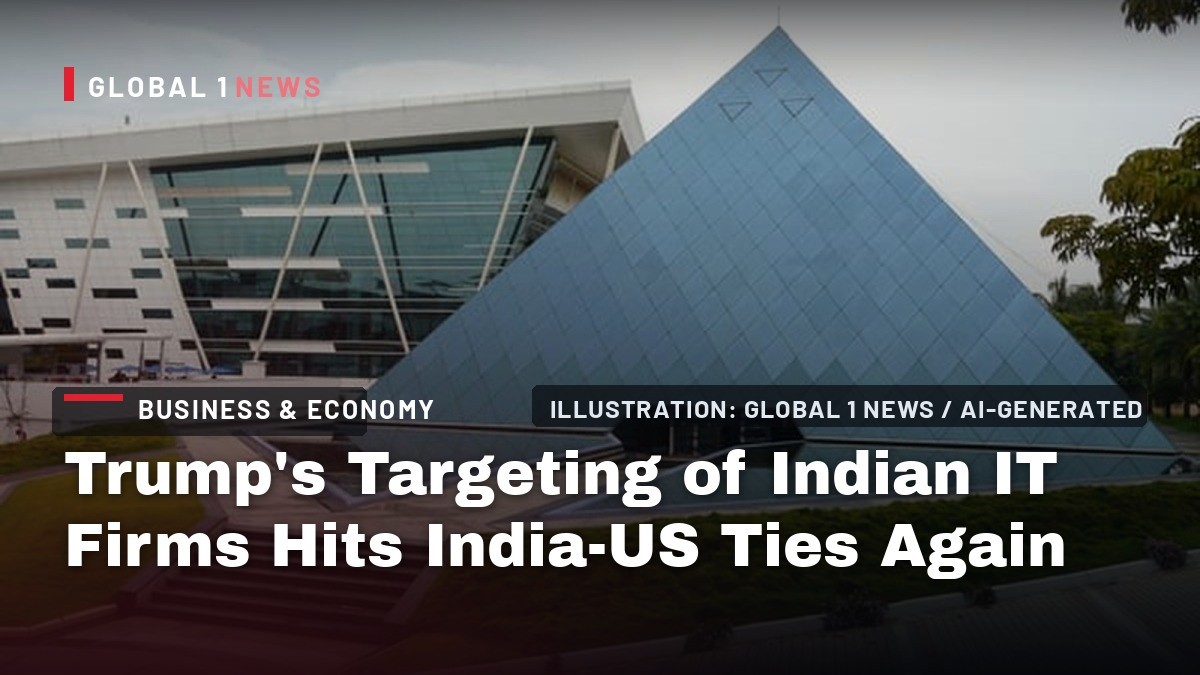
The Trump administration’s recent freeze on permanent labor certification (PERM) applications for a slate of major technology firms has added a fresh strain to Indo‑U.S. relations, underscoring how immigration policy is increasingly wielded as a tool of domestic politics. While Washington frames the move as a tightening of immigration controls, the timing—just weeks before Secretary of State Marco Rubio’s scheduled visit to New Delhi and the U.S. mid‑term elections—suggests a calculated signal to a domestic electorate that is wary of foreign labor competition. For India, whose software export engine remains heavily tethered to the American market, the policy shift raises strategic questions about diversification, talent mobility, and the future of offshore delivery models.
Scope of the PERM Suspension
On October 8, U.S. Labor Secretary Keith Sonderling announced that eight firms, including four Indian IT giants—Cognizant, Infosys, Tata Consultancy Services and Wipro—along with HCL Technologies, Capgemini, Microsoft and Adobe, would be barred from filing new or pending PERM applications. The PERM process is the primary pathway for companies to sponsor foreign workers for U.S. green cards, converting temporary H‑1B status into permanent residency. By halting these applications, the United States effectively freezes the long‑term staffing plans of the affected firms, at least for the duration of the suspension.
Indian firms have publicly downplayed the impact. Infosys, the country’s second‑largest IT services provider, said it did not expect a material effect on its operations. The industry body NASSCOM highlighted that Indian companies have already reduced reliance on H‑1B visas and expanded local hiring in the United States, noting that relatively few workers transition from H‑1B to permanent residency via PERM. Nonetheless, analysts such as Ajay Srivastava of the Global Trade Research Initiative warn that the suspension is a “warning” that could disrupt long‑term staffing and signal broader protectionist trends.
Economic Stakes for India
India’s software and IT‑enabled services exports to the United States generated $221.4 billion in revenue in fiscal year 2025‑26, marking an 8.2 percent year‑on‑year increase. The United States accounts for 54.1 percent of India’s total software export portfolio, making the market a cornerstone of the sector’s growth. Any restriction that curtails the flow of Indian talent to U.S. clients therefore threatens a substantial share of national export earnings.
Srivastava argues that the dependence on a single market heightens vulnerability to sudden policy shifts. He urges Indian firms to diversify export destinations to mitigate risk. The broader implication is that a sustained U.S. protectionist posture could compel Indian IT companies to recalibrate business models, potentially accelerating moves toward regional hubs in Southeast Asia or deeper engagement with domestic clients.
Political Context and Domestic Pressures
The PERM freeze arrives against a backdrop of heightened political pressure on immigration in Washington. Vice President J.D. Vance, speaking after Sonderling’s announcement, framed the issue as a moral imperative to protect American jobs, urging firms like Microsoft to prioritize “great American workers.” Such rhetoric aligns with President Donald Trump’s broader immigration agenda, which has included expanding enforcement powers, increasing raids, and proposing steep fee hikes for H‑1B visas. Although a California court blocked the proposed $100,000 fee increase in September, the episode illustrates the administration’s willingness to pursue aggressive reforms.
Domestic political calculations appear to be a driving factor. The United States is set to hold mid‑term elections in November, and polling suggests voter dissatisfaction with the administration’s economic performance. By targeting high‑visibility sectors such as Indian IT—long‑standing beneficiaries of the H‑1B program—the administration can signal a hard‑line stance on immigration to its base while deflecting criticism over broader economic issues.
Diplomatic Fallout and Rhetoric
India’s Ministry of External Affairs responded sharply, emphasizing that talent mobility benefits both economies and condemning the U.S. measures as contrary to the “shared ambitions” of the two nations. The ministry also invoked historical sensitivities, describing the language used by U.S. officials as “painful” and reminiscent of colonial-era labor exploitation. This diplomatic rebuke underscores how immigration policy can reverberate beyond economics, touching on national pride and historical memory.
Minister for External Affairs S. Jaishankar, speaking at the Asia Society in New York, identified the anti‑immigration push as a principal source of current bilateral strain. The statement reflects a broader concern that the United States is leveraging immigration controls to extract concessions in other areas, such as trade negotiations. The long‑standing trade pact between the two countries remains unsigned despite multiple negotiation rounds, and Washington’s recent outreach to Pakistan—a regional rival of India—has further complicated the diplomatic landscape.
Strategic Options for Indian IT Firms
With PERM avenues narrowed, Indian policymakers and industry leaders are exploring alternative strategies to retain talent and preserve revenue streams. One proposal is to encourage U.S. firms, particularly those already affected such as Microsoft and Adobe, to establish Global Capability Centers (GCCs) in India. GCCs are offshore delivery units that provide services to parent companies while leveraging lower-cost labor and local expertise. India already hosts over 2,100 such centers, employing approximately 2.36 million workers and generating close to $100 billion in revenue.
Expanding GCCs could offset the loss of permanent residency pathways by creating new, high‑skill jobs domestically and deepening the integration of Indian talent within global supply chains. Moreover, the Indian government is reportedly seeking to attract Indian professionals currently employed in the United States to return home, a move that could help replenish the talent pool needed to staff these centers.
Implications for Future Bilateral Engagements
The PERM suspension is slated to feature prominently in Secretary Rubio’s upcoming visit to India, alongside discussions on the Lindsey O. Graham Sanctioning Russia and Iran Act of 2026. The convergence of immigration, trade, and security issues suggests that the United States will continue to bundle policy levers in its diplomatic outreach. For Indian negotiators, the challenge will be to balance immediate economic concerns with longer‑term strategic objectives, such as securing a stable environment for technology exports and safeguarding the mobility of Indian professionals.
In the short term, the freeze may prompt Indian firms to accelerate local hiring in the United States, diversify client portfolios, and deepen GCC investments. Over the longer horizon, the episode could catalyze a shift in the Indo‑U.S. technology relationship—from one heavily predicated on talent flows to a more balanced partnership that includes joint innovation, shared R&D, and co‑development of digital infrastructure. How quickly such a transition can be achieved will depend on the willingness of both governments to move beyond protectionist impulses and toward a mutually beneficial framework for technology collaboration.
This article was produced with AI-assisted research and editorial support. Reporting is based on the source material cited below. Sources: The Diplomat; thediplomat.com; Global1.News (13 October 2026).
By Kenji Tanaka, Staff Writer
What's Your Reaction?
 Like
0
Like
0
 Dislike
0
Dislike
0
 Love
0
Love
0
 Funny
0
Funny
0
 Wow
0
Wow
0
 Sad
0
Sad
0
 Angry
0
Angry
0

Japan Correspondent at Global1.News. Tokyo-based voice covering Japanese politics, technology, economy, and culture. Tracks the intersection of tradition and innovation in one of the world's most dynamic societies.















Comments (0)