
The Strait of Hormuz Showdown: Trump's Compensation Gambit Threatens Fragile Iran-Oman Deal
US-Iran tensions escalate as Trump demands 50 years of compensation from Tehran, threatening an Iran-Oman deal to reopen the Strait of Hormuz. A tanker strike and weeks of US bombing underscore the fragile, dangerous standoff over the world's key oil artery.
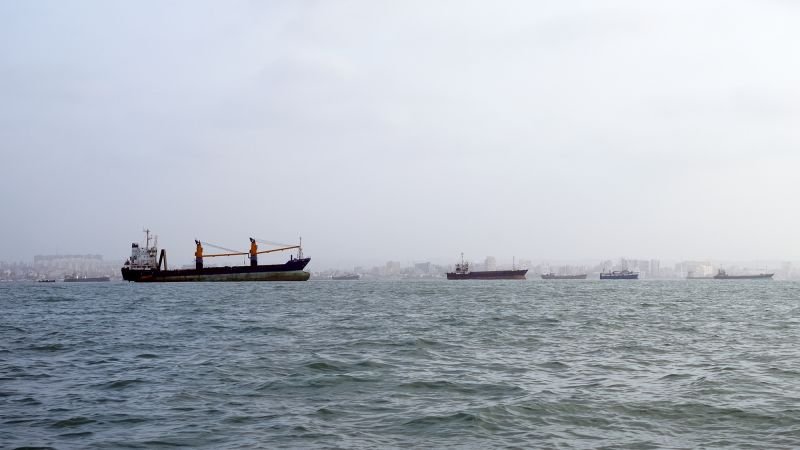
A Waterway Held Hostage by a War of Words
The Strait of Hormuz, the narrow artery through which roughly 20% of the world's oil and liquefied natural gas once flowed, remains effectively sealed shut as the United States and Iran trade escalating demands that threaten to torpedo a fragile reopening agreement. What began as a promising diplomatic breakthrough brokered by Oman has devolved into a standoff, with Trump injecting a sweeping compensation demand that has thrown negotiations into chaos.
Iranian Foreign Minister Abbas Araqchi said Sunday, August 9, via Iran's Mehr news agency, that the Iran-Oman deal to manage traffic through the waterway was in its "final stages." Within 24 hours, Trump publicly rejected Tehran's conditions and demanded payment for what he cast as five decades of Iranian-inflicted damage. The timing could not be more volatile: a tanker was struck in the strait early Tuesday, and US strikes on Iran continue night after night.
The core dispute is no longer just about reopening shipping lanes. It has become a confrontation over who controls the strait, who pays for the war's destruction, and whether Washington will accept any arrangement that cedes even partial authority to Tehran.
The Anatomy of a Broken Truce
The crisis traces back to late February 2026, when the United States and Israel launched joint air strikes on Iran aimed at preventing Tehran from acquiring nuclear weapons or threatening the region. On February 28, an air strike killed Iran's Supreme Leader, Ali Khamenei. His son, Mojtaba Khamenei, succeeded him but was reportedly injured in the same strike and has not appeared in public since. State media says he met President Masoud Pezeshkian in late July; a paramilitary leader has promised footage of him.
On June 17, the US and Iran signed a Memorandum of Understanding establishing a 60-day negotiating period and a fee-free transit window. Six days later, Iran and Oman committed to collaborating on the "future administration of navigation." On June 24, Oman said it was working with the International Maritime Organization (IMO) on a temporary maritime corridor.
The truce collapsed in July when the US reimposed a naval blockade on Iranian shipping in the Gulf — a move Iran called a violation of the agreement. The war reignited, and oil flows through the strait began falling back toward pre-peace-deal levels. By early August, a US official told Reuters that an Iran-Oman agreement was close and could soon reopen the waterway, only for Trump's Monday intervention to cast doubt on that timeline.
Trump's 50-Year Compensation Demand
At the White House on Monday, August 10, Trump dropped a diplomatic bombshell. "They asked for reparations, you might say. Or they asked for money for the damage that we've done. I said that's a good idea. Well, we're going to ask for money for the damage they've done over a 50-year period," he told reporters. The remarks turned a narrow dispute over shipping fees into an open-ended demand for historical restitution.
On Truth Social, Trump cited roadside bombs "led initially by Gen Soleimani," the families of the 17 US sailors killed in the October 2000 USS Cole attack in Yemen, "hundreds of thousands of innocent protesters" killed over five decades, and "52,000 that have been killed in the last five months." The USS Cole attack, notably, was blamed on al-Qaeda, not Iran — a distinction that appeared lost in the president's broad-brush indictment.
Iranian officials dispute the numbers. They say about 3,117 people died in antigovernment protests in January, before the war. The US-based Human Rights Activists News Agency (HRANA) reported about 7,000 deaths in February, including 6,500 protesters. The chasm between the figures underscores the propaganda battle raging alongside the military one.
The Iran-Oman Framework: A Geopolitical Earthquake
At the heart of the dispute lies a deal that would restructure how the strait is managed. Iran would coordinate vessels entering the Arabian Gulf; Oman would oversee vessels exiting. Ships would use designated routes rather than the pre-existing IMO 1968 two-lane system, effectively creating a new regime for the world's most critical oil chokepoint.
Fees remain the sticking point. Iran is seeking charges equivalent to roughly 5% of cargo value, with some reports suggesting 5-7%; Oman has floated around 3%. The United States rejects any fees, insisting the strait must return to prewar freedom of navigation. "Any temporary routes will be without any impediments — meaning no approvals or permissions and no tolls or charges," a US official told the Washington Post. "The Strait of Hormuz is an international waterway, and no party controls the lanes or the ability to transit through them."
Yet the emerging deal would effectively ratify Tehran's control over inbound traffic — a massive geopolitical victory for Iran that extends far beyond shipping fees. "The concession has already been made regarding some form of control over Hormuz," one source told Reuters. That is what makes the deal so contentious: it implicitly acknowledges Iran's legitimate role in managing the strait — a principle Washington has long rejected.
Iran's Conditions: Reparations, Sanctions, and Threats
Reopening the strait is contingent on far more than fees. Mohammad Baqer Zolqadr, secretary of Iran's top national security body, and foreign ministry spokesperson Esmail Baghaei have outlined the demands: US war reparations, an end to sanctions, lifting the naval blockade, freeing Iranian assets, and ending US threats against Iran and its Lebanese, Palestinian, Yemeni, and Iraqi allies.
Washington has shown no willingness to entertain these maximalist demands. The US reimposed its naval blockade in July, and there is no indication Trump is prepared to lift it as a goodwill gesture. The two nations are not in direct talks; messages move through intermediaries, a slow, risk-prone process.
Iran has also warned Gulf neighbors that any new US attack would trigger retaliation against critical energy infrastructure. The threat hangs over the region as Gulf states scramble to add pipeline capacity to bypass the strait. Iran views the waterway not just as an economic asset but as a strategic weapon.
Tuesday's Tanker Strike: A Dangerous Escalation
The fragility of the situation was underscored early Tuesday, August 12, when an oil tanker was struck in the Strait of Hormuz by an "unknown projectile," according to the UK Maritime Trade Operations (UKMTO). The vessel was hit "on the port side causing a fire, whilst traveling southbound," east of Limah, Oman. No casualties were reported.
Axios, citing a US official, reported that Iran's Revolutionary Guards (IRGC) carried out strikes on two commercial ships transiting the strait, causing significant damage. Iran's state television reported the tanker came under attack after ignoring warnings, without directly claiming the assault. The ambiguity is characteristic of a shadow war where deniability is as valuable as firepower.
The attack came a day after the US military said it fired Hellfire missiles at a Panama-flagged vessel sailing toward an Iranian port in the Gulf of Oman, claiming the ship sought to break the blockade. Yemen, meanwhile, has accused Iran-backed Houthis of killing six people in a "double-tap" strike on a commercial vessel in the Bab al-Mandeb Strait, the other great oil chokepoint on the opposite side of the Arabian Peninsula.
Oil Markets and Military Readiness Under Strain
Global oil prices rose Monday as the US and Iran set stringent conditions on each other, reflecting market anxiety about prolonged disruption. US officials warn a continued shutdown could push up oil and gas prices, adding inflationary pressure to a strained global economy. Before the conflict, Hormuz carried about 20% of the world's oil and LNG — the planet's single most important energy artery.
US inventories of key munitions and interceptors are reportedly at critical lows, raising questions about a bombing campaign that has run for weeks. Gulf states are racing to add pipeline capacity to bypass the strait, but such infrastructure takes years and cannot replace the waterway's throughput soon.
Inside Iran, the leadership is consolidating power. Mohsen Rezaei was announced as the new security chief, alongside six new appointments to the Revolutionary Guards and armed forces — a sign Tehran is preparing for a prolonged confrontation even as it negotiates. Israel, meanwhile, has rejected Trump's 15-point roadmap to end the war in Gaza, adding another layer of complexity.
The Road Ahead: No Clear Path to Reopening
The fundamental impasse is simple: Iran wants compensation and control; the United States wants unfettered access and no payments. Trump's demand has hardened Iranian resolve, while Iran's conditions make any deal politically untenable in Washington. The US insists traffic must be completely unfettered and says it is not part of the Oman-Iran talks — contradicting the framework being negotiated.
For now, the strait remains closed, the strikes continue, and Tuesday's tanker attack is a grim reminder of the stakes. The Iran-Oman deal may be in its "final stages," but final stages can last indefinitely when the world's most powerful nations are locked in a struggle over the world's most important waterway. Every day of closure carries economic and human costs that neither side can sustain indefinitely.
This article was produced with AI-assisted research and editorial support. Sources: CNN, Reuters, Al Jazeera, AP, The Guardian, DW, UKMTO, Fortune, The National, Washington Post.
By Jessica Ali, Staff WriterWhat's Your Reaction?
 Like
0
Like
0
 Dislike
0
Dislike
0
 Love
0
Love
0
 Funny
0
Funny
0
 Wow
0
Wow
0
 Sad
0
Sad
0
 Angry
0
Angry
0

Editor-in-Chief at Global1.News. Atlanta-based journalist who cuts through the BS and tells it like it is. Lead anchor, host, and the voice you hear when the spin stops and the truth starts.










Comments (0)