
Trump Orders Federal Contractors to Route Congressional Requests Through the White House
President Donald Trump signed Executive Order 14438, requiring every federal contractor to notify the White House of congressional requests about their executive-branch work and to withhold material the White House deems privileged, as Democrats prepare to take control of Congress in January.
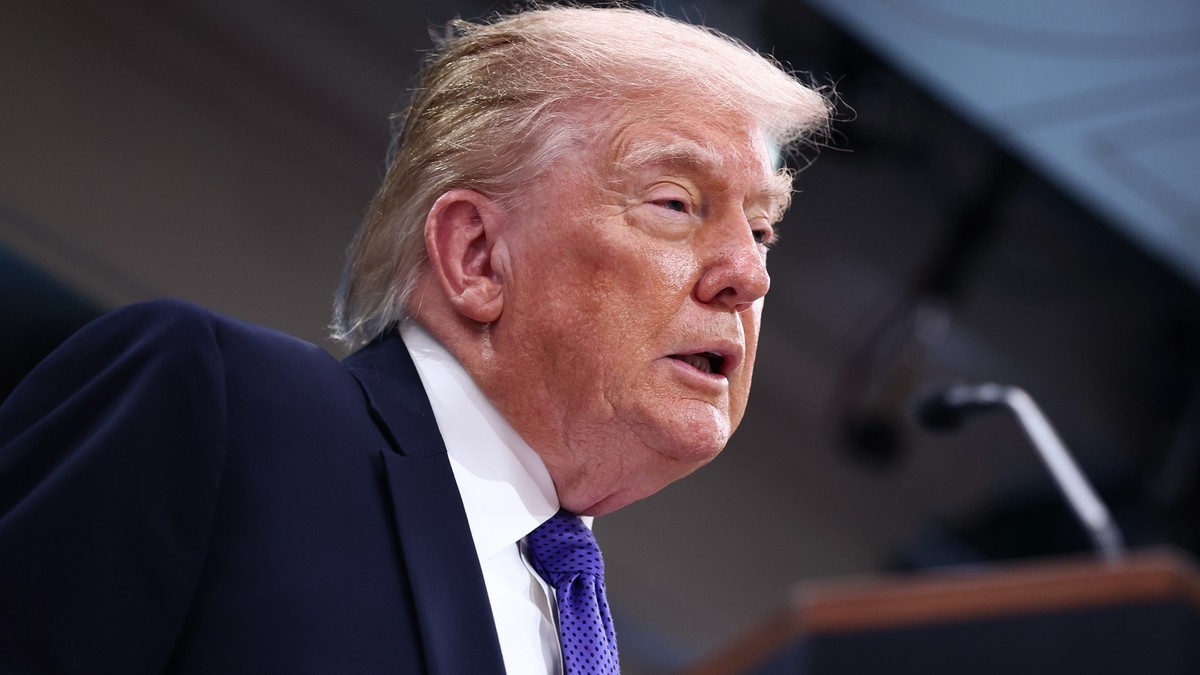
President Donald Trump signed Executive Order 14438 late on Friday, 20 November 2026, and the White House posted it that night. It tells every federal contractor to notify the White House of any congressional request about their work with the executive branch, then to withhold whatever the White House says is privileged. It lands as Democrats, who won both chambers this month, prepare to take control of Congress in January.
Trump Orders Federal Contractors to Route Congressional Requests Through the White House
WASHINGTON — The order is titled "Protecting the Executive's Privileges and Enhancing Efficiencies in Federal Contracting," and its duties apply immediately to prime contractors and subcontractors alike.
An Order Signed Late on a Friday
Folks, here is the instrument. Executive Order 14438, signed by President Donald Trump on Friday, 20 November 2026. The legal foundation it claims for itself is this: "By the authority vested in me as President by the Constitution and the laws of the United States of America, including the Federal Property and Administrative Services Act (40 U.S.C. 101 et seq.) and the common law." Read that twice. Not a statute written for congressional oversight, and not a new law from Congress. Two housekeeping clauses tell you how the White House sees the paperwork. Section 6(d) says "The costs for publication of this order shall be borne by the Department of Labor." Section 6(c) says the order "is not intended to, and does not, create any right or benefit, substantive or procedural, enforceable at law or in equity by any party against the United States." A severability clause follows.
What Section 2 Actually Requires
Section 2 is the engine, and the verbs are not gentle. Federal contractors "must immediately" notify both the White House and their contracting agencies of "any pending or future congressional request respecting the contractors' communications or work with the executive branch." Then comes the second half of the duty: contractors must "abide by any instructions received from the White House and contracting agency related to the withholding of communications" that the White House or the agency has decided is protected by executive privilege. Notice first, then obey. Subsection (b) sets the machinery, requiring agencies to coordinate with the White House and the contractor on the response, including "the application or assertion of any relevant privileges." Subsection (c) reaches down the supply chain: "This section also applies to subcontractors working for a Federal contractor on a Federal contract." Prime contractors are made responsible for their subcontractors' compliance. Note the boundary: the duty attaches to a company's "communications or work with the executive branch," not to everything the company does.
The Price of Not Complying
Now the teeth. Section 4 is where the pressure lives, and it is written as a menu of consequences. When a contractor or subcontractor fails to comply, "contracting agencies shall consider whether to take all appropriate actions, consistent with applicable law, to enforce the terms of this order, including the potential termination or cancellation of contracts and the potential debarment or suspension of contractors." Termination. Cancellation. Debarment. Suspension. The Associated Press reads it as a warning that a contractor's deals could be terminated and its future work with the federal government suspended. And look at the size of the universe this touches. Roughly 100,000 companies hold federal contracts, plus the subcontractors, according to Bloomberg Government. Every agency now has to tell its contractors what the rule is, and require their compliance, promptly.
The Case the White House Makes
Give the White House its argument, because the argument is written down in Section 1 and in the fact sheet that accompanied it. The order opens with the purpose: "In order to protect and serve the American people, the executive branch must be able to work closely with its employees and contractors on sensitive matters without fear that confidential information will be released to unauthorized third parties." Then the constitutional claim: "The ability of the Congress to seek executive branch information is limited; it cannot seek information from executive branch departments and agencies (agencies), employees, or Federal contractors without a valid legislative purpose that does not intrude on core Executive functions." On the chilling effect, the order warns that if confidentiality cannot be assured, "agencies and the White House will be chilled from sharing sensitive information with contractors, which will stymie the operation of critical Government programs." On waste, it says separate contractor litigation forces the government "to intervene or engage in separate litigation to defend its rights," and that the policy exists to prevent "uncoordinated disclosures of information pursuant to congressional requests." The fact sheet frames the order as "protecting executive privileges from congressional overreach." One detail matters: the order names no member of Congress and no specific request.
The Memo That Came Four Days Earlier
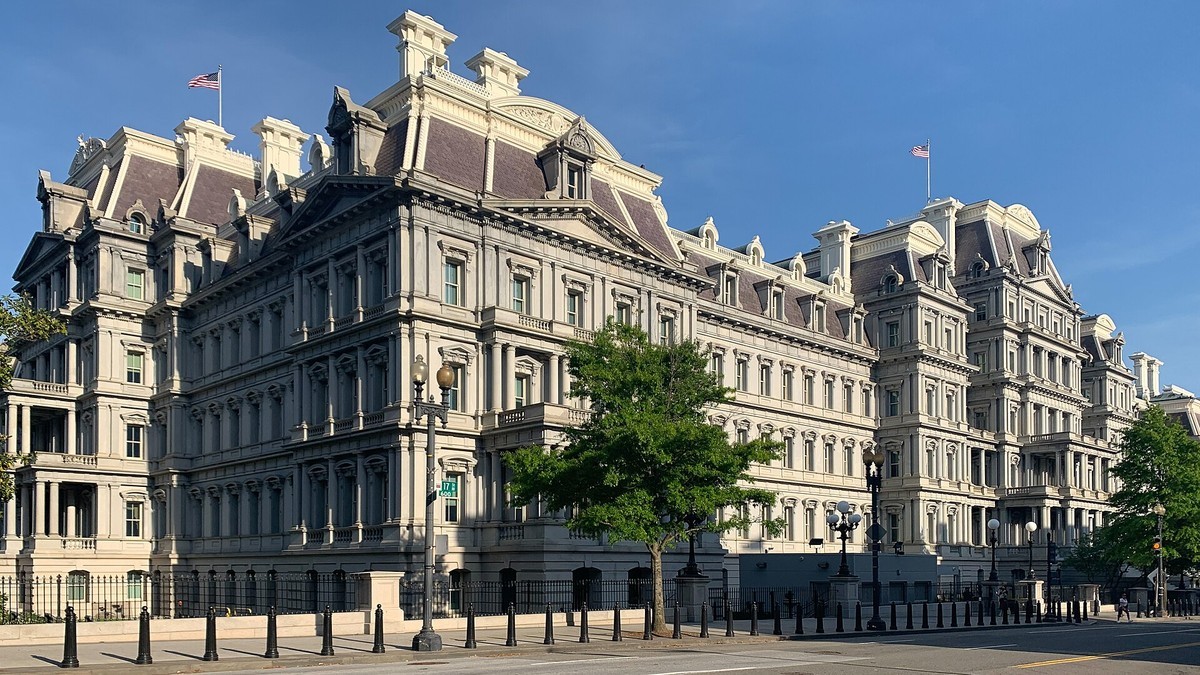
This did not begin on Friday. On Monday 16 November, White House counsel Will Scharf told federal agencies and executive departments that they must obtain approval from his office, and from the White House's Office of Legislative Affairs, before agreeing to appear before Congress. ABC News obtained that memo. PBS published the full memo. So the sequence is plain: first the clearance requirement for testimony, then the executive order covering the private companies that do the government's work. Scharf is the president's lawyer, and his office now sits in the path of every congressional appearance by an executive branch employee and, under this order, of every congressional request to a federal contractor. The order did not arrive out of nowhere. It arrived after the machinery was already standing.
Two Statutes the Order Never Mentions
Here is the part that should stop you cold. The order does not mention 41 U.S.C. 4712. That statute protects employees of federal contractors, subcontractors, grantees and personal services contractors, who "may not be discharged, demoted, or otherwise discriminated against as a reprisal for disclosing" evidence of gross mismanagement of a federal contract or grant, a gross waste of federal funds, an abuse of authority relating to a federal contract or grant, or a substantial and specific danger to public health or safety. Protected recipients expressly include "a Member of Congress or a representative of a committee of Congress," along with inspectors general, the Government Accountability Office and the Justice Department. A complaint goes to the relevant agency's inspector general and must be filed within three years. The order also does not mention 5 U.S.C. 7211, the Lloyd-La Follette Act of 1912: "The right of employees, individually or collectively, to petition Congress or a Member of Congress, or to furnish information to either House of Congress, or to a committee or Member thereof, may not be interfered with or denied." Congress passed that after Theodore Roosevelt and William Howard Taft issued "gag orders" barring federal employees from contacting Congress without a superior's permission. And here is the Congressional Research Service's caveat, which cuts the other way: "the executive branch has long taken the view that agency officials have the authority to control rank-and-file employees' ability to disclose information directly to Congress."
Garcia: "Lawyer up"
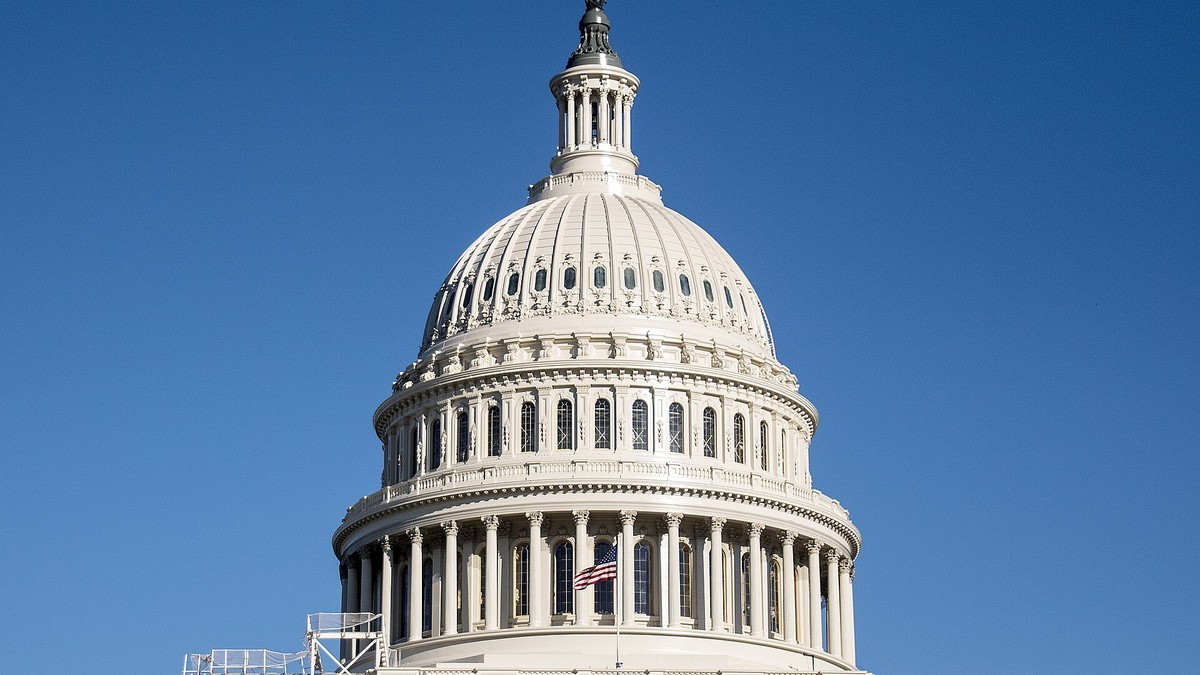
Democrats won control of both chambers of Congress in this month's midterm elections and take control in January. Rep. Robert Garcia of California is the incoming chairman of the House Oversight Committee. Rep. Jamie Raskin of Maryland is expected to chair the House Judiciary Committee. Hakeem Jeffries holds the Speakership nomination. After Democrats officially secured the House, Garcia had two words: "Lawyer up." He then sent letters directing members of Trump's family and top administration officials to preserve documents. Scharf dismissed the letters, noting that Democrats are not yet in the majority and cannot compel compliance. Garcia answered him directly: "Congress has wide latitude to conduct investigations and oversight, an authority inherent in the power to legislate." On the order itself, he called it part of the administration's "blatant attack on Congress' constitutional right to conduct oversight," and added that despite the effort to slow investigations down, "we're just getting started."
A Threat of Criminal Investigation
Then came the letter that raised the temperature. Scharf wrote to Garcia in the days after the midterms, arguing that the planned investigations were pretextual and warning that oversight threats could themselves be criminally investigated. In that letter he wrote that the threats "make it abundantly clear that any forthcoming investigative processes will be deployed to harass and aggrandize, rather than to advance any legitimate legislative end." He also suggested that some congressional investigations may amount to "blatant criminality." Attorney General Todd Blanche threatened to prosecute lawmakers over their investigations, then walked the threat back several days later. A former federal prosecutor described the Justice Department's threats against Democratic probes as "stupid and frivolous." Garcia did not blink. "We are a co-equal branch of government and will not be deterred by baseless threats from a weaponized DOJ or from the President's lawyers," he said.
What the Courts Have Not Decided
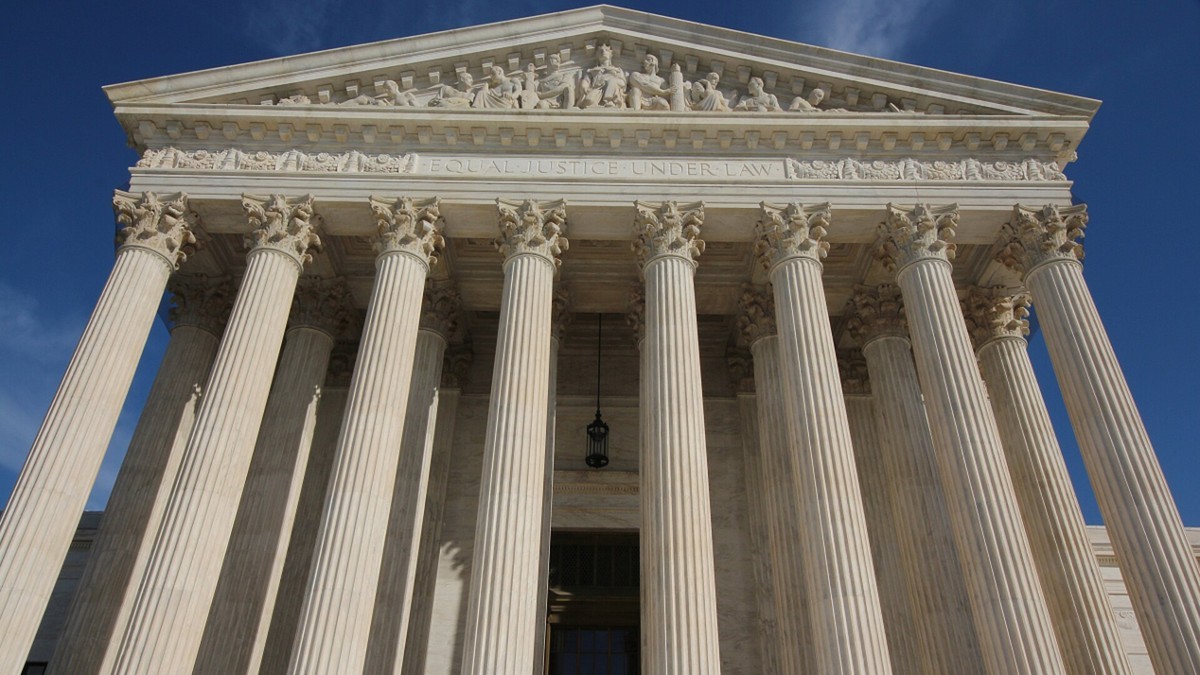
Nobody has settled any of this. "The legality and enforceability of the order is unclear," POLITICO reports. The same analysis adds: "It's unlikely that a contractor could tap into executive privilege to ignore a congressional or court subpoena." Notice to the White House, though, could buy the Justice Department time to mount a challenge. It flags a second doubt: "It's also uncertain whether the administration can unilaterally impose new conditions on existing federal contracts or add requirements not specifically authorized by Congress." Reuters reports the restrictions "could face legal challenges, particularly if contractors are told to withhold information sought through congressional subpoenas." The precedent worth knowing is Trump v. Mazars USA, LLP, in 2020, where the Supreme Court held that Congress has investigatory powers ancillary to legislation and that a subpoena must further a legitimate legislative task. That test was built for presidential personal records held by third parties, not for contractors' records of agency work. And the Justice Department's Office of Legal Counsel concluded in August 2026 that executive privilege could extend to third parties and to the president's private advisers.
January Is the Deadline That Matters
So what lands in January? POLITICO reports the White House is bracing for an onslaught, with promised probes into the rate of FEMA grant denials for Democratic states, the handling of the Epstein files, and the business relationships cultivated by the president's family. On contracts specifically, the Associated Press notes that "Democrats have made government contracts one of their top investigative targets, noting that federal money has been flowing to companies linked with Trump's family, particularly at the Pentagon." That is the collision course, and it is set for a date. Watch two things. First, the OMB guidance Section 3(b) demands, which the order requires but sets no deadline for. Second, the first subpoena that meets this order. That is the moment a theory becomes a courtroom. Folks, this is your government and your money. Read the order, call your member, and ask what your district's contractors were told to keep quiet.
By Jessica Ali, Staff Writer
This article was produced with AI-assisted research and editorial support. Sources: the White House executive order and fact sheet; the Associated Press; Reuters; POLITICO; ABC News; MS NOW; the Congressional Research Service; the FTC Office of Inspector General. Photographs: lead image, Finn Gomez/Getty Images via ABC News; Eisenhower Executive Office Building by Abovfold/Wikimedia Commons, CC BY-SA 4.0; U.S. Capitol by Ron Cogswell/Wikimedia Commons, CC BY 2.0. Any editorial cover card is produced in-house.
What's Your Reaction?
 Like
0
 Dislike
0
 Love
0
 Funny
0
 Wow
0
 Sad
0
 Angry
0

Editor-in-Chief at Global1.News. Atlanta-based journalist who cuts through the BS and tells it like it is. Lead anchor, host, and the voice you hear when the spin stops and the truth starts.














Comments (0)