
The $14 Billion Data Center With $5 Million of Property Insurance — and Nobody Blinked
Meta and BlackRock's $14 billion Sopaipilla data center in El Paso carries just $5 million of all-risk property insurance. A founder on the insurance gap hiding inside the AI infrastructure buildout.
The $14 Billion Data Center With $5 Million of Property Insurance — and Nobody Blinked
Let me tell you something that's been sitting heavy with me since the Financial Times story crossed my desk Monday morning. I've been running hosting infrastructure for more than a decade, and I've learned the scariest numbers in this industry are never the ones in the press release. They're the ones buried in the fine print nobody reads. This one is buried so deep it took a team of reporters to dig it out.
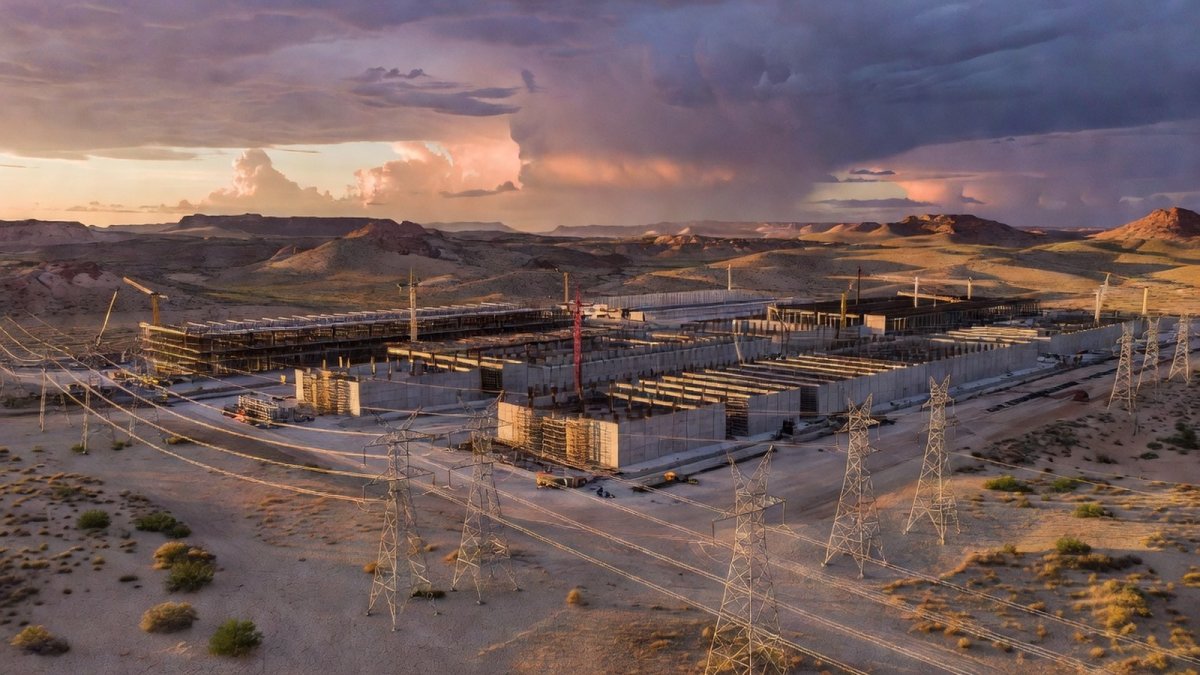
Meta and BlackRock are building a $14 billion AI data center campus in El Paso, Texas. Codename: Sopaipilla. Nine hundred and sixty megawatts. Four million square feet. One of the largest single-site AI projects on the planet. And the all-risk property insurance on it? Five million dollars. Let me write that again, slowly. Five. Million. Dollars. On a fourteen billion dollar building.
I wrote about this campus back in July, when BlackRock started marketing $12.3 billion in investment-grade bonds to fund it. I called it a structural shift — the world's largest asset manager packaging an AI data center as a financial product and selling it to pension funds, insurers, sovereign wealth funds. What we learned this week is what that bond doesn't cover. And that changes the risk math for every one of us running infrastructure, not just the giants.
The $14 Billion Data Center With $5 Million of Property Insurance — and Nobody Blinked
El Paso, Texas — Aug 17, 2026 — The FT reported Monday that the Sopaipilla campus — Meta and BlackRock's $14 billion, 960-megawatt AI project — carries only partial insurance, and no total-loss coverage against property damage or natural disaster. The fine print of the deal, and what it means for everyone carrying infrastructure risk, follows.
The News — A $14 Billion Campus and a Very Specific Insurance Ledger
Let me be precise about the numbers, because the gap only looks insane until you see the whole ledger. The FT, citing people familiar with the insurance program, laid it out: $218 million to cover rent in case construction is delayed, $645 million against terrorism, $5 million in all-risk property insurance, and $1 million a year in general liability. Marsh, the New York brokerage, mapped the whole strategy. Add it up and the property cover is the smallest line on the page. The building itself — the thing that has to survive a tornado, a fire, a flood, a catastrophic equipment failure — carries five million dollars of all-risk cover against a fourteen billion dollar replacement cost.
Now, before you laugh, understand the structure.
The Structure — Who Put Up the Money, and Who's Actually on the Hook
This is an 80/20 venture. BlackRock-managed funds put up roughly $4.9 billion in cash. Meta contributed about $2.3 billion in land and construction-in-progress. A $12.5 billion senior secured bond, issued through an entity called Sopaipilla Investor LLC, carries the rest. Meta is the sole tenant of the 960-megawatt, four-million-square-foot campus. And the protection the bondholders are actually leaning on isn't a property policy at all. It's a residual value guarantee from Meta — about $13 billion, stepping down over the first 16 years of the lease — that covers shortfalls if the asset underperforms.
Under the triple-net lease, Meta bears the property taxes, the utilities, the insurance, the routine maintenance, the structural replacements. In plain English: the bondholders' recovery runs through Meta's balance sheet, not through a reinsurer's. The people who bought this paper are underwriting Meta's credit, not the building.
The Two Readings — Rational Risk Engineering, or the First Visible Crack
There are two ways to read this deal, and both of them are true. You need to hold both in your head at the same time, because that's exactly what the market is doing.
Reading one: this is the most sophisticated risk engineering in the history of commercial real estate. In a world where insurers can't price gigawatt-scale campuses — brokers and analysts literally call this moment a data-center insurance supercycle, with capacity strained by the sheer scale of new AI builds — self-insurance through a tenant guarantee is the only structure that works. The rating agencies signed off: A+ and AA- from S&P and Fitch. The guarantee is bigger than the bond. Meta's balance sheet is bigger than Texas. Why pay premiums to an insurance market that can't cover you anyway? That's the bull case, and it is not stupid.
Reading two: this is the first visible crack in the financing facade. Watch the bond orders. That $12.5 billion deal drew only about $17 billion in demand. For hyperscaler-grade paper, that's weak — these deals normally get oversubscribed three, four, five times by investors desperate for yield. Seventeen on twelve and a half means the market took one look at this campus and paused. And when a market pauses, it's usually because it can see the thing the sales deck didn't say. The insurance gap is that thing, made visible.
Here's the structural problem nobody's facing directly. In a normal building, a fire is a property event: the insurance pays, the lender gets made whole, the tenant keeps paying rent. In Sopaipilla, a fire is a Meta credit event. The recovery comes out of Meta's cash flow. And Meta's balance sheet is already carrying the heaviest load in its history — around $145 billion of capex this year, an overbuild it has admitted to, and $10 billion of compute leased to a competitor just to soak up capacity it couldn't fill itself. The insurer of last resort is a tenant that's already stretched. That's not insurance. That's a prayer with a coupon.
And this is West Texas. Hail, straight-line wind, wildfire — that's not a hypothetical risk profile, that's the local climate. El Paso sits in one of the most severe-hail corridors in the country. A single supercell through the basin, and the total-loss scenario this policy doesn't cover stops being an actuarial footnote and becomes a live test of whether a $13 billion guarantee holds at $14 billion of scale.
The Secondary Bottleneck Nobody's Talking About — Insurance Can't Scale to the Buildout
Here's the part that keeps me up at night, and it's not this one building. It's that the insurance market — the mechanism that is supposed to price and absorb risk — cannot scale to match the buildout. The supercycle isn't a boom for insurers. It's a capacity crisis. Insurers look at a 960-megawatt single-site concentration in a hail corridor and their models say no. Reinsurers look at a portfolio of those and say definitely no. So the risk doesn't get transferred. It gets parked — on the balance sheets of the very companies doing the building.
Moody's flagged the tension in its own words: rapid advancements in AI, semiconductor technology, and cooling systems could render infrastructure outdated before full monetization. A rating agency saying the asset could be obsolete before it's paid for. And the "insurance" for that obsolescence is a lease guarantee from the same company whose capex is driving the obsolescence cycle. The risk isn't diversified. It's concentrated in exactly the place that's already the most leveraged.
This is the same thread I've been pulling all summer. The hyperscalers are on track to spend $725 billion this year — up 77% from $410 billion — and the financing has moved from balance sheets to bond markets to private credit to Nvidia's own vendor-financing platforms, where GPUs themselves became loan collateral. Every step of that chain moves risk further from the asset and closer to someone's promise. Sopaipilla is just the first time the promise is wearing a name tag: Meta's guarantee, standing in for a property policy that literally does not exist. Bond traders are already worrying about $70 billion of shadow AI-credit backstops. This is what a shadow looks like before it's a headline.
What This Means for Independent Hosting Providers
If you're running an independent hosting business, you might be tempted to file this under "giant-company problems." Don't. Here's what this changes for you, right now.
First: read your own insurance policy like you read a server spec. Check the named perils, the sublimits, the business-interruption language, and the exclusions. If the hyperscalers can't buy total-loss cover on a $14 billion campus, your policy has the same holes — just smaller. The "AI data center exclusion" is already creeping into commercial property policies. Know what yours says before you need it, not after.
Second: watch the bond prospectuses. The next hyperscaler data center bond that discloses a comparable insurance gap makes Sopaipilla the template — tenant credit, not property cover, becomes the market's real protection layer. When you see that pattern repeat, you know the risk-transfer market has permanently changed, and you should price your own exposure accordingly.
Third: know whose balance sheet actually covers your racks. If you're in a colo lease, ask whether your landlord's property policy would rebuild the building or just hand you a check for your rent. Your landlord's insurance is not your insurance. If you're renting space to customers, make sure they understand the same thing. The Sopaipilla structure is just a triple-net lease at a scale that makes the nakedness visible.
Fourth: position as the insurable alternative. Smaller, distributed, documented facilities are insurable. That is a genuine competitive advantage when the giants cannot buy cover at any price. Document your fire suppression, your redundant power, your cooling design, your location risk — because that documentation is what unlocks coverage, and it's what your customers will start asking for as this story spreads.
Fifth: expect your premiums to rise. An insurance supercycle means capacity is tight for everyone, not just the megacampuses. Factor a 20-40% premium increase into your pricing model now, while you still have time to adjust, instead of eating it later.
The Bottom Line
This isn't a warning about something that might happen. It's happening right now, in the fine print of the biggest bet in the history of capital markets. Fourteen billion dollars of building, five million dollars of property insurance, and a market that blinked — seventeen billion of orders on twelve and a half billion of paper.
When the first big loss hits — and in a hail corridor, it's when, not if — the whole "AI infrastructure is investment grade" thesis gets retested in real time. The recovery won't come from an insurance company. It'll come out of a tech giant's cash flow, at the exact moment the giant can least afford it. I'm not rooting for it. I'm just telling you the fine print says what it says. Read yours before the market reads it for you.
— Allan Ali, Founder
This article was produced with AI-assisted research and editorial support. Sources: Financial Times (Aug 17, 2026), AI News Weekly, TeleTrader/Breaking The News, Yahoo Finance Market Chatter, Reuters (Aug 19, 2026).
What's Your Reaction?
 Like
0
Like
0
 Dislike
0
Dislike
0
 Love
0
Love
0
 Funny
0
Funny
0
 Wow
0
Wow
0
 Sad
0
Sad
0
 Angry
0
Angry
0

Publisher of Global1.News. Automation architect, systems builder, and the guy making sure the truth gets published.











Comments (0)