
Wat Nimmanoradee Market: Bangkok's Vanishing Canal Life
Bangkok Post's Fine Time video series visits the 100-year-old market at Wat Nimmanoradee in Phasi Charoen district, where residents like 73-year-old Orawan Wanasabodeekul and 97-year-old vendor Cheng Siaojarern watch canal life vanish behind condominiums as the district weighs reviving its floating market.
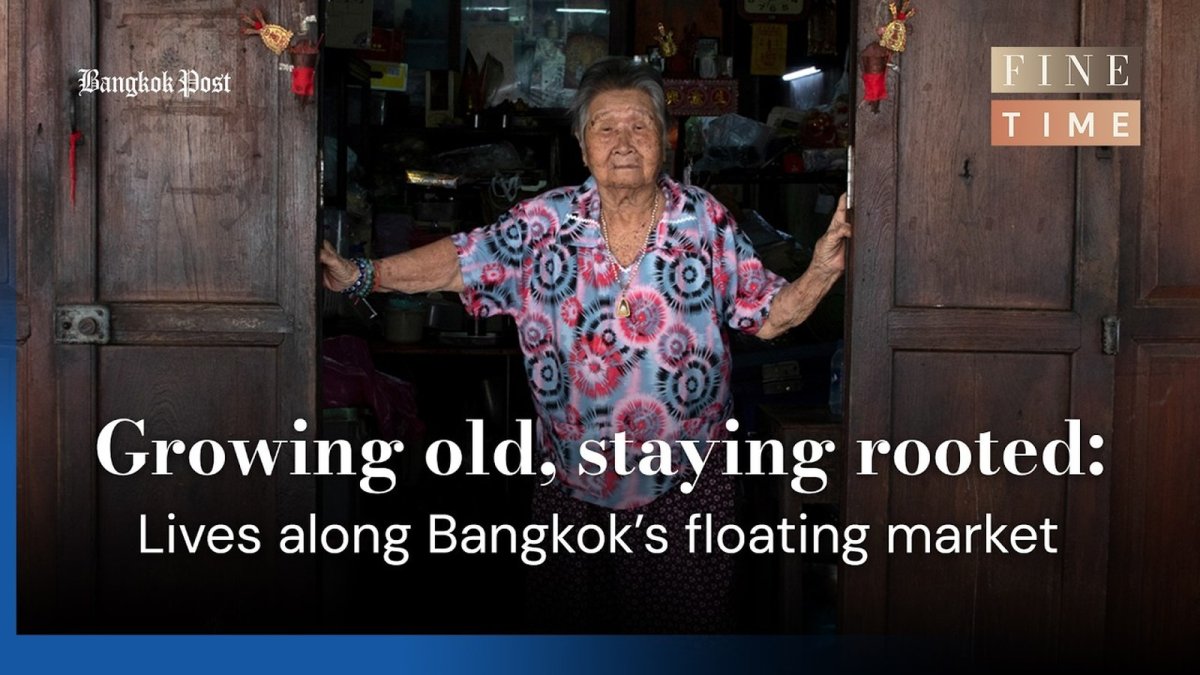
Bangkok Post’s video series “Fine Time” this week turned its lens on the 100-year-old market at Wat Nimmanoradee in Bangkok’s Phasi Charoen district, where lifelong residents are watching a canal way of life disappear behind rows of new condominiums. In the feature “Growing Old, Staying Rooted: Lives Along Bangkok’s Floating Market,” 73-year-old Orawan Wanasabodeekul and 97-year-old vendor Cheng Siaojarern speak of sunsets over the khlong, boats laden with vegetables, and a community now caught between heritage and development as the district weighs reviving its old floating-market atmosphere.
Growing Old, Staying Rooted: The Vanishing Lifeways of Wat Nimmanoradee’s Ancient Market
Bangkok, Thailand — For generations, the canal opposite Wat Nimmanoradee was not just a waterway; it was the lifeblood of the community. Orawan Wanasabodeekul, who has lived her entire 73 years facing the temple, remembers a time when the khlong was a place of simple, profound beauty. “I used to sit on the bridge with my legs dangling and watch the sunset,” she told the Bangkok Post. “Now the view is blocked by condominiums. The natural beauty and atmosphere we used to have are gone.” Her words, carried in the recent Bangkok Post feature and its accompanying video, capture the quiet grief of a neighborhood transformed by forces far larger than itself.
A Century of Commerce on Khlong Phasi Charoen
The market at Wat Nimmanoradee is not a recent invention. Built in the Rattanakosin Era 120 (AD 1902), it stands as a living relic of a time when Bangkok’s canals served as the city’s primary highways. The market’s location, directly opposite the temple with Khlong Phasi Charoen flowing between them, was once a bustling hub of aquatic commerce. In the early mornings, boats laden with fresh vegetables and food would arrive to supply the residents. As the day progressed, vendors would shift to selling cooked dishes, noodles, steamed fish, and sweets, creating a floating feast that extended well into the evening hours.
The canal itself was teeming with life, rich with fish and shrimp that sustained local families. But the advent of roads changed everything. As land-based transport became the norm, the area’s reliance on the waterway diminished. Pollution crept in, and the changing living conditions gradually choked the life out of the floating trade. The vibrant, fish-filled waters of Orawan’s youth are now a memory, replaced by a quieter reality that mirrors the slow decline of the traditional market scene.
Khao Mu Daeng at 40 Baht: A Legacy of Flavor
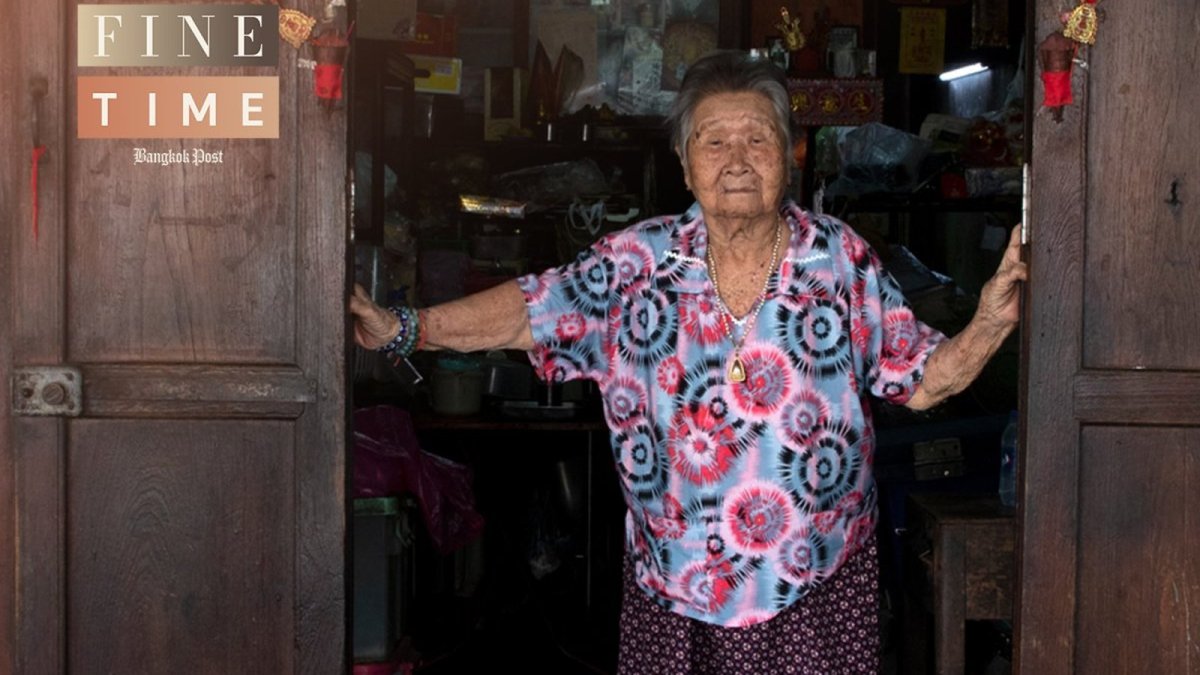
Amidst the change, one constant remains: the Peng Nguan shop. For more than 70 years, 97-year-old Cheng Siaojarern has been serving his famous red-pork rice, or khao mu daeng, to generations of customers. His stall is a testament to endurance and tradition. A plate of his signature dish once cost a single baht, with a child’s portion going for just 50 satang. Today, the same plate sells for 40 baht, a price that reflects the economic shifts of a nation while the recipe remains unchanged.
“I’m the only one left selling here,” Cheng told the Bangkok Post with a sense of pride that belies his age. “Business is good, very good.” His words offer a glimmer of hope, suggesting that even in a changing landscape, authenticity and quality still hold value. Cheng’s longevity is not just a personal achievement; it is a living link to the market’s glorious past, a daily reminder of the flavors that once defined this canal-side community. His presence is a draw for those seeking a taste of old Bangkok, a tangible connection to a history that is rapidly slipping away.
The Staged Authenticity of Modern Floating Markets
In recent years, the Phasi Charoen District Office has sought to recapture the area’s old floating-market atmosphere. In January 2010, the market was officially rehabilitated with the aim of attracting visitors. However, by 2023, conditions had deteriorated considerably, and the dream of a thriving tourist destination has proven difficult to sustain. Orawan, for one, is skeptical of these revival efforts. She points out that many modern floating markets in Thailand are designed primarily for tourism, with carefully staged scenery that bears little resemblance to the community’s traditional way of life.
“This is a residential area,” she explains. “When it was a floating market, some households complained about noise and loss of privacy.” Her observation cuts to the heart of the matter: the past cannot be recreated as a theme park. The original floating market was a functional, organic part of daily life, not a performance for visitors.
Unlike the famous markets of Damnoen Saduak or Amphawa, which have been polished for tourist cameras, Khlong Phasi Charoen’s history is one of quiet necessity. What makes this spot poignant is that it was never a grand spectacle, but an ordinary, working waterway. The shift away from canal life was not a single event but a slow erosion — first the roads, then the pollution, then the changing habits of a generation that no longer needed to buy fish from a boat. For residents like Orawan, the canal’s silence is not nostalgia but a lived memory of a community that once spilled onto the water’s edge. Her plea to “come see the atmosphere” is an invitation to witness a way of life that has almost vanished, preserved only in the weathered riverside houses and the patient flow of the khlong.
Conservation Zones and the Price of Progress
The tension between development and preservation is palpable in Phasi Charoen. Orawan notes that land prices have skyrocketed, tempting residents to sell their homes to developers. “It was so much fun back then. Those things are gone now,” she laments. “Land is expensive and everything is more expensive. As development comes in, people sell their homes.” This exodus of original residents is slowly eroding the community’s fabric, replacing long-standing neighbors with new condominium dwellers who have no connection to the khlong’s history.
Recognizing the area’s unique cultural value, authorities have designated it a conservation zone. This status prevents properties from being demolished or re-developed without special permission, offering a layer of protection against unchecked urban sprawl. Orawan supports this measure, seeing it as a necessary bulwark against the total erasure of her heritage. The designation is a powerful tool, but it is also a double-edged sword; it can freeze the area in time, but it cannot generate the economic vitality needed to sustain it. Land prices have climbed as developers wait for the day when the last old shopkeepers retire and the last family homes are sold. The market’s survival, then, is not just about preserving structures but about keeping a community alive in the face of economic pressure.
What is happening here mirrors a broader Bangkok debate about what heritage truly means. The district office’s 2010 rehabilitation brought temporary hope, but by 2023 the decay had returned, revealing that official restoration alone cannot sustain a living market. Meanwhile, younger Thais are rediscovering canal-side culture through boat tours and community markets, but often in a form carefully staged for tourists that Orawan finds jarring. She is not against tourism — she welcomes visitors who come to appreciate the genuine ambiance — but she resists the staged floating markets that turn residential life into a performance. Her complaint about noise and privacy is a reminder that heritage is not a museum piece; it is a neighborhood where people still cook, sleep, and argue.
A Future Rooted in Memory, Not Nostalgia
For Thailand and the broader Southeast Asian region, the story of Wat Nimmanoradee’s market is a cautionary tale. As cities across ASEAN race towards modernization, the pressure on historic communities intensifies. The question facing Phasi Charoen is not uniquely Thai: from the UNESCO-listed trading town of Hoi An in Vietnam to the water villages of Kampong Ayer in Brunei, waterfront communities across the region are weighing how much of their old character they can carry into a development-driven future. The khlongs of Bangkok, once so numerous that the city was dubbed the “Venice of the East,” are a finite resource. Each one that is filled in or overshadowed represents a permanent loss to the nation’s heritage.
Orawan’s hopes for the future are modest but profound. She supports local commerce and wants the area to develop, but she yearns for the old character to survive. “Sometimes I want to see the old atmosphere come back a little,” she says. “People shouldn’t expect to shop a lot here. Come to see the atmosphere — you can’t find this kind of ambiance in Bangkok anymore.” Her vision is not for a return to the past, but for a future that respects it. She dreams of a day when someone might “restore or develop it well,” creating opportunities for the community to have jobs and extra income while preserving the unique ambiance that makes Phasi Charoen special.
As the sun sets over the condominiums that now line the khlong, the story of this ancient market is far from over. It is a story of resilience, of a 97-year-old cook still serving his beloved recipe, and of a 73-year-old woman who remembers a world of sunsets and fish-filled waters. The future of Wat Nimmanoradee’s market remains uncertain, but the determination of its residents to stay rooted in their history offers a powerful lesson. In a city that is constantly reinventing itself, the quiet act of remembering, of holding onto a sense of place, may be the most radical form of resistance. The market may no longer float, but the spirit of the community, anchored by memory and tradition, continues to endure.
This article was produced with AI-assisted research and editorial support. Sources: Bangkok Post, Wikipedia.
By Ann Srisawat, Staff Writer
What's Your Reaction?
 Like
0
Like
0
 Dislike
0
Dislike
0
 Love
0
Love
0
 Funny
0
Funny
0
 Wow
0
Wow
0
 Sad
0
Sad
0
 Angry
0
Angry
0

Southeast Asia Correspondent at Global1.News. Based in Bangkok, covering Thai and Southeast Asian politics, economy, technology, and culture. Deep regional perspective on one of the world's most dynamic regions.















Comments (0)