
Thailand Household Power Bills to Fall From Sept 1 as ERC Cuts Tariff
Thailand's household electricity bills will drop from September 1, 2026, after the Energy Regulatory Commission (ERC) approved a new residential tariff structure that removes public street-lighting costs from household bills and caps the first 200 units of monthly consumption at no more than 3 baht per unit.
Thailand's household electricity bills will drop from September 1, 2026, after the Energy Regulatory Commission (ERC) approved a new residential tariff structure that removes public street-lighting costs from household bills and caps the first 200 units of monthly consumption at no more than 3 baht per unit. Energy Minister Akanat Promphan announced the changes on Thursday, saying they cut electricity charges by about 6 satang per unit, affecting September bills through at least December. The move is part of the government's broader effort to ease living costs for Thai families grappling with household expenses across Bangkok, Chiang Mai, and the Isaan region.
Household Power Bills to Fall From Sept 1 as ERC Cuts Streetlight Charges
Bangkok, Thailand - Thursday - The ERC's decision marks a significant shift in how Thailand prices residential electricity, ending a practice that quietly added costs to every household bill for roughly three decades. ERC secretary-general Poonpat Leesombatpiboon confirmed that the average residential electricity charge will drop from 3.95 baht per unit to 3.86 baht per unit, excluding VAT. For a typical household using 300 units per month, the savings amount to roughly 18 baht per bill - modest for individual families, but substantial when multiplied across the millions of households served by the Metropolitan Electricity Authority (MEA) in Bangkok and the Provincial Electricity Authority (PEA) nationwide.
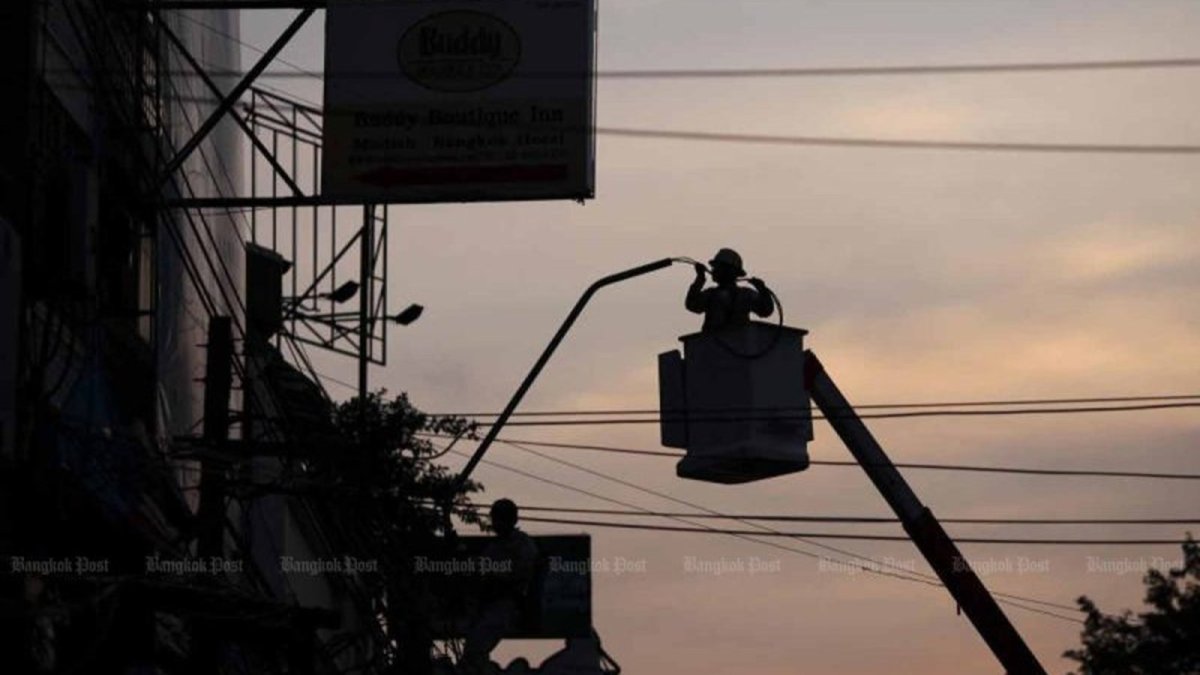
The revised structure follows a National Energy Policy Council resolution last month to remove public street-lighting costs from residential bills. Street lighting was a hidden cost shared by all consumers for about 30 years, totaling roughly 18 billion baht annually. The ERC completed a public consultation on the revised residential tariffs before approving the final structure, which takes effect for the September-December tariff period - the final one of the year.
What the New Tariff Means for Thai Households
Under the new structure, households using up to 200 units a month will pay no more than 3 baht per unit for that portion of their consumption. Usage above 200 units is charged at applicable tariff rates. This tiered approach protects low-income households and small families who typically consume less electricity, particularly in rural areas of the Isaan region and northern provinces like Chiang Mai.
For users consuming 201-400 units per month, the rate drops to 4.15 baht per unit, down from 4.22 baht. Those using over 400 units per month will pay 4.35 baht per unit. The ERC's calculation shows that removing the hidden streetlight cost benefits all residential users, with the largest relative savings going to households in the lower tiers.
The revised tariff structure also extends residential rates to some occupants of homes without permanent house registration, provided they meet conditions set by electricity authorities, including a record of electricity payments. This change matters for Thailand's urban poor and migrant communities who often live in unregistered housing but still pay for electricity. The ERC's decision recognizes their contribution to the grid and extends the same protections to them.
Streetlight Charges: A Hidden Burden for 30 Years
For approximately 30 years, Thai households have been paying for public street lighting through their electricity bills without explicit disclosure. The cost - roughly 18 billion baht annually - was bundled into the tariff structure, making it invisible to consumers who assumed their bills reflected only their own usage. This hidden charge affected every residential account, from a small shop in Udon Thani to a condominium in central Bangkok.
The National Energy Policy Council's resolution last month to remove this cost from residential bills represents a transparency victory for consumer advocates who have long argued that public infrastructure costs should be borne by the state or by all electricity users proportionally, not hidden in household tariffs. The ERC's public consultation on the revised tariffs allowed citizens and businesses to weigh in before the final approval, a process that Poonpat said helped shape the final structure.
The removal of streetlight charges from residential bills also aligns Thailand with international best practices, where public lighting is typically funded through municipal budgets or general taxation rather than electricity tariffs. For Thai households, this means their bills now more accurately reflect their own consumption, not the city's need to illuminate public roads and alleys.
How the ERC Will Fund Public Lighting
The ERC will fund public street lighting from new sources, shifting the burden away from households. These sources include data center users, consumers with direct electricity purchase contracts, reduced adder payments, and community solar projects. This diversified funding approach spreads the cost across the broader energy ecosystem rather than concentrating it on residential consumers.
Data center users - a growing segment in Thailand as the country positions itself as a regional digital hub - will contribute to streetlight funding through their electricity charges. Consumers with direct electricity purchase contracts, typically large industrial users who buy power directly from generators, will also share the burden. Reduced adder payments refer to the gradual phase-out of premium payments for renewable energy producers, freeing up funds that can be redirected to public infrastructure.
Community solar projects represent a forward-looking funding source, allowing local communities to generate solar power that can offset streetlight costs. This approach aligns with Thailand's renewable energy targets and encourages decentralized energy production. The ERC's funding plan demonstrates that removing a hidden cost from household bills does not mean eliminating the service - it means finding fairer, more transparent ways to pay for it.

Thailand Context: Energy Policy and the Cost of Living
Thailand's electricity sector is dominated by EGAT (Electricity Generating Authority of Thailand), which generates most of the country's power, with distribution handled by the MEA in Bangkok and the PEA across the rest of the country. This centralized structure has historically made tariff adjustments a matter of national policy, with the ERC acting as the regulatory gatekeeper. The current reduction is part of a broader energy relief package that the government has rolled out in recent months to address rising living costs.
Energy Minister Akanat Promphan has positioned this tariff cut as a direct response to household financial pressures, particularly in the wake of global energy price volatility. The government's approach reflects a recognition that electricity is not just a commodity but a basic necessity for Thai families, from the street food vendors of Bangkok's Yaowarat district to the rice farmers of Buriram who rely on electric water pumps.
The timing of the reduction - taking effect for the September-December tariff period - is significant. This is the final tariff period of the year, and the government is easing living costs as part of broader energy relief measures. For Thai households, the savings come at a critical time as families prepare for the year-end holiday season and the associated increase in electricity usage from festive lighting and air conditioning during the hot months.
Implications for Southeast Asia
Thailand's decision to remove streetlight charges from residential bills and cap low-usage tariffs at 3 baht per unit sends a signal across Southeast Asia. Neighboring countries like Vietnam, Laos, and Cambodia face similar challenges in balancing electricity affordability with infrastructure funding. Thailand's approach - shifting costs to data centers, direct-purchase consumers, and community solar - offers a model that other ASEAN nations could study.
The move also strengthens Thailand's position as a regional leader in energy policy reform. As ASEAN moves toward greater energy integration under the ASEAN Power Grid initiative, Thailand's transparent tariff structure could become a benchmark for regional cooperation. The ERC's willingness to hold public consultations and adjust tariffs based on consumer feedback demonstrates a regulatory maturity that other Southeast Asian energy regulators may seek to emulate.
For foreign investors and businesses operating in Thailand, the tariff reduction signals a government responsive to cost-of-living concerns while maintaining grid stability. The diversified funding sources for street lighting - particularly the inclusion of data center users - reflect Thailand's ambition to attract digital economy investment. This policy coherence between energy pricing and economic development goals is a positive signal for the region.
Expert Perspectives
Energy analysts in Bangkok have welcomed the ERC's decision, noting that the removal of hidden streetlight charges improves tariff transparency. The 6-satang reduction, while modest for individual households, represents a meaningful shift in how Thailand prices electricity: for the first time in decades, the residential tariff will reflect consumption rather than bundled public infrastructure costs. The public consultation process that preceded the approval also gave consumer groups and businesses a formal channel to shape the final structure.
Consumer advocacy groups have also praised the extension of residential rates to occupants without permanent house registration. This change addresses a long-standing inequity in Thailand's electricity pricing, where unregistered residents often paid commercial rates. The condition requiring a record of electricity payments ensures that the system remains accountable while extending protections to vulnerable populations.
However, some experts caution that the funding shift to data centers and direct-purchase consumers could have unintended consequences. If these costs are passed on to end users, the savings for households might be offset by higher prices for digital services or industrial goods. The ERC will need to monitor these effects in the coming months to ensure the policy achieves its intended goal of easing household burdens without creating new ones elsewhere.
What to Watch For
The September-December tariff period will serve as a test case for the new funding model. The ERC will monitor whether data center users and direct-purchase consumers absorb the streetlight costs without significant pushback, and whether community solar projects can generate sufficient revenue to offset the removed charges. If the model proves successful, it could be extended beyond the current tariff period.
Households should check their September bills carefully to confirm the 6-satang reduction is applied. The ERC has instructed the MEA and PEA to implement the new rates from September 1, and any discrepancies should be reported to the authorities. For households using up to 200 units per month, the 3 baht per unit cap provides a clear benchmark against which to verify their bills.
The broader energy relief measures announced by the government in recent months - including fuel price adjustments and LPG subsidies - will continue to shape Thailand's cost-of-living landscape. The electricity tariff reduction is one component of a larger strategy to support Thai families, and the government has indicated that further measures may follow if global energy prices remain volatile.
For Thailand's neighbors, the ERC's approach to funding public infrastructure through diversified sources rather than household tariffs offers a potential template. As Southeast Asia's energy demand grows, the question of who pays for public goods like street lighting will become increasingly important. Thailand's answer - transparency, diversification, and consumer protection - provides a thoughtful starting point for regional dialogue.
The reduction in household electricity bills from September 1 represents more than a small monthly saving for Thai families. It marks the end of a 30-year hidden cost, the beginning of a more transparent tariff structure, and a signal that Thailand's energy regulators are listening to consumers. For the millions of households across Bangkok, Chiang Mai, Phuket, and the Isaan region, the change brings both financial relief and a sense that their electricity bills finally reflect their own usage - not the city's streetlights.
By Ann Srisawat, Staff Writer
This article was produced with AI-assisted research and editorial support. Reporting is based on sources cited in the article.
What's Your Reaction?
 Like
0
Like
0
 Dislike
0
Dislike
0
 Love
0
Love
0
 Funny
0
Funny
0
 Wow
0
Wow
0
 Sad
0
Sad
0
 Angry
0
Angry
0

Southeast Asia Correspondent at Global1.News. Based in Bangkok, covering Thai and Southeast Asian politics, economy, technology, and culture. Deep regional perspective on one of the world's most dynamic regions.














Comments (0)