
Russian Drone Strike Kills Train Crew in Odesa: 340 Evacuated
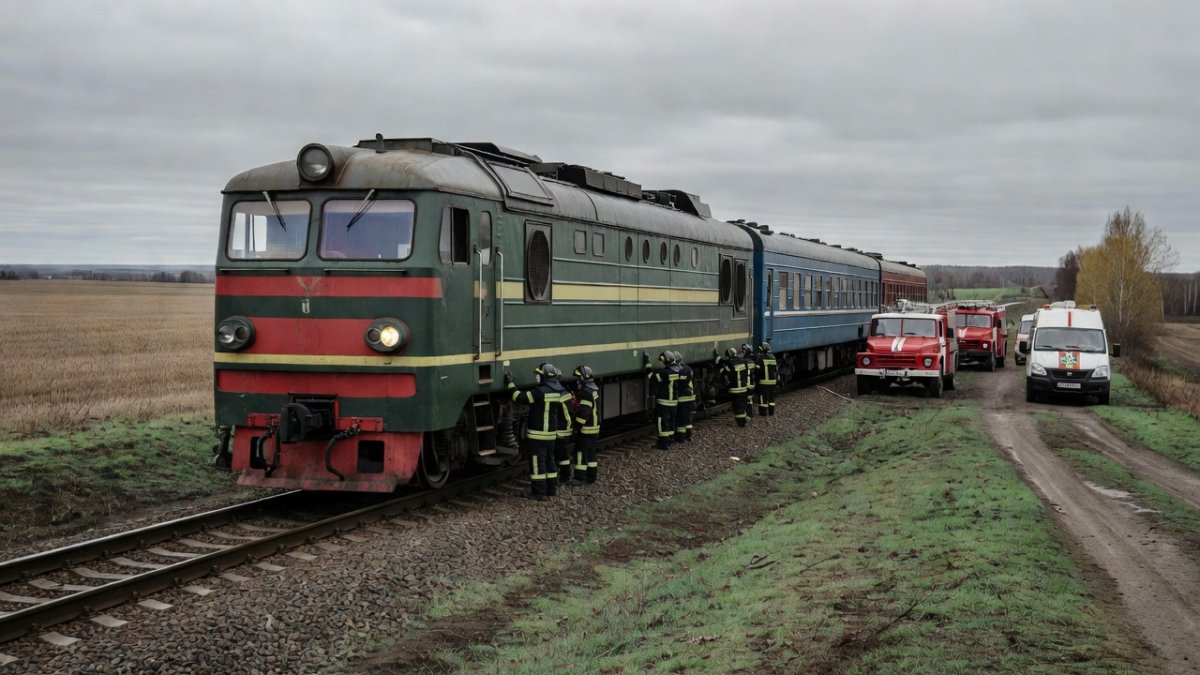
The locomotive of a civilian passenger train in southern Ukraine lies scorched and twisted this morning, a stark testament to the indiscriminate nature of Russia's aerial campaign. In the Berezivka district of the Odesa region, a jet-powered Shahed drone struck the train's engine at speed, killing the driver and his assistant instantly, yet sparing the 340 passengers—including 67 children—who were aboard.
The locomotive of a civilian passenger train in southern Ukraine lies scorched and twisted this morning, a stark testament to the indiscriminate nature of Russia's aerial campaign. In the Berezivka district of the Odesa region, a jet-powered Shahed drone struck the train's engine at speed, killing the driver and his assistant instantly, yet sparing the 340 passengers—including 67 children—who were aboard.
Deadly Precision on a Civilian Track: The Odesa Train Strike and the West's Next Move
Odesa, Ukraine – 13 August 2026 — The attack, which occurred overnight, has sent shockwaves through Ukraine's railway network and reignited a fierce debate in Westminster about the nature of British support. This was not a strike on a munitions depot or a military logistics hub; it was a direct hit on a train carrying ordinary families, a fact that Ukrainian President Volodymyr Zelenskyy seized upon in an emotional address. "This was an entirely civilian target," he said, insisting the drone operator must have known what he was striking.
The Attack: A Warning That Came Too Late
The sequence of events reveals the terrifying speed of modern drone warfare. Ukrzaliznytsia, Ukraine's state-owned railway operator, confirmed that its security team received an intelligence warning about a jet-powered Shahed drone operating in the area. The warning was immediately forwarded to the train's driver, a procedure honed over two years of war. However, as Oleksandr Pertskyi, chairman of Ukrzaliznytsia's board, explained, the warning was insufficient.
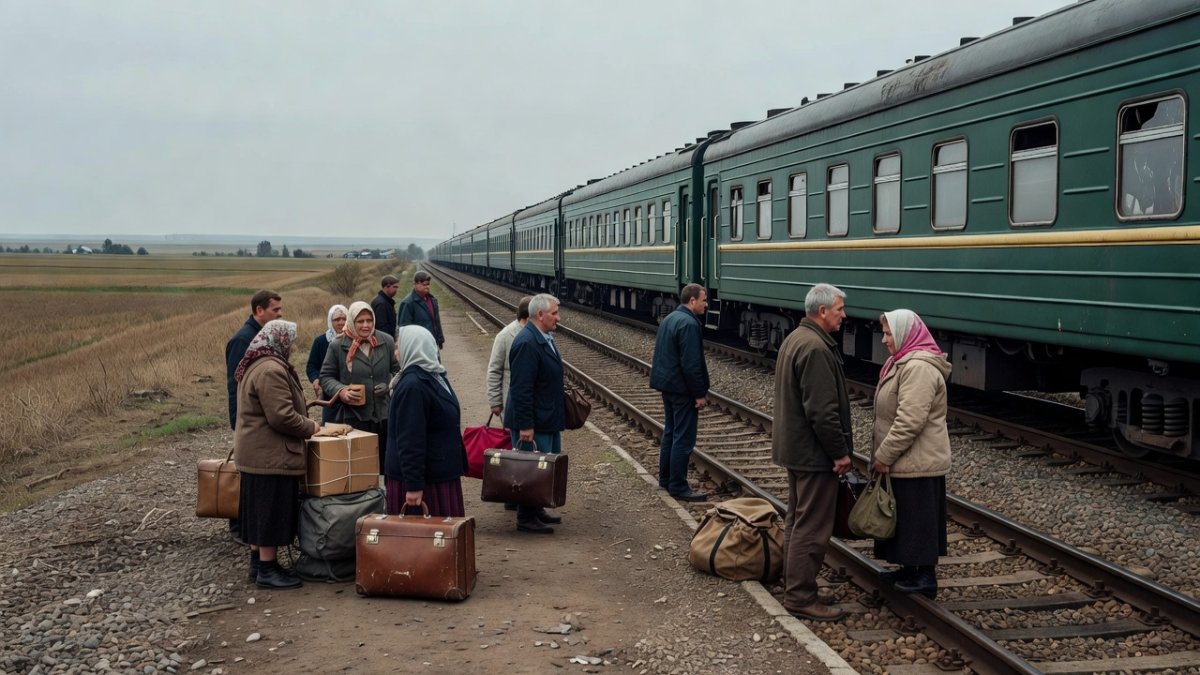
"The Shahed's high speed and sudden manoeuvre meant there was not enough time to stop the locomotive," Pertskyi said in a statement. The drone, travelling at several hundred kilometres per hour, altered its trajectory at the last moment, making evasion impossible. The impact was concentrated on the locomotive, a testament to either luck or a deliberate attempt to disable the train without causing mass casualties. The driver and his assistant, whose names have not yet been released pending family notification, bore the full brunt of the blast. The 340 passengers and remaining crew were evacuated swiftly, with no reported injuries among them.
Zelenskyy's Condemnation and the Human Cost
President Zelenskyy's response was immediate and visceral. He framed the attack not as a military accident but as a deliberate act against civilian infrastructure, stressing that the train was an entirely civilian target and that the drone operator must have known it. With 67 children among the 340 people aboard, the strike underscored how far the front line's dangers now reach into everyday Ukrainian life.
Oleh Kiper, head of the Odesa Regional Military Administration, released images of firefighters inspecting the damaged locomotive, the metal skin peeled back like tin foil. The visual evidence is grim: a machine designed to transport life, now a smoking wreck. The attack has also raised questions about the effectiveness of early warning systems. While Ukraine has become adept at intercepting drones, the sheer volume of nightly launches—over 130 drones across 11 regions overnight—is straining air defence resources. The Berezivka district, relatively far from the front lines, had perhaps grown accustomed to a degree of safety that no longer exists.
Ukrzaliznytsia: The Civilian Lifeline Under Fire
For Britons, the image of a train driver killed at his post resonates deeply. It evokes the Blitz, the bravery of railway workers during wartime, and the essential nature of rail travel to national life. In Ukraine, Ukrzaliznytsia is more than a transport provider; it is a lifeline. Since February 2022, its workers have evacuated millions from occupied territories, transported grain to Black Sea ports, and moved humanitarian aid to the front lines. They have done so under constant threat of missile and drone attack.
This is not the first time a passenger train has been targeted. On 18 July 2026, a drone strike on a passenger train in Zaporizhzhia injured one conductor after a rapid evacuation. That incident was a warning; this one is a tragedy. The difference is the direct hit on the locomotive, a deliberate choice to kill the crew. Russia has previously targeted railway infrastructure—power supplies, signalling lines, and stations—but a direct strike on a moving passenger train is a significant and dangerous escalation. It signals a willingness to attack the very people who keep Ukraine moving, and it places every railway worker in the country in the crosshairs.
The Overnight Campaign: A War of Attrition
The strike on the train was part of a broader, relentless assault. Ukrainian authorities reported that Russian forces launched over 130 drones across 11 regions overnight, targeting energy infrastructure, residential areas, and transport links. The strategy is clear: to degrade Ukraine's will to resist by making daily life unbearable. The attacks on the energy grid have already caused rolling blackouts in several cities, and the targeting of Odesa's Black Sea ports threatens the grain export corridor that is vital to both Ukraine's economy and global food security.
This summer has seen a marked escalation in Russia's aerial campaign. The use of jet-powered Shahed drones, which are faster and harder to intercept than their propeller-driven predecessors, represents a new challenge for Ukrainian air defence. The UK has been a key partner in this effort, supplying advanced systems and training Ukrainian personnel. The Ministry of Defence has repeatedly condemned attacks on civilians, and the Foreign, Commonwealth and Development Office has issued statements supporting Ukraine's right to self-defence. But the question remains: is it enough?
What This Means for the UK: The Support Debate
In London, the attack has sharpened the political debate over continued support for Ukraine. Prime Minister Keir Starmer's government has maintained military aid, but voices of dissent are growing louder, fuelled by war fatigue and economic concerns. The cost-of-living crisis, the strain on public services, and a general sense of "Ukraine fatigue" have emboldened those who argue for a scaling back of commitments. This attack, however, provides a stark counter-argument.
For British readers, the parallels with our own railway network are inescapable. Network Rail engineers, train drivers, and station staff are the backbone of our transport system. The idea of a driver being killed simply for doing their job is abhorrent. It humanises the conflict in a way that statistics cannot. The UK has a moral imperative, the argument goes, to ensure that Ukrainian railway workers are not forced to choose between their duty and their lives. The provision of more air defence systems, particularly those capable of intercepting jet-powered drones, is seen by many analysts as the most effective way to protect civilian infrastructure.
The Wider Escalation: A Dangerous Summer
The train strike must also be viewed within the context of a broader escalation. On 10 August 2026, Ukrainian strikes deep inside Russia, including on oil refineries in Tatarstan, killed at least 13 people. These attacks, which Ukraine has neither confirmed nor denied, represent a significant shift in the conflict. They demonstrate Ukraine's growing capability to strike at Russia's economic heart, but they also risk provoking a further escalation from Moscow. The Kremlin has repeatedly warned of retaliation, and the targeting of civilian infrastructure in Ukraine appears to be part of that response.
The cycle of violence is spiralling. Russia attacks Ukrainian cities; Ukraine strikes Russian refineries; Russia responds with more drones and missiles. In this environment, the risk of a catastrophic miscalculation grows. The international community, including the UK, is walking a tightrope, trying to support Ukraine without triggering a wider war. The attack on the train in Odesa is a reminder that the cost of this balancing act is being paid in Ukrainian blood.
The Bottom Line — What Comes Next
The killing of two railway workers in the Odesa region is a tragedy, but it is also a warning. It demonstrates that Russia's campaign against civilian infrastructure is not abating, and that the methods are becoming more lethal. For the UK, the implications are clear. The debate over support for Ukraine cannot be reduced to a simple ledger of costs and benefits. It is a question of values, of standing up to aggression, and of protecting the innocent. The government must now consider whether its current level of support is sufficient to meet the threat. If jet-powered drones can strike a moving train with impunity, what else can they target?
The coming weeks will be critical. Ukraine will demand more air defence systems, and the UK will face pressure to respond. The memory of the driver and his assistant, killed in the line of duty, should serve as a powerful reminder of what is at stake. They were not soldiers; they were civilians, doing a job that kept their nation alive. Their deaths must not be in vain. The UK, and the wider international community, must decide whether they are willing to pay the price to ensure that such attacks become a thing of the past.
By Erica Thornton, Staff Writer
This article was produced with AI-assisted research and editorial support. Reporting is based on sources cited in the article.
What's Your Reaction?
 Like
0
Like
0
 Dislike
0
Dislike
0
 Love
0
Love
0
 Funny
0
Funny
0
 Wow
0
Wow
0
 Sad
0
Sad
0
 Angry
0
Angry
0

US Politics and Policy Correspondent at Global1.News. Based in Washington DC, covering American politics, policy, elections, and the courts. Knows how the system works and tells you what it actually means.














Comments (0)