
Tesla's Own Data Contradicts the Public Story in a Fatal Texas Crash
Folks, we need to talk about Clute, Texas. For three months, the public was told a young man died in a fiery crash because of a likely medical emergency. That story was incomplete. It was, at best, a half-truth.
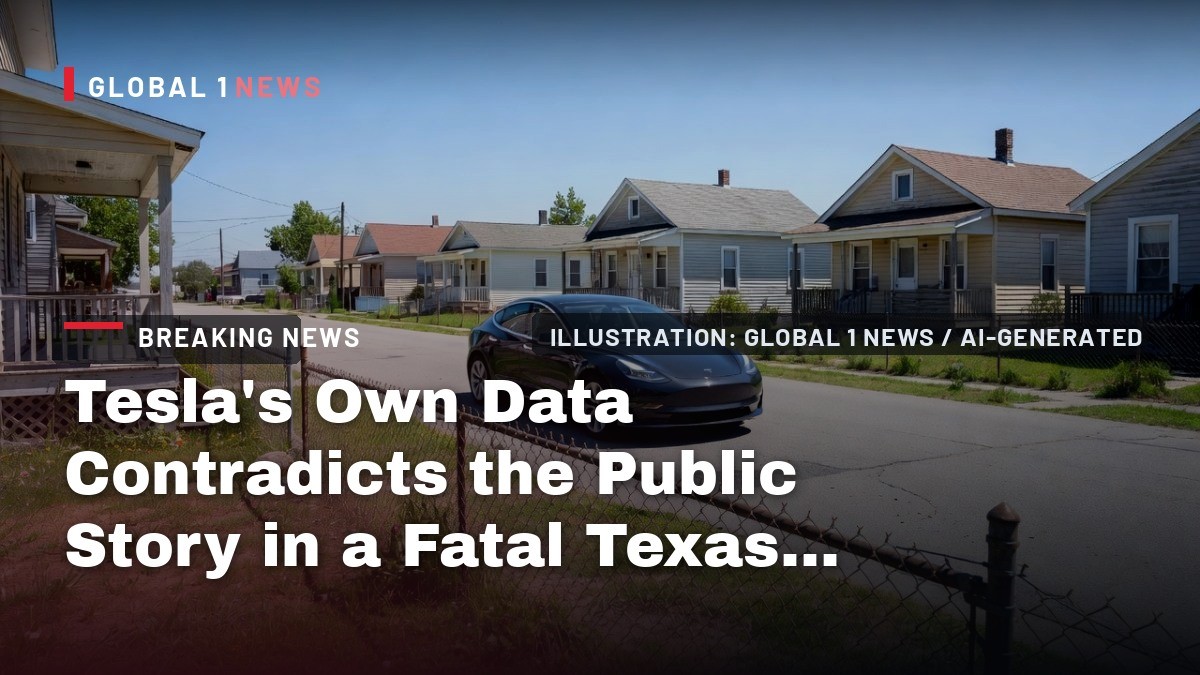
Folks, we need to talk about Clute, Texas. For three months, the public was told a young man died in a fiery crash because of a likely medical emergency. That story was incomplete. It was, at best, a half-truth. Tesla’s own report to federal regulators, obtained and published by Electrek this Monday, tells a very different story: the car’s driver-assist system was "verified engaged" at 104 miles per hour on a residential street. That detail never made it into a single police statement or news report at the time. This is a massive gap between what the public was told and what the data shows, and it demands answers.
Clute, Texas – August 31, 2026 — Newly revealed federal crash data contradicts the official narrative surrounding the death of 22-year-old Steven Alvarez, who perished when his Tesla left a Clute roadway and erupted in flames in May. The revelation, first reported by Electrek, raises urgent questions about transparency, the limits of automated driving technology, and whether the public is being given the full picture when these systems are involved in fatal incidents.
The Crash That Wasn't What It Seemed
Let’s set the scene. On the evening of May 20, 2026, Steven Alvarez was driving southbound on Brazoswood Drive in Clute, a street that runs right by Brazoswood High School. According to the verified facts of the incident, his Tesla left the road, tore through a fence, and slammed into a decommissioned municipal pool complex at Clute Municipal Park. The vehicle caught fire. Alvarez, a proud graduate of Brazoswood High School’s Class of 2022 and a valued staff member of the Brazosport Independent School District, died at the scene. The district remembered him for his kindness and the positive relationships he built with students and staff. That is the human tragedy at the center of this story—a young life cut short, a community in mourning.
But here is where the story gets complicated. In the immediate aftermath, the Clute Police Department and local media reported the crash as a likely medical episode. The implication was clear: something happened to Steven physically, causing him to lose control. No mention was made of the vehicle’s speed. No mention was made of any automated system being active. The public was left with a tragic but simple narrative—a medical event caused a fatal crash.
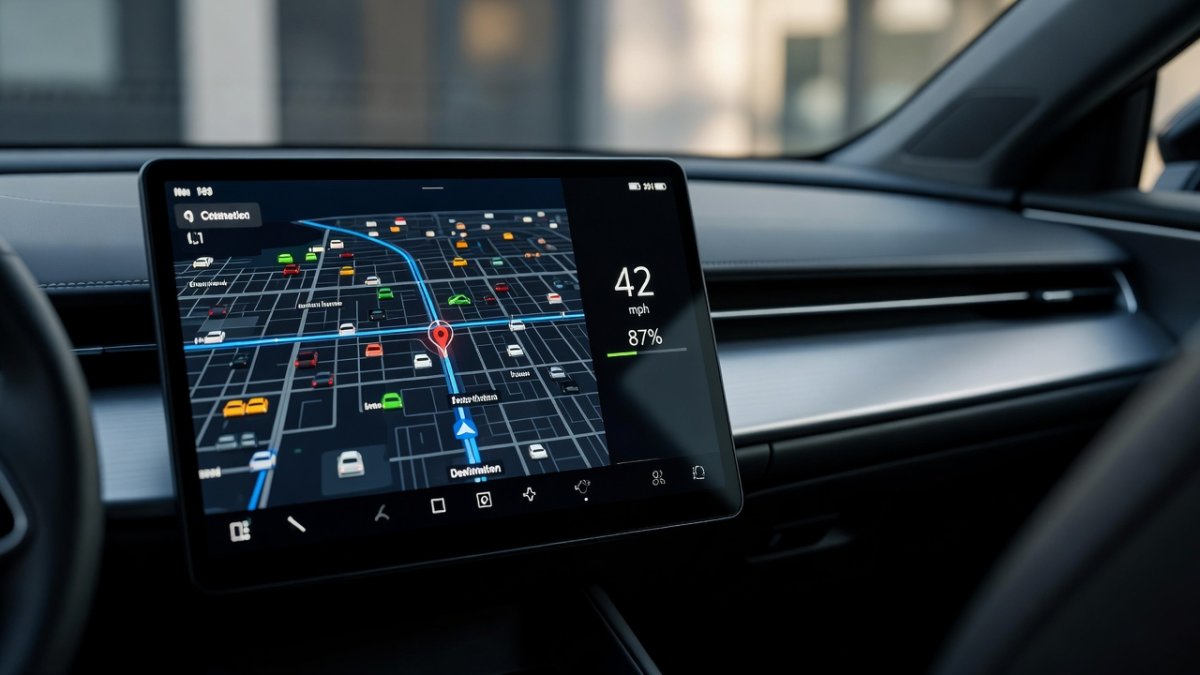
That narrative, as it turns out, was not just incomplete. It was contradicted by data sitting in Tesla’s own files. The crash report submitted to the National Highway Traffic Safety Administration (NHTSA) states plainly that the driver-assist system was "verified engaged" at the time of the crash. And the speed? The vehicle was traveling at 104 mph on a residential street. One hundred and four miles per hour. On a road near a high school. That is not a medical episode; that is a high-velocity catastrophe waiting to happen.
What Does 'Verified Engaged' Actually Mean?
This is the phrase that should make every single one of us stop and pay attention. "Verified engaged." It sounds technical, precise, and reassuring. But what does it actually tell us? Critics argue it tells us almost nothing. As of April 2026, all 18 of Tesla's automated-driving-system crash reports to NHTSA marked the system status as "Verified Engaged." All of them. This boilerplate language has become a catch-all that obscures more than it reveals.
Does "verified engaged" mean the driver had their hands on the wheel? Does it mean the system was actively steering, or just that the cruise control function was on? Does it mean the car was in a mode that allowed it to exceed the speed limit? We don't know. The public doesn't know. And that is precisely the problem. When a federal report uses the same generic phrase for every single crash, it becomes meaningless. It tells us the system was on, but it doesn't tell us what the system was doing, why it failed to prevent the crash, or whether the driver was even conscious.
This matters because Tesla markets these features as "Autopilot" and "Full Self-Driving." These are not neutral names. They imply a level of capability that the technology simply does not have. Regulators and safety advocates have argued for years that these names overstate what the systems can do. The truth is that these are Level 2 driver assistance systems. They require an attentive driver, ready to take over at any moment. They do not prevent all crashes. They are not self-driving in the way the name suggests. And yet, we have a situation where a car was "verified engaged" at 104 mph on a residential street, and the system did nothing to stop it.
The Silence of the Police and the Media
Here is the part that should make you angry. The Clute Police Department had access to this information, or at least they had the ability to access it. Tesla collects this data. It is transmitted to the company and, in cases like this, reported to NHTSA. Yet, in the days and weeks following Steven Alvarez's death, no public statement from law enforcement mentioned the speed or the driver-assist system. Local media reports, which relied on police statements, also omitted these critical details.
Why? Was it an oversight? Was it a lack of technical understanding? Or was there a deliberate decision to keep this information out of the public eye? We don't have the answer to that question yet, but we are asking it. The public has a right to know the circumstances surrounding a fatal crash, especially one involving a vehicle with advanced technology. When the official story is "medical episode" and the data says "104 mph with driver-assist engaged," that is not a minor discrepancy. That is a fundamental failure of transparency.
This is not an isolated incident. In June 2026, a Tesla Model 3 slammed into a home in Katy, Texas, near Houston, killing a 76-year-old woman who was standing inside. NHTSA opened a special investigation into that crash. In July, the NTSB said the driver had overridden the car's driver-assistance system. Tesla CEO Elon Musk blamed the driver for flooring the accelerator. Federal regulators have also probed Tesla over alleged delays in reporting Autopilot crashes. The pattern is consistent: when a Tesla crashes, the blame is often placed on the driver, and the limitations of the technology are minimized.
A Decade of Investigations and a Body Count
Let's zoom out and look at the bigger picture, because this is not just about one crash in Clute. NHTSA has opened 46 special investigations involving Teslas using self-driving or driver-assistance technology over the past decade. In more than a dozen of those crashes, at least one person was killed. That is a staggering number. These are not just fender-benders; these are fatal incidents involving technology that is being sold to the public as a safety feature.
In August 2025, NHTSA formally opened a probe into Tesla's driver-assistance system following a string of 11 crashes involving parked first-responder vehicles that killed 17 people. Seventeen people. First responders. The very people we rely on to save lives. These crashes involved vehicles that were supposed to have advanced safety systems, and they plowed into emergency vehicles with lights flashing. The technology is not just failing to prevent crashes; it is actively involved in them.
The question we have to ask is simple: how many more people have to die before we have a serious, public, and honest conversation about the limits of this technology? The names "Autopilot" and "Full Self-Driving" are marketing terms, not engineering specifications. They create a false sense of security. A driver who believes their car can drive itself is a driver who is not paying attention. And a driver who is not paying attention at 104 mph is a danger to themselves and everyone around them.
The Human Cost and the Path Forward
Let's bring this back to Steven Alvarez. He was not a statistic. He was a son, a friend, a colleague. He was a young man who worked in the school district, who built relationships with students, who was remembered for his kindness. His death is a tragedy, and our hearts go out to his family and the Brazosport community. But his death is also a data point. It is a data point that shows a vehicle traveling at 104 mph on a residential street with a driver-assist system engaged. It is a data point that was hidden from the public for months.
We need to know what happened in the moments before that crash. Was Steven having a medical emergency? It is possible. A driver can have a heart attack or a seizure while the driver-assist system is on. But if that is the case, why didn't the system detect that the driver was incapacitated? Why didn't it slow the vehicle down? Why didn't it pull over? These are the questions that Tesla and NHTSA need to answer. The system was "verified engaged," and yet it allowed a car to travel at 104 mph on a residential street and crash into a building. That is a failure of the system, regardless of what happened to the driver.
The gap between the public story and the data is not acceptable. It erodes trust in our institutions, in our regulators, and in the technology that is being sold to us. We deserve better. We deserve transparency. We deserve to know exactly what these systems can and cannot do, and we deserve to know the full circumstances of every fatal crash involving them.
What You Can Do
Folks, this story is not over. It is just beginning. And you have a role to play in making sure the truth comes out. First, stay informed. Follow this story as it develops. Electrek broke this news, and other outlets will be picking it up. Do not rely on a single source. Read the NHTSA crash data yourself. It is public information, and you have a right to see it. Look at the reports for Tesla crashes and ask yourself if the language is clear or if it is obfuscating.
Second, contact your representatives. Tell them that automated-vehicle oversight is not a niche issue; it is a public safety issue. Ask them to demand that NHTSA provide clear, specific, and timely information about every crash involving driver-assistance systems. Ask them to push for regulations that require automakers to use honest language when marketing these features. "Autopilot" and "Full Self-Driving" are misleading, and they put lives at risk.
Finally, do not be complacent. If you drive a vehicle with these systems, understand what they are and what they are not. They are assistance features, not replacements for an attentive driver. Keep your hands on the wheel. Keep your eyes on the road. And never assume that the car will save you from a bad decision. The technology is not there yet, and pretending it is costs lives. We owe it to Steven Alvarez, and to everyone else who has died in these crashes, to demand better.
By Jessica Ali, Staff Writer
This article was produced with AI-assisted research and editorial support. Sources: Electrek, NHTSA crash data, The Facts, ABC13/KTRK Houston, Brazosport ISD, AP, Ars Technica.
What's Your Reaction?
 Like
0
Like
0
 Dislike
0
Dislike
0
 Love
0
Love
0
 Funny
0
Funny
0
 Wow
0
Wow
0
 Sad
0
Sad
0
 Angry
0
Angry
0

Editor-in-Chief at Global1.News. Atlanta-based journalist who cuts through the BS and tells it like it is. Lead anchor, host, and the voice you hear when the spin stops and the truth starts.












Comments (0)