
Syrian Kurds Return to Ras al-Ain After 7-Year Displacement
WASHOKANI CAMP, Syria – The first organized mass return of displaced Syrian Kurds to the border town of Ras al-Ain began Monday, a fragile milestone seven years after Turkey’s military offensive scattered tens of thousands from their homes.
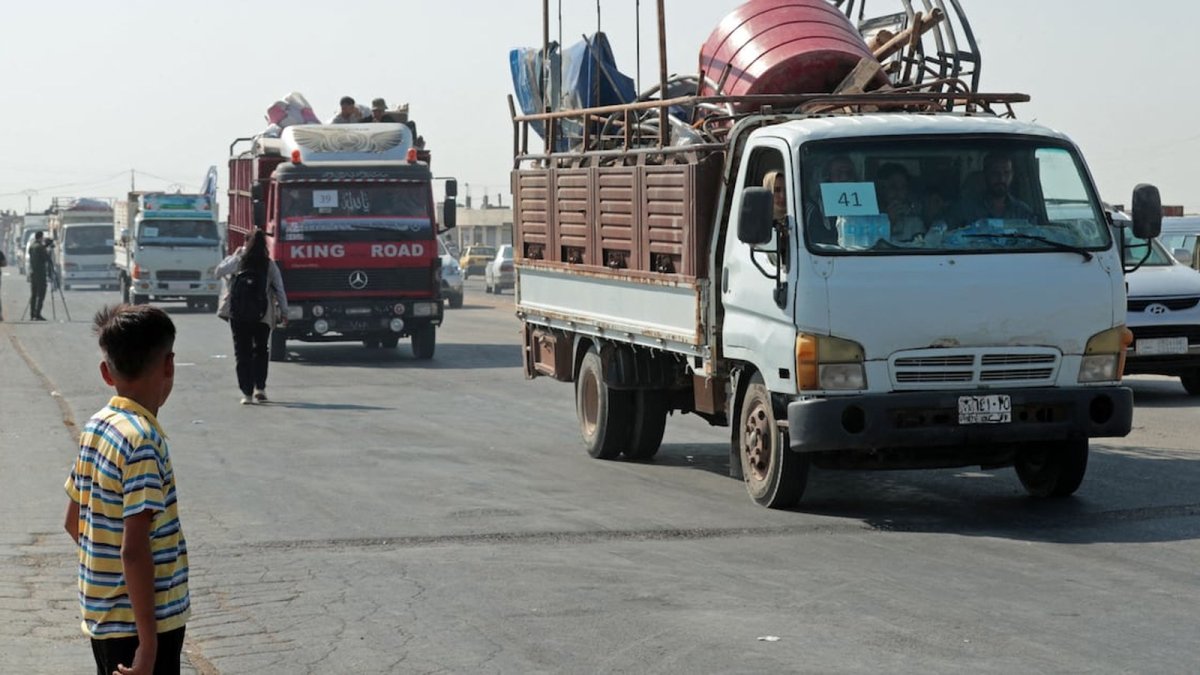
WASHOKANI CAMP, Syria – The first organized mass return of displaced Syrian Kurds to the border town of Ras al-Ain began Monday, a fragile milestone seven years after Turkey’s military offensive scattered tens of thousands from their homes. More than 400 families — roughly 2,500 people — set out from the Washokani camp north of Hasakah city, marking the initial phase of a repatriation process brokered through a US-mediated agreement between Damascus and the Kurdish-led Syrian Democratic Forces (SDF).
Syrian Kurds Return to Ras al-Ain After Seven Years of Displacement, but Violence Mars Historic Convoy
Ras al-Ain, Syria – August 10, 2026 — The convoy’s departure was hailed by organizers as “a significant milestone in a long struggle for a voluntary, safe, dignified and sustainable return,” yet reports of attacks along the route underscored the deep fractures that remain. The Sere Kaniye Displacement Committee, which coordinated the return, blamed Damascus authorities, security forces in Ras al-Ain, and the local administration for failing to protect the returnees, stating they “are responsible for maintaining security, protecting our returning people, and pursuing and arresting the perpetrators as quickly as possible.”
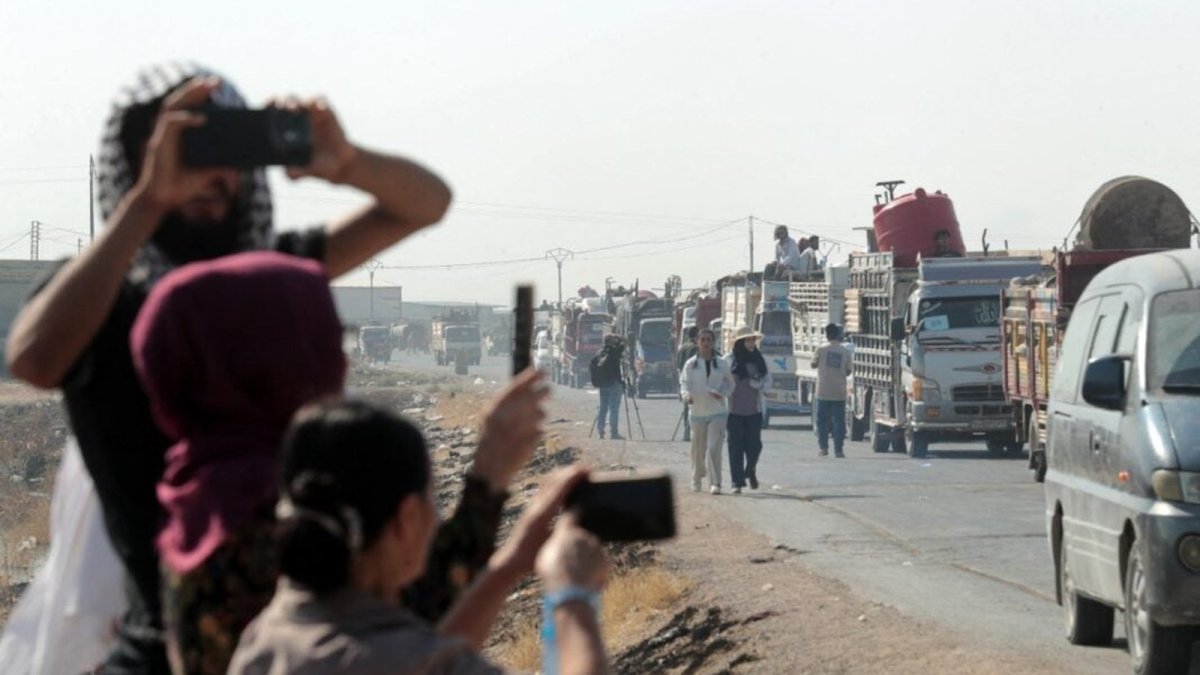
For returnees like Nora Khodor, 37, the journey was an emotional reckoning. “I’ve been waiting for this moment… it’s like a dream for a person to return to their home,” she told Al Arabiya, her voice carrying the weight of years in a dusty camp. Rawda Mohammed, 39, acknowledged her home was destroyed but insisted on returning anyway, determined to assess what could be salvaged and rebuilt. The convoy’s passage was not without incident; the committee’s statement did not detail the nature of the violence, but the accusation against state-aligned forces signals how precarious the security environment remains in a town that Turkey and its allied Syrian factions seized in October 2019.
A Return Seven Years in the Making
The displacement of Ras al-Ain’s Kurdish population began with Operation Peace Spring, when Turkish forces and Syrian proxy fighters captured the town and a strip of territory along the border, including Tell Abyad (Girê Spî). More than 14,000 families — approximately 85,000 people — fled the area, with over 13,000 families still awaiting return in the Washokani, Newroz, and Sere Kaniye camps. Monday’s convoy represents a fraction of that population, but its symbolic weight is considerable: it is the first organized, state-sanctioned return since the 2019 offensive.
The repatriation is a direct outcome of the January 29, 2026 agreement between Syrian President Ahmad al-Sharaa and the SDF, brokered by Washington. That deal, which integrated the SDF into state security forces and institutions, also included provisions for the return of displaced people and, notably, Presidential Decree No. 13 of 2026, recognizing Kurdish cultural and linguistic rights. For the Kurdish community, the decree is a historic concession from a government that, under Bashar al-Assad, denied such recognition for decades. For Damascus, it is a calculated step toward consolidating control over the country’s northeast, a region that functioned as a semi-autonomous enclave for years.
Integration on the Ground: Four Brigades, One Army
The mechanics of integration are already visible. Last week, on August 4, SDF Commander-in-Chief Mazloum Abdi met al-Sharaa at the People’s Palace in Damascus to discuss completing implementation of the January accord. Four SDF-derived brigades have already been integrated into the Syrian army in Kobani, Hasakah, Qamishli, and Derik — a tangible sign that the merger is moving beyond paper. Abdi, who condemned the attacks on Monday’s convoy, said he was working to “hold accountable anyone proven to be involved” and urged Kurds to show restraint, a plea that reflects the tension between the promise of integration and the reality of local frictions.
Jawan Isso, a member of the Sere Kaniye Displacement Committee, framed the return as a product of sustained coordination. “This step is the result of efforts by all sides and ongoing coordination” between Damascus and Kurdish authorities, he said, adding that another group of returnees would follow in the coming days. Each returning family is scheduled to receive $2,000 in compensation, with transport of belongings provided free of charge by the committee and protection supplied by the Internal Security Forces (Asayish).
Landmines, Looted Homes, and the Ghosts of 2019
Yet the physical landscape of Ras al-Ain remains hostile. Landmines are the returnees’ main concern, as documented in Al Arabiya’s video coverage of the convoy. Human rights groups have also documented the widespread seizure and looting of homes after the 2019 offensive, with some fighters who participated in the operation later settling in the town with their families. Reports indicate that some of those fighters remain, a fact that raises uncomfortable questions about cohabitation and justice in a community where the wounds of displacement are still raw.
The committee’s statement, while welcoming the return, did not shy away from the challenges. It called on authorities to pursue and arrest the perpetrators of Monday’s attacks, signaling that the security vacuum in Ras al-Ain is far from resolved. For the returnees, the act of coming home is both a personal triumph and a gamble — a bet that the political settlement holding this fragile peace together will outlast the immediate euphoria of return.
Turkey’s Shadow: The Strategic Calculus in Ankara
No analysis of Ras al-Ain is complete without addressing Turkey, the main regional backer of the current Syrian government. Ankara has long considered the SDF a terrorist organization due to its links to the Kurdistan Workers’ Party (PKK), and Turkish policy has consistently favored dismantling the SDF rather than integrating it. The January 2026 agreement, which preserves the SDF as a unified force within the Syrian army, runs counter to Ankara’s stated preferences. Yet Turkey’s leverage over Damascus is substantial — it hosts millions of Syrian refugees, controls key border crossings, and has military assets in northern Syria.
The return of Kurdish families to Ras al-Ain, a town Turkey still views through a security lens, is therefore a delicate diplomatic dance. Damascus must balance its need for Turkish support against its desire to project sovereignty over the northeast. The SDF, for its part, is seeking to transform its military role into political legitimacy, a transition that requires both Damascus’s goodwill and Washington’s continued backing. The United States, which brokered the January deal, has seen its role as the SDF’s key partner against ISIS diminish, but it remains the indispensable guarantor of the current arrangement.
A Broader Regional Pattern: Afrin, Displacement, and the Politics of Return
Monday’s convoy is not the first such return, nor will it be the last. In March 2026, the first batch of 400 displaced families returned to Afrin, another Kurdish-majority area seized by Turkey-backed forces in 2018. The Syrian Democratic Council called that return a “positive step” but insisted that a broader solution was needed. Later that month, al-Sharaa agreed to form an official committee for IDP returns from Afrin and Sari Kani, signaling that Damascus recognizes the political capital to be gained from facilitating returns — even as it struggles to secure the areas where those returns occur.
The numbers are staggering. The United Nations estimates that some 5.5 million people remain displaced in Syria after more than 13 years of civil war. The returns to Afrin and Ras al-Ain are drops in that ocean, but they are politically significant: they demonstrate that the post-Assad order, under al-Sharaa’s leadership, is attempting to address one of the war’s most intractable legacies. Whether this is genuine reconciliation or a strategic maneuver to extend state control remains an open question. Al-Sharaa’s forces ousted Assad in December 2024 after nearly 14 years of civil war, and the SDF was the most powerful rival to central government authority. Integrating the SDF is not just about security; it is about defining what kind of state Syria will become.
The Road Ahead: Compensation, Reconstruction, and Trust
For the families now returning to Ras al-Ain, the immediate priorities are practical: clearing landmines, assessing damaged homes, and accessing basic services. The $2,000 compensation per family is a start, but it will not rebuild a town that has been under hostile control for seven years. The committee’s promise of free transport and Asayish protection addresses logistics and security, but the deeper challenge is psychological — rebuilding trust between a population that was violently displaced and a state that, until recently, was aligned with the forces that displaced them.
The attacks on Monday’s convoy are a stark reminder that this trust is not yet earned. The Sere Kaniye Displacement Committee’s pointed accusation against Damascus authorities suggests that the central government’s writ in Ras al-Ain is still contested, even after the January agreement. Mazloum Abdi’s call for restraint, while necessary, may not be enough to prevent further incidents. The coming weeks will test whether the integration process can deliver security on the ground, or whether the return of displaced Kurds becomes another flashpoint in Syria’s unfinished conflict.
For now, the images from Washokani camp — families loading belongings, children seeing their hometown for the first time in years — offer a rare moment of hope. But hope, in Syria, has a way of being deferred. The returnees of Ras al-Ain are walking into a landscape of landmines, looted homes, and unresolved grievances. Their return is a milestone, but it is also a test — of Damascus’s commitment, of Turkey’s tolerance, and of the fragile architecture of a peace that is still under construction.
By Malik Hassan, Staff Writer
This article was produced with AI-assisted research and editorial support. Reporting is based on sources cited in the article.
What's Your Reaction?
 Like
0
Like
0
 Dislike
0
Dislike
0
 Love
0
Love
0
 Funny
0
Funny
0
 Wow
0
Wow
0
 Sad
0
Sad
0
 Angry
0
Angry
0
Middle East Correspondent at Global1.News. Based in Beirut, covering politics, conflict, energy, and society across the Middle East. Brings context and depth to a region often reduced to headlines.











Comments (0)