
Japan sends up jets after alleged Russian incursion of its airspace
Japan’s defence ministry reported that fighter jets were scrambled in response to two aircraft it identified as Russian military planes that entered Japanese airspace early on Tuesday.
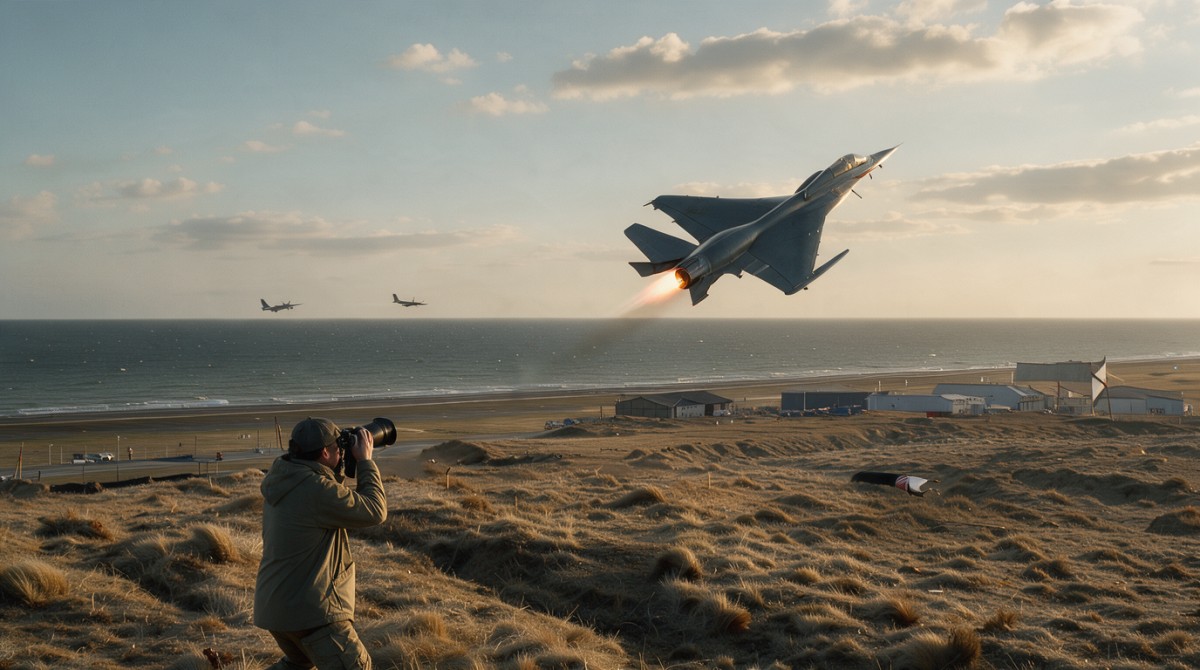
Japan’s defence ministry reported that fighter jets were scrambled in response to two aircraft it identified as Russian military planes that entered Japanese airspace early on Tuesday. The incident, which also prompted similar alerts in South Korea and Taiwan, underscores a growing pattern of Russian air activity near the air defence identification zones (ADIZ) of several East Asian states, and raises questions about the strategic timing of such moves ahead of the APEC summit in China.
Details of the Japanese response
Chief Cabinet Secretary Minoru Kihara characterised the flight paths of the aircraft, which passed off the south‑western Okinoshima island, as a “serious infringement of Japan’s sovereignty” and “completely unacceptable”. In line with standard protocol, the Japanese Self‑Defence Forces launched fighter jets to intercept the suspected Russian planes and lodged a strong protest through diplomatic channels.
The incident marks the first confirmed breach of Japanese airspace since a Russian patrol aircraft entered Japanese territory off Rebun Island in Hokkaido in 2024. The earlier event set a precedent for heightened vigilance, and the current incursion appears to follow a similar pattern of testing Japan’s air defence posture.
Reactions from neighbouring states
South Korea reported that it deployed fighter jets after an unspecified number of Russian military aircraft entered its ADIZ over the Sea of Japan. Korean authorities noted that the aircraft departed without crossing into Korean sovereign airspace, but the deployment of jets signals a readiness to respond to any perceived threat.
Meanwhile, Taiwan’s military said it “responded accordingly” after two Russian aircraft entered its ADIZ on the same day. The Taiwanese statement mirrors Japan’s language, suggesting a coordinated approach to monitoring and reacting to Russian air movements in the region.
Understanding ADIZ and its legal status
Air defence identification zones are unofficial buffer areas beyond a nation’s territorial airspace where governments identify approaching aircraft for security purposes. While international law does not obligate foreign aircraft to seek prior permission before entering an ADIZ, doing so is considered a customary practice to avoid misunderstandings.
The East China Sea, where the Japanese and Korean incidents occurred, is characterised by overlapping ADIZ claims from China, Taiwan, Japan and South Korea. This complex overlay increases the risk of inadvertent violations and complicates the task of distinguishing routine flights from deliberate incursions.
Strategic timing ahead of the APEC summit
The timing of the incursions coincides with the upcoming Asia‑Pacific Economic Cooperation (APEC) summit in China, where Russian President Vladimir Putin is scheduled to meet United States President Donald Trump, Chinese President Xi Jinping and Japanese Prime Minister Sanae Takaichi. The presence of high‑level leaders from the world’s major powers makes the region a focal point for diplomatic signalling.
Analysts note that the Russian aircraft activity could be intended to demonstrate Moscow’s military reach and to test the readiness of Japan, South Korea and Taiwan ahead of the summit. Such displays may serve both domestic and international audiences, reinforcing Russia’s image as a formidable regional actor.
Historical context of Japan‑Russia tensions
Japan and Russia have been locked in a decades‑old dispute over the Kuril Islands, a chain of islands in the Pacific that Japan refers to as the “Northern Territories”. The disagreement has persisted since the end of World War II and remains a core obstacle to a formal peace treaty.
In recent months, Moscow has intensified pressure on Tokyo. In August, President Putin visited one of the disputed islands, prompting a sharp rebuke from Prime Minister Takaichi, who described the visit as “absolutely unacceptable”. The tension escalated further in October when Russian authorities detained a Japanese journalist on espionage charges, adding a diplomatic strain to the already fraught relationship.
Implications for regional security dynamics
The coordinated alerts from Japan, South Korea and Taiwan illustrate a growing convergence in how East Asian states perceive Russian air activity. While each country maintains its own ADIZ, the similarity of their responses suggests an emerging consensus on the need for rapid interception and diplomatic protest.
Such incidents also highlight the vulnerability of the region’s airspace to external powers. The overlapping ADIZs, combined with the presence of multiple militaries operating in close proximity, increase the risk of miscalculation. Continued Russian incursions, if left unchecked, could compel neighbouring states to further bolster their air defence capabilities, potentially spurring an arms‑building cycle.
Future outlook and diplomatic pathways
With the APEC summit imminent, diplomatic channels will be under pressure to manage the fallout from the airspace violations. Japan is likely to pursue a formal protest through its embassy in Moscow, while also coordinating with allied partners, including the United States, to underscore the seriousness of the breach.
For South Korea and Taiwan, the incidents reinforce the importance of maintaining robust air surveillance and rapid response mechanisms. Both nations may seek to deepen intelligence sharing with Japan and the United States to ensure a unified stance against any further provocations.
In the broader context, the episode serves as a reminder that regional stability hinges not only on economic cooperation but also on clear rules of engagement in contested airspace. How the involved parties navigate this delicate balance will shape the security architecture of the Indo‑Pacific in the months ahead.
This article was produced with AI-assisted research and editorial support. Reporting is based on the source material cited below. Sources: BBC News Asia; bbc.co.uk; Global1.News (19 November 2026).
By Kenji Tanaka, Staff Writer
What's Your Reaction?
 Like
0
 Dislike
0
 Love
0
 Funny
0
 Wow
0
 Sad
0
 Angry
0

Japan Correspondent at Global1.News. Tokyo-based voice covering Japanese politics, technology, economy, and culture. Tracks the intersection of tradition and innovation in one of the world's most dynamic societies.













Comments (0)