
Libya's Central Bank Chief Resigns, Exposing Fiscal Fault Lines
Libya's Central Bank governor Naji Issa has resigned to the country's rival legislative chambers, reopening the 2024 standoff over oil revenues. The move exposes fiscal strains: a LYD 190 billion spending pact, dollar-funded fuel subsidies, and an impossible balancing act between two governments.
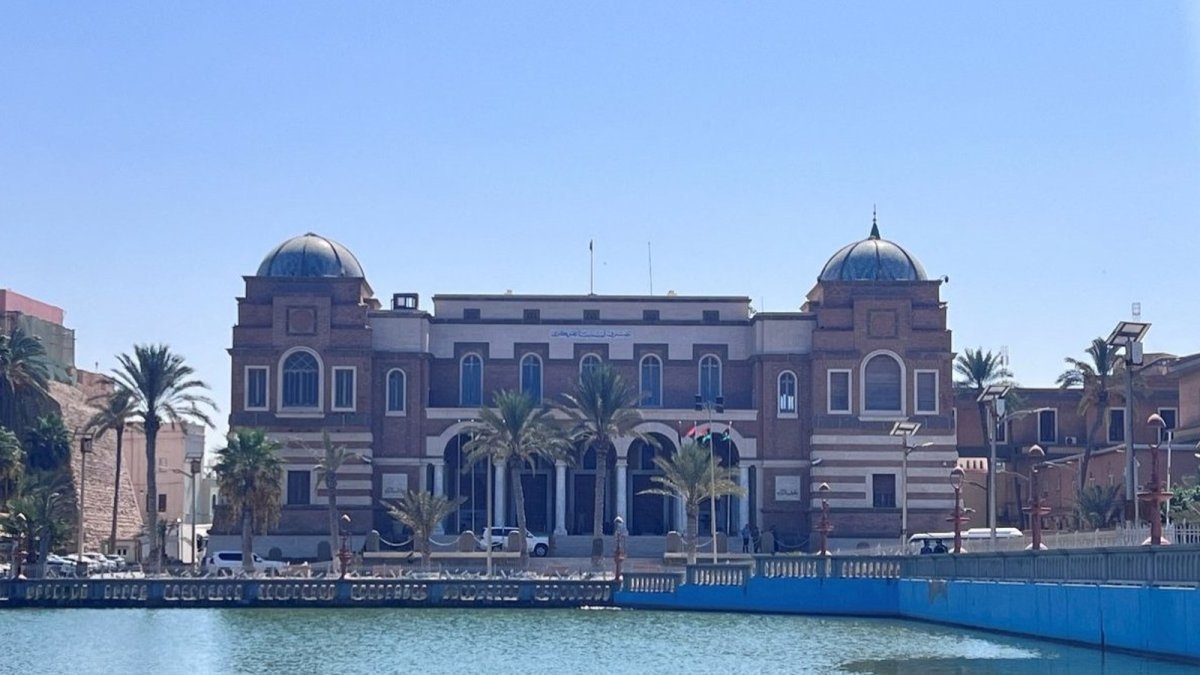
The governor of Libya's Central Bank (CBL), Naji Issa, has tendered his resignation to the country's rival legislative chambers, according to documents dated August 9 and confirmed by Reuters. The move threatens to unravel the fragile political bargain that ended a 2024 standoff over control of the bank and Libya's oil revenues.
Libya's Central Bank Chief Resigns, Exposing Fiscal Fault Lines
Tripoli, Libya – August 10, 2026 — Issa confirmed the authenticity of the resignation letters in a message to Reuters but declined to explain his decision, citing the sensitivity of the matter. The letters, addressed to the eastern-based House of Representatives and the High Council of State, contain a single, careful sentence: "I apologize for not being able to continue in my duties as Governor of the Central Bank of Libya (CBL), without stating the reasons, due to their sensitivity."
A Fragile Bargain Begins to Crack
Issa's appointment in 2024 was itself a product of crisis. Both chambers agreed to install him as a compromise candidate following months of confrontation over the CBL's leadership — a standoff that began when the Tripoli-based Presidential Council moved in August 2024 to oust then-governor Sadiq al-Kabir, in a step backed by factions of the UN-recognised Government of National Unity (GNU) under Prime Minister Abdulhamid Dbeibah and replace him with a rival board. Officials close to Dbeibah had long criticised Kabir's management of the bank and state funds, accusing him of favouring the eastern-based rival administration aligned with military strongman Khalifa Haftar.
The response from the east was swift: the Benghazi-based administration declared force majeure and suspended all oil production and exports. The shutdown cut Libya's output by half, to roughly 600,000 barrels per day (bpd), according to the state-run National Oil Corporation (NOC) — a stark demonstration of how control over Libya's energy heartland in the east and south can be weaponised against the west's political dominance. That standoff ended only when a UN-backed deal installed Issa and vice-governor Miree al-Barasee in September 2024, restoring oil flows and easing the financial crisis. Now, less than two years later, the compromise governor has walked away — without explanation.
An Impossible Balancing Act
The resignation letters were formally delivered to two institutions that rarely agree on anything. The House of Representatives, elected in 2014, has not yet responded. Mohamed Takala, head of the High Council of State — formed under the 2015 political agreement from members of the 2012 parliament — has urged Issa to remain "in order to maintain financial, economic and political stability" until the resignation can be considered under constitutional and legal procedures. The eastern parliament, for its part, has offered no immediate comment.
Takala's plea reflects the stakes. As Libyan analyst Husni Bey observed in a Libya Herald assessment, the resignation letter does not state its reasons, and it would be professionally inappropriate to claim any single economic file caused it. But the pressures bearing down on the CBL are structural, not merely personal. Two intertwined economic conflicts define Libya's predicament: first, who controls spending — and who finances what the state can no longer afford; second, whether to defend the official exchange rate or defend the country's foreign reserves.
These are not abstract choices. Libya earns most of its public revenues in foreign currency from oil and gas, while the bulk of government expenditure is in Libyan dinars. The central bank sits at the intersection: oil generates dollars, the bank converts them into dinars for the government to spend. Every fiscal decision is therefore a monetary decision, and every monetary decision is a political one.
A Spending Agreement That Settled Nothing
The scale of the problem is visible in the numbers. In April 2026, Libya's rival institutions signed an agreement on Unified Public Spending of approximately LYD 190 billion — roughly LYD 73 billion for salaries, LYD 37 billion for subsidies, LYD 40 billion for development, LYD 18 billion for family allowances, LYD 10 billion for operating expenditure, and LYD 12 billion for the National Oil Corporation. The agreement did not end the dispute; it merely codified it.
In June 2026, the chairman of the House of Representatives' Unified Spending Committee wrote to Issa warning that the House might consider itself released from the agreement's commitments if what it described as obstruction of implementation continued. The central bank, caught between two principals demanding payment, was being pressed from both sides.
The International Monetary Fund has warned that persistently high public expenditure increases pressure on the exchange rate and foreign reserves and, without adjustment, becomes unsustainable. Central Bank data cited in the Libya Herald analysis show that foreign-currency usage by commercial banks during the first five months of 2026 amounted to approximately USD 12.9 billion. Against that outflow, the state must simultaneously fund salaries, subsidies, development projects, and its own operational costs — a ledger that cannot balance without hard choices.
The Subsidy Trap and the Parallel Market
A very large part of Libya's subsidy burden is effectively paid in dollars — through fuel imports or through domestic consumption of products that could otherwise be exported. The gap between near-free domestic energy prices and the true economic cost incentivises smuggling, diversion, and resale outside official channels. Every barrel of subsidised fuel that leaves the country is a barrel of lost revenue and a direct drain on reserves.
The exchange-rate gap compounds the problem. When access to official dollars at a cheaper rate becomes an asset in its own right, demand for dollars rises as the gap widens — depleting reserves further. The central bank, in this reading, is being asked to do the impossible: finance very high public expenditure, preserve the value of the dinar, provide foreign currency for trade, cover a heavy fuel bill, protect foreign reserves, eliminate the parallel market, and avoid devaluing the currency. As Bey notes, these objectives cannot all be achieved if the underlying fiscal position does not change.
The real question, he argues, is who bears the cost of adjustment: the treasury, through spending reform; the reserves, through depletion; the dinar, through devaluation; or the citizen, through inflation and lost purchasing power. Every faction in Libya's political landscape wants the answer to be someone else.

Oil Boom Masks Structural Fragility
This fiscal drama is unfolding against the backdrop of a remarkable production recovery. By mid-2026, Libya had raised crude output to around 1.4 million barrels per day — the highest level since 2013, according to the National Oil Corporation — closing in on an official target of 1.5 million bpd and a stated goal of 1.6 million bpd by the end of 2026. On June 21, 2026, the NOC said crude production had reached 1.4 million bpd, with condensate adding roughly 49,000 bpd, the highest output since 2013. The NOC expects USD 3-4 billion in new investments to modernise infrastructure and restore production capacity.
These are numbers that international oil markets watch closely. Libya's output swings have, since 2011, repeatedly moved global prices, and its position within OPEC+ gives its production decisions outsized significance. But the boom masks a deeper fragility: the very success of the recovery — driven by the political bargain that gave Issa his post — has not resolved the underlying contest over who controls the revenue it generates. Higher production eases the pressure but does not change the structure: a state that spends more than it can sustainably finance, a currency that cannot find its true value, and two governments that cannot agree on the most basic rules of fiscal management.
What the Resignation Signals
Issa's departure, if it stands, would reopen the 2024 wound at the worst possible moment. The process of appointing a successor would require both chambers to agree — the same process that took months of negotiation and a full production shutdown to achieve. Takala's request that Issa stay, and the House's silence, suggest both sides understand the risk of allowing the vacancy to become another battlefield.
The resignation also signals something deeper: the exhaustion of the institutional compromise that has kept Libya's economy on life support. The Central Bank of Libya has been asked to serve as the guarantor of a political settlement that does not exist. It is the institution through which oil wealth is converted into state spending, but it has no authority to decide how that wealth is distributed. That authority is contested, continuously, among actors who have not reached — and show no sign of reaching — a genuine agreement on the state's fiscal constitution.
Regional Stakes: Energy, Stability, and the UN Track
For the region, the stakes extend well beyond Tripoli and Benghazi. Libya's fragmentation is the most dramatic example in the Middle East and North Africa of the post-2011 pattern of state collapse: a country with vast hydrocarbon wealth and a thin institutional layer, captured by rival coalitions that external powers — including Turkey, Russia, and Gulf states — have variously armed, funded, or courted. The central bank, as the node through which all oil revenue flows, is the most important prize in that contest.
A renewed central bank crisis would threaten the production recovery that has brought Libya back toward 1.4 million bpd and its target of 1.6 million bpd. For global energy markets, already sensitive to supply disruptions, a Libyan shutdown of even a few hundred thousand barrels per day would tighten balances and push prices higher at a moment when OPEC+ is calibrating its own production policy.
The UN mediation track, which brokered the 2024 deal that installed Issa, now faces the challenge of rebuilding a consensus that was already paper-thin. The resignation is a reminder that peace in Libya has been bought, repeatedly, with temporary institutional fixes rather than a durable political settlement. Each fix delays the day of reckoning — but the fiscal arithmetic, the IMF warnings, and the USD 12.9 billion outflow all suggest that day is approaching. The question is whether Libya's leaders will confront it through negotiation, or whether, as in August 2024, they will choose to shut the taps again.
This article was produced with AI-assisted research and editorial support. Sources: Reuters, AFP, Libya Herald, National Oil Corporation.
By Malik Hassan, Staff Writer
What's Your Reaction?
 Like
0
Like
0
 Dislike
0
Dislike
0
 Love
0
Love
0
 Funny
0
Funny
0
 Wow
0
Wow
0
 Sad
0
Sad
0
 Angry
0
Angry
0

Middle East Correspondent at Global1.News. Based in Beirut, covering politics, conflict, energy, and society across the Middle East. Brings context and depth to a region often reduced to headlines.











Comments (0)