
Israel FM threatens Britain with countermeasures, vows to step up settlement expansion
Israeli Foreign Minister Gideon Sa’ar’s recent remarks in Jerusalem underscore a stark escalation in the diplomatic tug‑of‑war over Israel’s settlement enterprise in the occupied West Bank.
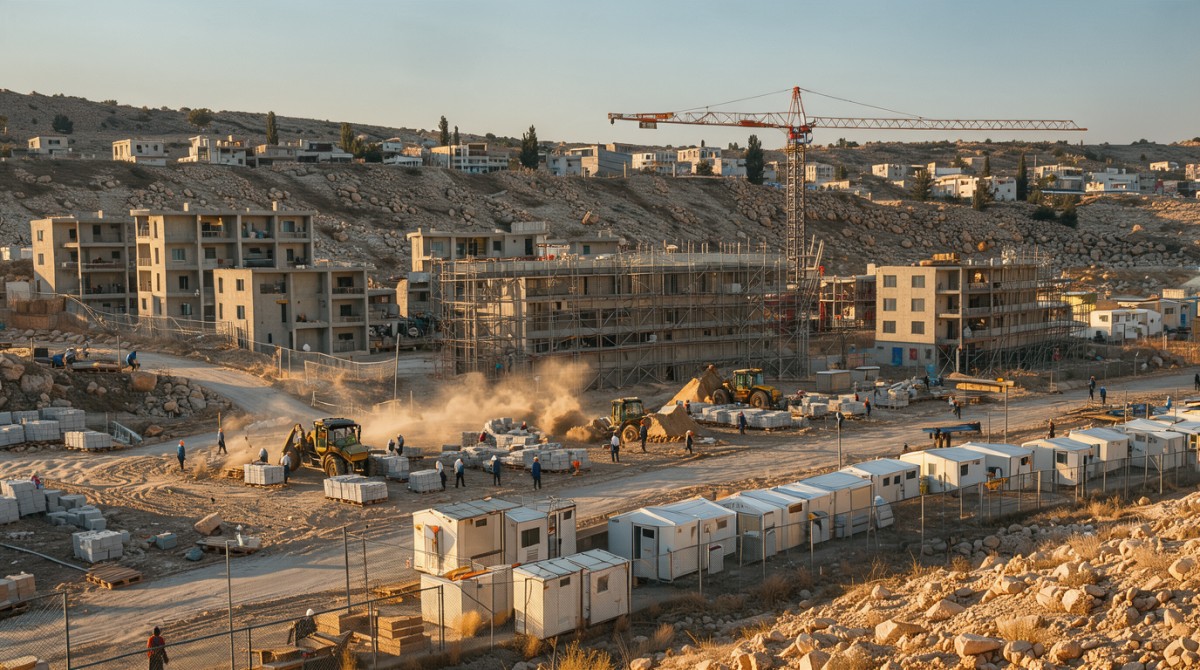
Israeli Foreign Minister Gideon Sa’ar’s recent remarks in Jerusalem underscore a stark escalation in the diplomatic tug‑of‑war over Israel’s settlement enterprise in the occupied West Bank. Speaking on Tuesday, Sa’ar warned Britain that Israel would take “countermeasures” in response to the Labour government’s decision to sanction eight Israeli firms involved in settlement construction. His statements, delivered amid a broader Israeli push to expand and protect Jewish communities in what Israel calls Judea and Samaria, highlight a refusal to bend under what he termed “external pressure.” The language of the foreign minister, steeped in historic claims and a resolve to “strengthen” settlements, signals a deepening of the policy clash that already pits Israel’s settlement agenda against a growing chorus of international legal criticism.
Sanctions trigger a diplomatic showdown
The British Labour government’s recent sanctions target eight Israeli companies that are directly linked to building projects in the occupied West Bank. Sa’ar described the move as a “hostile act targeting private, law‑abiding companies,” framing the sanctions not as a legitimate response to alleged violations of international law but as an attack on ordinary businesses. By emphasizing the “law‑abiding” nature of the firms, the foreign minister seeks to shift the narrative from the contested legality of settlements to the perceived unfairness of punitive measures against private actors.
Sa’ar’s warning that Israel will consider “countermeasures” against Britain signals a possible escalation beyond diplomatic protest. While the exact form of these measures was not detailed, the foreign minister’s language suggests a willingness to explore economic, political, or legal avenues to retaliate. This stance reflects a broader pattern in recent Israeli policy, where external criticism is met with promises of resilience and, at times, retaliatory steps designed to deter further sanctions or diplomatic pressure.
Settlement expansion as a policy priority
Beyond the immediate diplomatic row, Sa’ar used the occasion to reaffirm Israel’s commitment to expanding Jewish communities in the West Bank. He pledged to “consider new ways to strengthen Jewish communities in Judea and Samaria” and to protect those involved in developing and building on the “Land of Israel.” The emphasis on “strengthening” settlements aligns with a series of recent initiatives, including the allocation of land for settlement‑related projects, such as the 179 dunums earmarked in Qalandia.
This rhetoric is anchored in a historical narrative that the foreign minister invoked, asserting that “the Jewish people have the right to live in their historic homeland” and that these rights “date back thousands of years.” By linking contemporary settlement policy to centuries‑old claims, Sa’ar seeks to legitise expansion in the eyes of domestic audiences and to frame any external criticism as an affront to a historic entitlement.
Legal arguments and international law
Sa’ar’s reference to the Balfour Declaration and the British Mandate as recognitions of Jewish historic rights attempts to root the settlement project in a legal tradition that predates the modern Israeli state. However, the international community, including the United Nations and the International Court of Justice, has consistently held that the construction of settlements in occupied territory violates the Fourth Geneva Convention, which prohibits an occupying power from transferring its civilian population into occupied lands.
The foreign minister’s dismissal of these legal standards as “external pressure” underscores a widening gap between Israel’s self‑perceived legal justification and the prevailing international consensus. By refusing to “bow” to sanctions, Sa’ar signals a policy trajectory that prioritises settlement growth over compliance with widely accepted norms of occupation law.
Human impact on the ground
Each new settlement expansion carries a tangible human cost for Palestinians living in the West Bank. Land allocations for settlement projects—such as the 179 dunums in Qalandia—often involve the expropriation of agricultural land, restrictions on movement, and the erection of security infrastructure that fragments Palestinian communities. While the source material does not detail specific incidents, the broader context of settlement expansion is well‑documented as a driver of dispossession and heightened tension.
The foreign minister’s pledge to protect “those involved in developing and building” the settlements implicitly acknowledges the vulnerability of settlement enterprises to external actions like sanctions. Yet the emphasis on protection and expansion suggests that any human impact on Palestinians will be secondary to the goal of consolidating Jewish presence in the contested territories.
British response and the Labour government’s stance
The British Labour government’s decision to sanction eight Israeli companies reflects a growing willingness in Europe to hold private actors accountable for activities that facilitate settlement construction. By targeting firms rather than the Israeli state directly, the UK aims to apply pressure on the economic underpinnings of settlement growth. This approach aligns with a broader trend of using secondary sanctions to deter involvement in activities deemed contrary to international law.
Sa’ar’s condemnation of the sanctions as “hostile” and his promise of countermeasures reveal the diplomatic stakes of this policy choice. The British government now faces the challenge of balancing its commitment to human‑rights‑based foreign policy with the potential fallout from Israeli retaliation, which could affect bilateral trade, security cooperation, or diplomatic engagement.
Implications for the peace process
The foreign minister’s unequivocal commitment to “strengthen” settlements and to resist external pressure complicates any prospects for a negotiated settlement to the Israeli‑Palestinian conflict. Settlement expansion is widely viewed as a core obstacle to the creation of a viable, contiguous Palestinian state, as it erodes the territorial contiguity necessary for statehood.
By framing settlement growth as a non‑negotiable right rooted in historic claims, Sa’ar signals that future Israeli policy may continue to prioritize demographic and territorial consolidation over diplomatic compromise. This stance risks further marginalising moderate voices on both sides and could entrench a status quo that deepens humanitarian suffering and fuels cycles of violence.
International reactions and the road ahead
Beyond Britain, other Western nations have expressed concern over settlement activity, though responses have varied in intensity. The foreign minister’s rhetoric suggests that Israel is prepared to confront a coalition of states that might seek to impose additional sanctions or diplomatic censure. By positioning settlement expansion as a matter of historic rights, Israel may seek to rally sympathetic allies and to cast criticism as an affront to its national narrative.
Looking forward, the trajectory set by Sa’ar’s statements points to a likely continuation of settlement expansion, coupled with a defensive posture against international pressure. The human cost for Palestinians, the strain on the peace process, and the potential for diplomatic retaliation all converge to create a volatile environment in which law, politics, and everyday lives intersect. The international community will need to weigh the efficacy of sanctions against the risk of escalation, while Palestinian communities continue to bear the brunt of policies that prioritize settlement growth over human rights and legal norms.
This article was produced with AI-assisted research and editorial support. Reporting is based on the source material cited below. Sources: Middle East Monitor; middleeastmonitor.com; Global1.News (19 November 2026).
By Fatima Al-Rashid, Staff Writer
What's Your Reaction?
 Like
0
 Dislike
0
 Love
0
 Funny
0
 Wow
0
 Sad
0
 Angry
0

Gulf/MENA Correspondent at Global1.News. Based in Doha, covering Gulf politics, energy markets, diplomacy, and development across the Middle East and North Africa. Tracks the economic transformation of the Gulf states.














Comments (0)